Kirjojen hintavertailu – 12 903 724 kirjaa ja 27 kauppaa
Kirjailija
Richard Brinsley Sheridan
Kirjat ja teokset yhdessä paikassa: 205 kirjaa, julkaisuja vuosilta 1799–2026, suosituimpiin kuuluu The Works Of Richard Brinsley Sheridan. Vertaile teosten hintoja ja tarkista saatavuus suomalaisista kirjakaupoista.
The School for Scandal: A Comedy by Richard Brinsley Sheridan. The School for Scandal is a play written by Richard Brinsley Sheridan. It was first performed in London at Drury Lane Theatre on 8 May 1777. Various editions of the play exhibit several relatively minor textual differences. One reason is that Sheridan revised his text repeatedly, not only prior to its first production, but afterwards. In its earliest stages, as detailed by Thomas Moore, Sheridan developed two separate play sketches, one initially entitled "The Slanderers" that began with Lady Sneerwell and Spatter (equivalent to Snake in the final version), and the other involving the Teazles. He eventually combined these and with repeated revisions and restructuring arrived at substantially the play that we have today.
The critic: or a tragedy rehearsed a dramatic piece in three acts as it is performed at the Theatre Royal in Drury Lane by, Richard Brinsley Sheridan Esqr. by Richard Brinsley Sheridan The 18th century was a wealth of knowledge, exploration and rapidly growing technology and expanding record-keeping made possible by advances in the printing press. In its determination to preserve the century of revolution, Gale initiated a revolution of its own: digitization of epic proportions to preserve these invaluable works in the largest archive of its kind. Now for the first time these high-quality digital copies of original 18th century manuscripts are available in print, making them highly accessible to libraries, undergraduate students, and independent scholars. Western literary study flows out of eighteenth-century works by Alexander Pope, Daniel Defoe, Henry Fielding, Frances Burney, Denis Diderot, Johann Gottfried Herder, Johann Wolfgang von Goethe, and others. Experience the birth of the modern novel, or compare the development of language using dictionaries and grammar discourses. The 18th century was a wealth of knowledge, exploration and rapidly growing technology and expanding record-keeping made possible by advances in the printing press. In its determination to preserve the century of revolution, Gale initiated a revolution of its own: digitization of epic proportions to preserve these invaluable works in the largest archive of its kind. Now for the first time these high-quality digital copies of original 18th century manuscripts are available in print, making them highly accessible to libraries, undergraduate students, and independent scholars. The eighteenth-century fascination with Greek and Roman antiquity followed the systematic excavation of the ruins at Pompeii and Herculaneum in southern Italy; and after 1750 a neoclassical style dominated all artistic fields. The titles here trace developments in mostly English-language works on painting, sculpture, architecture, music, theater, and other disciplines. Instructional works on musical instruments, catalogs of art objects, comic operas, and more are also included.
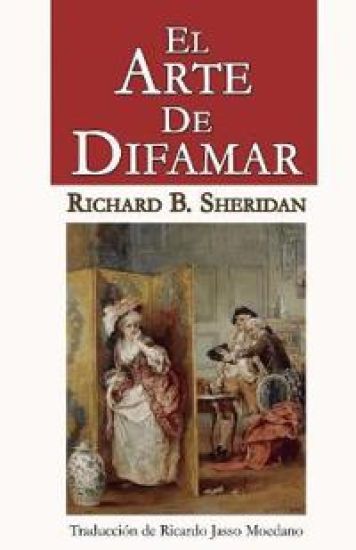
Desde su estreno en 1777, El Arte de Difamar ("The School for Scandal") se convirti en un cl sico de los escenarios debido a su exposici n de los vicios y frivolidad de la alta sociedad inglesa durante el reino de George III. Esta comedia de costumbres nos relata los enredos y estragos que ocasiona un grupo de gente ociosa, liderada por la mordaz y rencorosa Lady Sneerwell, cuya principal ocupaci n consiste en inventar y difundir rumores acerca de otras personas por mero entretenimiento. Los hermanos Charles y Joseph Surface, uno v ctima y el otro c mplice de las intrigas de dicha dama, compiten por el afecto de Maria, una joven que repudia con vehemencia la perversidad de quienes la rodean y tratan de corromperla. Por su parte, Sir Peter lamenta que su esposa provinciana Lady Teazle se haya sumado al s quito de Lady Sneerwell, ya que adopt aires y h bitos t picos de las mujeres ricas de la ciudad, mismos que lo desquician sobremanera. Cuando Sir Oliver, viejo amigo de Sir Peter, as como t o y benefactor de Charles, el pr digo, y de Joseph, el modelo de rectitud, regresa de la India resuelto en determinar, por medio de un enga o, cu l de sus sobrinos merece realmente heredar su fortuna, empiezan a descubrirse una serie de calumnias, secretos y maquinaciones, de modo que al final los inocentes quedan reivindicados, las parejas que se hab an separado se reconcilian, y los embusteros enfrentan la ruina moral que pretend an provocarle a los dem s.
The intrigues of such aptly named characters as Lady Sneerwell, Sir Joseph Surface, Lady Candour, and Sir Benjamin Backbite have amused theater audiences for more than two centuries. They are the invention of the Irish-born playwright Richard Brinsley Sheridan, and they unfold, collide, and backfire hilariously in his masterpiece, The School for Scandal, a play still considered by many the best comedy of manners in English.
The 18th century was a wealth of knowledge, exploration and rapidly growing technology and expanding record-keeping made possible by advances in the printing press. In its determination to preserve the century of revolution, Gale initiated a revolution of its own: digitization of epic proportions to preserve these invaluable works in the largest archive of its kind. Now for the first time these high-quality digital copies of original 18th century manuscripts are available in print, making them highly accessible to libraries, undergraduate students, and independent scholars. The eighteenth-century fascination with Greek and Roman antiquity followed the systematic excavation of the ruins at Pompeii and Herculaneum in southern Italy; and after 1750 a neoclassical style dominated all artistic fields. The titles here trace developments in mostly English-language works on painting, sculpture, architecture, music, theater, and other disciplines. Instructional works on musical instruments, catalogs of art objects, comic operas, and more are also included. ++++The below data was compiled from various identification fields in the bibliographic record of this title. This data is provided as an additional tool in helping to insure edition identification: ++++Trinity College Library Watkinson CollectionN056718Anonymous. By Richard Brinsley Sheridan (Nicoll). Newcastle: printed by Hall and Elliot, 1791?]. 27, 1]p.; 8
The 18th century was a wealth of knowledge, exploration and rapidly growing technology and expanding record-keeping made possible by advances in the printing press. In its determination to preserve the century of revolution, Gale initiated a revolution of its own: digitization of epic proportions to preserve these invaluable works in the largest archive of its kind. Now for the first time these high-quality digital copies of original 18th century manuscripts are available in print, making them highly accessible to libraries, undergraduate students, and independent scholars. The eighteenth-century fascination with Greek and Roman antiquity followed the systematic excavation of the ruins at Pompeii and Herculaneum in southern Italy; and after 1750 a neoclassical style dominated all artistic fields. The titles here trace developments in mostly English-language works on painting, sculpture, architecture, music, theater, and other disciplines. Instructional works on musical instruments, catalogs of art objects, comic operas, and more are also included. ++++The below data was compiled from various identification fields in the bibliographic record of this title. This data is provided as an additional tool in helping to insure edition identification: ++++Bodleian Library (Oxford)W004866Prologue by David Garrick; epilogue by George Colman. "Essays from the Idler. By Samuel Johnson, L. L. D."--p. 59-64. Bookseller's advertisement, foot of p. 64. Philadelphia: Printed by Robert Bell, in Third Street, M, DCC, LXXXII. 1782]. 64p.; 8
The 18th century was a wealth of knowledge, exploration and rapidly growing technology and expanding record-keeping made possible by advances in the printing press. In its determination to preserve the century of revolution, Gale initiated a revolution of its own: digitization of epic proportions to preserve these invaluable works in the largest archive of its kind. Now for the first time these high-quality digital copies of original 18th century manuscripts are available in print, making them highly accessible to libraries, undergraduate students, and independent scholars. Western literary study flows out of eighteenth-century works by Alexander Pope, Daniel Defoe, Henry Fielding, Frances Burney, Denis Diderot, Johann Gottfried Herder, Johann Wolfgang von Goethe, and others. Experience the birth of the modern novel, or compare the development of language using dictionaries and grammar discourses. ++++The below data was compiled from various identification fields in the bibliographic record of this title. This data is provided as an additional tool in helping to insure edition identification: ++++Harvard University Houghton LibraryT060198Each play has a separate undated titlepage and half-title, but the pagination and register of 'The rivals' and 'The duenna' continue that of 'The school for scandal'. The imprint is false, probably printed at York for Wilson, Spence and Mawman. Paper dated 1796 & 1797. London i.e. York?]: printed for A. Millar, W. Law, and R. Cater, 1797?]. 4],215, 1]; 2],54p., plate: port.; 12
The 18th century was a wealth of knowledge, exploration and rapidly growing technology and expanding record-keeping made possible by advances in the printing press. In its determination to preserve the century of revolution, Gale initiated a revolution of its own: digitization of epic proportions to preserve these invaluable works in the largest archive of its kind. Now for the first time these high-quality digital copies of original 18th century manuscripts are available in print, making them highly accessible to libraries, undergraduate students, and independent scholars. Western literary study flows out of eighteenth-century works by Alexander Pope, Daniel Defoe, Henry Fielding, Frances Burney, Denis Diderot, Johann Gottfried Herder, Johann Wolfgang von Goethe, and others. Experience the birth of the modern novel, or compare the development of language using dictionaries and grammar discourses. ++++The below data was compiled from various identification fields in the bibliographic record of this title. This data is provided as an additional tool in helping to insure edition identification: ++++British LibraryT000767Edition statement from half-title. The titlepage is engraved. With a final advertisement leaf. In fact a reimpression of the first edition; no press figure on p. 52; p.9 catchword: sneer. On p. 84, in the middle of the page, "awkward" is correctly speLondon: printed for T. Becket, 1781. 4], ii, 4],98, 2]p.; 8
The 18th century was a wealth of knowledge, exploration and rapidly growing technology and expanding record-keeping made possible by advances in the printing press. In its determination to preserve the century of revolution, Gale initiated a revolution of its own: digitization of epic proportions to preserve these invaluable works in the largest archive of its kind. Now for the first time these high-quality digital copies of original 18th century manuscripts are available in print, making them highly accessible to libraries, undergraduate students, and independent scholars. Western literary study flows out of eighteenth-century works by Alexander Pope, Daniel Defoe, Henry Fielding, Frances Burney, Denis Diderot, Johann Gottfried Herder, Johann Wolfgang von Goethe, and others. Experience the birth of the modern novel, or compare the development of language using dictionaries and grammar discourses. ++++The below data was compiled from various identification fields in the bibliographic record of this title. This data is provided as an additional tool in helping to insure edition identification: ++++British LibraryT060225The imprint is false; probably printed at York for Wilson, Spence and Mawman. Also issued as part of 'The dramatic works of R. B. Sheridan, Esq.' London i.e. York?], 1798. London i.e. York?]: printed for A. Miller, W. Law, and R. Cater, 1797. 85, 1]p.; 12
The 18th century was a wealth of knowledge, exploration and rapidly growing technology and expanding record-keeping made possible by advances in the printing press. In its determination to preserve the century of revolution, Gale initiated a revolution of its own: digitization of epic proportions to preserve these invaluable works in the largest archive of its kind. Now for the first time these high-quality digital copies of original 18th century manuscripts are available in print, making them highly accessible to libraries, undergraduate students, and independent scholars. Western literary study flows out of eighteenth-century works by Alexander Pope, Daniel Defoe, Henry Fielding, Frances Burney, Denis Diderot, Johann Gottfried Herder, Johann Wolfgang von Goethe, and others. Experience the birth of the modern novel, or compare the development of language using dictionaries and grammar discourses. ++++The below data was compiled from various identification fields in the bibliographic record of this title. This data is provided as an additional tool in helping to insure edition identification: ++++British LibraryT060220Anonymous. By Richard B. B. Sheridan. Dublin: printed for the booksellers, 1800. 72p., plate; 12
The 18th century was a wealth of knowledge, exploration and rapidly growing technology and expanding record-keeping made possible by advances in the printing press. In its determination to preserve the century of revolution, Gale initiated a revolution of its own: digitization of epic proportions to preserve these invaluable works in the largest archive of its kind. Now for the first time these high-quality digital copies of original 18th century manuscripts are available in print, making them highly accessible to libraries, undergraduate students, and independent scholars. Western literary study flows out of eighteenth-century works by Alexander Pope, Daniel Defoe, Henry Fielding, Frances Burney, Denis Diderot, Johann Gottfried Herder, Johann Wolfgang von Goethe, and others. Experience the birth of the modern novel, or compare the development of language using dictionaries and grammar discourses. ++++The below data was compiled from various identification fields in the bibliographic record of this title. This data is provided as an additional tool in helping to insure edition identification: ++++British LibraryT046319London: printed for T. Cadell, 1783. 87, 1]p.; 12
The 18th century was a wealth of knowledge, exploration and rapidly growing technology and expanding record-keeping made possible by advances in the printing press. In its determination to preserve the century of revolution, Gale initiated a revolution of its own: digitization of epic proportions to preserve these invaluable works in the largest archive of its kind. Now for the first time these high-quality digital copies of original 18th century manuscripts are available in print, making them highly accessible to libraries, undergraduate students, and independent scholars. Western literary study flows out of eighteenth-century works by Alexander Pope, Daniel Defoe, Henry Fielding, Frances Burney, Denis Diderot, Johann Gottfried Herder, Johann Wolfgang von Goethe, and others. Experience the birth of the modern novel, or compare the development of language using dictionaries and grammar discourses. ++++The below data was compiled from various identification fields in the bibliographic record of this title. This data is provided as an additional tool in helping to insure edition identification: ++++British LibraryT060213Anonymous. By Richard B. B. Sheridan. London: printed for G. Wilkie, 1798. 11],4-100p.; 8
The 18th century was a wealth of knowledge, exploration and rapidly growing technology and expanding record-keeping made possible by advances in the printing press. In its determination to preserve the century of revolution, Gale initiated a revolution of its own: digitization of epic proportions to preserve these invaluable works in the largest archive of its kind. Now for the first time these high-quality digital copies of original 18th century manuscripts are available in print, making them highly accessible to libraries, undergraduate students, and independent scholars. Western literary study flows out of eighteenth-century works by Alexander Pope, Daniel Defoe, Henry Fielding, Frances Burney, Denis Diderot, Johann Gottfried Herder, Johann Wolfgang von Goethe, and others. Experience the birth of the modern novel, or compare the development of language using dictionaries and grammar discourses. ++++The below data was compiled from various identification fields in the bibliographic record of this title. This data is provided as an additional tool in helping to insure edition identification: ++++British LibraryT060216Anonymous. By Richard B. B. Sheridan. Pagination of p.4 is inverted. With a final leaf of prologue and epilogue. Dublin: printed in the year, 1793. 70, 2]p.; 12
The School for Scandal is a play written by Richard Brinsley Sheridan. It was first performed in London at Drury Lane Theatre on 8 May 1777. Plot Act I Scene I: Lady Sneerwell, a wealthy young widow, and her hireling Snake discuss her various scandal-spreading plots. Snake asks why she is so involved in the affairs of Sir Peter Teazle, his ward Maria, and Charles and Joseph Surface, two young men under Sir Peter's informal guardianship, and why she has not yielded to the attentions of Joseph, who is highly respectable. Lady Sneerwell confides that Joseph wants Maria, who is an heiress, and that Maria wants Charles. Thus she and Joseph are plotting to alienate Maria from Charles by putting out rumors of an affair between Charles and Sir Peter's new young wife, Lady Teazle. Joseph arrives to confer with Lady Sneerwell. Maria herself then enters, fleeing the attentions of Sir Benjamin Backbite and his uncle Crabtree. Mrs. Candour enters and ironically talks about how "tale-bearers are as bad as the tale-makers." Soon after that, Sir Benjamin and Crabtree also enter, bringing a good deal of gossip with them. One item is the imminent return of the Surface brothers' rich uncle Sir Oliver from the East Indies, where he has been for fifteen years; another is Charles' dire financial situation. Scene II: Sir Peter complains of Lady Teazle's spendthrift ways. Rowley, the former steward of the Surfaces' late father, arrives, and Sir Peter gives him an earful on the subject. He also complains that Maria has refused Joseph, whom he calls "a model for the young men of the age," and seems attached to Charles, whom he denounces as a profligate. Rowley defends Charles, and then announces that Sir Oliver has just arrived from the East Indies. Act II edit] Scene I: Sir Peter argues with his wife, Lady Teazle, refusing to be "ruined by her] extravagance." He reminds her of her recent and far humbler country origins. Lady Teazle excuses herself by appealing to "the fashion", and departs to visit Lady Sneerwell. Despite their quarrel, Sir Peter still finds himself charmed by his wife even when she is arguing with him. Scene II: At Lady Sneerwell's, the scandal-mongers have great fun at the expense of friends not present. Lady Teazle and Maria arrive; Lady Teazle joins in, but Maria is disgusted...... Richard Brinsley Butler Sheridan (30 October 1751 - 7 July 1816) was an Irish satirist, a playwright and poet, and long-term owner of the London Theatre Royal, Drury Lane. He is known for his plays such as The Rivals, The School for Scandal, The Duenna, and A Trip to Scarborough. He was also a Whig MP for 32 years in the British House of Commons for Stafford (1780-1806), Westminster (1806-1807), and Ilchester (1807-1812). He is buried at Poets' Corner in Westminster Abbey. His plays remain a central part of the canon and are regularly performed worldwide.
The Duenna is a three-act comic opera, mostly composed by Thomas Linley the elder and his son, Thomas Linley the younger, to an English-language libretto by Richard Brinsley Sheridan. At the time, it was considered one of the most successful operas ever staged in England, and its admirers included Samuel Johnson, William Hazlitt and Lord George Byron (Byron called it "the best opera ever written"). First performed in the Covent Garden Theatre on 21 November 1775, The Duenna was performed seventy-five times in its first season, and was frequently revived in Britain until the 1840s. In total, 256 performances of the opera had been held in London from its opening in 1775 to the end of the eighteenth century. Another 194 performances occurred in the capital during the nineteenth century, with the last known London representation happening in January 1851 (there were some subsequent Dublin performances in 1853). The opera was first performed in Jamaica in 1779, and subsequently spread round the English-speaking world. Soon after its first London performance, representations sprang up in British provincial theatres, though these often used invented dialogue (Sheridan's original text was not published until 1794) to link the published songs and musical numbers. In Autumn 2010, English Touring Opera performed the complete opera in venues around the UK, beginning in the Linbury Studio Theatre within the Royal Opera House as part of ROH2's Autumn season - bringing the opera back to its Covent Garden home. Two modern operas based on Sheridan's libretto have been performed: Sergei Prokofiev's Betrothal in a Monastery (composed 1940-1), and Roberto Gerhard's version of 1945-7.............. Richard Brinsley Butler Sheridan (30 October 1751 - 7 July 1816) was an Irish satirist, a playwright and poet, and long-term owner of the London Theatre Royal, Drury Lane. He is known for his plays such as The Rivals, The School for Scandal, The Duenna, and A Trip to Scarborough. He was also a Whig MP for 32 years in the British House of Commons for Stafford (1780-1806), Westminster (1806-1807), and Ilchester (1807-1812). He is buried at Poets' Corner in Westminster Abbey. His plays remain a central part of the canon and are regularly performed worldwide. LIFE: RB Sheridan was born in 1751 in Dublin, Ireland, where his family had a house on then fashionable Dorset Street. While in Dublin Sheridan attended the English Grammar School in Grafton Street. The family moved permanently to England in 1758 when he was aged seven. He was a pupil at Harrow School from 1762 to 1768. His mother, Frances Sheridan, was a playwright and novelist. She had two plays produced in London in the early 1760s, though she is best known for her novel The Memoirs of Miss Sidney Biddulph (1761). His father, Thomas Sheridan, was for a while an actor-manager at the Smock Alley Theatre in Dublin, but following his move to England in 1758 he gave up acting and wrote several books on the subject of education, and especially the standardisation of the English language in education. After Sheridan's period in Harrow School, his father employed a private tutor, Lewis Ker, who directed his studies in his father's house in London, while Angelo instructed him in fencing and horsemanship. In 1772 Sheridan fought two duels with Captain Thomas Mathews, who had written a newspaper article defaming the character of Elizabeth Ann Linley, the woman Sheridan intended to marry. In the first duel, they agreed to fight in Hyde Park, but finding it too crowded they went first to the Hercules Pillars tavern (on the site where Apsley House now stands at Hyde Park Corner) and then on to the Castle Tavern in Henrietta Street, Covent Garden. Far from its romantic image, the duel was short and bloodless. Mathews lost his sword and, according to Sheridan, was forced to "beg for his life" and sign a retraction of the article....
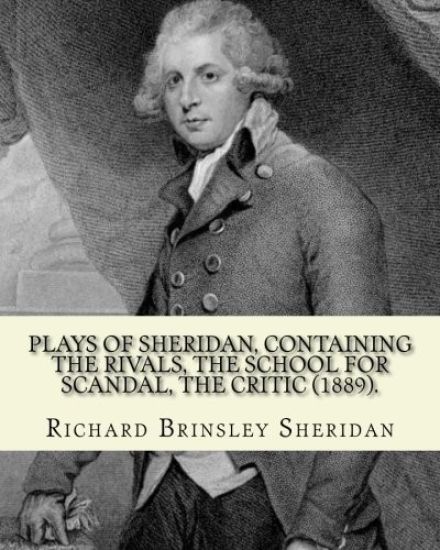
Richard Brinsley Butler Sheridan (30 October 1751 - 7 July 1816) was an Irish satirist, a playwright and poet, and long-term owner of the London Theatre Royal, Drury Lane. He is known for his plays such as The Rivals, The School for Scandal, The Duenna, and A Trip to Scarborough. He was also a Whig MP for 32 years in the British House of Commons for Stafford (1780-1806), Westminster (1806-1807), and Ilchester (1807-1812). He is buried at Poets' Corner in Westminster Abbey. His plays remain a central part of the canon and are regularly performed worldwide. LIFE: RB Sheridan was born in 1751 in Dublin, Ireland, where his family had a house on then fashionable Dorset Street. While in Dublin Sheridan attended the English Grammar School in Grafton Street. The family moved permanently to England in 1758 when he was aged seven. He was a pupil at Harrow School from 1762 to 1768. His mother, Frances Sheridan, was a playwright and novelist. She had two plays produced in London in the early 1760s, though she is best known for her novel The Memoirs of Miss Sidney Biddulph (1761). His father, Thomas Sheridan, was for a while an actor-manager at the Smock Alley Theatre in Dublin, but following his move to England in 1758 he gave up acting and wrote several books on the subject of education, and especially the standardisation of the English language in education. After Sheridan's period in Harrow School, his father employed a private tutor, Lewis Ker, who directed his studies in his father's house in London, while Angelo instructed him in fencing and horsemanship. In 1772 Sheridan fought two duels with Captain Thomas Mathews, who had written a newspaper article defaming the character of Elizabeth Ann Linley, the woman Sheridan intended to marry. In the first duel, they agreed to fight in Hyde Park, but finding it too crowded they went first to the Hercules Pillars tavern (on the site where Apsley House now stands at Hyde Park Corner) and then on to the Castle Tavern in Henrietta Street, Covent Garden. Far from its romantic image, the duel was short and bloodless. Mathews lost his sword and, according to Sheridan, was forced to "beg for his life" and sign a retraction of the article. The apology was made public and Mathews, infuriated by the publicity the duel had received, refused to accept his defeat as final and challenged Sheridan to another duel. Sheridan was not obliged to accept this challenge, but could have become a social pariah if he had not. The second duel, fought in July 1772 at Kingsdown near Bath, was a much more ferocious affair. This time both men broke their swords but carried on fighting in a "desperate struggle for life and honour". Both were wounded, Sheridan dangerously, being "borne from the field with a portion of his antagonist's weapon sticking through an ear, his breast-bone touched, his whole body covered with wounds and blood, and his face nearly beaten to jelly with the hilt of Mathews' sword". His remarkable constitution pulled him through, and eight days after this bloody affair the Bath Chronicle was able to announce that he was out of danger. Mathews escaped in a post chaise.






![The Real and Genuine School for Scandal, a Comedy; Acted With Bursts of Applause, at the Theatres in London and Dublin. Written by Brinsley Sheridan Esquire. [One Line of Quotation]](/covers/9781385479490.jpg)
![The Critic or a Tragedy Rehearsed a Dramatic Piece in Three Acts as it is Performed at the Theatre Royal in Drury Lane by, Richard Brinsley Sheridan Esqr. [The Second Edition]](/covers/9781385099971.jpg)