Kirjojen hintavertailu – 12 903 725 kirjaa ja 27 kauppaa

Kirjailija

Richard Cahan

Kirjat ja teokset yhdessä paikassa: 7 kirjaa, julkaisuja vuosilta 2007–2023, suosituimpiin kuuluu Bronzeville Nights: On the Town in Chicago's Black Metropolis. Vertaile teosten hintoja ja tarkista saatavuus suomalaisista kirjakaupoista.

7 kirjaa

Kirjojen julkaisuvuodet: 2007–2023.

Lost in America: Photographing the Last Days of Our Architectural Treasures
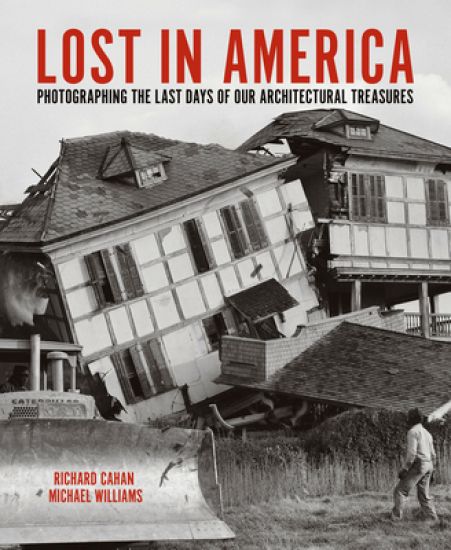
Lost in America documents the life and death of America's architectural and historic treasures. The book is based on a remarkable archive created by the Historic American Building Survey (HABS), a Works Progress Administration project that still documents the nation's most important buildings. Lost in America focuses on 100 buildings that have been torn down over the past 90 years. Some―like New York's Penn Station and Chicago's Stock Exchange―were majestic. Others―like a tiny bridge in rural Montana and a small farmstead torn down for Denver's International Airport―were modest. But they all reflected America's story before they were razed. Using haunting black-and-white images by the nation's top architectural photographers, the book presents a timely look at what we've lost.
Chicago Exposed: Defining Moments from the Chicago Sun-Times Photo Archive
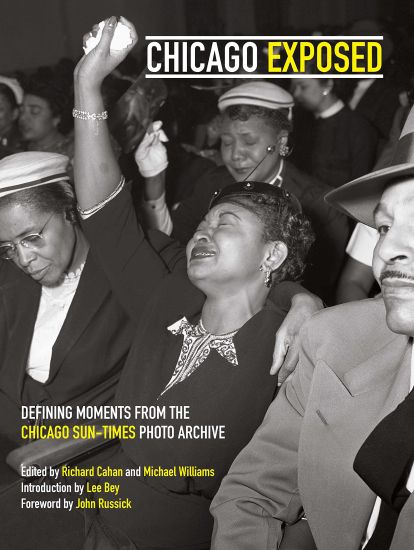
Chicago Exposed reveals Chicago. It is based on the most eye-opening photographs taken over the past eighty years by the staffs of the Chicago Sun-Times and Chicago Daily News. Pictures of labor strikes, racial unrest, immigration, crimes and catastrophes, renewal and resistance. But what makes this book so powerful is its bold writing. Each of these iconic photographs is paired with text from varied and vital writers that bring the pictures alive. Their words offer insight into what the photograph, taken decades ago, means to Chicago now. This book is about our recent past. It begins at the start of World War II and ends in the calamitous year of 2020. It covers Chicago: from Uptown to Pilsen, from the West, North, to the South Sides. And it includes the people who helped mold modern Chicago, mayors like the Daleys, Harold Washington and Jane Byrne, and outsiders such as Martin Luther King Jr. and Abbie Hoffman, who left their mark. Chicago Exposed provides a detailed look at more than 100 photographs that have recently been archived at the Chicago History Museum. Pivotal moments--the funeral of Emmett Till, the 1968 Democratic National Convention, and even Disco Demolition Night--as well as pivotal places--such as Maxwell Street, the Garrick Theater and Cabrini-Green--are all here. But not in a nostalgic way. Here to reconsider. The book is introduced by Sun-Times writer Lee Bey, whose recent award-winning book Southern Exposure takes a fresh look at Chicago's South Side. Richard Cahan and Michael Williams, the city's most prolific picture editors, write and edit the book. They are accompanied by dozens of contributing writers, both new and established, who share insights into photographs that capture the moment and speak to the future.
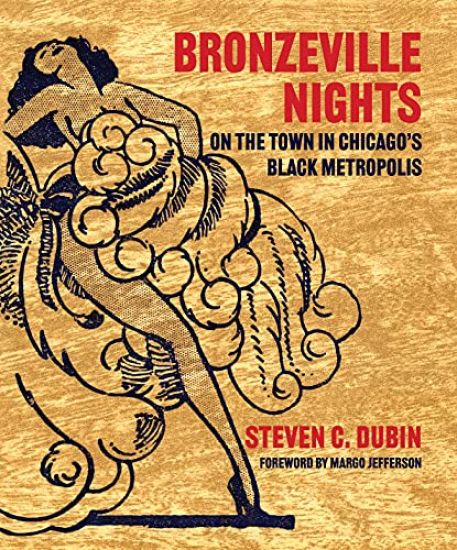
Bronzeville Nights: On the Town in Chicago's Black Metropolis

Bronzeville Nights: On the Town in Chicago's Black Metropolis

Steven C. Dubin; Richard Cahan

Cityfiles Press
2021
sidottu
Bronzeville was once America's most vibrant Black community--next to Harlem. Nightclubs, dance halls, rialtos, and jazz and blues joints lined the streets of Chicago's South Side. Not much is left. A few sound recordings, memories passed down from generation to generation, and--until now--only a handful of photographs. Bronzeville Nights brings it back, with dozens of photos and mementos recently found in a cache gathered by Lonnie Simmons, a jazzman of renown who played these clubs and also roamed Bronzeville with a camera. Simmons snapped Ella Fitzgerald, Lena Horn and Billie Holiday. He photographed Louis Armstrong, Sammy Davis Jr. and Redd Foxx. And he captured images of astonishing acrobats, howling entertainers, stunning dancers--and drag queens. His never-before published pictures tell an unknown story of lavish life during the segregated 1940s and 50s when African Americans frequented these vibrant clubs. Bronzeville Nights is a treasure box. Souvenir photo folders from the Rhumboogie Club, postcards from the Palm Tavern and matchbook covers from the Grand Terrace. And it's the story of Lonnie Simmons himself, who ran away from his South Carolina home at age 16 so he could play saxophone for Fats Waller and Ella Fitzgerald before making Bronzeville his home. Simmons' photos--seen for the first time--exude glamour, swagger and coolness. His images record a time and place that was destroyed more than half a century ago. A place that has never before been reconstructed in pictures. These photos revive this extraordinary social and cultural arena. It's a world that Steven C. Dubin, author of six books including New York Times Notable Book Arresting Images, and Pulitzer Prize-winning critic Margo Jefferson reexamine, explore and explain in exhilarating text.
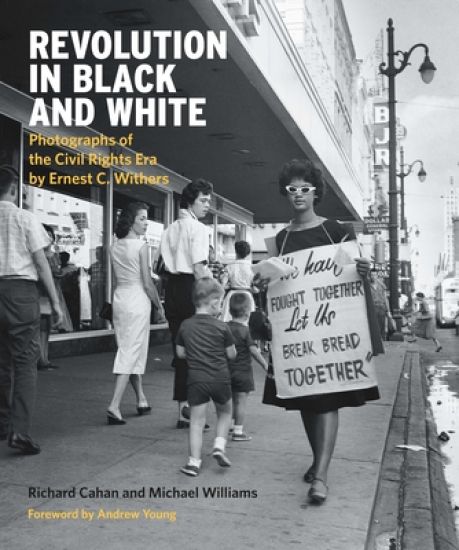
Revolution in Black and White: Photographs of the Civil Rights Era by Ernest Withers
Ernest C. Withers was one of the most prominent African-American photographers of the civil rights era. During the course of his work, he took thousands photographs that document the civil rights movement--from the Emmett Till trial in 1955 to the assassination of Martin Luther King in 1968. What set his work apart was that he goes beyond the political struggles to explain the civil rights movement that changed the country. Withers was primarily a local photographer, working as a freelancer for the Memphis World and Tri-State Defender starting in 1948. His photographs of the everyday world--bridge clubs, funerals, people at work and play, and street life--create a stunning record of what it was like to live in Memphis and the Mid-South. He was also a noted baseball photographer, documenting Negro League baseball in Memphis, and a noted music photographer, taking thousands of photographs of jazz, blues, rock 'n' roll and R&B performers. This book combines this work for the first time and uses first-hand accounts of people who lived in the South to explain these transformative years. The photographs, taken as bare-bones journalism, rises to the level of fine art decades later. They are also important examples of photojournalism, documenting decades of struggle in Memphis and the Mid-South. They serve as an important missing link in the civil rights narrative. In 2010, three years after his death, the Memphis Commercial Appeal newspaper published a series of articles that showed that Withers was a paid informant of the FBI. This book goes beyond the headlines to show how Withers created an essential record for all of us to better understand life in the South during this crucial era.
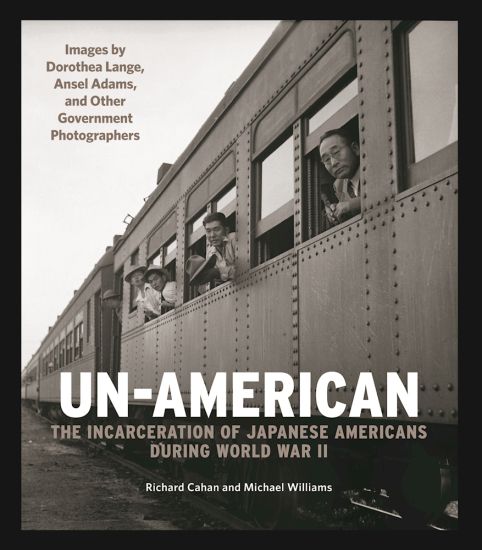
Un-American: The Incarceration of Japanese Americans During World War II
It is the shame of America. In the spring of 1942, the United States rounded up 120,000 residents of Japanese ancestry living along the West Coast and sent them to interment camps for the duration of World War II. Many abandoned their land. Many gave up their personal property. Each one of them lost a part of their lives. Amazingly, the government hired famed photographers Dorothea Lange, Ansel Adams, and others to document the expulsion--from assembling Japanese Americans at racetracks to confining them in ten camps spread across the country. Their photographs, exactly seventy-five years after the evacuation began, give an emotional, unflinching portrait of a nation concerned more about security than human rights. These photographs are more important than ever. Authors Richard Cahan and Michael Williams--noted photo historians--took a slow, careful look at each of these images as they put together a powerful history of one of America's defining moments. Their book consists of photographs that have never been seen, many of them impounded by the U. S. Army. It also uses primary source government documents to explain and place the pictures in context. And it relies on firsthand recollections of Japanese Americans survivors to offer a complete perspective. The result is one of the first visual looks at the Japanese-American internment. The story is told with brilliant pictures that help us better understand this important chapter in U. S. history.
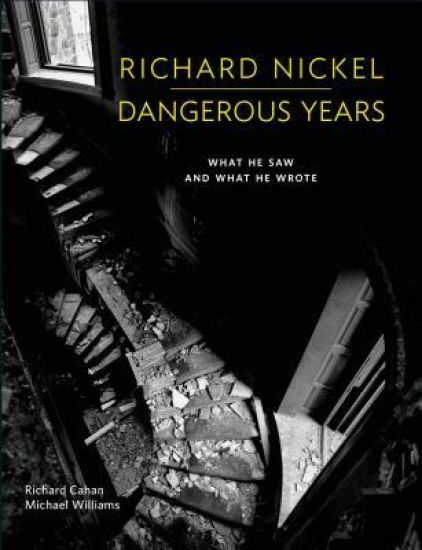
Richard Nickel Dangerous Years

Richard Nickel Dangerous Years

Richard Cahan; Michael Williams

CityFiles Press
2015
sidottu
Pioneering preservationist Richard Nickel lived and died to save America's architecture. He is remembered for the photographs he left behind. But he also left thousands of notes and letters--funny, angry, and always eloquent--that detail a life of passion and determination. This book is the closest you will ever come to knowing Richard Nickel. Collected here are his own writings, some yellowed with age, paired with never-before-seen photographs of the urban world he captured so well. We are finally catching up to Richard Nickel. He took risks, spoke his mind, and championed an over--size cause. His rebellion against the shortsighted disregard of great architecture appeals to a new generation interested in conservation--whether of old buildings or natural resources. This singular book tells a life story through evidence. It is a narrative built around the written and photographic documents in Nickel's life. What he left behind still inspires people to stop and look. He is more relevant today than ever before.
Chicago under Glass

Chicago under Glass

Mark Jacob; Richard Cahan; Rick Kogan

University of Chicago Press
2007
sidottu
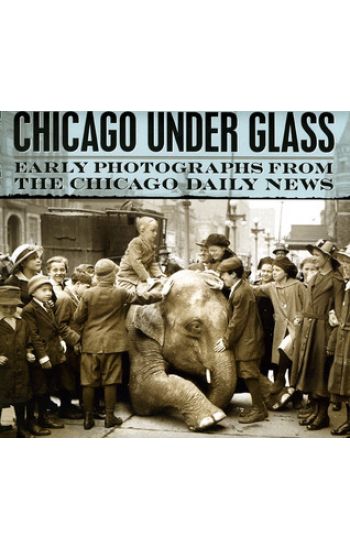
A stunning array of more than 250 duotone images, representing the work of the photographers of the Chicago Daily News, offers photographs from the early years, from 1901 to 1930, that capture defining moments in the history of a great American city during a time of great change, from the Eastland steamer disaster to the bloody aftermath of the St. Valentine's Day Massacre.