Kirjojen hintavertailu – 12 859 827 kirjaa ja 27 kauppaa

Kirjailija

Richard Cohen

Kirjat ja teokset yhdessä paikassa: 31 kirjaa, julkaisuja vuosilta 1989–2025, suosituimpiin kuuluu Sanando la Humanidad. Vertaile teosten hintoja ja tarkista saatavuus suomalaisista kirjakaupoista.

31 kirjaa

Kirjojen julkaisuvuodet: 1989–2025.

Gay Children, Straight Parents: A Plan for Family Healing

Gay Children, Straight Parents: A Plan for Family Healing

Richard Cohen

Createspace Independent Publishing Platform
2016
nidottu
Hope and Healing for Families. Out of his own experience and the experience of many of those he has served in his counseling practice, Richard Cohen sets out a step-by-step plan that offers a path toward renewed family relationships grounded in love and mutual respect. Cohen offers insights how to love all family and friends who experience homosexual feelings. The book is filled with powerful stories of hope and transformation from parents and their children. "This book helped us go from shock and disbelief to an understanding of what happened to our son who experiences same-sex attractions. It showed us how to develop an action plan to help heal the wounds of his heart . . . and gave us real hope." Bob & Sue"I enthusiastically recommend Gay Children, Straight Parents as a must-read for every parent facing the difficult discovery of their child's homosexuality. Richard's compassionate approach relieves the stigma and shame often associated with a loved-one's homosexual struggle." Janelle M. Hallman, Ph. D. "Words cannot express the gratitude that we feel in our hearts for the incredible enlightenment that we have received from Gay Children, Straight Parents. This book has changed the life of our family and helped our daughter heal from same-sex attractions." Michael & LindaRichard Cohen, M. A., is the director of Positive Approaches To Healthy Sexuality (PATH). As a psychotherapist for the past 30 years, he has helped parents around the world learn how to love and embrace their LGBT children.
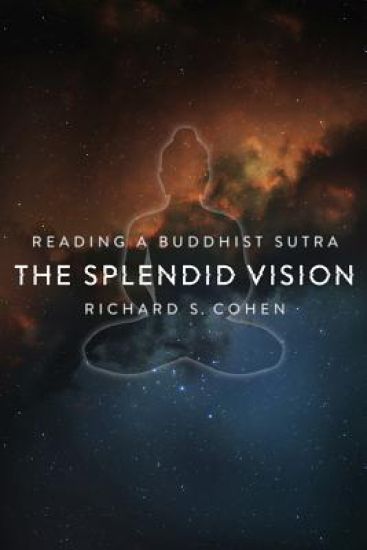
The Splendid Vision

The Splendid Vision

Richard Cohen

Columbia University Press
2012
pokkari
Featuring the first-ever English translation of the "Splendid Vision Sutra," a sixth-century Indian Mahayana Buddhist scripture known for its rich ritual magic and worship of bodhisattva-goddesses, this volume explicates the text's cultural significance as a source of extraordinary value, cosmic truth, and existential meaning. The ancient author of the "Splendid Vision Sutra" promises every imaginable reward to those who heed its words and rites, whether one's desire is to become king, enjoy heavenly pleasures for thousands of millennia, or attain the spiritual summit of advanced bodhisattvahood. Richard S. Cohen carefully analyzes this religious rhetoric, developing a heuristic model of "scripture" that extends beyond Buddhist literature. In his framework, a text becomes sacred scripture when a community accepts it as a receptacle of extraordinary value, an authoritative source of cosmic truth, and a guide for meaningful action. While clarifying these points, Cohen untangles the discursive skein through which the "Splendid Vision Sutra" expresses its authority, inspires readers to accept that authority, and promises superior power and accomplishments to those who implement its teachings. Exploring ways of living and reading a text, Cohen draws on Marcel Duchamp's theory of found art, Jerzy Grotowski's idealization of the holy actor, and other formulations, identifying contingencies, uncertainties, and incompleteness in the lived present and its determination of our reception of the past. More than a mere introduction to an important work, The Splendid Vision opens a window into religious experience and practice in contemporary environments as well as in the world of the sutra.
The Splendid Vision

The Splendid Vision

Richard Cohen

Columbia University Press
2012
sidottu
Featuring the first-ever English translation of the "Splendid Vision Sutra," a sixth-century Indian Mahayana Buddhist scripture known for its rich ritual magic and worship of bodhisattva-goddesses, this volume explicates the text's cultural significance as a source of extraordinary value, cosmic truth, and existential meaning. The ancient author of the "Splendid Vision Sutra" promises every imaginable reward to those who heed its words and rites, whether one's desire is to become king, enjoy heavenly pleasures for thousands of millennia, or attain the spiritual summit of advanced bodhisattvahood. Richard S. Cohen carefully analyzes this religious rhetoric, developing a heuristic model of "scripture" that extends beyond Buddhist literature. In his framework, a text becomes sacred scripture when a community accepts it as a receptacle of extraordinary value, an authoritative source of cosmic truth, and a guide for meaningful action. While clarifying these points, Cohen untangles the discursive skein through which the "Splendid Vision Sutra" expresses its authority, inspires readers to accept that authority, and promises superior power and accomplishments to those who implement its teachings. Exploring ways of living and reading a text, Cohen draws on Marcel Duchamp's theory of found art, Jerzy Grotowski's idealization of the holy actor, and other formulations, identifying contingencies, uncertainties, and incompleteness in the lived present and its determination of our reception of the past. More than a mere introduction to an important work, The Splendid Vision opens a window into religious experience and practice in contemporary environments as well as in the world of the sutra.
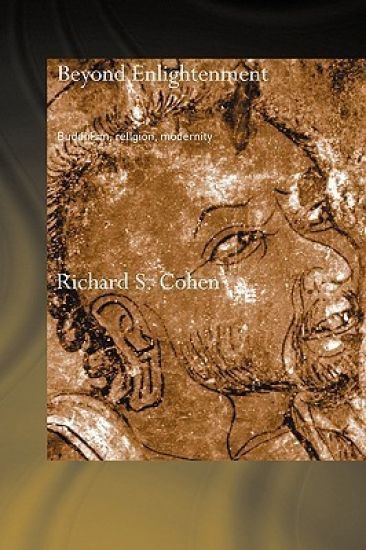
Beyond Enlightenment

Beyond Enlightenment

Richard Cohen

Routledge
2009
nidottu
The vast majority of books on Buddhism describe the Buddha using the word enlightened, rather than awakened. This bias has resulted in Buddhism becoming generally perceived as the eponymous religion of enlightenment. Beyond Enlightenment is a sophisticated study of some of the underlying assumptions involved in the study of Buddhism (especially, but not exclusively, in the West). It investigates the tendency of most scholars to ground their study of Buddhism in these particular assumptions about the Buddha’s enlightenment and a particular understanding of religion, which is traced back through Western orientalists to the Enlightenment and the Protestant Reformation. Placing a distinct emphasis on Indian Buddhism, Richard Cohen adeptly creates a work that will appeal to those with an interest in Buddhism and India and also scholars of religion and history.
Beyond Enlightenment

Beyond Enlightenment

Richard Cohen

Routledge
2006
sidottu
The vast majority of books on Buddhism describe the Buddha using the word enlightened, rather than awakened. This bias has resulted in Buddhism becoming generally perceived as the eponymous religion of enlightenment. Beyond Enlightenment is a sophisticated study of some of the underlying assumptions involved in the study of Buddhism (especially, but not exclusively, in the West). It investigates the tendency of most scholars to ground their study of Buddhism in these particular assumptions about the Buddha’s enlightenment and a particular understanding of religion, which is traced back through Western orientalists to the Enlightenment and the Protestant Reformation. Placing a distinct emphasis on Indian Buddhism, Richard Cohen adeptly creates a work that will appeal to those with an interest in Buddhism and India and also scholars of religion and history.
By the Sword: A History of Gladiators, Musketeers, Samurai, Swashbucklers, and Olympic Champions; 10th Anniversary Edition
A vivid history of swordfighting ranges from ancient times to the present day, profiling such great swordsfighters as Ignatius Loyola, Napoleon, Shakespeare, Karl Marx, Grace Kelly, Harry Truman, George Patton, Errol Flynn, and Basil Rathbone while exploring the cultural and social implications of fencing. Reprint. 30,000 first printing.
World Trade and Payments Cycles

World Trade and Payments Cycles

Richard Cohen

Praeger Publishers Inc
1989
sidottu
This landmark study of economic history since World War II systematically explores why postwar trade and payments have evolved as they have, the prospects for their future evolution, and the range of policy adjustments likely to be required. Through a rigorous examination and analysis of historical records, the author makes two significant and unique contributions to the scholarship on the subject. First, he reveals the existence of distinct cycles in world trade and payments, beginning in 1959. While scholars have recognized postwar business cycles, none have identified--until now--trade and payments cycles which seem to run parallel. Second, Cohen utilizes newly researched data to explore the much-heralded J-curve and its relevance in relating exchange rates to trade balances, and he identifies several important factors which have slowed the maturation of the J-curve effect on U. S. balances. The study is divided into four parts and begins by looking at the forces that have shaped the postwar trade and payments order. Cohen then turns to an investigation of the period of advance in the trade and payments order from 1945-1967, describing three distinct stages that reflect the emergence, the establishment, and the peak of this period. Section three begins with an analysis of the structure and causes of the four postwar trade and payments cycles and includes an examination of the differences among them. Subsequent chapters address the different cycles themselves, reviewing the history of each and evaluating the growing challenges to the postwar trade and payments order. In the concluding section, Cohen explores why the J-curve in the U. S. has been so weak during the current cycle and assesses the likely consequences of the failure of existing policies to reduce external imbalances. Finally, the author offers a set of recommendations to reduce such imbalances through a new Cycle of Adjustment. Students of economic history, policy makers, and investors will find in Cohen's work significant new insights into economic processes and the probable future economic terrain.