Kirjojen hintavertailu – 12 859 828 kirjaa ja 27 kauppaa

Kirjailija

Richard Davis

Kirjat ja teokset yhdessä paikassa: 69 kirjaa, julkaisuja vuosilta 1998–2025, suosituimpiin kuuluu New Media and American Politics. Vertaile teosten hintoja ja tarkista saatavuus suomalaisista kirjakaupoista.

69 kirjaa

Kirjojen julkaisuvuodet: 1998–2025.

Basal-Looped Spearheads

Basal-Looped Spearheads

Richard Davis

BAR Publishing
2006
nidottu
Basal-looped spearheads were prevalent in the British Isles during the later part of the Middle Bronze Age. Their main period of use covered the Taunton and Penard industrial phases in Britain, and the contemporary Bishopsland phase in Ireland, dating to around 1300-1000 BC. Distribution also extended to the northwestern area of Continental Europe. The diagnostic attribute of these spearheads is the loops at the base of the blade, either incorporated within the blade, or projecting below it. Ireland is likely to have been the place of origin of the category, with manufacturing taking place in Ireland, Britain and on the Continent. 551 basal-looped spearheads are included in the study's catalogue. 54% of these come from Britain, 32% from Ireland and 14% from the Continent. A typology is developed for the category, sorting them into eight main types and establishing the chronological sequence of these types. Recovery contexts are weighted to watery locations at 80% of the total, supporting the interpretation that much of the deposition was purposeful, and represented a form of votive offering. The condition of the spearheads is analyzed, from which it can be concluded that at least two thirds had been used in some form of combat. An experimental programme was undertaken with replicas which were combat tested at the Royal Armouries, Leeds. The programme demonstrated the versatility of the basal-looped spearhead, and its overall superiority to the rapier, the main contemporary sidearm. The basal-looped spearhead may therefore be considered the primary weapon of its time in the British Isles, with use in warfare and on ceremonial occasions. Its supremacy began to be eclipsed during the Penard phase with the introduction of the early flange-hilted swords from the Continent.
Climate Variability and Water Resources Degradation in Kenya

Climate Variability and Water Resources Degradation in Kenya

Hezron Mogaka; Samuel Gichere; Richard Davis; Rafik Hirji

World Bank Publications
2006
nidottu
The report, based on a complex analytical methodology, provides a clear economic rationale for investing in improved water resources development and management in Kenya. It is part of the World Bank's policy dialogue on water resources management reforms and investment planning in Kenya. It focuses on the economic implications of two key factors that make the economy and people of Kenya highly vulnerable - the effects of climate variability and the steady degradation of the nation's water resources. The 1997-2000 El Nino-La Nina episodes cost the country Ksh 290 billion, about 14 percent of GDP during the three year period. Given their regularity, over the long term, floods and droughts are estimated to cost the economy about Ksh 16 billion per annum (2.4 percent of GDP). This is a very serious drag on the country's economic performance. Water resources degradation costs the country at least Ksh 3.3 billion (0.5 percent GDP) annually. The long term annual impact of 2.9 percent of GDP from these two factors has been developed conservatively. While it is not economic to avoid all costs, many of them can be minimized by increased investment in management and infrastructure and more efficient, accountable, and participatory management and operation of the water resource sector.
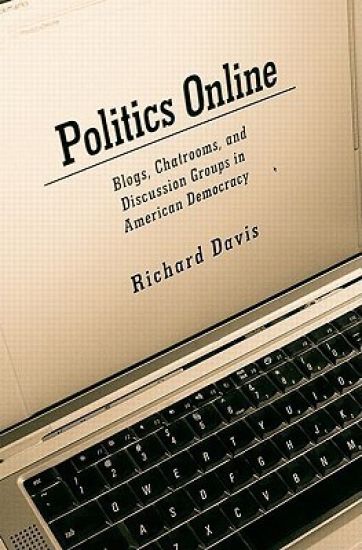
Politics Online

Politics Online

Richard Davis

Routledge
2005
sidottu
Despite the growth of various forms of online discussion, their impact on American political life is only beginning to be examined systematically. In Politics Online Richard Davis provides a thorough analysis detailing the political attitudes, behavior, and demographic nature of the electronic discussion community contrasting that community with the general public.
Politics Online

Politics Online

Richard Davis

Routledge
2005
nidottu
Despite the growth of various forms of online discussion, their impact on American political life is only beginning to be examined systematically. In Politics Online Richard Davis provides a thorough analysis detailing the political attitudes, behavior, and demographic nature of the electronic discussion community contrasting that community with the general public.
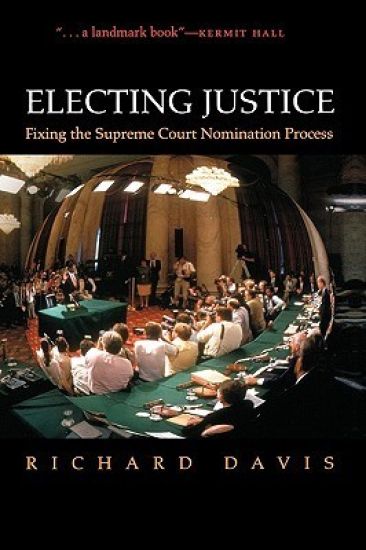
Electing Justice

Electing Justice

Richard Davis

Oxford University Press Inc
2005
sidottu
The nomination and confirmation of Supreme Court justices has, in recent years, become a battleground like no other. Bruising Senate confirmation hearings for failed nominee Robert Bork and successful nominee Clarence Thomas left the reputation of all branches of government in disarray and the participants--and the nation--exhausted. The Senate's Constitutional prerogative to provide advice and consent to the President's nominations to the highest court in the land has given rise to political grandstanding and ideological battles. Less well known is how other players--interest groups, the news media, and, through their involvement, the general public--also affect the conduct and outcome of the Supreme Court nomination process. Electing Justice reveals how from the late 1960s on, the role of these other players grew in intensity to the point that the nomination process would be unrecognizable to its original devisers, the Framers of the Constitution. Over the past quarter century, live television coverage of Senate hearings, "murder boards" in preparation for those hearings, a flood of press releases, television and radio advertisements, and public opinion polls all characterize nominations. Unlike earlier, more elite-governed processes, the involvement of outside groups has become highly public and their effect on the outcome of some nominations is now widely accepted. How should we respond to this informal democratization of the selection process? The genie, Davis contends, cannot be put back into the bottle and we cannot return to a non-political, elite-driven ideal. Davis concludes with several controversial recommendations that preserve the public role while avoiding the excesses of past controversial nominations. By embracing the public's new role in the examination of nominees we can ensure a democratic process and secure an independent and accountable judicial branch.
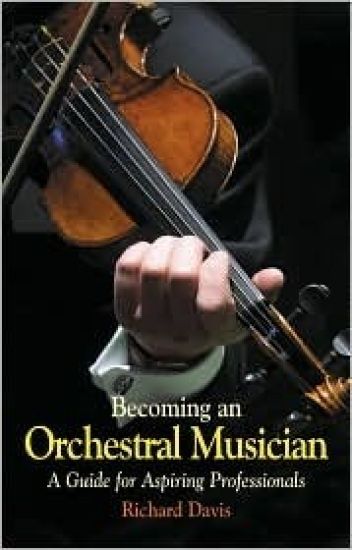
Becoming an Orchestral Musician

Becoming an Orchestral Musician

Richard Davis

Giles de la Mare Publishers
2004
nidottu
Becoming an Orchestral Musician takes you on a journey into the musical profession. It is the first comprehensive guide for professional musicians on how to succeed in joining an orchestra or ensemble, and how to survive as an orchestral musician. Such crucial topics as how to obtain the right tuition, music college versus university, auditioning, nerves, the secrets of ensemble playing and intonation, conductors, the mechanics of the orchestra, performing philosophies and strategies for survival are covered in separate sections. The matter of how to explore and adapt one's musical psyche, the pitfalls of a career in music and the highs and lows of performing are also discussed. The history, mythology and science of music-making and numerous anecdotes provide a vivid background. It is essential reading for all orchestral musicians, including players of every instrument, whether at college or university or during their career, whether full-time or part-time, and whether professional or amateur, and also for the parents of budding instrumentalists. There are probably more orchestras and ensembles in the length and the breadth of Britain today than ever before. With the renewed recognition in schools of the importance of music, the competition among younger musicians has become intense. Schools and colleges need to be well informed about career guidance for their students. Richard Davis's book will give the answers to many of the questions those students will be asking. It has been warmly welcomed by his colleagues in the BBC Philharmonic, and by other musicians, too. Twenty of them have been interviewed by him specially for it on their experiences and on advice they would like to give to younger musicians on many different themes. They include principals and rank and file players, soloists, academics, music critics, fixers, chamber musicians and people involved in management.
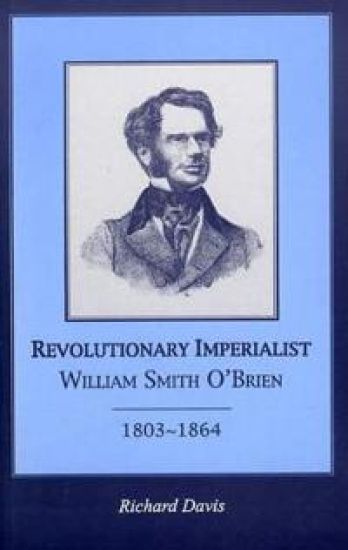
Revolutionary Imperialist

Revolutionary Imperialist

Richard Davis

The Lilliput Press Ltd
1998
nidottu
By 1848 all peaceful means of giving Ireland an equal place within the British Empire seemed exhausted and William Smith O’Brien found himself a reluctant revolutionary leader. An aristocratic Protestant landlord, O’Brien nevertheless commanded unrivalled respect amonst all Irish classes. This scion of an ancient dynasty and tireless campaigner for Catholic Emancipation and Repeal of the Union had advocated a host of improving laws and policies in a parliamentary and political career spanning more than twenty years. Disilllusioned by parliament, dismayed at Ireland’s imminent disintegration during the Great Famine, and pressured by Young Irelanders of the Irish Confederation, O’Brien strove to reunite with fellow-nationalists loyal to the memory of Daniel O’Connell. The first full biography of the leader of the 1848 Rebellion paints a convincing picture of O’Brien’s private nature and public personality. Davis provides an in-depth anlysis of his long and varied political career and argues that O’Brien was a far more consistent political thinker and active nationalist than previously understood.
A Beginning Singer's Guide

A Beginning Singer's Guide

Richard Davis

Scarecrow Press
1998
nidottu
A Beginning Singer's Guide is a vocal pedagogy with four practical uses. First, it can be used as a collateral text for studio voice lessons. The teacher can conserve time by assigning relevant reading in the book instead of making lengthy expositions during the lesson. Second, it can be used as a primary text for undergraduate vocal pedagogy classes. Many schools offer a vocal pedagogy class whose enrollment includes singers and future choral conductors. A special chapter for the future choral conductor containing methods and other aids should meet the need for an all-in-one text for this class. Third, it can be used as a practical guide for new voice teachers. A special chapter containing methods for new voice teachers and studio administration will be very useful to the new teacher of voice. Fourth, the book explores subjects not usually covered in music pedagogy books, such as notes on working with a pianist, improving memory, common acting terms, subtexting, and methods for alleviating performance anxiety. These important, yet often disregarded areas, further complement a singer's talent and skill. The author does not espouse any particular "method" of singing; instead, he applies a universal, scientific approach with the firm belief that singing can be enhanced through further musical knowledge. The sequence of the book follows the natural sequence of learning to sing. The book is rounded out with line art of the vocal mechanism, musical examples, tables outlining the musculature of singing, practical forms, information for the beginning teacher, and a bibliography.