Kirjojen hintavertailu – 12 903 724 kirjaa ja 27 kauppaa

Kirjailija

Richard Dean

Kirjat ja teokset yhdessä paikassa: 9 kirjaa, julkaisuja vuosilta 2005–2018, suosituimpiin kuuluu Speke Hall. Vertaile teosten hintoja ja tarkista saatavuus suomalaisista kirjakaupoista.

9 kirjaa

Kirjojen julkaisuvuodet: 2005–2018.

An Essay on the Future Life of Brute Creatures. By Richard Dean, ... In two Volumes. ... of 2; Volume 1
The 18th century was a wealth of knowledge, exploration and rapidly growing technology and expanding record-keeping made possible by advances in the printing press. In its determination to preserve the century of revolution, Gale initiated a revolution of its own: digitization of epic proportions to preserve these invaluable works in the largest archive of its kind. Now for the first time these high-quality digital copies of original 18th century manuscripts are available in print, making them highly accessible to libraries, undergraduate students, and independent scholars. Medical theory and practice of the 1700s developed rapidly, as is evidenced by the extensive collection, which includes descriptions of diseases, their conditions, and treatments. Books on science and technology, agriculture, military technology, natural philosophy, even cookbooks, are all contained here.++++The below data was compiled from various identification fields in the bibliographic record of this title. This data is provided as an additional tool in helping to insure edition identification: ++++National Library of ScotlandN001718First published in 1767 as 'An essay on the future life of brutes'. London: printed for G. Kearsly, 1768. 2v.; 8
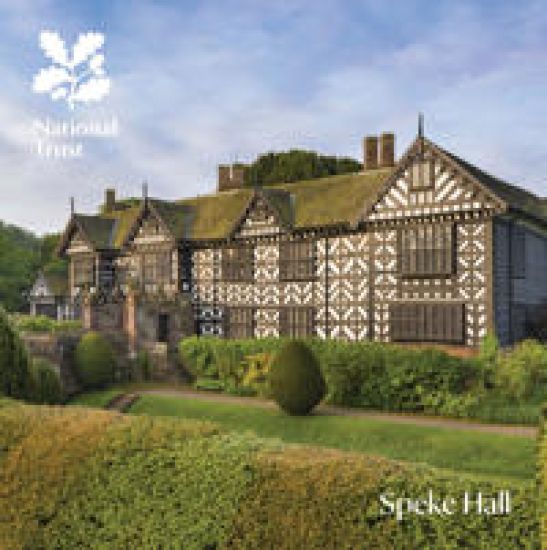
Speke Hall

Speke Hall

Richard Dean

National Trust
2017
nidottu
Discover the stories of Worthless Sidney; shipping magnate Frederick Leyland, patron of Dante Gabriel Rossetti; and Adelaide Watt, who tightly managed the estate in the 19th and 20th centuries. This guidebook reveals why Speke Hall was once described by Dante Gabriel Rossetti as one of the most glorious places in England. If it werent for the determination and ambition of its owners and tenants, Speke Hall might not be here today. This romantic, homely and marvellously complete Tudor timber-framed house tells the histories and mysteries of families as they evolved through the heyday of the Tudor period, embraced the Victorian era and continued into the 20th century, and how they preserved their house for the years to come. Discover the stories of Worthless Sidney (grandson of Charles II and Nell Gwyn); shipping magnate Frederick Leyland, patron of Dante Gabriel Rossetti; and Adelaide Watt, who tightly managed the estate in the 19th and 20th centuries. Surprising, enchanting and inspirational, this guidebook reveals why Speke Hall was once described by Dante Gabriel Rossetti as one of the most glorious places in England.
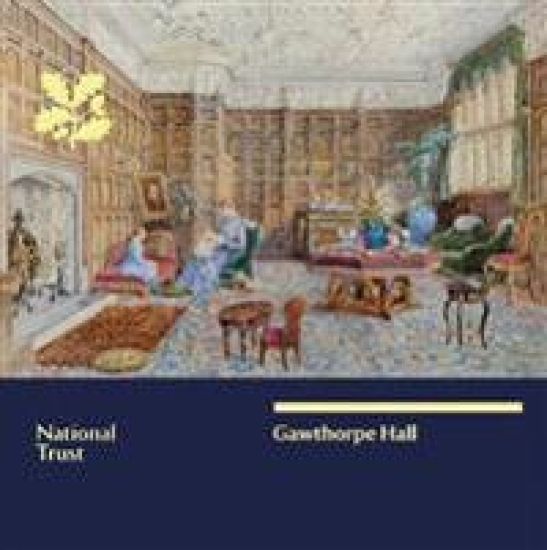
Gawthorpe Hall, Lancashire

Gawthorpe Hall, Lancashire

Richard Dean

National Trust
2013
nidottu
Gawthorpe Hall is a precious survival in a largely urban landscape. The Shuttleworths built the Elizabethan mansion in 1600-5 and brought it to life with music and theatre. In the mid-19th century the great Victorian architects Sir Charles Barry and A. W. N. Pugin made the house even more romantic, filling it with luxurious furnishings. Today it is also home to a unique collection of historic needlework and embroidery. The tranquil garden and woodland have welcomed visitors since the 1860s. Richly illustrated with new photography, this lively book tells the story of the house and the Shuttleworth family who created and transformed it. It is complemented with a tour chapter, a family tree and plans of the house. Richard Dean is the National Trust's curator responsible for Gawthorpe Hall. He is also the author of the National Trust's guidebook for Rufford Old Hall.
Leech

Leech

Richard Dean

Lulu.com
2010
pokkari
By 2018, America has been ravaged by terrorism and biological warfare. One particular bio-weapon, dubbed the "Wrath of God," has virtually destroyed the nation- inflicting its victims with wildly varying symptoms and creating horrifying genetic mutations. Those who survive the plague fight for life day to day, struggling to maintain a semblance of society. Rebecca Artemis has been infected by "the Wrath" in an astonishingly macabre way. Like a vampire, she feeds upon blood to maintain her own deteriorating blood cells. Consumed by guilt over the atrocities she commits, she feverishly seeks to regain her faith and humanity. Making matters worse, Rebecca's condition is exploited by the evil "Reverend," who forces her to commit unspeakable acts of violence for his own amusement. For Rebecca, death may be the only true escape from the evil surrounding her, but how many others will perish in rivers of blood on her path to redemption?
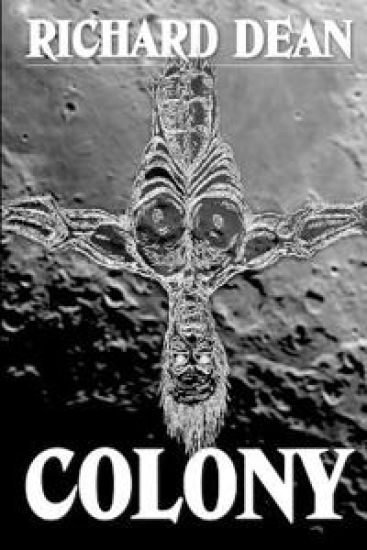
Colony

Colony

Richard Dean

Lulu.com
2009
pokkari
In the year 2085, mankind has finally colonized the moon. The ISO ONE penal colony has become the off-world home to 300 of the earth's most vicious murderers, rapists and felons. Inside ISO ONE, something has gone terribly wrong. An incident of unspeakable savagery leads to the mysterious, completely inexplicable disappearance of every living being inside the colony. Three prison guards are sent to investigate the mystery of ISO ONE. There, they will confront a force so alien, so completely evil, they will learn that hell is not beneath us. It is 240,000 miles above.
The Value of Humanity in Kant's Moral Theory
The humanity formulation of Kant's Categorical Imperative demands that we treat humanity as an end in itself. Because this principle resonates with currently influential ideals of human rights and dignity, contemporary readers often find it compelling, even if the rest of Kant's moral philosophy leaves them cold. Moreover, some prominent specialists in Kant's ethics recently have turned to the humanity formulation as the most theoretically central and promising principle of Kant's ethics. Nevertheless, despite the intuitive appeal and the increasingly recognized philosophical importance of the humanity formulation, it has received less attention than many other, less central, aspects of Kant's ethics. Richard Dean offers the most sustained and systematic examination of the humanity formulation to date. Dean argues that the 'rational nature' that must be treated as an end in itself is not a minimally rational nature, consisting of the power to set ends or the unrealized capacity to act morally, but instead is the more properly rational nature possessed by someone who gives priority to moral principles over any contrary impulses. This non-standard reading of the humanity formulation provides a firm theoretical foundation for deriving plausible approaches to particular moral issues - and, contrary to first impressions, does not impose moralistic demands to pass judgment on others' character. Dean's reading also enables progress on problems of interest to Kant scholars, such as reconstructing Kant's argument for accepting the humanity formulation as a basic moral principle, and allows for increased understanding of the relationship between Kant's ethics and supposedly Kantian ideas such as 'respect for autonomy'.