Kirjojen hintavertailu – 12 903 725 kirjaa ja 27 kauppaa

Kirjailija

Richard Doherty

Kirjat ja teokset yhdessä paikassa: 20 kirjaa, julkaisuja vuosilta 1999–2025, suosituimpiin kuuluu None Bolder. Vertaile teosten hintoja ja tarkista saatavuus suomalaisista kirjakaupoista.

20 kirjaa

Kirjojen julkaisuvuodet: 1999–2025.

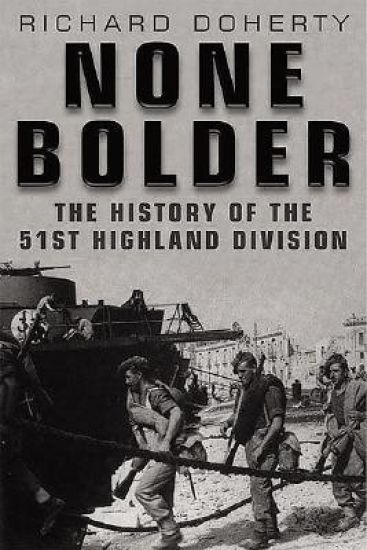
None Bolder

None Bolder

Richard Doherty

Spellmount Publishers Ltd
2006
sidottu
A history of one of the most famous British infantry division of the Second World War, formed from battalions of the Scottish Highland regiments, which fought in France, in North Africa, Sicily; the Normandy landings; and the subsequent campaign through France, into the Low Countries and finally, into Germany.
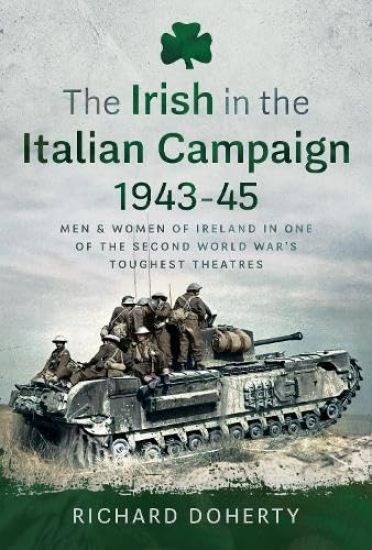
The Irish in the Italian Campaign, 1943-45

The Irish in the Italian Campaign, 1943-45

Richard Doherty

PEN SWORD BOOKS LTD
2025
sidottu

Halvin toimitettuna 38,00 €

More Irish personnel served in the Italian campaign than in any theatre of the Second World War. The greatest numbers were in the Army but airmen and sailors also played important roles. From the first actions in Sicily on 10 July 1943 until the German surrender in Italy on 2 May 1945, Irish personnel were in the front line. Those in the combat support services also gave outstanding service, as did medical officers, nurses and chaplains. Many were decorated. At least one was recommended for a posthumous Victoria Cross and there were numerous awards of the DSO, DCM, MC and MM as well as Mentions in Despatches. For most there were no decorations, only the Italy Star; and the service of many was marked only by a headstone or a name on a memorial. Their stories are equally inspiring and deserve to be told whether they were tankmen, gunners, sappers, signallers, infantry or the faithful members of support services such as drivers and mechanics or nurses who were often under threat from air attack or artillery fire. At the other end of the spectrum, many of the commanders, including General Montgomery, Admiral Cunningham and Field Marshal Alexander were also Irish. Drawing on personal memoirs, published works, official records and interviews with veterans, as well as his own in-depth knowledge of the Italian campaign, Richard Doherty reveals the service of Irish units and Irish personnel of all ranks and throughout the campaign, especially during the major battles.
Framing Oak Cliff Volume 1

Framing Oak Cliff Volume 1

Richard Doherty

UNIVERSITY OF NORTH TEXAS PRESS,U.S.
2024
sidottu
In this stunning collection of black-and-white photographs, photographer Richard Doherty takes a deep visual dive into Oak Cliff, the southwest Dallas neighborhood where he has lived for the past four decades. Using a variety of film cameras, Doherty combines vivid, sweeping panoramic images on the main business drag, Jefferson Boulevard, with intimate portraits of people in their workplaces, homes, and yards. These evocative, richly detailed images reveal the unique character of the diverse people, social landscapes, and personal spaces in this often-overlooked section of Dallas. Doherty’s photographs are a testament to his love of Oak Cliff, a place where he has made his home and raised his family. They are also a powerful reminder of the beauty and complexity of everyday life in a modern city. In addition to Doherty’s photographs, the book features a concise history of Oak Cliff by bestselling author Bill Minutaglio, as well as essays by curators John Rohrbach of the Amon Carter Museum and Christopher Blay of the Houston Museum of African American Culture. These essays provide context for the photographs and anchor them in the landscape of contemporary photography. Framing Oak Cliff: A Visual Diary of a Dallas Neighborhood is a must-have for anyone who loves photography, history, or the city of Dallas. This photographic work is a beautiful and insightful portrait of a unique and vibrant place.
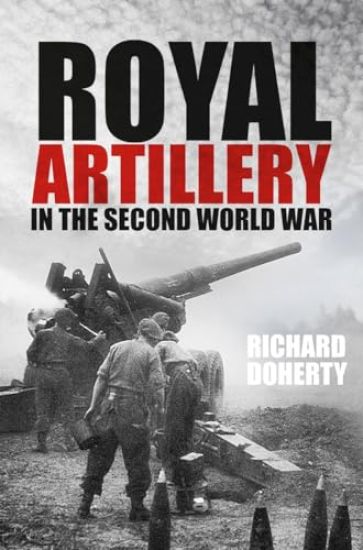
Royal Artillery in the Second World War

Royal Artillery in the Second World War

Richard Doherty

THE HISTORY PRESS LTD
2023
nidottu
During the Second World War, the Germans considered the Royal Artillery to be the most professional arm of the British Army: British gunners were accurate, effective and efficient, and provided fire support for their armoured and infantry colleagues that was better than that in any other army. However, the Royal Artillery delivered much more than field and medium artillery battlefield support. Gunner regiments manned antitank guns on the front line and light anti-aircraft guns in divisional regiments to defend against air attack at home and abroad. The Royal Artillery also helped to protect convoys that brought essential supplies to Britain, and AA gunners had their finest hour when they destroyed the majority of the V-1 flying bombs launched against Britain from June 1944. Richard Doherty delves into the wide-ranging role of the Royal Artillery, examining its state of preparedness in 1939, the many developments that were introduced during the war – including aerial observation and self-propelled artillery – the growth of the regiment and its effectiveness in its many roles. Royal Artillery in the Second World War is a comprehensive account of a British Army regiment that played a vital role in the ensuing Allied victory.
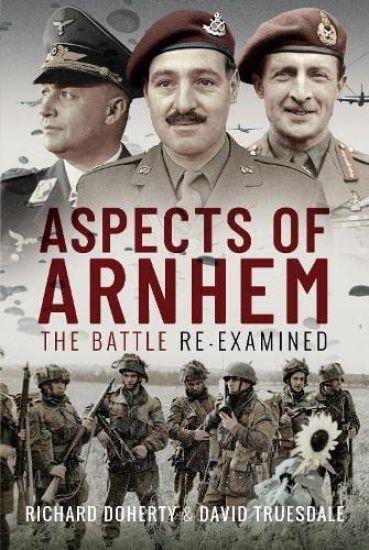
Aspects of Arnhem

Aspects of Arnhem

Richard Doherty; David Truesdale

PEN SWORD BOOKS LTD
2023
sidottu

Halvin toimitettuna 38,00 €

Almost 80 years on the battle for the Arnhem Rhine crossing remains controversial. Opinion on its justification and success differs widely. This superbly researched book, written by two acknowledged experts, takes a wide-ranging examination of Operation MARKET GARDEN from the strategic, operational and tactical level. The role of the Allied commanders involved is scrutinised with surprising results. For example, US General Brereton's pivotal role has seldom been mentioned, yet he is revealed as responsible for choosing landing and drop zones. The record of airborne forces, both German and Allied, prior to September 1944 raises questions and the doubt that many senior commanders, including Eisenhower, had as to their effectiveness is highlighted. The parts played by VIII and XII Corps of Second Army and General Dempsey, its Commander are scrutinised, as are the actions of local commanders and troops on the ground. Both those with a deep interest in military history and the layman will find much to inform and satisfy them in this valuable and at times provocative account.
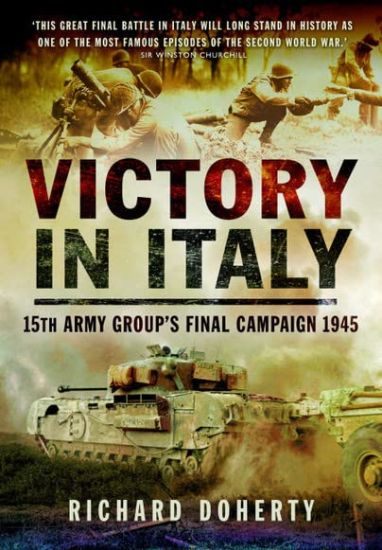
Victory in Italy

Victory in Italy

Richard Doherty

PEN SWORD BOOKS LTD
2023
nidottu
While the main focus in early 1945 was on the advance to The Fatherland, 15 Army Groups 5th (US) and 8th (British) Armies were achieving remarkable results in Northern Italy. Superb generalship (Truscott 5th Army and McCreery 8th Army under General Mark Clarks 15 Army Group), planning, preparation and training outweighed the diversion of major formations to NW Europe, the appalling terrain, harsh climate and general battle fatigue. Equipment was improvised and air/ground operations coordinated to a very high level.. In April the Allied offensive surprised the Germans with its speed and brilliance. As a result the Germans capitulated on 2 May before the surrender in Germany. Churchill wrote to Field Marshal Alexander on 29 April 19.45 I rejoice in the magnificently planned and executed operations of 15th Group of Armies. Praise indeed. This is a masterly description and analysis of this victorious campaign.
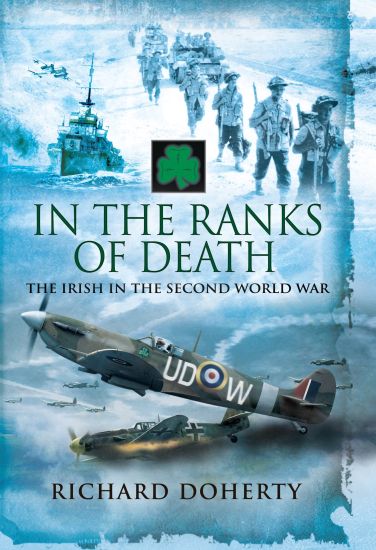
In the Ranks of Death

In the Ranks of Death

Richard Doherty

PEN SWORD BOOKS LTD
2022
nidottu
When war broke out in 1939 over 20,000 Irishmen were serving in the Royal Navy, Army and Royal Air Force with the greatest proportion in the Army. During the war this rose to over 120,000, suggesting that about 100,000 enlisted during the war. Nine earned the Victoria Cross; three members of the Royal Navy, including a Fleet Air Arm pilot, four soldiers, including a member of the Australian forces, and two RAF pilots. The author looks at the seven Irish regiments in campaigns across the globe, at Irish soldiers across the Army, at Irish sailors from the Battle of the River Plate to the final actions against Japan, and at Irish airmen from the first bombing raids of the war to the closing days of war. Included are outstanding personalities such as the Chavasse brothers, who earned three DSOs, three DSCs and two MiDs, Bala Bredin, Corran Purden, Brendan 'Paddy' Finucane, Blair Mayne and Roy Farran, the latter pair highly-decorated SAS officers. There are also Irish generals, such as Paddy Warren who died while commanding 5th Indian Division in Burma and Frederick Loftus Tottenham, who commanded 81st (West African) Division, not to mention giants such as Alexander, Auchinleck, Montgomery and McCreery. Irish women are not forgotten in the book which also takes a brief look at the Irish in other Allied forces, including a most unusual volunteer for the US Navy whose application to serve had to be approved by President Roosevelt. He was William Patrick Hitler, a nephew of Germany's fhrer.

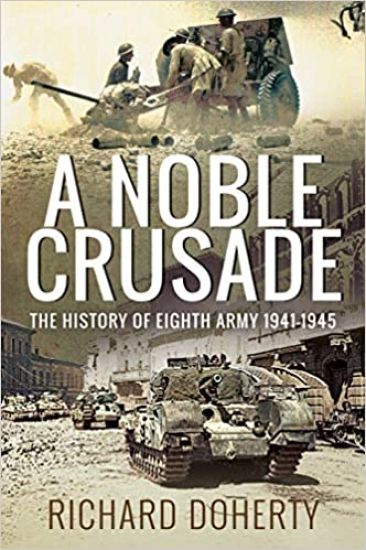
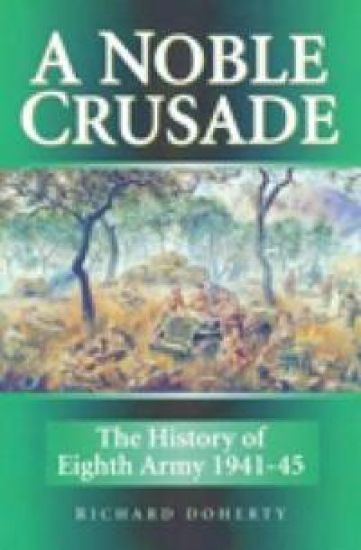
A Noble Crusade

A Noble Crusade

Richard Doherty

Pen Sword Military
2020
nidottu

Halvin toimitettuna 29,90 €

Eighth Army was formed in Egypt in September 1941\. A year later, under Montgomery, it defeated Rommel's Panzerarmee Afrika at El Alamein which led to the victorious end of the North African campaign at Tunis in May 1943. The controversial landings in Italy in September 1943 followed the short Sicilian campaign. Tenacious German resistance, exemplified by the protracted Monte Cassino battle during the first half of 1944, made the Eighth Army's advance north testing and costly. In April 1945, Eighth Army, now commanded by General Dick McCreery, brilliantly attacked into the plain of Lombardy overcoming the last Nazi defensive lines in Italy. No less than thirty-four Victoria Crosses were awarded to soldiers of Eighth Army who were drawn from every Empire and Commonwealth country, including neutral Ireland, and nations such as Poland occupied by the Nazis. Drawing on official records and personal accounts, A Noble Crusade, first published in 1999, is a superb and comprehensive history of the most famous British military formation of the Second World War and, arguably, of all time.
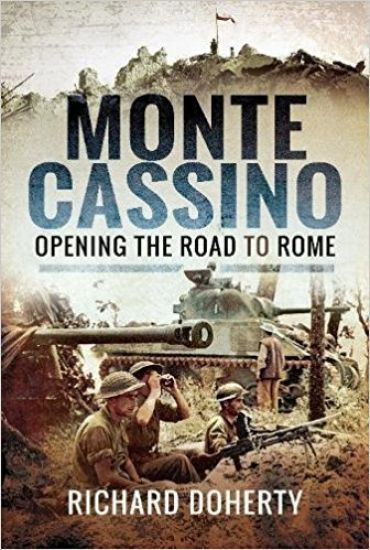
Monte Cassino

Monte Cassino

Richard Doherty

Pen Sword Military
2018
sidottu
One of the bloodiest European battles of the Second World War was that from January to June 1944 for the Gustav Line, anchored on Monte Cassino, famous for its Benedictine Abbey. Better known as the Battle of Cassino, the campaign only ended when Rome was liberated. With General Sir Harold Alexander in overall command, the Allied Army Group in Italy, consisted of Fifth (US) and Eighth (British) Armies. Both were truly multi-national with some 20 allies nations involved. The book recognises the contributions of all elements and flags up the inevitable national tensions and rivalries exacerbated by restrictions of terrain and weather. Allied commanders, using ingenuity, highly effective artillery and sophisticated close air support, finally triumphed over their formidable German adversaries. Cassino: January-June 1944 examines the campaign from the political/strategic levels to the tactical, using official records, accounts from commanders and participants, including interviews. The Author has conducted many battlefield studies and written extensively on the War in Italy.
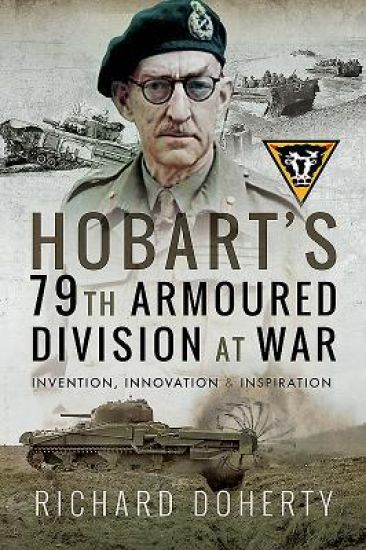
Hobart's 79th Armoured Division at War

Hobart's 79th Armoured Division at War

Richard Doherty

Pen Sword Military
2018
nidottu

Halvin toimitettuna 26,90 €

Hobart's reputation as an armoured warfare specialist began in the pre-war era. In 1923 he transferred from the Royal Engineers to the Royal Tank Corps and quickly established himself as one of the foremost thinkers on armoured warfare. By 1938 he was GOC Mobile Division, later 7th Armoured Division, in Egypt. Unable to suffer fools at all, he was relieved of his command (sacked!) in 1939, retired in 1940 and became a corporal in the Home Guard. At Winston Churchill's inspired behest, he was ordered to create and command 11th Armoured Division. Although he trained the new division to a very high standard, he was seen as too old to lead it in action he was 57. Instead he was told to form 79th Armoured Division and design specialized armoured vehicles necessary to breach the Atlantic Wall. The Division played a major part in the D-Day landings and the subsequent campaign in NW Europe. Hobart's Funnies included mine-clearing tanks, bridge-carrying tanks, flamethrowers, swimming tanks and amphibious assault vehicles. Brigades and units of the Division were deployed wherever they were needed by Second (British) and First (Canadian) Armies and no major operation between Normandy and the final victory took place without them present. Percy Hobart's skills played a significant part in the final Allied victory and the lasting tribute to that vision was the adoption by all armies of the specialized funnies that his Division introduced to modern warfare. This book is based on official records, published materials and personal recollections.
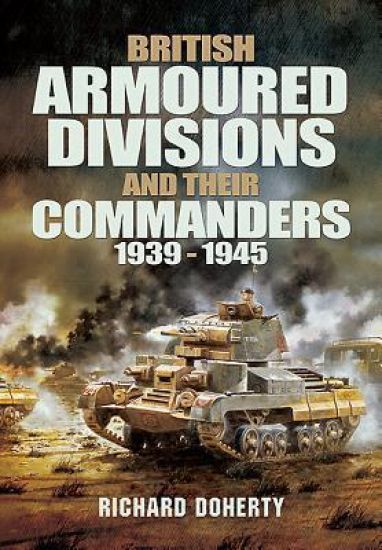
British Armoured Divisions and their Commanders, 1939-1945
A total of eleven British armoured divisions were formed during the 1939-1945 war but, as this highly informative book reveals, just eight saw action. In 1940 only 1st Armoured Division faced the overwhelming German blitzkrieg and it was in the North African desert that the armoured division concept came of age. The terrain was ideal for armoured warfare and six divisions of 8th Army fought Rommel's panzers to a standstill. Three were disbanded prior to the invasion of Sicily and Italy. D-Day saw the Guards Armoured, the Desert Rats, 11th and the unique 79th Armoured Divisions in action. Of particular interest is the influence of the men who led these formations and the way their characters contributed to the success or failure of operations. While some went on the greater heights others were dismissed either fairly or unfairly. The stakes were high. The author describes many fascinating aspects of armoured warfare, from the reluctance to replace the horse, the development of tactics or the different and improving tanks be they infantry support (I-Tank) or the faster cruiser tanks. Due to British design failure, great reliance was placed on the US Grant and Sherman with the Comet coming late and the Centurion too late. The combination of historical narrative and well researched analysis and fact make this an invaluable book for the student of WW2 and armoured warfare.
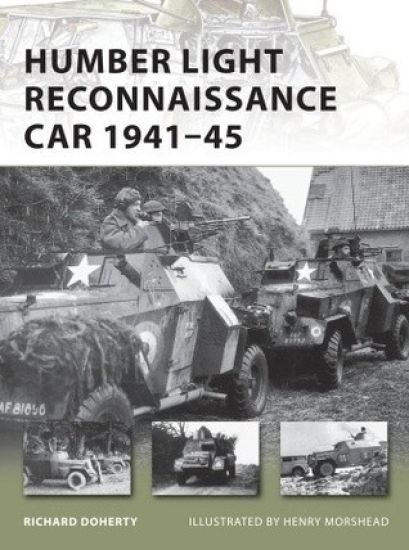
Humber Light Reconnaissance Car 1941–45

Humber Light Reconnaissance Car 1941–45

Richard Doherty

Osprey Publishing
2011
nidottu
The iconic vehicle of the British Army's Reconnaissance Corps during World War II, the Humber Light Reconnaissance Car (LRC) saw service in several theatres of war between 1941 and 1945. The Humber LRC gave excellent service to the Reconnaissance Corps with its agility, speed and height proving to be invaluable assets to the units that operated it. Using numerous photographs, and newly commissioned artwork, this book looks at the development of the LRC, its use by the Reconnaissance Corps and its importance to British infantry divisions in the theatre in which it served.
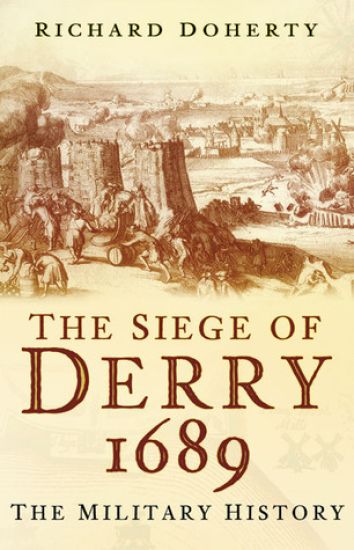
The Siege of Derry 1689

The Siege of Derry 1689

Richard Doherty

The History Press Ltd
2010
nidottu
The Protestant war cry of 'No Surrender!' was first used in 1689 by the Mayor of Londonderry as James II's army laid siege to the city for 105 days, during which half the city's population died. There were many acts of courage, from the heroic death of Captain Browning to the anonymous, apprentice boys who played signal roles in the defence of the city. The book examines how the Jacobites might have achieved success, and the far reaching impact of the siege as a crucial event in the second British civil war. This is a military study of one of the most iconic episodes in Irish history, based on contemporary accounts, official records of the day, and published works on the siege. With an understanding of seventeenth-century warfare, especially siegecraft, the author probes many of the myths that have grown up around the siege and sets it in its proper context. Its ramifications for the consequent history of Ireland cannot be over emphasised.
A Noble Crusade

A Noble Crusade

Richard Doherty

Spellmount Publishers Ltd
2008
nidottu
Offers the history of Eighth Army. This book uses official records, personal accounts and Victoria Cross winners' stories to deliver a tale of the Eighth Army from its beginnings in the sands of North Africa through the victory of El Alamein to the end of the war and eventual victory.
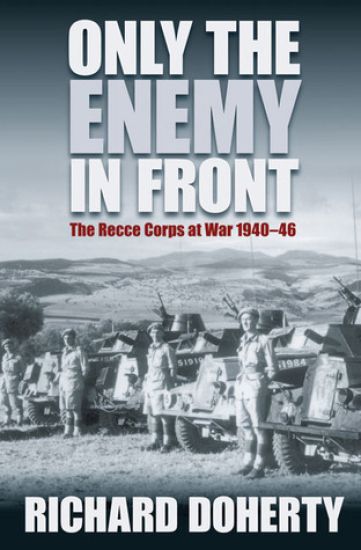
Only the Enemy in Front

Only the Enemy in Front

Richard Doherty

Spellmount Publishers Ltd
2008
nidottu
The first comprehensive history of the Reconnaissance Corps, which was founded in 1940 and disbanded in 1946 after serving with distinction in every theatre of the Second World War. This is the story of an elite force from its inception following Dunkirk through to victory in Europe four-and-a-half years later. The campaigns in Singapore, Egypt and the Western Desert, Tunisia, Sicily, Italy, Burma and North-West Europe are all represented in this book (included a battalion with Wingate’s Chindits and a squadron at Arnhem), and many actions are covered in some detail to illustrate the special nature of the work of a reconnaissance regiment in the field. Throughout the book the theme of the important of reconnaissance is developed and the unique ethos of the Corps that made them an elite force in their day is given due credit. Many actions are covered in some detail to illustrate the special nature of a reconnaissance regiment in the field. It should be remembered that members of the Recce Corps were more heavily armed than any other type of unit – with good reason!
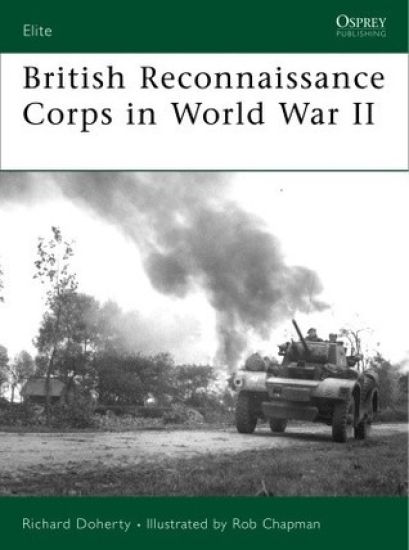
The British Reconnaissance Corps in World War II

The British Reconnaissance Corps in World War II

Richard Doherty

Osprey Publishing
2007
nidottu
Either creeping through the landscape or mounted in armoured cars and Bren carriers, Reconnaissance Regiments became a vital addition to all British infantry divisions. Their spearhead role meant that they were consistently at the forefront of all dramatic action, and most famously served with the 1st and 6th Airborne at Arnhem and with the Chindits in Burma. Within every theatre of war, ranging from the jungles to the deserts, the Reconnaissance Corps made a critical contribution to the Allied war effort. However, with the disbandment of the Corps at the end of the war, their record has been unjustly forgotten. With a selection of rare and unpublished frontline photographs taken from private collections, this fascinating new insight into the forgotten elite core of the British Army will recount the experiences of those soldiers who operated ahead of the army throughout the course of the war.
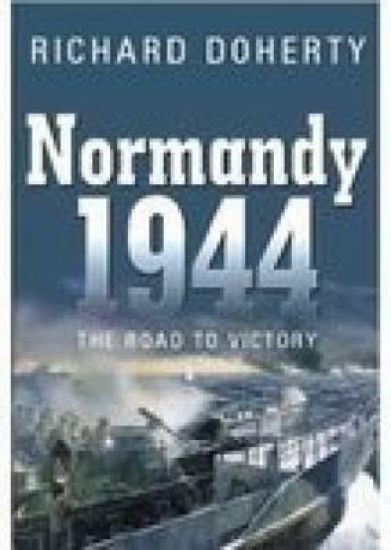
Normandy 1944

Normandy 1944

Richard Doherty

Spellmount Publishers Ltd
2004
nidottu
An examination of the planning and preparation for the invasion, the launching of the greatest military operation of all time, and the campaign that followed in the summer of 1944, until the Allied armies closed at Falaise Gap and the Germans began their retreat from France.
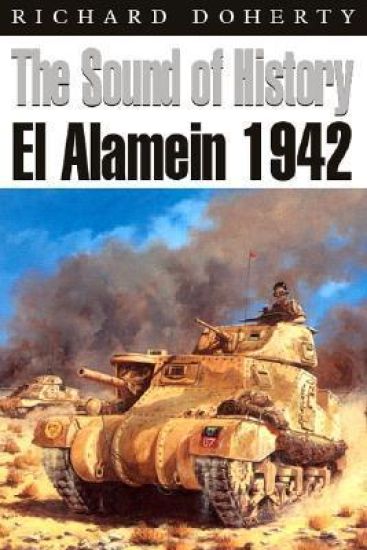
The Sound of History

The Sound of History

Richard Doherty

Spellmount Publishers Ltd
2002
nidottu
Eighth Army's victory at El Alamein in November 1942 was one of the pivotal points of the Second World War and significant as the most recent major victory for a British Army under sole British command. This book looks at the victory in detail.
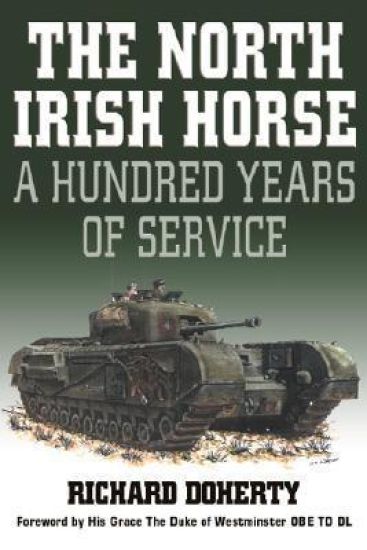
The North Irish Horse

The North Irish Horse

Richard Doherty

Spellmount Publishers Ltd
2002
sidottu
A detailed history of a most distinguished Irish regiment which saw service in both World Wars. - Raised in the northern counties of Ireland in the aftermath of the Boer War. - The first reserve forces unit to see action in the Great War. - The 'one-man regiment' of the 1930s. - Converted to tanks early in the Second World War. - Did the impossible in 1943 when a troop of Churchills climbed the Djebel Ang to support the Irish Brigade. - Supported the Canadians at the battle of the Hitler Line in Italy, May 1944. - Survives in the modern TA as a Squadron of Queen's Own Yeomanry and a Squadron of Royal Signals.
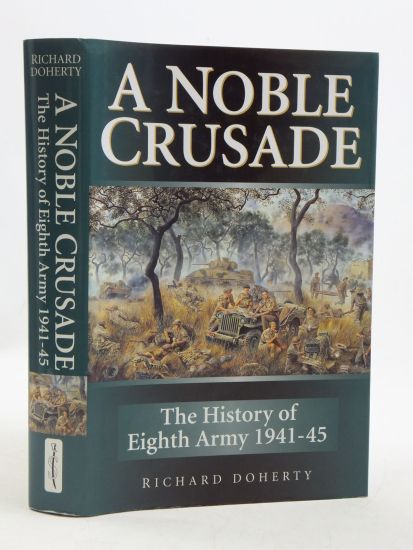
A Noble Crusade

A Noble Crusade

Richard Doherty

Spellmount Publishers Ltd
1999
sidottu
A history of one of Britain's most famous armies of all time, the Eighth Army, which adopted the Crusader's Cross as its badge of honour. It fought valiantly in North Africa, Sicily and Italy under Auchinleck, Montgomery and McCreery and won a staggering total of 32 Victoria Crosses, half of which were posthumous.