

Kirjailija
Richard Edwards
Kirjat ja teokset yhdessä paikassa: 282 kirjaa, julkaisuja vuosilta 1982–2026, suosituimpiin kuuluu Lifelong Learning - Signs, Discourses, Practices. Vertaile teosten hintoja ja tarkista saatavuus suomalaisista kirjakaupoista.
282 kirjaa
Kirjojen julkaisuvuodet: 1982–2026.



The Analytical Speller: Containing Lists Of The Most Useful Words In The English Language (1871)
Richard Edwards; Mortimer A. Warren
KESSINGER PUBLISHING, LLC
2008
nidottu
Edwards's Great West And Her Commercial Metropolis (1860)
Richard Edwards; Menra Hopewell
KESSINGER PUBLISHING, LLC
2008
sidottu

Edwards's Great West And Her Commercial Metropolis
Richard Edwards; Menra Hopewell
Kessinger Pub
2008
pokkari
With different pedagogic practices come different ways of examining them and fresh understandings of their implications and assumptions. It is the examination of these changes and developments that is the subject of this book. The authors examine a number of questions posed by the rapid march of globalisation, incuding:What is the role of the teacher, and how do we teach in the context of globalisation? What curriculum is appropriate when people and ideas become more mobile? How do the technologies of the internet and mobile phone impact upon what is learnt and by whom? The second edition of this important book has been fully updated and extended to take account of developments in technology, pedagogy and practice, in particular the growth of distance and e-learning.
With different pedagogic practices come different ways of examining them and fresh understandings of their implications and assumptions. It is the examination of these changes and developments that is the subject of this book. The authors examine a number of questions posed by the rapid march of globalisation, incuding:What is the role of the teacher, and how do we teach in the context of globalisation? What curriculum is appropriate when people and ideas become more mobile? How do the technologies of the internet and mobile phone impact upon what is learnt and by whom? The second edition of this important book has been fully updated and extended to take account of developments in technology, pedagogy and practice, in particular the growth of distance and e-learning.
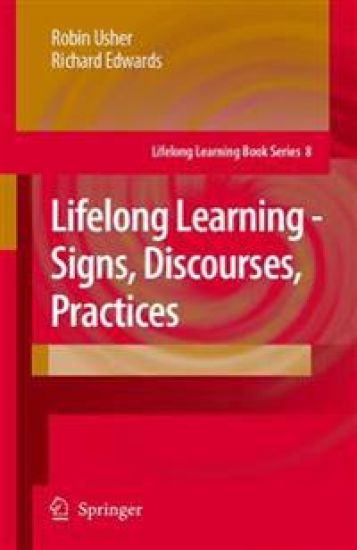
Lifelong Learning - Signs, Discourses, Practices
Robin Usher; Richard Edwards
Springer-Verlag New York Inc.
2007
sidottu
This text explores the different ways in which the various social practices in which people participate becomes signed as learning, how and why that occurs and with what consequences. It takes seriously the linguistic turn in social theory to draw upon semiotics and poststructuralism through which to explore the significance of lifelong learning as an emerging discourse in education. The text explores the different ways in which learning conveys meaning and is given meaning. Given this, lifelong learning therefore is a way, and a significant way, in which learning is fashioned. The text then explores the notion that, if learning is lifelong and lifewide, what precisely is learning as distinct from other social practices and how those practices are given meaning as learning.
Statistical Gazetteer of the State of Virginia, Embracing Important topographical and Historical information From Recent and original Sources, together With the Results of the Last Census Population, in Most Cases, to 1854.
Richard Edwards
University of Michigan Library
2006
pokkari
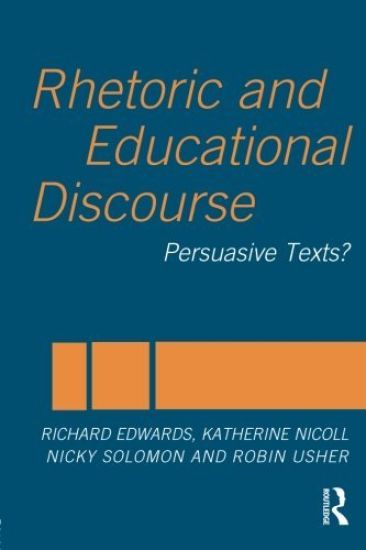
Rhetoric and Educational Discourse
Richard Edwards; Katherine Nicoll; Nicky Solomon; Robin Usher
Routledge
2004
nidottu
Educational policy is often dismissed as simply rhetoric and a collection of half truths. However, this is to underestimate the power of rhetoric and the ways in which rhetorical strategies are integral to persuasive acts. Through a series of illustrative chapters, this book argues that rather than something to be dismissed, rhetorical analysis offers a rich and deep arena in which to explore and examine educational issues and practices. It adopts an original stance in relation to contemporary debates and will make a significant contribution to educational debates in elucidating and illustrating the pervasiveness of persuasive strategies in educational practices. Rhetoric and Educational Discourse is a useful resource for postgraduate and research students in education and applied linguistics. The book will also be of interest to academics and researchers in these fields of study and those interested in discursive approaches to research and scholarship.
Rhetoric and Educational Discourse
Richard Edwards; Katherine Nicoll; Nicky Solomon; Robin Usher
Routledge
2004
sidottu
Educational policy is often dismissed as simply rhetoric and a collection of half truths. However, this is to underestimate the power of rhetoric and the ways in which rhetorical strategies are integral to persuasive acts. Through a series of illustrative chapters, this book argues that rather than something to be dismissed, rhetorical analysis offers a rich and deep arena in which to explore and examine educational issues and practices. It adopts an original stance in relation to contemporary debates and will make a significant contribution to educational debates in elucidating and illustrating the pervasiveness of persuasive strategies in educational practices. Rhetoric and Educational Discourse is a useful resource for postgraduate and research students in education and applied linguistics. The book will also be of interest to academics and researchers in these fields of study and those interested in discursive approaches to research and scholarship.
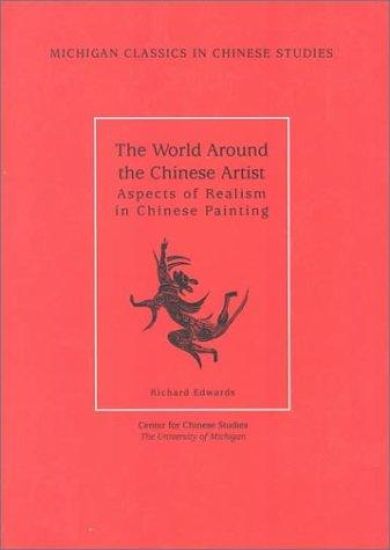
The World around the Chinese Artist
Richard Edwards
Centre for Chinese Studies Publications
2000
nidottu
In Chinese painting there is no clear desire to separate the subjective world and the objective world. Rather, there is a constant, conscious play between the physical reality of the world and the subjective vision of the artist. The artist is continually imitating the world—sometimes more, sometimes less—but he never denies its appearance to the point of total abstraction; nor, in the other extreme, does he claim for the physical world an existence independent of his own involvement. The World around the Chinese Artist explores this special relationship between the self and the landscape in Chinese art through studies of painters Hsia Kuei (12th–13th centuries), Shen Chou (15th–16th centuries), and Shih-t’ao (17th–18th centuries). Each of these three was important in his own time and deemed a master by later critics. Hsia Kuei was Painter-in-attendance in the Academy of Painting during the reign of Emperor Ning-tsung, and he was concerned with presenting a directly observable view of a physically believable landscape. Shen Chou can be described as the inheritor of Yüan ideals and the recipient of traditional training, yet he developed his own style and sensitivity characterized by walking the hair-line between involvement in and detachment from the world he observed. Shih-t’ao was a Buddhist priest and Confucian who viewed narrow adherence to the past as unacceptable slavery and countered it with conscoius rebellion, painting with special notions of style, independence, and individuality that included freedom and abstraction.
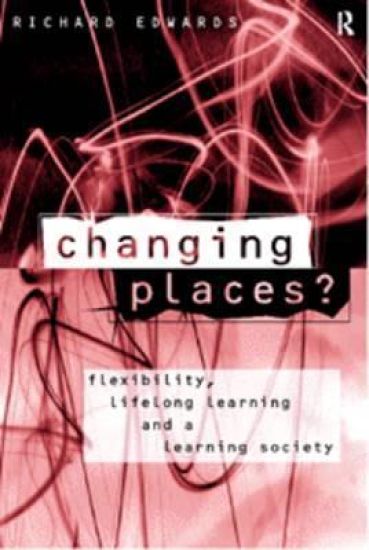
Flexibility has become a central concept in much policy and academic debate. Individuals, organizations and societies are all required to become more flexible so that they can participate in the ongoing processes of change involved in lifelong learning. This book explores how the notion of a learning society has developed over recent years: the changes that have given rise to the requirement for flexibility, and the changed discourses and practices that have emerged in the education and training of adults. With the growth in interest in adults as learners, (primarily to support economic competitiveness), the closed field of adult education has now been displaced by a more open discourse of lifelong learning. This involves not only changing practices such as moving towards open and distance-based learning, but also changing workplace identities. Learning settings are therefore changing places in a number of senses: they are places in which people change; they are subject to change; and they are changing to include the home and workplace as well as more formal settings. This book takes an unusually critical standpoint: it challenges contemporary trends, explores the uncertainties and ambivalences of the processes of change, and is suggestive of different forms of engagement with them. It will prove an important text for policy makers, workplace trainers and those working in the field of adult, further and higher education. Richard Edwards is currently a Senior Lecturer in post compulsory education at the Open University.
Flexibility has become a central concept in much policy and academic debate. Individuals, organizations and societies are all required to become more flexible so that they can participate in the ongoing processes of change involved in lifelong learning. This book explores how the notion of a learning society has developed over recent years: the changes that have given rise to the requirement for flexibility, and the changed discourses and practices that have emerged in the education and training of adults. With the growth in interest in adults as learners, (primarily to support economic competitiveness), the closed field of adult education has now been displaced by a more open discourse of lifelong learning. This involves not only changing practices such as moving towards open and distance-based learning, but also changing workplace identities. Learning settings are therefore changing places in a number of senses: they are places in which people change; they are subject to change; and they are changing to include the home and workplace as well as more formal settings. This book takes an unusually critical standpoint: it challenges contemporary trends, explores the uncertainties and ambivalences of the processes of change, and is suggestive of different forms of engagement with them. It will prove an important text for policy makers, workplace trainers and those working in the field of adult, further and higher education. Richard Edwards is currently a Senior Lecturer in post compulsory education at the Open University.

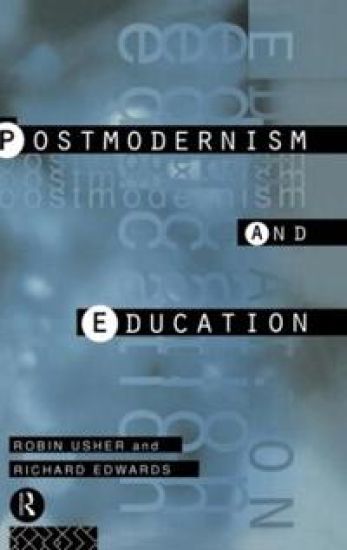
In this book, the authors explore and clarify the nature of postmodernism and provide a detailed introduction to key writers in the field such as Lacan Derrida Foucault Lyotard They examine the impact of this thinking upon contemporary theory and practice of education, concentrating particularly upon how postmodernist ideas challenge existing concepts, structures and hierarchies.
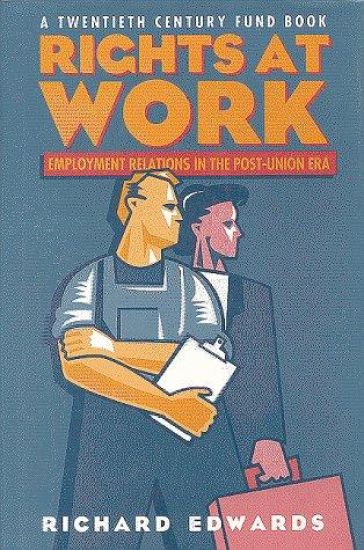
"With growing international competition, American firms have been gaced with increasing pressures to produce better products, cut costs, and improve efficiency. As a result, American employers have changed many of their long-standing labor priorities. Work-force stability has become less important; long-term commitments have become less attractive; and labor costs, especially fringe benefits, have come under increased scrutiny. With this large reorganization of work forces and priorities, Americans are again faced with the significant questions of what rights workers have—and should have—in the workplace. In the current environment, employers have a greater need for highly motivated, hard-working, skilled employees, and have often developed innovated forms of management to enlist these worker's support. So too, national legislation has granted workers new rights in recent years, such as mandatory early notification of plant closings, greater rights for workers with disabilities, and increased protection for older workers. State legislators have also enacted expanded protection for workers, and state courts have been rewriting basic legal doctrines governing workers' rights in ways that favor employees. In this book, Richard Edwards explores workers' rights and the institutions that have defined and are now enforcing them. He looks closely at the decline of American unions and its effect on traditional rights. As unions have been transformed from major institutional players in the American economy to much more marginal brokers enrolling only a small minority of American workers, political support for workers' rights has diminished. Edwards also traces the American state courts' and the ongoing revision of the legal interpretations of employment contracts and employers' promises, a development which he believes may revolutionize traditional employment law. Rights at Work cuts through the debate between employers' groups and workers' advocates to find a new common ground. Edwards argues that a new system of employment relations offers a ""win-win"" opportunity, and he proposes some innovative public policy strategies that could protect workers' rights while enhancing employers' ability to succeed in a highly competitive global market."
In The Forgotten Link two prominent economists on either side of the Atlantic discuss strategies for labor to claim its stake in international economic cooperation.