

Kirjailija
Richard F Burton
Kirjat ja teokset yhdessä paikassa: 370 kirjaa, julkaisuja vuosilta 1991–2026, suosituimpiin kuuluu The Supplemental Nights to the Thousand Nights and a Night. Vertaile teosten hintoja ja tarkista saatavuus suomalaisista kirjakaupoista.
Nimi esiintyy myös muodoissa: Richard F. Burton
370 kirjaa
Kirjojen julkaisuvuodet: 1991–2026.


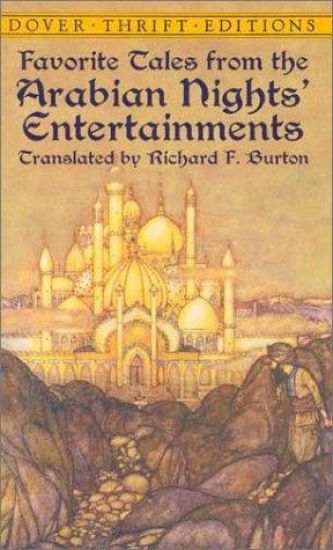
Favorite Tales from the Arabian Nights' Entertainments
Richard F. Burton
Dover Publications Inc.
2002
nidottu
6 enchanting tales, told by an Arabian princess to delay her execution, teem with giants, magnificent palaces, and beautiful princesses. Includes Sindbad the Seaman and Sindbad the Landsman; Aladdin, or the Wonderful Lamp; Ali Baba and the Forty Thieves; The Fisherman and the Jinni; Judar and His Brethren; and Khalifah the Fisherman of Baghdad.
Thinking quantitatively about physiology is something many students find difficult. However, it is fundamentally important to a proper understanding of many of the concepts involved. In this enlarged second edition of his popular textbook, Richard Burton gives the reader the opportunity to develop a feel for values such as ion concentrations, lung and fluid volumes, blood pressures etc. through the use of calculations which require little more than simple arithmetic for their solution. Much guidance is given on how to avoid errors and the usefulness of approximation and 'back-of-envelope sums'. Energy metabolism, nerve and muscle, blood and the cardiovascular system, respiration, renal function, body fluids and acid-base balance are all covered, making this book essential reading for students (and teachers) of physiology everywhere, both those who shy away from numbers and those who revel in them.
Biologists are notoriously reticent about using mathematics. This textbook is both an introduction to quantitative biology and a guide for the number-shy. Richard Burton fosters a sense of the fundamental importance and usefulness of mathematical principles in biology, with a fascinating range of examples. The book is geared towards the non-mathematician, and covers the basics as well as various more advanced topics from many diverse biological disciplines. Questions and calculations encourage active participation without holding up the reader. A key feature is the structure of the book. Rather than building it around biological disciplines, Dr Burton emphasises the common ways of reasoning used in areas as diverse as insect and population growth, seed mortality and sensory response (to mention a few that use logarithms). Written primarily for beginning undergraduates, this enlightening text will also be an essential aid for students throughout their undergraduate and graduate years.
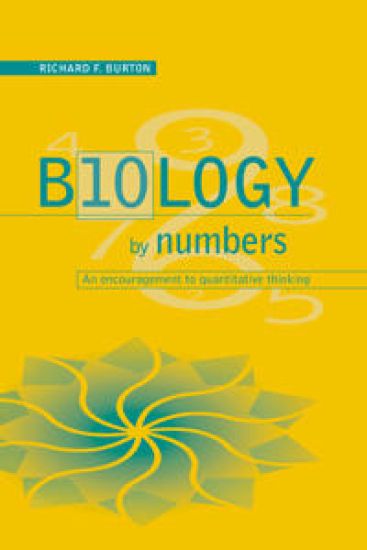
Biologists are notoriously reticent about using mathematics. This textbook is both an introduction to quantitative biology and a guide for the number-shy. Richard Burton fosters a sense of the fundamental importance and usefulness of mathematical principles in biology, with a fascinating range of examples. The book is geared towards the non-mathematician, and covers the basics as well as various more advanced topics from many diverse biological disciplines. Questions and calculations encourage active participation without holding up the reader. A key feature is the structure of the book. Rather than building it around biological disciplines, Dr Burton emphasises the common ways of reasoning used in areas as diverse as insect and population growth, seed mortality and sensory response (to mention a few that use logarithms). Written primarily for beginning undergraduates, this enlightening text will also be an essential aid for students throughout their undergraduate and graduate years.

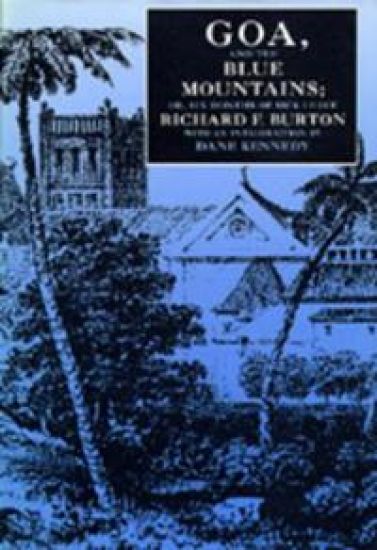
Goa, and the Blue Mountains; Or, Six Months of Sick Leave
Richard F. Burton
University of California Press
1991
pokkari
Published in 1851, this is the first book written by the famed Victorian explorer Richard F. Burton. It is an account of his journey through portions of southwest India while he was on sick leave from the British Indian army. Traveling through Bombay to the Portuguese colony of Goa, he went through Calicut and other cities on the Malabar coast, ending up in the Nilgiri mountains at the hill station of Ootacamund. The observant traveler, not the intrepid adventurer, is the narrator of the account, and its intended audience was the voracious Victorian consumer of travel literature. Coupled with a critical introduction by Dane Kennedy, this facsimile edition provides a revealing look at the people who inhabited a part of India that was generally off the beaten track in the nineteenth century. The Portuguese and Mestizo inhabitants of Goa, the Todas of Ootacamund, as well as the fellow Britons Burton meets on his journey are all subject to his penetrating scrutiny. Burton's clever, ascerbic, and unorthodox personality together with his irreverence for convention and his bemused disdain for humanity come through clearly in these pages, as does his extraordinary command of the languages and literatures of various people. 'What a glad moment it is, to be sure, when the sick and seedy, the tired and testy invalid from pestiferous Scinde or pestilential Guzerat, 'leaves all behind him' and scrambles over the sides of his Pattimar'. 'His what?' 'Ah! we forget. The gondola and barque are household words in your English ears, the budgerow is beginning to own an old familiar sound, but you are right - the 'Pattimar' requires a definition'.