Kirjojen hintavertailu – 12 859 818 kirjaa ja 27 kauppaa
Kirjailija
Richard F. Fleck
Kirjat ja teokset yhdessä paikassa: 10 kirjaa, julkaisuja vuosilta 2000–2016, suosituimpiin kuuluu Henry Thoreau and John Muir Among the Native Americans. Vertaile teosten hintoja ja tarkista saatavuus suomalaisista kirjakaupoista.
In the fall of 1850 Henry Thoreau embarked upon an excursion into the French-Canadian province of Quebec, with stops in Montreal and Quebec City. His reactions to the foreign country are mixed and ambivalent: he is critical of Canada’s Old World Catholicism, feudalism, and an alien British military presence while most of his references to America and Americans are favorable. But if one looks closely, positive reactions to Canadian society and negative reactions to American society do exist within the essay. A YANKEE IN CANADA is a study in paradox, the paradox being due to a man stunned by his only international experience. In this sense A YANKEE IN CANADA parallels Mark Twain’s INNOCENTS ABROAD in that both authors are experiencing culture shock expressed with all the elements of a mental twilight zone of grays, not just black and white. Unlike the many facsimile reproductions available, this edition features a modern design that enhances readability. A YANKEE IN CANADA is now part of the Literary Naturalist Series and features a new foreword by noted literary scholar Richard F. Fleck.
In the fall of 1850 Henry Thoreau embarked upon an excursion into the French-Canadian province of Quebec, with stops in Montreal and Quebec City. His reactions to the foreign country are mixed and ambivalent: he is critical of Canada’s Old World Catholicism, feudalism, and an alien British military presence while most of his references to America and Americans are favorable. But if one looks closely, positive reactions to Canadian society and negative reactions to American society do exist within the essay. A YANKEE IN CANADA is a study in paradox, the paradox being due to a man stunned by his only international experience. In this sense A YANKEE IN CANADA parallels Mark Twain’s INNOCENTS ABROAD in that both authors are experiencing culture shock expressed with all the elements of a mental twilight zone of grays, not just black and white. Unlike the many facsimile reproductions available, this edition features a modern design that enhances readability. A YANKEE IN CANADA is now part of the Literary Naturalist Series and features a new foreword by noted literary scholar Richard F. Fleck.
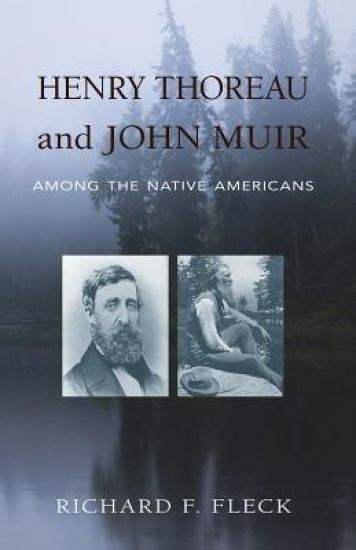
No two persons in the United States have written with as much passion and power about the bond between human beings and the natural world as Thoreau of WALDEN and Muir of MOUNTAINS OF CALIFORNIA. For both, Native Americans best exemplified the innate need of the human spirit to merge with the primal wilderness. This is the first book to treat together and in depth these two great students of our natural America to explore Native American influence on the development not only of their—but America’s—natural philosophies and environmental awareness.
This set of timeless essays from the quintessential American shares his valuable philosophies on nature, solitude, slavery, religion, politics, fulfilling work, civil responsibilities, and more. WALDEN, Thoreau’s beloved and well-known reflection upon simple living in natural surroundings, looks at how the outside world can benefit from renouncing a materialistic way of life. “If the machine of government is of such a nature that it requires you to be the agent of injustice to another, then, I say, break the law.” —Thoreau “If a plant cannot live according to its nature, it dies; and so a man.” —Thoreau His other essays deal with the social problems of his time: CIVIL DISOBEDIENCE applies principles of individualism to civil life, culminating in a call for a life that answers to a power outside of and unaffected by the state. LIFE WITHOUT PRINCIPLE offers his program for a righteous livelihood through ten “commandments.” SLAVERY IN MASSACHUSETTS is based on a speech he gave at an antislavery rally after the re-enslavement of fugitive slave Anthony Burns and relates that freedom could not exist while slavery remained. PLEA FOR CAPTAIN JAMES BROWN portrays his kinship to Brown’s abolitionist efforts and anger toward the injustice Brown received. “Thoreau was a great writer, philosopher, poet, and withal a most practical man, that is, he taught nothing he was not prepared to practise in himself. . . . He went to gaol for the sake of his principles and suffering humanity. His essay has, therefore, been sanctified by suffering. Moreover, it is written for all time. Its incisive logic is unanswerable.” —Mohandas Gandhi “. . . when, in the mid-1950s, the United States Information Service included as a standard book in all their libraries around the world a textbook . . . which reprinted Thoreau’s ‘Civil Disobedience,’ the late Senator Joseph McCarthy succeeded in having that book removed from the shelves—specifically because of the Thoreau essay.” —Walter Harding, in The Variorum Civil Disobedience "I became convinced that noncooperation with evil is as much a moral obligation as is cooperation with good. No other person has been more eloquent and passionate in getting this idea across than Henry David Thoreau. As a result of his writings and personal witness, we are the heirs of a legacy of creative protest." —Martin Luther King, Jr., Autobiography
This set of timeless essays from the quintessential American shares his valuable philosophies on nature, solitude, slavery, religion, politics, fulfilling work, civil responsibilities, and more. WALDEN, Thoreau’s beloved and well-known reflection upon simple living in natural surroundings, looks at how the outside world can benefit from renouncing a materialistic way of life. “If the machine of government is of such a nature that it requires you to be the agent of injustice to another, then, I say, break the law.” —Thoreau “If a plant cannot live according to its nature, it dies; and so a man.” —Thoreau His other essays deal with the social problems of his time: CIVIL DISOBEDIENCE applies principles of individualism to civil life, culminating in a call for a life that answers to a power outside of and unaffected by the state. LIFE WITHOUT PRINCIPLE offers his program for a righteous livelihood through ten “commandments.” SLAVERY IN MASSACHUSETTS is based on a speech he gave at an antislavery rally after the re-enslavement of fugitive slave Anthony Burns and relates that freedom could not exist while slavery remained. PLEA FOR CAPTAIN JAMES BROWN portrays his kinship to Brown’s abolitionist efforts and anger toward the injustice Brown received. “Thoreau was a great writer, philosopher, poet, and withal a most practical man, that is, he taught nothing he was not prepared to practise in himself. . . . He went to gaol for the sake of his principles and suffering humanity. His essay has, therefore, been sanctified by suffering. Moreover, it is written for all time. Its incisive logic is unanswerable.” —Mohandas Gandhi “. . . when, in the mid-1950s, the United States Information Service included as a standard book in all their libraries around the world a textbook . . . which reprinted Thoreau’s ‘Civil Disobedience,’ the late Senator Joseph McCarthy succeeded in having that book removed from the shelves—specifically because of the Thoreau essay.” —Walter Harding, in The Variorum Civil Disobedience "I became convinced that noncooperation with evil is as much a moral obligation as is cooperation with good. No other person has been more eloquent and passionate in getting this idea across than Henry David Thoreau. As a result of his writings and personal witness, we are the heirs of a legacy of creative protest." —Martin Luther King, Jr., Autobiography
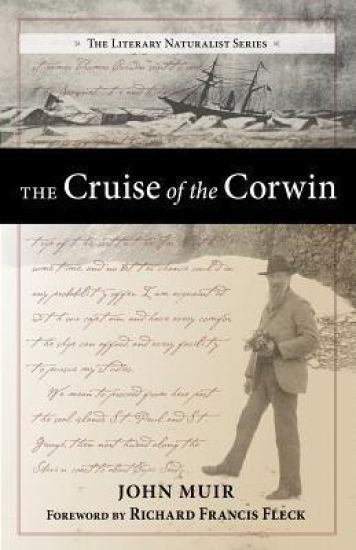
John Muir agreed in 1881 to sail aboard the Corwin, whose fruitless mission it was to search for the missing scientific research vessel Jeannette, which itself became icebound while exploring the distant and mysterious Wrangell Land in the higher latitudes of the Arctic. This cruise would afford Muir the opportunity to examine evidence of glaciation along the arctic coastlines of Siberia and Alaska and the harmonious lifestyle of Inuits and Chukchis, which was in the midst of disruption from the intrusions of the civilized South. “John Muir was certainly as concerned for the potential loss of marvelous arctic cultures as he was for our continent’s vanishing wilderness. In this sense, THE CRUISE OF THE CORWIN truly deserves our attention, especially in light of all that is happening in the Arctic today.” –Richard Fleck
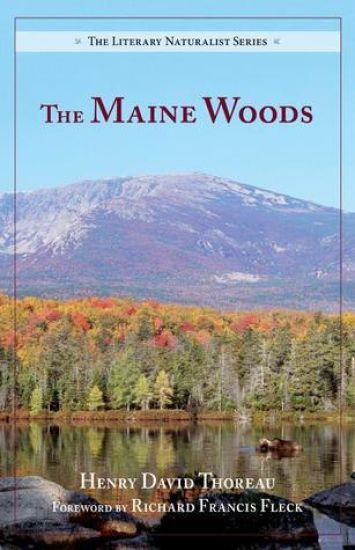
Posthumously published in 1864, The Maine Woods depicts Henry David Thoreau’s experiences in the forests of Maine, and expands on the author’s transcendental theories on the relation of humanity to Nature. On Mount Katahdin, he faces a primal, untamed Nature. Katahdin is a place “not even scarred by man, but it was a specimen of what God saw fit to make this world.” In Maine he comes in contact with “rocks, trees, wind and solid earth” as though he were witness to the creation itself. Of equal importance, The Maine Woods depicts Thoreau’s contact with the American Indians and depicts his tribal education of learning the language, customs, and mores of the Penobscot people. Thoreau attempts to learn and speak the Abenaki language and becomes fascinated with its direct translation of natural phenomena as in the word sebamook—a river estuary that never loses is water despite having an outlet because it also has an inlet. The Maine Woods illustrates the author’s deeper understanding of the complexities of the primal wilderness of uplifted rocky summits in Maine and provides the reader with the pungent aroma of balsam firs, black spruce, mosses, and ferns as only Thoreau could. This new, redesigned edition features an insightful foreword by Thoreau scholar Richard Francis Fleck. Redesigned edition featuring an insightful foreword by Thoreau scholar Richard Francis Fleck. Fleck is a well-respected authority on Thoreau and the author of many books including Henry Thoreau and John Muir Among the Indians. Henry David Thoreau (July 12, 1817 – May 6, 1862) was an American author, poet, philosopher, abolitionist, naturalist, tax resister, development critic, surveyor, historian, and leading transcendentalist. This book was first published in 1864 (composed partly of articles he had written earlier for periodicals) and still in print, is an insightful reporter’s picture of a rugged wilderness the moment before being irrevocably altered by armies of loggers. Today the virgin forest seen by Thoreau is gone; trees have been cut, regrown, and harvested again. But modern travelers — hikers, campers, hunters, fishers, canoeists or back road wanderers — will still find, as Thoreau did, a land “more grim and wild than you had anticipated.” It’s also pin-drop tranquil, teeming with wildlife and, in places, challenging to reach. (NYTimes) Following Thoreau into the Maine Woods is hardly a new idea, but it is becoming easier. The Thoreau-Wabanaki Trail was inaugurated, delineating and celebrating Thoreau’s passage on routes that Penobscot Indians had used for thousands of years. (NYTimes) Nature tourism is a $37 billion annual industry in the United States (Outdoor Industry Association).
Inspired by his ranger days in Rocky Mountain National Park more than forty-five years ago as well as more recent rambles, Richard Fleck has created these descriptive essays that take readers from shimmering desert heat to snowy summits. Fleck has expanded his acclaimed book Breaking Through the Clouds (2004) to create a new book that concentrates on the intermountain American West. This edition includes counterpoint experiences in the desert, canyon lands, and dry prairie far below the summits of the lofty peaks, such as Death Valley, Grand Gulch, Grand Canyon, and the Great Sand Dunes. His literary model was Edward Abbey’s Desert Solitaire and his intent is to involve readers with an equally potent but different kind of natural reality. Fleck says, “After all, do not mountains rise out of deserts and dry lands? Mountains and surrounding deserts should not be separated.” The mountains are a constant source of spiritual renewal for this author, enabling him to become more aware and whole.
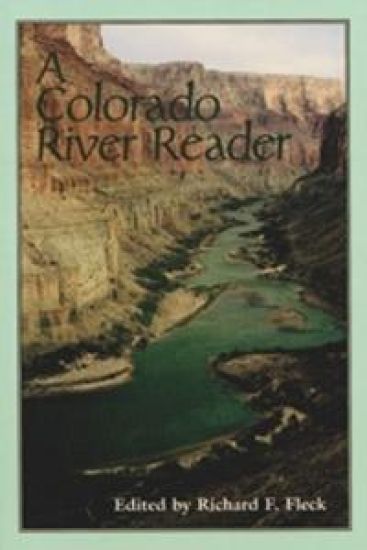
"This canyon world where water yearns toward the ocean is a place so large I can’t take it in. Instead, I am taken in, traveling a near dream as we journey by water, contained by rock walls. In order to see this shorn-away world, I narrow my vision to the small and nearly secret. Never mind the stone’s illusion of permanence or the great strength of water. I look to the most fragile of things here, to the plant world of the canyon. The other river travelers seem taken in by stone, time, and water, and do not see the small things that tempt my attention, the minute fern between stones, the tiny black snails in a pond of water. I am drawn in by the growing life and not by the passing."- from 'Plant Journey' by Linda HoganThe mystique of the Colorado River is no less enduring and powerful than is its physical presence in the landscape of the West. Little wonder that narratives about the Colorado still arouse and intrigue readers, or that the river continues to inspire new writing among contemporary authors. What is surprising is that no anthology offering a comprehensive introduction to these works existed - until now. A Colorado River Reader spans hundreds of years and many cultures and voices to capture an array of responses to this mighty river and tributaries. The collection opens with a Paiute creation myth set in the Grand Canyon and progresses through time, encompassing the Spanish and American exploration narratives of the eighteenth and nineteenth centuries and culminating in the adventure and nature writings of the twentieth. This is a book that deserves a place next to every armchair and in a pocket of every backpack.