Kirjojen hintavertailu – 12 903 724 kirjaa ja 27 kauppaa

Kirjailija

Richard F. Selcer

Kirjat ja teokset yhdessä paikassa: 9 kirjaa, julkaisuja vuosilta 2004–2025, suosituimpiin kuuluu Written in Blood. Vertaile teosten hintoja ja tarkista saatavuus suomalaisista kirjakaupoista.

9 kirjaa

Kirjojen julkaisuvuodet: 2004–2025.

Fort Worth Characters 2 Volume 10

Fort Worth Characters 2 Volume 10

Richard F. Selcer

UNIVERSITY OF NORTH TEXAS PRESS,U.S.
2025
sidottu
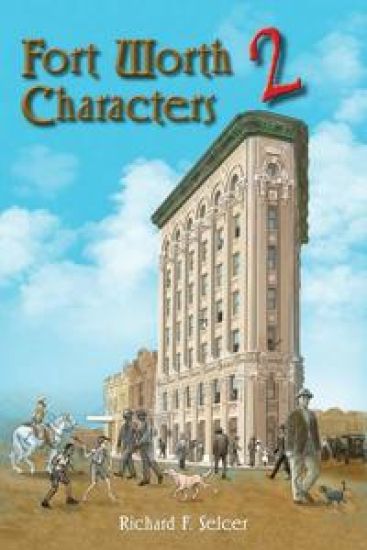
Fort Worth Characters 2 is a sequel to Fort Worth Characters (UNT Press, 2009) by Richard F. Selcer, the preeminent historian of Fort Worth. This book continues the theme of human-interest stories of twenty-five more characters pulled from Fort Worth history. Some, like Frank James, were already famous when they came to Fort Worth. Others, like “Stutterin’ Sam” Dowell, were “discovered” here before going on to fame and fortune on the national stage. How about a character who might have been the inspiration for detective Nancy Drew? Or a female reporter who was the first American to score an interview with the president of Mexico? How about a husband-wife pair who might have been the first African American “power couple”? Or an abortion doctor convicted at trial in Fort Worth in 1913? These and more are covered in the pages of Fort Worth Characters 2.
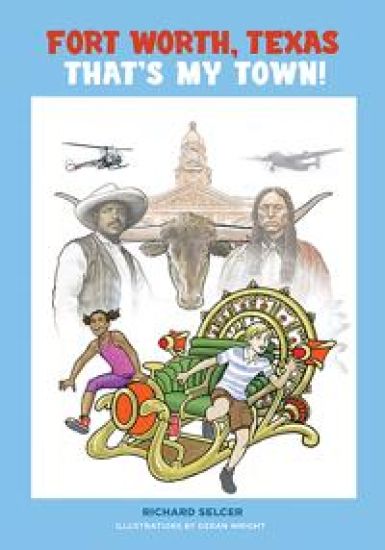
Fort Worth, Texas, That's My Town!

Fort Worth, Texas, That's My Town!

Richard F. Selcer

Texas Christian University Press
2023
sidottu
This is the first time since 1967 that Fort Worth kids have had a history book written about their town, just for them. Unlike the outdated school text of 1967, this is the story not just of heroic white folks but of all the people who have made up our community. Twenty years and more of research went into the writing, which incorporates the latest historiography. The wealth of illustrations by artist Deran Wright are an integral part of the book. Wright carefully researched the people and events for each full-color painting, reaching out to descendants for photos and researching what long-ago machinery and locations looked like. The result is the story of Fort Worth told equally in words and pictures.
Fort Worth Stories

Fort Worth Stories

Richard F. Selcer

University of North Texas Press,U.S.
2022
sidottu
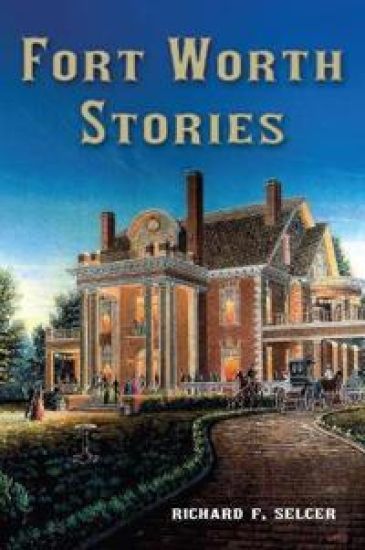
Fort Worth Stories is a collection of thirty-two bite-sized chapters of the city's history. Did you know that the same day Fort Worth was mourning the death of beloved African American 'Gooseneck Bill' McDonald, Dallas was experiencing a series of bombings in black neighborhoods? Or that Fort Worth almost got the largest statue to Robert E. Lee ever put up anywhere, sculpted by the same massive talent that created Mount Rushmore? Or that Fort Worth was once the candy-making capital of the Southwest and gave Hershey, Pennsylvania, a good run for its money as the sweet spot of the nation? A remarkable number of national figures have made a splash in Fort Worth, including Theodore Roosevelt while he was President; Vernon Castle, the Dance King; Dr. H. H. Holmes, America's first serial killer; Harry Houdini, the escape artist; and Texas Guinan, star of the vaudeville stage and the big screen. Fort Worth Stories is illustrated with 50 photographs and drawings, many of them never before published. This collection of stories will appeal to all who appreciate the Cowtown city.
Photographing Texas

Photographing Texas

Richard F. Selcer

Texas A M University Press
2019
sidottu
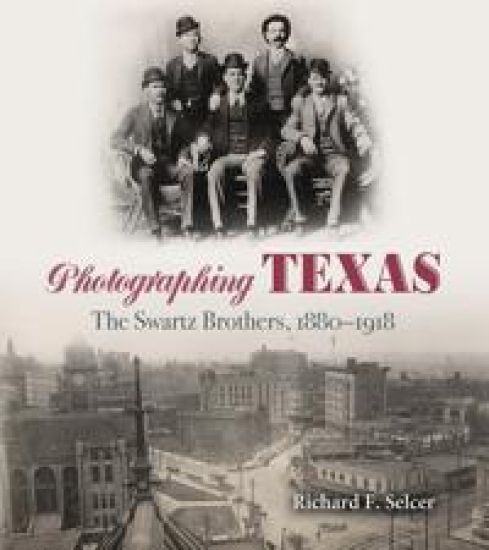
One of the most famous images in western history is a photograph of the Wild Bunch outlaw gang, also known as "The Fort Worth Five", featuring Butch Cassidy, Sundance Kid, and three other members of the gang dressed to the nines and posing in front of a studio backdrop. This picture, taken by John Swartz in his Fort Worth studio in November 1900, helped bring the gang down when distributed around the country by the Pinkerton Agency. It may be seen today as a prominent marketing image for the Sundance Square development in downtown Fort Worth. John, David, and Charles Swartz, three brothers who moved from Virginia to Fort Worth in the late nineteenth century, captured not only the famous "Wild Bunch" image, but also a visual record of the people, places, and events that chronicles Fort Worth's fin-de-siécle transformation from a frontier outpost to a bustling metropolis-the ingénue, the dashing young gentleman, the stern husband, the loving wife, the nuclear family, the solid businessman, and so on. Only occasionally does a hint of something different show up: an independent-looking woman, a spoiled child, a roguish male. In Photographing Texas: The Swartz Brothers, 1880-1918, historian and scholar Richard Selcer gathers a collection of some of the Swartz brothers' most important images from Fort Worth and elsewhere, few of which have ever been assembled in a single repository. He also offers the fruits of exhaustive research into the photographers' backgrounds, careers, techniques, and place in Fort Worth society. The result is an illuminating and entertaining perspective on frontier photography, western history, and life in Fort Worth at the turn of the nineteenth-to-twentieth centuries.
A History of Fort Worth in Black & White

A History of Fort Worth in Black & White

Richard F. Selcer

University of North Texas Press,U.S.
2016
sidottu
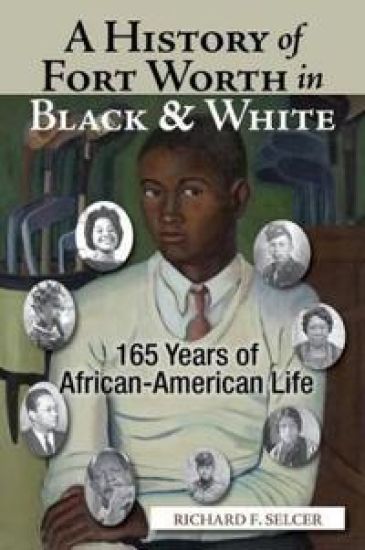
This volume fills a long-empty niche on the Fort Worth bookshelf: a scholarly history of the city’s black community that starts at the beginning with Ripley Arnold and the early settlers, and comes down to today with our current battles over education, housing, and representation in city affairs. Profiles on some noted and some not-so-noted African Americans will appeal to both schools and general readers. Using a wealth of primary sources, Richard Selcer dispels several enduring myths, for instance the mistaken belief that Camp Bowie trained only white soldiers, and the spurious claim that Fort Worth managed to avoid the racial violence that plagued other American cities in the twentieth century. Selcer arrives at some surprisingly frank conclusions that will challenge current politically correct notions.“Selcer does a great job of exploring little-known history about the military, education, sports, and even some social life and organizations.”—Bob Ray Sanders, author of Calvin Littlejohn: Portrait of a Community in Black and White
Written in Blood

Written in Blood

Richard F. Selcer; Kevin S. Foster

University of North Texas Press,U.S.
2011
sidottu
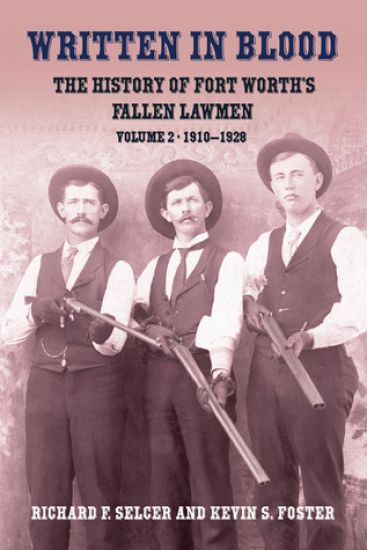
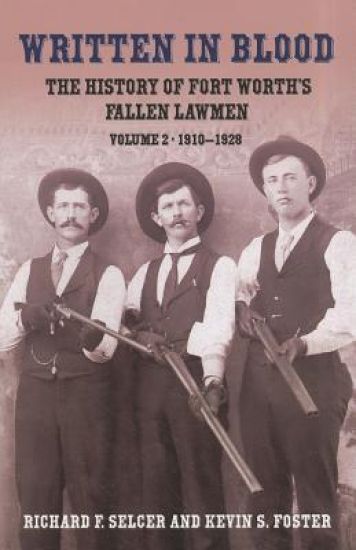
In 2010 Written in Blood: The History of Fort Worth's Fallen Lawmen, Volume 1, told the stories of thirteen Fort Worth law officers who died in the line of duty between 1861 and 1909. Now Richard F. Selcer and Kevin S. Foster are back with Volume 2 covering another baker's dozen line-of-duty deaths that occurred between 1910 and 1928. The stories are grouped into two sections: 'When Blood Ran in the Streets, 1910-1919' and 'Life Was Cheap, 1920-1928.' Not counting the two officers who died of natural causes (meningitis and drowning), these are more tales of murder, mayhem, and dirty work from all branches of local law enforcement: police, sheriff's deputies, constables, and special officers, just like in Volume 1. This era was, if anything,bloodier than the preceding era of the first volume. Fort Worth experienced a race riot, two lynchings, and martial law imposed by the U. S. Army while Camp Bowie was operating. Bushwhacking (such as happened to Peter Howard in 1915) and assassinations (such as happened to Jeff Couch in 1920) replaced blood feuds and old-fashioned shootouts as leading causes of death among lawmen. Violence was not confined to the streets either; a Police Commissioner was gunned down in his city hall office in 1917. Even the new category of 'vehicular homicide' claimed a lawman's life. Selcer and Foster also relate the story of their murderers and of the times. Every chapter follows the arrest and trial of the perp(s) and their ultimate fate. How some of the accused were treated by the justice system and how they ended up will surprise you. Woven throughout is the story of law enforcement and the criminal justice system in the early 20th century, including the move from horseback to motorized transportation; how the FWPD wrestled with the city's growing ethnic communities; bonding procedures back when policemen issued 'bonds,' not tickets; and the insidious influence of the KKK in local law enforcement. Forensics science changed how crimes were solved, even if they were solved. Throughout it all, the man wearing the badge was always the front line of civilization. He laid his life on the line every time he stepped out onto the street. As a result some men bought life insurance (something else new); some men did not marry. There are no saints here. These thirteen officers were all flesh-and-blood men. And their killers were not all mustache-twirling villains. Juries sometimes had trouble making the distinction, too. Written in Blood Volume 2 continues the story begun in the first volume, but it also stands alone as a fascinating slice of Fort Worth history and an examination of law enforcement in the old days.
Written In Blood

Written In Blood

Richard F. Selcer; Kevin S. Foster

University of North Texas Press,U.S.
2011
nidottu
In 2010 Written in Blood: The History of Fort Worth's Fallen Lawmen, Volume 1, told the stories of thirteen Fort Worth law officers who died in the line of duty between 1861 and 1909. Now Richard F. Selcer and Kevin S. Foster are back with Volume 2 covering another baker's dozen line-of-duty deaths that occurred between 1910 and 1928. The stories are grouped into two sections: "When Blood Ran in the Streets, 1910-1919" and "Life Was Cheap, 1920-1928." Not counting the two officers who died of natural causes (meningitis and drowning), these are more tales of murder, mayhem, and dirty work from all branches of local law enforcement: police, sheriff's deputies, constables, and special officers, just like in Volume 1. This era was, if anything, bloodier than the preceding era of the first volume. Fort Worth experienced a race riot, two lynchings, and martial law imposed by the U. S. Army while Camp Bowie was operating. Bushwhacking (such as happened to Peter Howard in 1915) and assassinations (such as happened to Jeff Couch in 1920) replaced blood feuds and old-fashioned shootouts as leading causes of death among lawmen. Violence was not confined to the streets either; a Police Commissioner was gunned down in his city hall office in 1917. Even the new category of "vehicular homicide" claimed a lawman's life. Selcer and Foster also relate the story of their murderers and of the times. Every chapter follows the arrest and trial of the perp(s) and their ultimate fate. How some of the accused were treated by the justice system and how they ended up will surprise you. Woven throughout is the story of law enforcement and the criminal justice system in the early 20th century, including the move from horseback to motorized transportation; how the FWPD wrestled with the city's growing ethnic communities; bonding procedures back when policemen issued "bonds," not tickets; and the insidious influence of the KKK in local law enforcement. Forensics science changed how crimes were solved, even if they were solved. Throughout it all, the man wearing the badge was always the front line of civilization. He laid his life on the line every time he stepped out onto the street. As a result some men bought life insurance (something else new); some men did not marry. There are no saints here. These thirteen officers were all flesh-and-blood men. And their killers were not all mustache-twirling villains. Juries sometimes had trouble making the distinction, too. Written in Blood Volume 2 continues the story begun in the first volume, but it also stands alone as a fascinating slice of Fort Worth history and an examination of law enforcement in the old days.
Legendary Watering Holes

Legendary Watering Holes

Nancy Hamilton; Richard F. Selcer; David Bowser; Chuck Parsons

Texas A M University Press
2004
sidottu
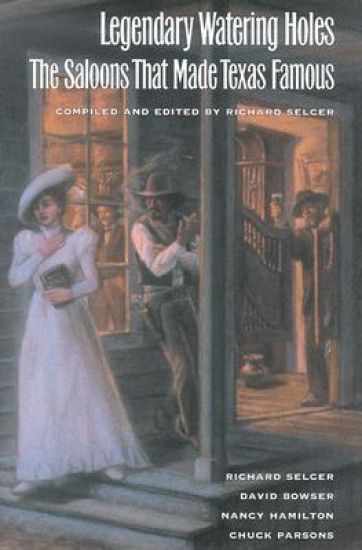
Saloons, barrooms, honky-tonks, or watering holes - by whatever name, they are part of the mythology of the American West, and their stories are cocktails of legend and fact, as Richard Selcer, David Bowser, Nancy Hamilton, and Chuck Parsons demonstrate in these accounts of four legendary Texas establishments. In most Western communities, the first saloon was built before the first church, and the drinking establishments far outnumbered the religious ones. Beyond their obvious functions, saloons served as community centers, polling places, impromptu courtrooms, and public meeting halls. Here, the spotlight is thrown on four celebrated saloons: Jack Harris's Saloon And Vaudeville Theater-San Antonio; Ben Dowell's Saloon-El Paso; The Iron Front-Austin; The White Elephant-Fort Worth; Selcer and his coauthors start with the origins of each establishment and follow their stories until the last drink was served and the places closed down for good. They discuss all aspects of the business: the owners, the liquor provided, the entertainment, the troubling issues of segregation by race and gender, and the way order was maintained - if it was at all. Along the way they consider the ornate bar construction, old floor plans, the liquor suppliers, the attire of the gentlemen gamblers, the variety of casino games that emptied men's pockets, fatal shootings that occurred, and more. Vintage photos of the establishments, along with some of their more famous customers, further take the reader back to the Old West.
Jim Courtright of Fort Worth

Jim Courtright of Fort Worth

Robert K. DeArment; Richard F. Selcer

Texas Christian University Press,U.S.
2004
sidottu
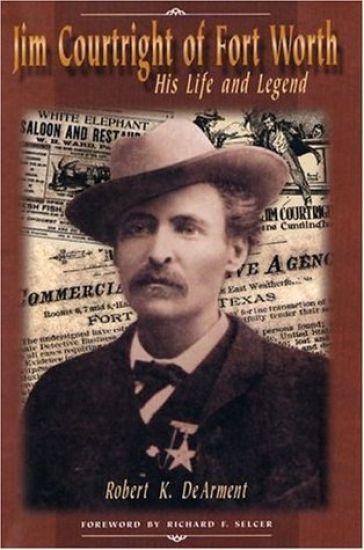
Timothy Isaiah "Longhair Jim" Courtright operated on both sides of the law and became a legend in his lifetime and after his death. One of the most colorful characters from the wild and woolly days of Fort Worth's Hell's Half Acre, Courtright was at various times city marshal, deputy sheriff, deputy U. S. marshal, private detective, hired killer, and racketeer. Today, he is almost forgotten, either as a gunfighter or a lawman, except in Fort Worth. Little is known about Courtright's early life, though he apparently served in the Union army during the Civil War, But when he arrived in the West, Courtright seemed to attract trouble. He was involved in a shootout during the 1886 railroad strikes and was accused of murder in New Mexico. Deputies were sent to Fort Worth to escort him to New Mexico to stand trial. His escape from them, complete with guns hidden under a restaurant table, is one of Fort Worth's most colorful stories. Finally, he was killed in a shootout that he apparently provoked with gambler and gunman Luke Short. To this day nobody is sure what provoked that feud, but Courtright was honored with the longest funeral procession Fort Worth had ever seen. The myth of Courtright as legendary gunfighter was built in two previous biographies - one by a novelist and the other by a Franciscan priest. After exhaustive research into contemporary newspapers and other accounts and close study of the previous two books, historian Robert K. DeArment deconstructs the myth of Longhair Jim and reconstructs the gunfighter as a real human being, complex, flawed, often courageous, usually both honorable and dishonorable. This book is a must for all those interested in the legends of the West, its lawmen, and its outlaws.