Kirjojen hintavertailu – 12 859 819 kirjaa ja 27 kauppaa

Kirjailija

Richard Fardon

Kirjat ja teokset yhdessä paikassa: 11 kirjaa, julkaisuja vuosilta 1991–2026, suosituimpiin kuuluu Mary Douglas. Vertaile teosten hintoja ja tarkista saatavuus suomalaisista kirjakaupoista.

11 kirjaa

Kirjojen julkaisuvuodet: 1991–2026.

Mary Douglas

Mary Douglas

Richard Fardon

Routledge
1999
sidottu
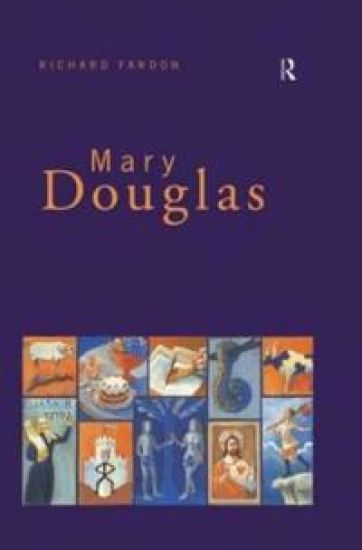
This is the first full length account of the life and ideas of Mary Douglas, the British social anthropologist whose publications span the second half of the twentieth century. Richard Fardon covers Douglas' family background, and the pervasive influence of her catholic faith on her writings before providing an analysis of two of her most influential works; Purity and Danger (1966) and Natural Symbols (1970). The final section deals with Douglas' more controversial writings in the fields of economics, consumption, religion and risk analysis in contemporary societies. Throughout, Fardon highlights the centrality of Douglas' role in the history of anthropology and the discipline's struggle to achieve relevance to contemporary, western societies.
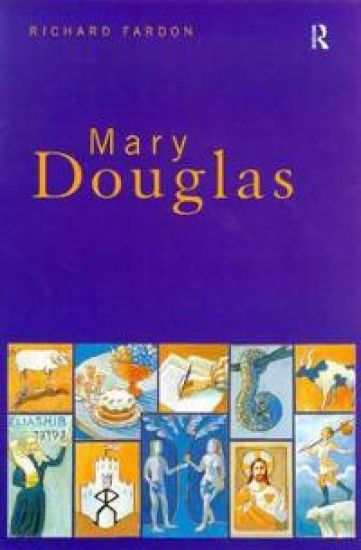
Mary Douglas

Mary Douglas

Richard Fardon

Routledge
1999
nidottu
This is the first full length account of the life and ideas of Mary Douglas, the British social anthropologist whose publications span the second half of the twentieth century. Richard Fardon covers Douglas' family background, and the pervasive influence of her catholic faith on her writings before providing an analysis of two of her most influential works; Purity and Danger (1966) and Natural Symbols (1970). The final section deals with Douglas' more controversial writings in the fields of economics, consumption, religion and risk analysis in contemporary societies. Throughout, Fardon highlights the centrality of Douglas' role in the history of anthropology and the discipline's struggle to achieve relevance to contemporary, western societies.

Franz Baermann Steiner

Franz Baermann Steiner

Jeremy Adler; Richard Fardon

Berghahn Books
2021
sidottu
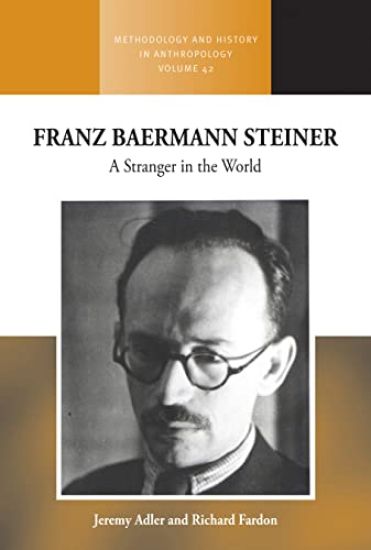
Franz Baermann Steiner (1909-52) provided the vital link between the intellectual culture of central Europe and the Oxford Institute of Anthropology in its post-Second World War years. This book demonstrates his quiet influence within anthropology, which has extended from Mary Douglas to David Graeber, and how his remarkable poetry reflected profoundly on the slavery and murder of the Shoah, an event which he escaped from. Steiner’s concerns including inter-disciplinarity, genre, refugees and exile, colonialism and violence, and the sources of European anthropology speak to contemporary concerns more directly now than at any time since his early death.
Learning from the Curse

Learning from the Curse

Richard Fardon

C Hurst Co Publishers Ltd
2017
sidottu
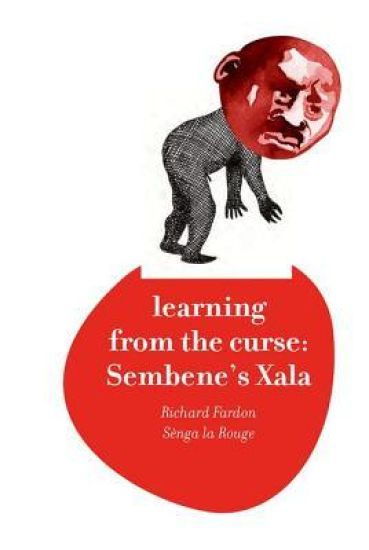
This book is about a story (Ousmane Sembene's Xala), about a time (the aftermath of Senegalese Independence), and about a place (Dakar, the capital of Senegal). It's also about the collaboration between an artist and an anthropologist, who have reacted in their different mediums to the story, time and place, and to what the other made of them ...' So opens a unique account in a genre of its own devising that will engage readers interested in Sembene Ousmane as writer and film director, in Senegal, in African film, in West Africa, or in books designed to be desirable objects in their own right.
Cultures and Crises

Cultures and Crises

Mary Douglas; Richard Fardon

SAGE Publications Ltd
2013
nidottu
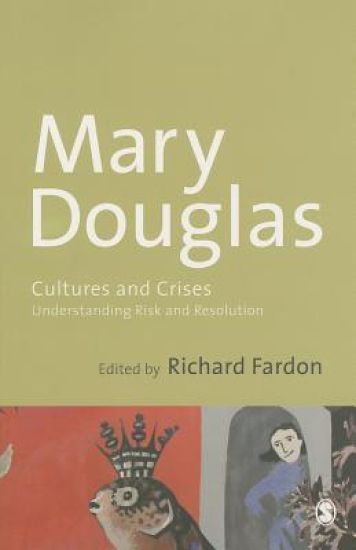
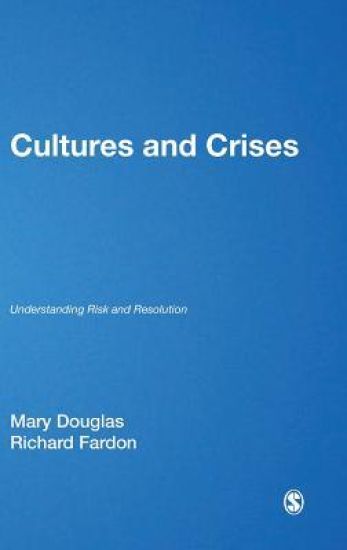
Written in the last two decades of her life, Cultures and Crises finds Mary Douglas developing analyses of critical conditions facing contemporary societies, sometimes in the company of distinguished co-authors across the whole gamut of social sciences. The essays focus on the collaborative development of 'cultural theory' from the 'grid and group' analysis of the 1970s through to its application and elaboration in her later thought. The material covers questions of culture and institutions, the challenges to culture posed by climate change and the nature of risk in culture. What emerges is the most complete picture of Mary Douglas's cultural theory that is currently available to us. The book will add to the legions of Douglas's readers across the disciplinary divisions of the social sciences. Mary Douglas was one of the most widely read social anthropologists of the 20th Century. She is celebrated both as a literary stylist and an anthropological thinker who challenged common presuppositions and understandings of religion, economy and society. As a cornerstone of modernism in social anthropology, and a precursor of 21st Century interdisciplinarity, her work remains highly influential both within and outside the social sciences. Richard Fardon is Mary Douglas's Literary Executor and Head of the Doctoral School and Professor of West African Anthropology at SOAS, University of London, UK.
Cultures and Crises

Cultures and Crises

Mary Douglas; Richard Fardon

SAGE Publications Ltd
2013
sidottu
Written in the last two decades of her life, Cultures and Crises finds Mary Douglas developing analyses of critical conditions facing contemporary societies, sometimes in the company of distinguished co-authors across the whole gamut of social sciences. The essays focus on the collaborative development of 'cultural theory' from the 'grid and group' analysis of the 1970s through to its application and elaboration in her later thought. The material covers questions of culture and institutions, the challenges to culture posed by climate change and the nature of risk in culture. What emerges is the most complete picture of Mary Douglas's cultural theory that is currently available to us. The book will add to the legions of Douglas's readers across the disciplinary divisions of the social sciences. Mary Douglas was one of the most widely read social anthropologists of the 20th Century. She is celebrated both as a literary stylist and an anthropological thinker who challenged common presuppositions and understandings of religion, economy and society. As a cornerstone of modernism in social anthropology, and a precursor of 21st Century interdisciplinarity, her work remains highly influential both within and outside the social sciences. Richard Fardon is Mary Douglas's Literary Executor and Head of the Doctoral School and Professor of West African Anthropology at SOAS, University of London, UK.
Lela in Bali

Lela in Bali

Richard Fardon

Berghahn Books
2006
sidottu
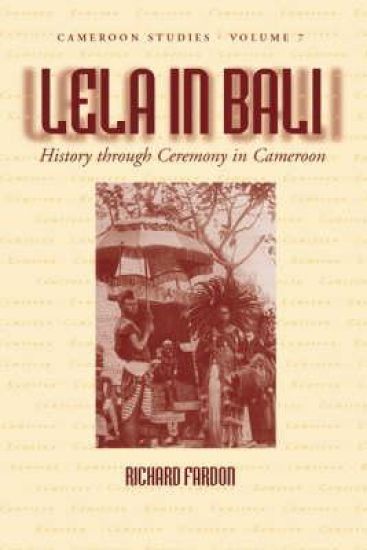
Lela in Bali tells the story of an annual festival of eighteenth-century kingdoms in Northern Cameroon that was swept up in the migrations of marauding slave-raiders during the nineteenth century and carried south towards the coast. Lela was transformed first into a mounted durbar, like those of the Muslim states, before evolving in tandem with the German colonial project into a festival of arms. Reinterpreted by missionaries and post-colonial Cameroonians, Lela has become one of the most important of Cameroonian festivals and a crucial marker of identity within the state. Richard Fardon’s recuperation of two hundred years of history is an essential contribution not only to Cameroonian studies but also to the broader understanding of the evolution of African cultures.
Between God, the Dead and the Wild

Between God, the Dead and the Wild

Richard Fardon

Edinburgh University Press
1991
nidottu
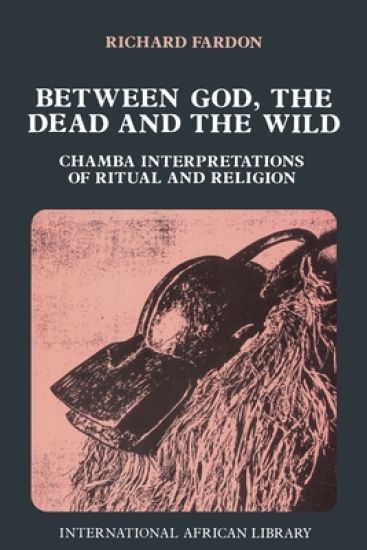
Based on observations in two West African villages - one a traditionally uncentralised community in contemporary Nigeria, the other a small chiefdom in Cameroon - this study shows that despite basic presuppositions regarding various types of being, the beliefs of the two groups manifest themselves in quite different ways. Focusing particularly on Chamba conceptions of people, masks and cults, Richard Fardon applies contemporary social theory to Chamba religion and shows how particular individuals integrate their concerns with notions of human purpose, the agricultural cycle and the values of the wilds.