Kirjojen hintavertailu – 12 903 725 kirjaa ja 27 kauppaa

Kirjailija

Richard Grimes

Kirjat ja teokset yhdessä paikassa: 8 kirjaa, julkaisuja vuosilta 2009–2025, suosituimpiin kuuluu Longman Chemistry 11-14 (2009 edition). Vertaile teosten hintoja ja tarkista saatavuus suomalaisista kirjakaupoista.

8 kirjaa

Kirjojen julkaisuvuodet: 2009–2025.

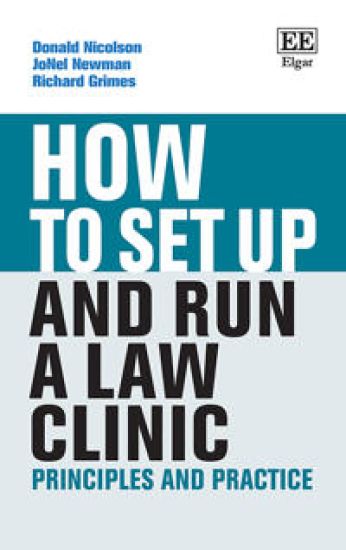
How to Set up and Run a Law Clinic

How to Set up and Run a Law Clinic

Donald Nicolson; JoNel Newman; Richard Grimes

EDWARD ELGAR PUBLISHING LTD
2025
nidottu
This accessible How To Guide provides practical, expert guidance on how to successfully set up and run a law clinic. Donald Nicolson, JoNel Newman and Richard Grimes explore the process of designing a clinic to address unmet legal needs, enhance student learning, and maximise the additional benefits of a clinic. How to Set up and Run a Law Clinic is a comprehensive guide to the theory and practice of running a clinic. Based on the authors’ first-hand experience, the book analyses a variety of day-to-day issues that can arise when setting up a law clinic and provides invaluable solutions to these commonly occurring challenges. In investigating how clinics may be run, and what services they can provide, the book investigates possible tensions between educational and social justice objectives, and how they may be resolved to meet these dual aims. The book examines how the expectations of all stakeholders, including those with regulatory oversight of clinical activities, can be managed and met. Those working within law schools who are wishing to set up or expand law clinics will find this book to be highly useful. It will be a valuable resource for those aiming to enhance employability and experiential learning offerings. Students, and legal practitioners, wishing to gain insight into the value of clinical work will also find this to be a helpful guide.
How to Set up and Run a Law Clinic

How to Set up and Run a Law Clinic

Donald Nicolson; JoNel Newman; Richard Grimes

EDWARD ELGAR PUBLISHING LTD
2023
sidottu
This accessible How To Guide provides practical, expert guidance on how to successfully set up and run a law clinic. Donald Nicolson, JoNel Newman and Richard Grimes explore the process of designing a clinic to address unmet legal needs, enhance student learning, and maximise the additional benefits of a clinic. How to Set up and Run a Law Clinic is a comprehensive guide to the theory and practice of running a clinic. Based on the authors’ first-hand experience, the book analyses a variety of day-to-day issues that can arise when setting up a law clinic and provides invaluable solutions to these commonly occurring challenges. In investigating how clinics may be run, and what services they can provide, the book investigates possible tensions between educational and social justice objectives, and how they may be resolved to meet these dual aims. The book examines how the expectations of all stakeholders, including those with regulatory oversight of clinical activities, can be managed and met. Those working within law schools who are wishing to set up or expand law clinics will find this book to be highly useful. It will be a valuable resource for those aiming to enhance employability and experiential learning offerings. Students, and legal practitioners, wishing to gain insight into the value of clinical work will also find this to be a helpful guide.
Public Legal Education

Public Legal Education

Richard Grimes

Routledge
2021
sidottu
This book makes the case for a more legally literate society and then addresses why and how a law school might contribute to achieving that. Moreover examining what public legal education (PLE) is and the forms it can take, the book looks specifically at the ways in which a law school can get involved, including whether that is as part of an academic, credit-bearing, course or as extra-curricular activity. Divided into five main chapters, the book first examines the nature of PLE and why its provision is so central to the functioning of modern society. Models of PLE are then set out ranging from face-to-face tuition to the use of hard-copy material, including the growing importance of e-based technology. One model of PLE that has proven to be very attractive to law schools – Street Law – is described and analysed in detail. The book then turns to look at the considerations for a law school wishing to incorporate PLE into its offerings be that as part of the formal curriculum or not. The subject of evaluation is then raised – how might we find out if what we do by way of PLE is effective and how it might be improved upon? The final chapter reaches conclusions, some penned by the book’s author and others drawn from key figures in the PLE movement. This book provides a thorough examination of PLE in a law school context and contains a set of templates that can be implemented and/or adapted for use as the situation and jurisdiction dictate. An accessible and compelling read, this book will be of interest to law students, legal academics, practising lawyers, community activists and all those interested in PLE.
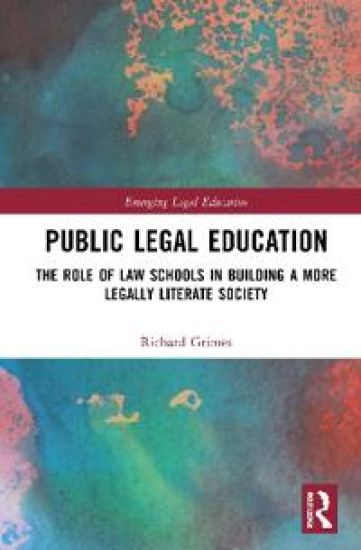
Public Legal Education

Public Legal Education

Richard Grimes

Routledge
2021
nidottu
This book makes the case for a more legally literate society and then addresses why and how a law school might contribute to achieving that. Moreover examining what public legal education (PLE) is and the forms it can take, the book looks specifically at the ways in which a law school can get involved, including whether that is as part of an academic, credit-bearing, course or as extra-curricular activity. Divided into five main chapters, the book first examines the nature of PLE and why its provision is so central to the functioning of modern society. Models of PLE are then set out ranging from face-to-face tuition to the use of hard-copy material, including the growing importance of e-based technology. One model of PLE that has proven to be very attractive to law schools – Street Law – is described and analysed in detail. The book then turns to look at the considerations for a law school wishing to incorporate PLE into its offerings be that as part of the formal curriculum or not. The subject of evaluation is then raised – how might we find out if what we do by way of PLE is effective and how it might be improved upon? The final chapter reaches conclusions, some penned by the book’s author and others drawn from key figures in the PLE movement. This book provides a thorough examination of PLE in a law school context and contains a set of templates that can be implemented and/or adapted for use as the situation and jurisdiction dictate. An accessible and compelling read, this book will be of interest to law students, legal academics, practising lawyers, community activists and all those interested in PLE.
Modern C++: Efficient and Scalable Application Development

Modern C++: Efficient and Scalable Application Development

Richard Grimes; Marius Bancila

Packt Publishing Limited
2018
nidottu

Halvin toimitettuna 63,30 €

Create apps in C++ and leverage its latest features using modern programming techniques. Key FeaturesDevelop strong C++ skills to build a variety of applicationsExplore features of C++17, such as containers, algorithms, and threadsGrasp the standard support for threading and concurrency and use them in basic daily tasksBook DescriptionC++ is one of the most widely used programming languages. It is fast, flexible, and used to solve many programming problems. This Learning Path gives you an in-depth and hands-on experience of working with C++, using the latest recipes and understanding most recent developments. You will explore C++ programming constructs by learning about language structures, functions, and classes, which will help you identify the execution flow through code. You will also understand the importance of the C++ standard library as well as memory allocation for writing better and faster programs. Modern C++: Efficient and Scalable Application Development deals with the challenges faced with advanced C++ programming. You will work through advanced topics such as multithreading, networking, concurrency, lambda expressions, and many more recipes. By the end of this Learning Path, you will have all the skills to become a master C++ programmer. This Learning Path includes content from the following Packt products:Beginning C++ Programming by Richard GrimesModern C++ Programming Cookbook by Marius BancilaThe Modern C++ Challenge by Marius Bancila What you will learnBecome familiar with the structure of C++ projectsIdentify the main structures in the language: functions and classesLearn to debug your programsLeverage C++ features to obtain increased robustness and performanceExplore functions and callable objects with a focus on modern featuresSerialize and deserialize JSON and XML dataCreate client-server applications that communicate over TCP/IPUse design patterns to solve real-world problemsWho this book is forThis Learning Path is designed for developers who want to gain a solid foundation in C++. The desire to learn how to code in C++ is all you need to get started with this Learning Path
Beginning C++ Programming

Beginning C++ Programming

Richard Grimes

Packt Publishing Limited
2017
nidottu
Modern C++ at your fingertips! About This Book • This book gets you started with the exciting world of C++ programming • It will enable you to write C++ code that uses the standard library, has a level of object orientation, and uses memory in a safe and effective way • It forms the basis of programming and covers concepts such as data structures and the core programming language Who This Book Is For A computer, an internet connection, and the desire to learn how to code in C++ is all you need to get started with this book. What You Will Learn • Get familiar with the structure of C++ projects • Identify the main structures in the language: functions and classes • Feel confident about being able to identify the execution flow through the code • Be aware of the facilities of the standard library • Gain insights into the basic concepts of object orientation • Know how to debug your programs • Get acquainted with the standard C++ library In Detail C++ has come a long way and is now adopted in several contexts. Its key strengths are its software infrastructure and resource-constrained applications, including desktop applications, servers, and performance-critical applications, not to forget its importance in game programming. Despite its strengths in these areas, beginners usually tend to shy away from learning the language because of its steep learning curve. The main mission of this book is to make you familiar and comfortable with C++. You will finish the book not only being able to write your own code, but more importantly, you will be able to read other projects. It is only by being able to read others' code that you will progress from a beginner to an advanced programmer. This book is the first step in that progression. The first task is to familiarize you with the structure of C++ projects so you will know how to start reading a project. Next, you will be able to identify the main structures in the language, functions, and classes, and feel confident being able to identify the execution flow through the code. You will then become aware of the facilities of the standard library and be able to determine whether you need to write a routine yourself, or use an existing routine in the standard library. Throughout the book, there is a big emphasis on memory and pointers. You will understand memory usage, allocation, and access, and be able to write code that does not leak memory. Finally, you will learn about C++ classes and get an introduction to object orientation and polymorphism. Style and approach This straightforward tutorial will help you build strong skills in C++ programming, be it for enterprise software or for low-latency applications such as games or embedded programming. Filled with examples, this book will take you gradually up the steep learning curve of C++.