Kirjojen hintavertailu – 12 903 725 kirjaa ja 27 kauppaa
Kirjailija
Richard Hil
Kirjat ja teokset yhdessä paikassa: 12 kirjaa, julkaisuja vuosilta 2003–2026, suosituimpiin kuuluu Discovering Risk. Vertaile teosten hintoja ja tarkista saatavuus suomalaisista kirjakaupoista.
International Criminology is an easy-access critical introduction to how conventional criminologists in the international arena think about and research crime. By using examples from the US, UK and Australia, the authors outline key ideas, vocabulary, assumptions and findings of the discipline while opening up a set of critical underlying issues and problems. From theoretical traditions to historical perspectives; contemporary criminology to reflexive criminology; this all encompassing text covers it all. This is the most valuable introduction to international criminology available for undergraduates and works as a superb refresher for more experienced students.
International Criminology is an easy-access critical introduction to how conventional criminologists in the international arena think about and research crime. By using examples from the US, UK and Australia, the authors outline key ideas, vocabulary, assumptions and findings of the discipline while opening up a set of critical underlying issues and problems. From theoretical traditions to historical perspectives; contemporary criminology to reflexive criminology; this all encompassing text covers it all. This is the most valuable introduction to international criminology available for undergraduates and works as a superb refresher for more experienced students.
Anxiety about unemployment, homelessness, poverty and crime has always been around. Today, governments, experts and the media spend a lot of time talking about people at risk, the measurement and prediction of risk factors, encouraging resiliency and the need for early intervention. What are the politics, origins and meanings behind risk talk? Is the discovery and management of risk factors capable of offering real solutions? This lively, provocative book asks these questions by examining youth employment, homelessness and juvenile crime. It is a must-read for policy makers, human service workers, researchers and anyone interested in the key social issues of our time.
Some things are hard to say out loud. That the climate catastrophe is no longer a future threat but a present condition. That the institutions we trusted to hold the line are already failing. That in many places in Australia – swept by floods, fires, droughts and heatwaves – what is coming has, in part, arrived. Unspeakable confronts the silence around these facts. Drawing on interdisciplinary scholarship and grounded case studies from Australia, the book portrays climate disruption not only as a scientific or technical problem, but as a crisis of meaning, relationship, and moral responsibility. It explores grief, power, and inequality alongside practices of mitigation, adaptation, resilience, and regeneration, with particular attention to how communities respond when institutions falter. It asks what it means to live within climate collapse, and how forms of civic life, care, and collective agency emerge amid profound systemic disruption. "This is a timely and important book. It has been clear to thoughtful people for decades that we are not living sustainably. The systems we rely on could collapse. Facing that reality does not demand despair or justify fatalistic inaction. The Chinese translation of our word ‘crisis’ consists of two characters which mean ‘danger’ and ‘opportunity’. The impending crisis must be a catalyst for rethinking the way we live, work and play. This book suggests broad approaches which will help us to navigate the troubled times ahead. It will help you be part of the change we all need." –Ian Lowe AO, Emeritus Professor of Science, Technology and Society
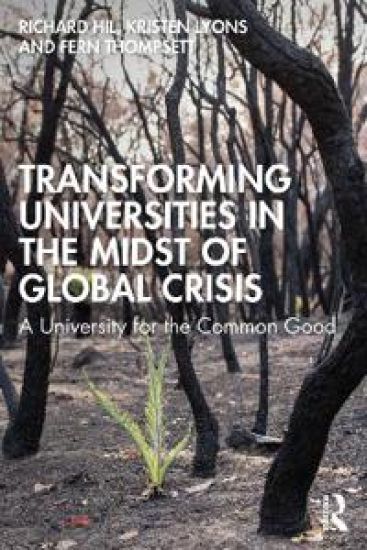
This book calls into question the colonial and neoliberal university, presenting alternative models of higher education that can more effectively respond to today’s intersecting social, economic, environmental and political crises. The authors argue that universities should be driven by a different set of core values – one that promotes the common good over private or commercial interests, individualism and market fundamentalism. Presenting a broad range of educational initiatives from around the world that reflect life-affirming regenerative and relational practices, Indigenous intellectual sovereignty, and principles of social and ecological justice, the authors contend that pathways toward transforming higher education already exist within and without the university. This task, say the authors, is urgent and necessary if universities and other institutions are to hold relevance in a rapidly changing global environment. This book makes a unique contribution to critiques of the modern, neoliberal university by looking for alternatives within and beyond traditional institutions of higher education. In doing so, the authors dismantle the longstanding 'ivory tower' image of the university, instead resituating education within broader social and ecological communities. Transforming Universities in the Midst of Global Crisis is aimed at all those who have a direct or indirect interest and stake in universities, from the general reader to futurists, ecologists as well as students, academics, administrators, managers, policy makers and politicians.
This book calls into question the colonial and neoliberal university, presenting alternative models of higher education that can more effectively respond to today’s intersecting social, economic, environmental and political crises. The authors argue that universities should be driven by a different set of core values – one that promotes the common good over private or commercial interests, individualism and market fundamentalism. Presenting a broad range of educational initiatives from around the world that reflect life-affirming regenerative and relational practices, Indigenous intellectual sovereignty, and principles of social and ecological justice, the authors contend that pathways toward transforming higher education already exist within and without the university. This task, say the authors, is urgent and necessary if universities and other institutions are to hold relevance in a rapidly changing global environment. This book makes a unique contribution to critiques of the modern, neoliberal university by looking for alternatives within and beyond traditional institutions of higher education. In doing so, the authors dismantle the longstanding 'ivory tower' image of the university, instead resituating education within broader social and ecological communities. Transforming Universities in the Midst of Global Crisis is aimed at all those who have a direct or indirect interest and stake in universities, from the general reader to futurists, ecologists as well as students, academics, administrators, managers, policy makers and politicians.
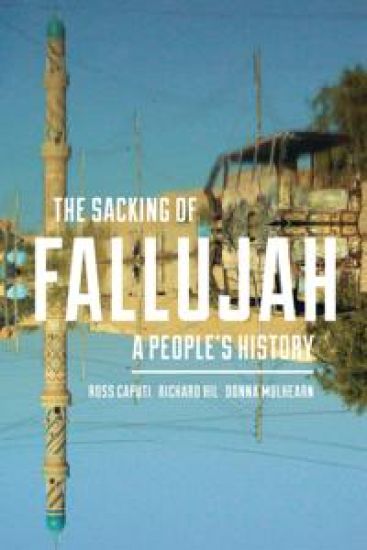
The Iraqi city of Fallujah has become an epicenter of geopolitical conflict, where foreign powers and non-state actors have repeatedly waged war in residential neighborhoods with staggering humanitarian consequences. The Sacking of Fallujah is the first comprehensive study of the three recent sieges of this city, including those by the United States in 2004 and the Iraqi-led operation to defeat ISIS in 2016. Unlike dominant military accounts that focus on American soldiers and U. S. leaders and perpetuate the myth that the United States ""liberated"" the city, this book argues that Fallujah was destroyed by coalition forces, leaving public health crises, political destabilization, and mass civilian casualties in their wake. This meticulously researched account cuts through the propaganda to uncover the lived experiences of Fallujans under siege and occupation, and contextualizes these events within a broader history of U. S. policy in the Middle East. Relying on testimony from Iraqi civilians, the work of independent journalists, and documentation from human rights organizations, Ross Caputi, Richard Hil, and Donna Mulhearn place the experiences of Fallujah's residents at the center of this city's recent history.
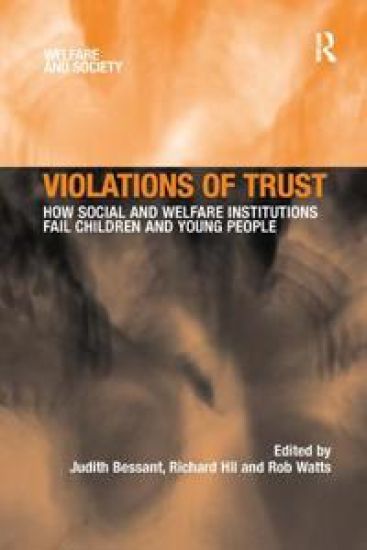
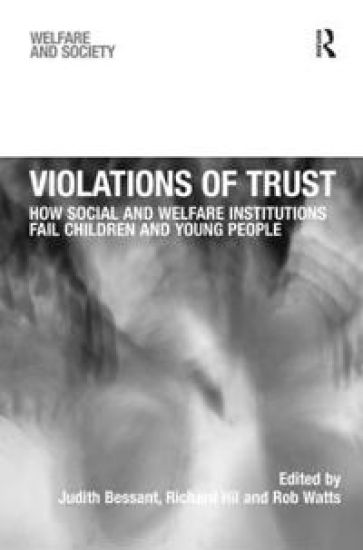
The past few decades have brought to light increasing evidence of systemic and repeated institutional abuse of children and young people in many western nations. Government enquiries, research studies and media reports have begun to highlight the widespread nature of sexual, physical and emotional abuse of vulnerable children and young people. However, while public attention has focused on 'episodic-dramatic' representations of institutional abuse, comparatively little emphasis has been given to the more mundane, routinized and systemic nature of abuse that has occurred. This book documents comprehensively a full range of abuse occurring in 'caring' and 'protective' institutions, with particular reference to the Australian case. The dominant theme is 'betrayal' and in particular the ways in which agencies charged with the care and protection of children and young people become the sites of abusive practices. The authors draw on a range of theoretical frameworks to explore issues of trust and betrayal in the context of the professional and ethical obligations which workers have to those in their charge. The authors argue that it is not sufficient merely to report on accounts of institutional abuse or the consequences of particular practices; rather it is necessary to locate the prevalence of institutional abuse in the wider context of institutional practices as they relate to the 'governance' of particular sections of the population.
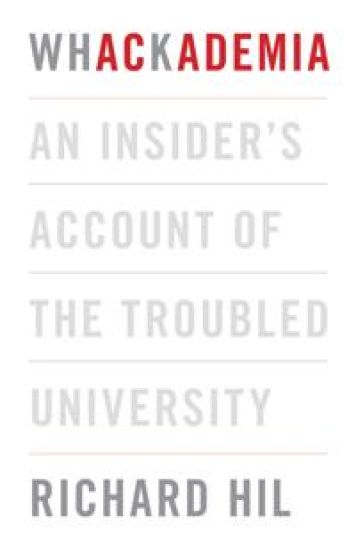
Australian universities are not happy places. Despite the shiny rhetoric of excellence, quality, innovation and creativity, universities face a barrage of criticism over claims of declining standards, decreased funding, compromised assessment, increased vocationalism, overburdened academics and never-ending reviews and restructures. In a scathing insider exposé, Dr. Richard Hil lifts the lid on a higher education system that’s corporatised beyond recognition, steeped in bureaucracy and dominated by marketing and PR imperatives rather than intellectual pursuit. Fearless, ferocious and often funny, Whackademia exposes a world that stands in stark contrast to the slogans and mottos joyously promoted by our universities. Raising bold questions that go to the heart of Australian higher education, Whackademia is an unsentimental call for a re-enlightened higher education sector that’s not only about revenue, efficiencies and corporate profile.
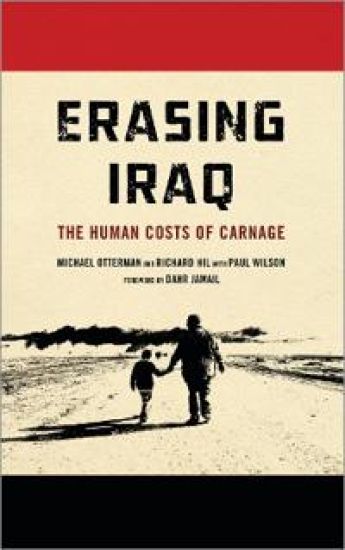
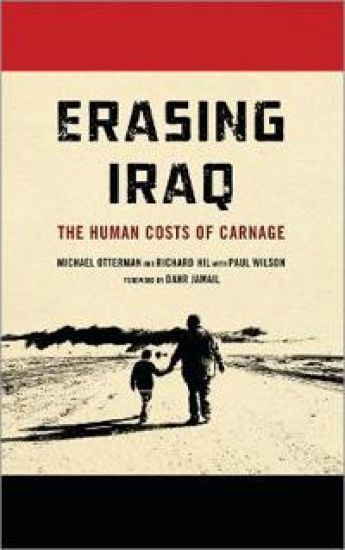
For nearly two decades, the US and its allies have prosecuted war and aggression in Iraq. Erasing Iraq shows in unparalleled detail the devastating human cost of the war in Iraq. Western governments and the mainstream media continue to ignore or play down the human costs of the war on Iraqi citizens This has allowed them to present their role as the benign guardians of Iraqi interests. The authors deconstruct this narrative by presenting a portrait of the total carnage in Iraq today. From Iraqi refugees in Syria, Jordan and the West, to civilians left behind, and other witnesses, this the story of the war told by those who experienced it firsthand.
For nearly two decades, the US and its allies have prosecuted war and aggression in Iraq. Erasing Iraq shows in unparalleled detail the devastating human cost of the war in Iraq. Western governments and the mainstream media continue to ignore or play down the human costs of the war on Iraqi citizens This has allowed them to present their role as the benign guardians of Iraqi interests. The authors deconstruct this narrative by presenting a portrait of the total carnage in Iraq today. From Iraqi refugees in Syria, Jordan and the West, to civilians left behind, and other witnesses, this the story of the war told by those who experienced it firsthand.
The past few decades have brought to light increasing evidence of systemic and repeated institutional abuse of children and young people in many western nations. Government enquiries, research studies and media reports have begun to highlight the widespread nature of sexual, physical and emotional abuse of vulnerable children and young people. However, while public attention has focused on 'episodic-dramatic' representations of institutional abuse, comparatively little emphasis has been given to the more mundane, routinized and systemic nature of abuse that has occurred. This book documents comprehensively a full range of abuse occurring in 'caring' and 'protective' institutions, with particular reference to the Australian case. The dominant theme is 'betrayal' and in particular the ways in which agencies charged with the care and protection of children and young people become the sites of abusive practices. The authors draw on a range of theoretical frameworks to explore issues of trust and betrayal in the context of the professional and ethical obligations which workers have to those in their charge. The authors argue that it is not sufficient merely to report on accounts of institutional abuse or the consequences of particular practices; rather it is necessary to locate the prevalence of institutional abuse in the wider context of institutional practices as they relate to the 'governance' of particular sections of the population.