Kirjojen hintavertailu – 12 903 725 kirjaa ja 27 kauppaa

Kirjailija

Richard Hunter

Kirjat ja teokset yhdessä paikassa: 37 kirjaa, julkaisuja vuosilta 1994–2025, suosituimpiin kuuluu The Layers of the Text. Vertaile teosten hintoja ja tarkista saatavuus suomalaisista kirjakaupoista.

37 kirjaa

Kirjojen julkaisuvuodet: 1994–2025.

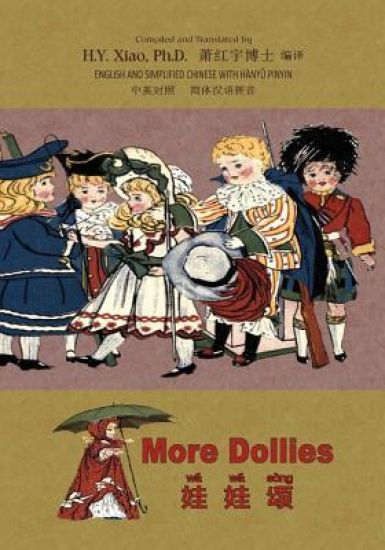
More Dollies (Simplified Chinese): 05 Hanyu Pinyin Paperback B&w

More Dollies (Simplified Chinese): 05 Hanyu Pinyin Paperback B&w

Richard Hunter; H. y. Xiao Phd

Createspace Independent Publishing Platform
2015
nidottu
Please see free book catalogs at www urls: tiny.cc/traditional or tiny.cc/simplified. DESCRIPTION: A picture book translated into Simplified Chinese with Hanyu Pinyin. Based on a Dumpy Book for Children by Richard Hunter, with illustrations by Ruth Cobb. (Greyscale B&W) OTHER PAPERBACK VERSIONS AVAILABLE: 01 Traditional Chinese (B&W ISBN:978-1505882568; COLOR ISBN:978-1503375376); 02 Traditional Chinese Zhuyin Fuhao (B&W ISBN:978-1505882575; COLOR ISBN:978-1503375383); 03 Traditional Chinese Tongyong Pinyin (B&W ISBN:978-1505882582; COLOR ISBN:978-1503375390); 04 Traditional Chinese Hanyu Pinyin (B&W ISBN:978-1505882599; COLOR ISBN:978-1503375406); 05 Simplified Chinese Hanyu Pinyin (B&W ISBN:978-1505882605; COLOR ISBN:978-1503375413); 06 Simplified Chinese (B&W ISBN:978-1505882612; COLOR ISBN:978-1503375420); 07 Traditional Chinese Zhuyin Fuhao with IPA (B&W ISBN:978-1505882629; COLOR ISBN:978-1503375437); 08 Traditional Chinese Tongyong Pinyin with IPA (B&W ISBN:978-1505882636; COLOR ISBN:978-1503375444); 09 Traditional Chinese Hanyu Pinyin with IPA (B&W ISBN:978-1505882643; COLOR ISBN:978-1503375451); 10 Simplified Chinese Hanyu Pinyin with IPA (B&W ISBN:978-1505882650; COLOR ISBN:978-1503375482). EBOOKS (COLOR) OF THESE 10 VERSIONS ARE ALSO AVAILABLE IN GOOGLE PLAY (No ISBN; Search by Title).
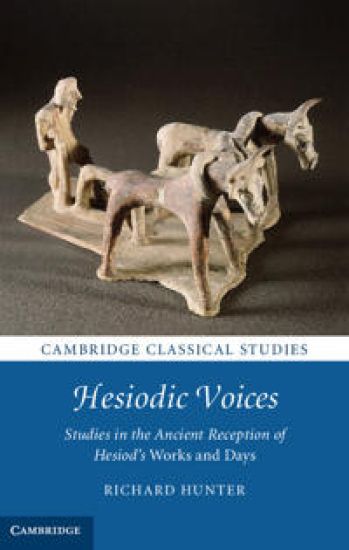
Hesiodic Voices

Hesiodic Voices

Richard Hunter

Cambridge University Press
2014
sidottu
This book selects central texts illustrating the literary reception of Hesiod's Works and Days in antiquity and considers how these moments were crucial in fashioning the idea of 'didactic literature'. A central chapter considers the development of ancient ideas about didactic poetry, relying not so much on explicit critical theory as on how Hesiod was read and used from the earliest period of reception onwards. Other chapters consider Hesiodic reception in the archaic poetry of Alcaeus and Simonides, in the classical prose of Plato, Xenophon and Isocrates, in the Aesopic tradition, and in the imperial prose of Dio Chrysostom and Lucian; there is also a groundbreaking study of Plutarch's extensive commentary on the Works and Days and an account of ancient ideas of Hesiod's linguistic style. This is a major and innovative contribution to the study of Hesiod's remarkable poem and to the Greek literary engagement with the past.
Three Hundred Years of Psychiatry, 1535-1860: A History Presented in Selected English Texts
""Three Hundred Years of Psychiatry, 1535-1860: A History Presented in Selected English Texts"" is a comprehensive book written by Richard Hunter. The book traces the history of psychiatry from the 16th century to the mid-19th century, focusing on the development of psychiatric theories and practices during this period. The author presents a collection of selected English texts that offer a glimpse into the evolution of psychiatric understanding, including the works of prominent figures such as John Locke, William Cullen, and Philippe Pinel. The book is divided into four parts, each representing a distinct period in the history of psychiatry. Part one covers the period from 1535 to 1700, during which time the concept of madness was still closely tied to religious beliefs. Part two covers the period from 1700 to 1800, during which time the focus shifted towards the medicalization of mental illness. Part three covers the period from 1800 to 1850, during which time the first psychiatric institutions were established and the study of mental illness became more scientific in nature. Part four covers the period from 1850 to 1860, during which time new theories of mental illness emerged, including the idea of moral treatment. Throughout the book, the author provides insightful commentary on the texts and their relevance to the broader history of psychiatry. The book is an essential resource for anyone interested in the history of mental health and the evolution of psychiatric theory and practice. This scarce antiquarian book is a facsimile reprint of the old original and may contain some imperfections such as library marks and notations. Because we believe this work is culturally important, we have made it available as part of our commitment for protecting, preserving, and promoting the world's literature in affordable, high quality, modern editions, that are true to their original work.
Plato and the Traditions of Ancient Literature

Plato and the Traditions of Ancient Literature

Richard Hunter

Cambridge University Press
2012
sidottu
Exploring both how Plato engaged with existing literary forms and how later literature then created 'classics' out of some of Plato's richest works, this book includes chapters on such subjects as rewritings of the Apology and re-imaginings of Socrates' defence, Plato's high style and the criticisms it attracted, and how Petronius and Apuleius threaded Plato into their wonderfully comic texts. The scene for these case studies is set through a thorough examination of how the tradition constructed the relationship between Plato and Homer, of how Plato adapted poetic forms of imagery to his philosophical project in the Republic, of shared techniques of representation between poet and philosopher and of foreshadowings of later modes of criticism in his Ion. This is a major contribution to Platonic studies, to the history of Platonic reception from the fourth century BC to the third century AD and to the literature of the Second Sophistic.
Tradition and Innovation in Hellenistic Poetry

Tradition and Innovation in Hellenistic Poetry

Marco Fantuzzi; Richard Hunter

Cambridge University Press
2012
pokkari
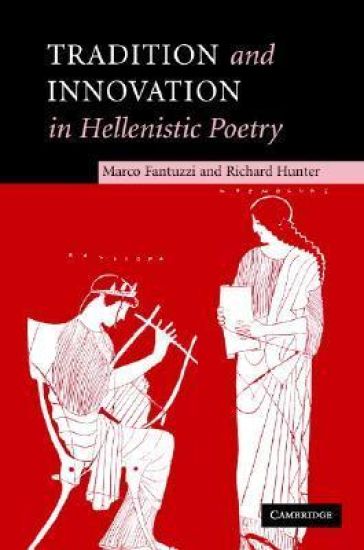
Hellenistic poets of the third and second centuries BC were concerned with the need both to mark their continuity with the classical past and to demonstrate their independence from it. In this revised and expanded translation of Muse e modelli: la poesia ellenistica da Alessandro Magno ad Augusto, Greek poetry of the third and second centuries BC and its reception and influence at Rome are explored allowing both sides of this literary practice to be appreciated. Genres as diverse as epic and epigram are considered from a historical perspective, in the full range of their deep-level structures, providing a different perspective on the poetry and its influence at Rome. Some of the most famous poetry of the age such as Callimachus' Aitia and Apollonius' Argonautica is examined. In addition, full attention is paid to the poetry of encomium, in particular the newly published epigrams of Posidippus, and Hellenistic poetics, notably Philodemus.
Real Business of IT

Real Business of IT

Richard Hunter; George Westerman

Harvard Business Review Press
2009
sidottu
If you're a general manager or CFO, do you feel you're spending too much on IT or wishing you could get better returns from your IT investments? If so, it's time to examine what's behind this IT-as-cost mind-set. In The Real Business of IT, Richard Hunter and George Westerman reveal that the cost mind-set stems from IT leaders' inability to communicate about the business value they create-so CIOs get stuck discussing budgets rather than their contributions to the organization. The authors explain how IT leaders can combat this mind-set by first using information technology to generate three forms of value important to leaders throughout the organization: -Value for money when your IT department operates efficiently and effectively -An investment in business performance evidenced when IT helps divisions, units, and departments boost profitability -Personal value of CIOs as leaders whose contributions to their enterprise go well beyond their area of specialization The authors show how to communicate about these forms of value with non-IT leaders-so they understand how your firm is benefiting and see IT as the strategic powerhouse it truly is.
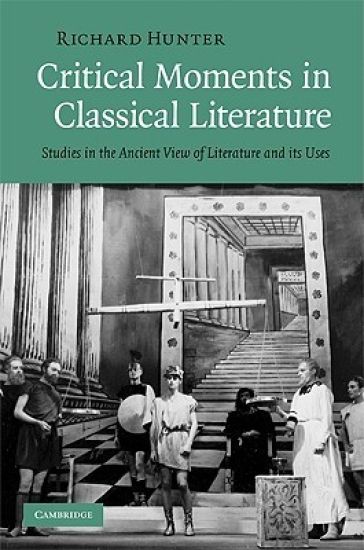
Critical Moments in Classical Literature

Critical Moments in Classical Literature

Richard Hunter

Cambridge University Press
2009
sidottu
Through a series of innovative critical readings Richard Hunter builds a picture of how the ancients discussed the meaning of literary works and their importance in society. He pays particular attention to the interplay of criticism and creativity by not treating criticism in isolation from the works which the critics discussed. Attention is given both to the development of a history of criticism, as far as our sources allow, and to the constant recurrence of similar themes across the centuries. At the head of the book stands the contest of Aeschylus and Euripides in Aristophanes' Frogs which foreshadows more of the subsequent critical tradition than is often realised. Other chapters are devoted to ancient reflection on Greek and Roman comedy, to the Augustan critic Dionysius of Halicarnassus, to 'Longinus', On the Sublime, and to Plutarch. All Greek and Latin is translated.
On Coming After

On Coming After

Richard Hunter

De Gruyter
2008
sidottu
This book gathers together many of the principal essays of Richard Hunter, whose work has been fundamental in the modern re-evaluation of Greek literature after Alexander and its reception at Rome and elsewhere. At the heart of Hunter’s work lies the high poetry of Ptolemaic Alexandria (Callimachus, Theocritus, and Apollonius of Rhodes) and the narrative literature of later antiquity (‘the ancient novel’), but comedy, mime, didactic poetry and ancient literary criticism all fall within the scope of these studies. Principal recurrent themes are the uses and recreation of the past, the modes of poetic allusion, the moral purposes of literature, the intellectual context for ancient poetry, and the interaction of poetry and criticism. What emerges is not a literature shackled to the past and cowed by an ‘anxiety of influence’, but an energetic and constantly experimental engagement with both past and present.
IT Risk

IT Risk

George Westerman; Richard Hunter

Harvard Business Review Press
2007
sidottu
Are you exposing your business to IT risk, and leaving profit opportunities on the table? You might be if you are managing your IT risk using more traditional approaches. IT Risk, a new book based on research conducted by MIT s Center for Information Systems Research and Gartner, Inc., helps companies focus on the most pressing risks and leverage the upside that comes with vigilance. Traditionally, managers have grouped technology risk and funding into silos. IT Risk outlines a new model for integrated risk management, which identifies three core areas you can develop to eliminate the problems that silo strategies create. The authors also offer specific ways to make the most of your new found advantage. And because IT risk is the responsibility of all senior executives not just CIOs this book describes the tools and practices in language that general managers can understand and use. Named a top-ten managerial book of 2007 by CIO Insight magazine.
Theocritus and the Archaeology of Greek Poetry

Theocritus and the Archaeology of Greek Poetry

Richard Hunter

Cambridge University Press
2006
pokkari
The poems of Theocritus are our best witness to a brilliant poetic culture that flourished in the first half of the third century BC. This book considers the context from which these poems grew and, in particular, the manner in which they engage with and recreate the poetic forms of the Greek archaic age. The focus is not on the familiar bucolic poems of Theocritus, but on the hymns, mimes and erotic poems of the second half of the corpus. Recent papyri have greatly increased our understanding of how Theocritus read archaic poetry, and these discoveries are fully exploited in a set of readings which will change the way we look at Hellenistic poetry.
The Shadow of Callimachus

The Shadow of Callimachus

Richard Hunter

Cambridge University Press
2006
sidottu
Through a series of critical readings this book builds a picture of the Roman reaction to, and adoption of, the Greek poetry of the last three pre-Christian centuries. Although the poetry of the greatest figure of Greek poetry after Alexander, Callimachus of Cyrene, and his contemporaries stands at the heart of the book, the individual studies embrace the full scope of what remains of Hellenistic poetry, both high literary productions and the more marginal poetry, such as that in honour of the great goddess Isis. The singularity of the poetry of Catullus and Virgil, of Horace and the elegists, emerges as more rich and complex than has hitherto been appreciated. Individual studies concern the poets' declared attitudes to their own work, the figure of Dionysus/Bacchus and the poetry of world conquest, the creation of similes, and the conversion of Greek bucolic into Latin pastoral.
The Shadow of Callimachus

The Shadow of Callimachus

Richard Hunter

Cambridge University Press
2006
pokkari
Through a series of critical readings this book builds a picture of the Roman reaction to, and adoption of, the Greek poetry of the last three pre-Christian centuries. Although the poetry of the greatest figure of Greek poetry after Alexander, Callimachus of Cyrene, and his contemporaries stands at the heart of the book, the individual studies embrace the full scope of what remains of Hellenistic poetry, both high literary productions and the more marginal poetry, such as that in honour of the great goddess Isis. The singularity of the poetry of Catullus and Virgil, of Horace and the elegists, emerges as more rich and complex than has hitherto been appreciated. Individual studies concern the poets' declared attitudes to their own work, the figure of Dionysus/Bacchus and the poetry of world conquest, the creation of similes, and the conversion of Greek bucolic into Latin pastoral.
Tradition and Innovation in Hellenistic Poetry

Tradition and Innovation in Hellenistic Poetry

Marco Fantuzzi; Richard Hunter

Cambridge University Press
2005
sidottu
Hellenistic poets of the third and second centuries BC were concerned with the need both to mark their continuity with the classical past and to demonstrate their independence from it. In this revised and expanded translation of Muse e modelli: la poesia ellenistica da Alessandro Magno ad Augusto, Greek poetry of the third and second centuries BC and its reception and influence at Rome are explored allowing both sides of this literary practice to be appreciated. Genres as diverse as epic and epigram are considered from a historical perspective, in the full range of their deep-level structures, shedding new light on the poetry and its influence at Rome. Some of the most famous poetry of the age such as Callimachus’ Aitia and Apollonius’ Argonautica is examined. In addition, full attention is paid to the poetry of encomium, in particular the newly-published epigrams of Posidippus, and Hellenistic poetics, notably Philodemus.
Theocritus and the Archaeology of Greek Poetry

Theocritus and the Archaeology of Greek Poetry

Richard Hunter

Cambridge University Press
1996
sidottu
The poems of Theocritus are our best witness to a brilliant poetic culture that flourished in the first half of the third century BC. This book considers the context from which these poems grew and, in particular, the manner in which they engage with and recreate the poetic forms of the Greek archaic age. The focus is not on the familiar bucolic poems of Theocritus, but on the hymns, mimes and erotic poems of the second half of the corpus. Recent papyri have greatly increased our understanding of how Theocritus read archaic poetry, and these discoveries are fully exploited in a set of readings which will change the way we look at Hellenistic poetry.
The Nature of Roman Comedy

The Nature of Roman Comedy

George E. Duckworth; Richard Hunter

University of Oklahoma Press
1994
nidottu
Originally published in 1952, The Nature of Roman Comedy is still the fullest and most accessible introduction to the plays of Plautus and Terence, which constitute the corpus of Roman comedy. With attention to the specific aspects (such as staging conventions, plot structure, and character delineation) of each play, George E. Duckworth provides a readable synthesis that emphasizes the dramatic and humorous significance of the Roman comedies. Duckworth explains why these plays are important -and funny through discussion of suspense and irony, moral tone, and the humorous aspects of situation, character, and language. He places the comedies in the history of drama, extending from their bases in the lost Greek comedies to their influence on sixteenth-and seventeenth-century European playwrights including Moliere, Shakespeare, and Ben Johnson. Included are eight plates depicting scenes and characters from the comedies. For the second edition, Richard Hunter supplies a foreword and a bibliographical appendix, bringing up-to-date this enduring classic.