

Kirjailija
Richard J. Evans
Kirjat ja teokset yhdessä paikassa: 56 kirjaa, julkaisuja vuosilta 1996–2025, suosituimpiin kuuluu Altered Pasts. Vertaile teosten hintoja ja tarkista saatavuus suomalaisista kirjakaupoista.
Nimi esiintyy myös muodoissa: Richard J Evans
56 kirjaa
Kirjojen julkaisuvuodet: 1996–2025.

Natsid ja vandenõuteooriad. kolmas riik ja paranoilised kujutelmad
Richard J. Evans
Varrak
2021
sidottu

Das Dritte Reich und seine Verschwörungstheorien
Richard J. Evans
DVA Dt.Verlags-Anstalt
2021
sidottu

Hitlerkonspirationer : om paranoida fantasier och Tredje riket
Richard J. Evans
Lind Co
2021
sidottu
Under 2000-talet med internet och sociala medier har konspirationsteorier blivit alltmer populära och spridda. Särskilt revisionistiska myter om Tredje riket. Konspirationsteorier som motbevisats och avfärdats sedan länge har fått nytt liv genom att presenteras som nyupptäckta fakta och oprövade utredningsvinklar. I Hitlerkonspirationer granskar den kände historikern Richard J. Evans fem vitt spridda påståenden om Hitler och nazisterna: att judarna konspirerade för att underminera civilisationen som sägs i Sions vises protokoll, att den tyska armén fick en dolkstöt i ryggen av socialister och judar 1918, att nazisterna brände ner riksdagshuset i Berlin för att gripa makten, att Rudolf Hess resa till Storbritannien 1941 var sanktionerad av Hitler men att de föreslagna fredsvillkoren hemlighölls av Churchill samt att Hitler inte dog 1945 utan lyckades fly till Latinamerika. Varför uppstod dessa myter och varför är de så seglivade? Hitlerkonspirationer är en viktig historiebok inte minst i en tid präglad av alternativa fakta. RICHARD J. EVANS har skrivit en rad betydande böcker om Tredje riket. Han var tidigare professor i historia vid Cambridge, där han ledde ett stort forskningsprogram om konspirationsteorier och deras påverkan på demokratin. Han adlades 2012. "Svår att lägga ifrån sig och oerhört insiktsfull ... 5 av 5, ett mästerverk"Evening Standard "Det finns ingen mer tillförlitlig vägledare till dessa konspirationsteorier än Evans ..." Financial Times "Lysande ... att ställa honom mot konspirationsteoretiker är lite som att knäcka en nöt med en slägga." Mail on Sunday
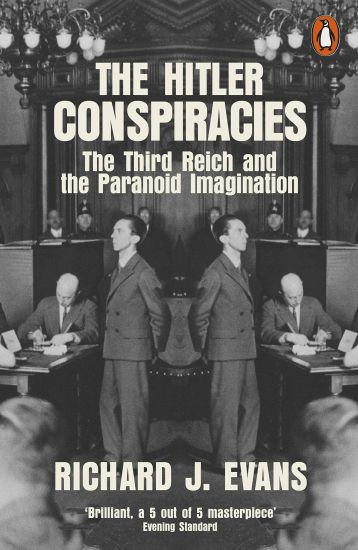
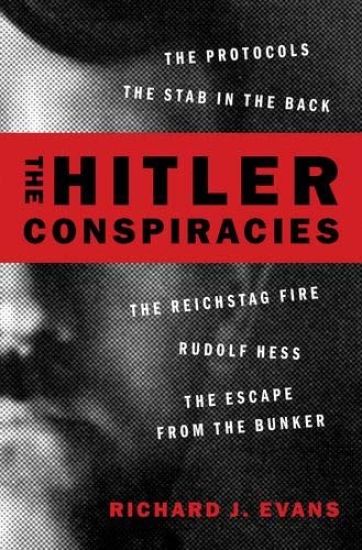
The Hitler Conspiracies: The Protocols - The Stab in the Back - The Reichstag Fire - Rudolf Hess - The Escape from the Bunker
Richard J. Evans
Oxford University Press
2020
sidottu
The idea that historical events, catastrophes in particular, didn't happen on their own but were driven by the hidden machinations of malign influences has deep roots. The appeal is clear: we can ascribe these events not to human shortsightedness or frailty, or to the contingencies of fate and circumstance, but to unseen forces. Conspiracy theories and paranoia go hand in hand. Something, or someone, is trying to control our lives and to regain that control we need to expose the truth. Conspiracy theories have lately proliferated, powered by the Internet and social media, as well as by the declining influence of the traditional gatekeepers of facts and information. In his new book, Richard J. Evans, one of the world's leading historians of the Third Reich, explores this new golden age of conspiracy theories and what underlies it. To do that, he focuses on five of the most enduring conspiracies theories of the Nazi period, including those that fueled Hitler's rise in the first place. Hence he reexamines the notorious anti-Semitic forgery The Protocols of the Elders of Zion; the "stab-in-the-back" myth about the of the role of Jews in Germany's loss in World War One; and the 1933 burning of the Reichstag, which the Nazis used to solidify their grip on power. Evans also delves into the multiple rumors regarding the ill-fated and mysterious 1941 flight to England by Rudolf Hess, Deputy Leader of the Nazi Party, and his death in Spandau prison in 1987. Lastly, he turns to the recurrent rumor that Hitler somehow managed to escape from Berlin in 1945 and live out his days in Argentina. The Hitler Conspiracies is a book about fantasies and fictions, fabrications and falsifications. A distinguished work of history by one of the world's most distinguished historians, it offers equally a hard look at our own troubled times, a "post-truth" era in which "alternative facts" have gained new standing.
At the time of his death at the age of 95, Eric Hobsbawm (1917-2012) was the most famous historian in the world. His books were translated into more than fifty languages and he was as well known in Brazil and Italy as he was in Britain and the United States. His writings have had a huge and lasting effect on the practice of history. More than half a century after it appeared, his books remain a staple of university reading lists. He had an extraordinarily long life, with interests covering many countries and many cultures, ranging from poetry to jazz, literature to politics. He experienced life not only as a university teacher but also as a young Communist in the Weimar Republic, a radical student at Cambridge, a political activist, an army conscript, a Soho 'man about town', a Hampstead intellectual, a Cambridge don, an influential journalist, a world traveller, and finally a Grand Old Man of Letters. In A Life in History, Richard Evans tells the story of Hobsbawm as an academic, but also as witness to history itself, and of the twentieth century's major political and intellectual currents. Eric not only wrote and spoke about many of the great issues of his time, but participated in many of them too, from Communist resistance to Hitler to revolution in Cuba, where he acted as an interpreter for Che Guevara. He was a prominent part of the Jazz scene in Soho in the late 1950s and his writings played a pivotal role in the emergence of New Labour in the late 1980s and early 1990s. This, the first biography of Eric Hobsbawm, is far more than a study of a professional historian. It is a study of an era.

Eric Hobsbawm's works have had a nearly incalculable effect across generations of readers and students, influencing more than the practice of history but also the perception of it. Born in Alexandria, Egypt, of second-generation British parents, Hobsbawm was orphaned at age fourteen in 1931. Living with an uncle in Berlin, he experienced the full force of world economic depression, and in the charged reaction to it in Germany was forced to choose between Nazism and Communism, which was no choice at all. Hobsbawm's lifelong allegiance to Communism inspired his pioneering work in social history, particularly the trilogy for which he is most famous--The Age of Revolution, The Age of Capital, and The Age of Empire--covering what he termed "the long nineteenth century" in Europe. Selling in the millions of copies, these held sway among generations of readers, some of whom went on to have prominent careers in politics and business. In this comprehensive biography of Hobsbawm, acclaimed historian Richard Evans (author of The Third Reich Trilogy, among other works) offers both a living portrait and vital insight into one of the most influential intellectual figures of the twentieth century. Using exclusive and unrestricted access to the unpublished material, Evans places Hobsbawm's writings within their historical and political context. Hobsbawm's Marxism made him a controversial figure but also, uniquely and universally, someone who commanded respect even among those who did not share-or who even outright rejected-his political beliefs. Eric Hobsbawm: A Life in History gives us one of the 20th century's most colorful and intellectually compelling figures. It is an intellectual life of the century itself.
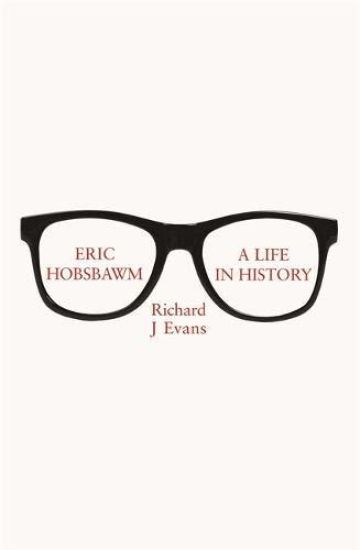
At the time of his death at the age of 95, Eric Hobsbawm (1917-2012) was the most famous historian in the world. His books were translated into more than fifty languages and he was as well known in Brazil and Italy as he was in Britain and the United States. His writings have had a huge and lasting effect on the practice of history. More than half a century after it appeared, his books remain a staple of university reading lists. He had an extraordinarily long life, with interests covering many countries and many cultures, ranging from poetry to jazz, literature to politics. He experienced life not only as a university teacher but also as a young Communist in the Weimar Republic, a radical student at Cambridge, a political activist, an army conscript, a Soho 'man about town', a Hampstead intellectual, a Cambridge don, an influential journalist, a world traveller, and finally a Grand Old Man of Letters. In A Life in History, Richard Evans tells the story of Hobsbawm as an academic, but also as witness to history itself, and of the twentieth century's major political and intellectual currents. Eric not only wrote and spoke about many of the great issues of his time, but participated in many of them too, from Communist resistance to Hitler to revolution in Cuba, where he acted as an interpreter for Che Guevara. He was a prominent part of the Jazz scene in Soho in the late 1950s and his writings played a pivotal role in the emergence of New Labour in the late 1980s and early 1990s. This, the first biography of Eric Hobsbawm, is far more than a study of a professional historian. It is a study of an era.

'Should be read by anyone who cares about the past and the way we think and write about it' Independent on Sunday At a time when fact and historical truth are under unprecedented assault, historian Richard Evans shows us why history is necessary. Taking us into the historians' workshop to show us just how good history gets written, he demolishes the wilder claims of postmodern historians, who deny the possibility of any realistic grasp of the subject. In one of the most important lessons for today he explains the deadly political dangers of losing a historical perspective on the way we live our lives. With wit, wisdom and incisive insight, this is a book to inspire faith in the practice of historians and the worth of learning from the past. In Defence of History is the definitive argument for the craft of history and the vital worth of historians to civilization. 'A subtle, engaged, brilliantly barbed and often amusing case for historical truth...' Sunday Times 'Brilliantly readable' Antonia Fraser 'Arguably the most talented social historian of his generation' Niall Ferguson 'An excellent primer... A model of lucid and intelligent historiographical analysis' Guardian
They Thought They Were Free – The Germans, 1933–45
Milton Mayer; Richard J. Evans
University of Chicago Press
2017
nidottu
Halvin toimitettuna 32,40 €
When this book was first published it received some attention from the critics but none at all from the public. Nazism was finished in the bunker in Berlin and its death warrant signed on the bench at Nuremberg. That's Milton Mayer, writing in a foreword to the 1966 edition of They Thought They Were Free. He's right about the critics: the book was a finalist for the National Book Award in 1956. General readers may have been slower to take notice, but over time they did what we've seen over decades is that any time people, across the political spectrum, start to feel that freedom is threatened, the book experiences a ripple of word-of-mouth interest. And that interest has never been more prominent or potent than what we've seen in the past year. Mayer, an American journalist of German descent, traveled to Germany in 1935 in attempt to secure an interview with Hitler. He failed, but what he saw in Berlin chilled him. He quickly determined that Hitler wasn't the person he needed to talk to after all. Nazism, he realized, truly was a mass movement; he needed to talk with the average German. He found ten, and his discussions with them of Nazism, the rise of the Reich, and mass complicity with evil became the backbone of this book, an indictment of the ordinary German that is all the more powerful for its refusal to let the rest of us pretend that our moment, our society, our country are fundamentally immune. A new foreword to this edition by eminent historian of the Reich Richard J. Evans puts the book in historical and contemporary context. We live in an age of fervid politics and hyperbolic rhetoric. They Thought They Were Free cuts through that, revealing instead the slow, quiet accretions of change, complicity, and abdication of moral authority that quietly mark the rise of evil.
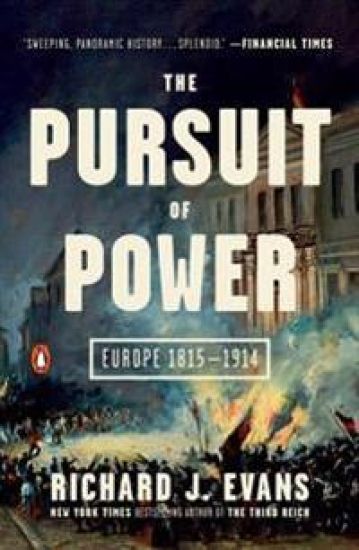
The Pursuit of Power: Europe 1815-1914
Richard J. Evans
PENGUIN BOOKS
2017
nidottu
Halvin toimitettuna 25,70 €
An Economist Best Book of the Year "Sweeping . . . an ambitious synthesis . . . Evans] writes with admirable narrative power and possesses a wonderful eye for local color . . . Fascinating."--Stephen Schuker, The Wall Street JournalFrom the bestselling author of The Third Reich at War, a masterly account of Europe in the age of its global hegemony; the latest volume in the Penguin History of Europe series Richard J. Evans, bestselling historian of Nazi Germany, returns with a monumental new addition to the acclaimed Penguin History of Europe series, covering the period from the fall of Napoleon to the outbreak of World War I. Evans's gripping narrative ranges across a century of social and national conflicts, from the revolutions of 1830 and 1848 to the unification of both Germany and Italy, from the Russo-Turkish wars to the Balkan upheavals that brought this era of relative peace and growing prosperity to an end. Among the great themes it discusses are the decline of religious belief and the rise of secular science and medicine, the journey of art, music, and literature from Romanticism to Modernism, the replacement of old-regime punishments by the modern prison, the end of aristocratic domination and the emergence of industrial society, and the dramatic struggle of feminists for women's equality and emancipation. Uniting the era's broad-ranging transformations was the pursuit of power in all segments of life, from the banker striving for economic power to the serf seeking to escape the power of his landlord, from the engineer asserting society's power over the environment to the psychiatrist attempting to exert science's power over human nature itself. The first single-volume history of the century, this comprehensive and sweeping account gives the reader a magnificently human picture of Europe in the age when it dominated the rest of the globe.
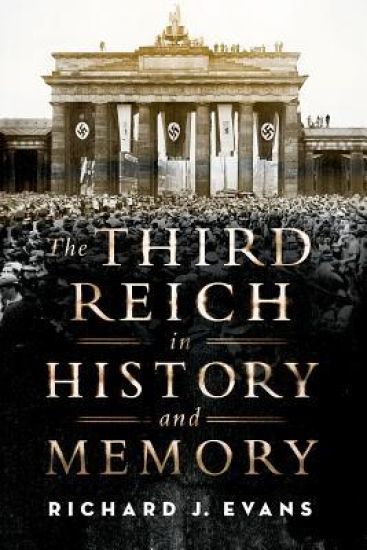
In the seventy years since the demise of the Third Reich, there has been a significant transformation in the ways in which the modern world understands Nazism. In this brilliant and eye-opening collection, Richard J. Evans, the acclaimed author of the Third Reich trilogy, offers a critical commentary on that transformation, exploring how major changes in perspective have informed research and writing on the Third Reich in recent years. Drawing on his most notable writings from the last two decades, Evans reveals the shifting perspectives on Nazism's rise to political power, its economic intricacies, and its subterranean extension into postwar Germany. Evans considers how the Third Reich is increasingly viewed in a broader international context, as part of the age of imperialism; discusses the growing emphasis on the larger economic and cultural circumstances of the era; and emphasizes the development of research into Nazi society, particularly in the understanding of Nazi Germany as a political system based on popular approval and consent. Exploring the complex relationship between memory and history, Evans also points out the places where the growing need to confront the misdeeds of Nazism and expose the complicity of those who participated has led to crude and sweeping condemnation, when instead historians should be making careful distinctions. Written with Evans' sharp-eyed insight and characteristically compelling style, these essays offer a summation of the collective cultural memory of Nazism in the present, and suggest the degree to which memory must be subjected to the close scrutiny of history.

This book, which was first published in 1988, deals with the neglected history of the lowest layers of German society, of marginal, outcast and deviant groups such as arsonists, witches, bandits, infanticides, poachers, murderers, prostitutes, vagrants and thieves, from the end of the thirteenth century to the middle of the twentieth. This book is ideal for students of history, particularly the German history.

Society and Politics in Wilhelmine Germany (Routledge Revivals)
Richard J. Evans
Routledge
2016
nidottu
In the search for the causes of the First World War and the origins of Hitler’s ‘Third Reich’, the attention of historians has turned increasingly towards the development of German society under Kaiser Wilhelm II. These ten essays, first published in 1978, introduced interpretations of Wilhelmine Germany to an English-speaking audience and contributed towards the discussion of these interpretations that were taking place amongst German historians. This book is ideal for student of history, particularly German history.
In Rethinking German History, first published in 1987, Richard J. Evans argues for a social-historical approach to the German past that pays equal attention to objective social structures and subjective values and experiences. If German history has been seen as an exception to the ‘normal’ development of Western society, this is not least because historians have until recently largely failed to look beyond the world of high politics, institutions, organizations and ideologies to broader historical problems of German society and German mentalities. By applying and adapting approaches learned from French and British social history as they have been developed over the last quarter of a century, it is possible to achieve a rethinking of German history which does away with many of the textbook myths that have encrusted the historiogrpahy of Germany for so long. This book will be valuable for students of German history and politics, and brings together essays widely used in teaching. Its broad coverage of social history will also be useful to all those interested in contemporary historiography or the comparative study of European history.

In Rereading German History, first published in 1997, Richard J. Evans draws together his seminal review essays on the political, economic, cultural and social history of Germany through war and reunification. This book provides a study of how and why historians – mainly German, American, British and French – have provided a series of differing and often conflicting readings of the German past. It also presents a reconsideration of German history in the light of the recent decline of the German Democratic Republic, collapse of the Berlin Wall and the reunification of Germany. Rereading German History re-examines major controversies in modern German history, such as the debate over Germany’s ‘special path’ to modernity in the nineteenth and twentieth centuries, and the discussions in the 1980s on the uniqueness or otherwise of Auschwitz. Evans also analyses the arguments over the nature of German national identity. The book offers trenchant and important analytical insights into the history of Germany in the last two centuries, and is ideal reading material for students of modern history and German studies.
This book, first published in 1986, surveys the history of rural society in Germany from the eighteenth century to the present day. The contributions include studies of Junker estates and small farming communities, serfs and landless labourers, maidservants and worker-peasants. They demonstrate the variety and complexity of the social division that structures the rural economy. Throughout the book there is an emphasis on the conflicts that divided rural society, and the ways and means in which these were expressed, whether in serf strikes in eighteenth-century Brandenburg, village gossip in early twentieth-century Hesse, or factional struggles over planning permission in present-day Swabia. The rural world emerges not as traditional, passive and undifferentiated , but as actively participating in its own making; not only responding to the changes going on around it, but exploiting them for its own purposes and influencing them in its own way. This book is ideal for students of history, particularly German history.