

Kirjailija
Richard Jefferies
Kirjat ja teokset yhdessä paikassa: 456 kirjaa, julkaisuja vuosilta 1885–2026, suosituimpiin kuuluu Visions of Collapse. Early Dystopias and the Fragility of Civilization. Vertaile teosten hintoja ja tarkista saatavuus suomalaisista kirjakaupoista.
456 kirjaa
Kirjojen julkaisuvuodet: 1885–2026.
An English Village
Richard Jefferies; Clifton (ILT) Johnson; Hamilton Wright Mabie
Kessinger Pub
2007
pokkari

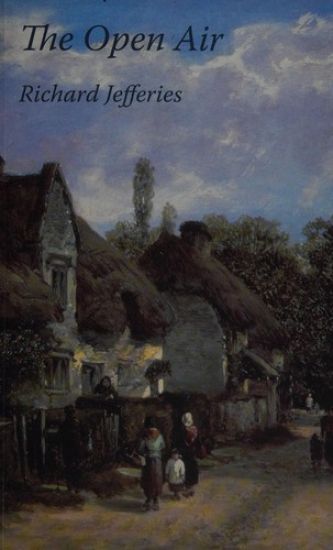
Born in Wiltshire and the son of a farmer, Richard Jeffries had an abiding love for nature and was a prolific writer on the subject. In this collection of beautifully-written essays Jeffries attempts to distill the essence of nature and of life in the country into prose and to impart the wonder he feels when immersed in nature. In all the pieces collected here, a different aspect of the countryside or its people is vividly brought to life, such as when describing the face of an old man as 'twisted like the fantastic turns of a gnarled tree-trunk, hollowed and decayed'. In "The Open Air" Jeffries displays his talent for descriptive writing again and again with crystal-clear descriptions and an emotionally-charged, poetic style.

Beautifully illustrated with engravings by C. F. Tunnicliffe, "Wild Life in a Southern County" is a meticulous, comprehensive study of the natural and social history of the area of Southern and South-Western England known as Wessex. Richard Jefferies describes the countryside and the animals, birds, fish and plants that lived there both as a naturalist and as an artist, and he pays considerable attention to detail, bringing to life a vision as of the countryside as it was before the mechanisation of farming and the ever-present noise of cars and aeroplanes. He also looks at the villages, hamlets and farms of the area and their inhabitants, recording for posterity their ways of life, their customs and traditions and some of the stories that they told. "Wild Life in a Southern County" is a delightfully-written evocation of the rural idyll of Wessex as it was in the 1870s.


This sci-fi classic depicts a London destroyed by a cataclysmic event, with the remnants of England's population beginning a primitive society in the countryside. With a background in studying the rural regions of England, professional naturalist turned novelist Richard Jefferies took to authoring a story that imagined a world in which nature emerges victorious over the encroaching industrialized world. London - the epicentre of urban activity and industrial progress - undergoes a disaster which wipes its human population, and much of England's, from existence. Jefferies investigates the aftermath of the disaster, as communities of people begin to form anew. The traces of London are gradually subsumed by nature, its ruined buildings worn away by water, plants and trees rising to reclaim the land upon which the metropolis sat. By contrast nature and man flourish anew in a mostly harmonious partnership. Today, After London is considered an early example of apocalyptic science fiction, a novelization of the author's own distrust and distaste for the cramped, polluted conditions that rapid industrialization brought upon England. It is his want of a world reborn that produces the most evocative passages, with many such descriptions serving as a philosophic forerunner to modern, environmentalist and conservationist movements.