Kirjojen hintavertailu – 12 859 819 kirjaa ja 27 kauppaa

Kirjailija

Richard Kearney

Kirjat ja teokset yhdessä paikassa: 35 kirjaa, julkaisuja vuosilta 1988–2024, suosituimpiin kuuluu Revisionen Des Heiligen: Streitgesprache Zur Gottesfrage. Vertaile teosten hintoja ja tarkista saatavuus suomalaisista kirjakaupoista.

35 kirjaa

Kirjojen julkaisuvuodet: 1988–2024.

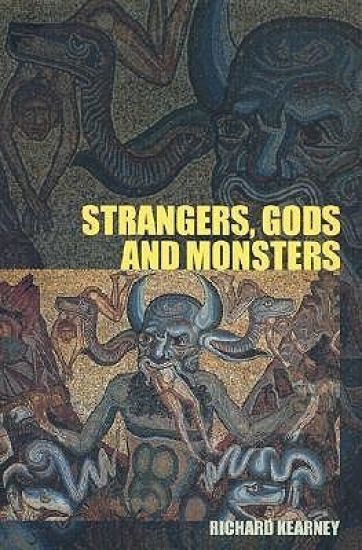
Strangers, Gods and Monsters

Strangers, Gods and Monsters

Richard Kearney

Routledge
2002
nidottu
Strangers, Gods and Monsters is a fascinating look at how human identity is shaped by three powerful but enigmatic forces. Often overlooked in accounts of how we think about ourselves and others, Richard Kearney skilfully shows, with the help of vivid examples and illustrations, how the human outlook on the world is formed by the mysterious triumvirate of strangers, gods and monsters. Throughout, Richard Kearney shows how Strangers, Gods and Monsters do not merely reside in myths or fantasies but constitute a central part of our cultural unconscious. Above all, he argues that until we understand better that the Other resides deep within ourselves, we can have little hope of understanding how our most basic fears and desires manifest themselves in the external world and how we can learn to live with them.
Strangers, Gods and Monsters

Strangers, Gods and Monsters

Richard Kearney

Routledge
2002
sidottu
Strangers, Gods and Monsters is a fascinating look at how human identity is shaped by three powerful but enigmatic forces. Often overlooked in accounts of how we think about ourselves and others, Richard Kearney skil lfully shows, with the help of vivid examples and illustrations, how the human outlook on the world is formed by the mysterious triumvirate of strangers, gods and monsters. In the first part of the book, he shows how the figure of stranger - the "barbarian" for ancient Greece, the 'savage' for imperial Europe - defines our own identity by the very idea that it is the Other, not we, who is unknown. He then goes on to examine the image of the monster, and with the aid of powerful examples from ancient Minotaurs to medieval demons and post-modern enemies, argues that human selfhood itself frequently contains a monstrous element. In the final part of the book Richard Kearney shows how many gods are still alive for people today testifying to the human psyche's yearning to slip the shackles of our finitude and death. Throughout, Richard Kearney shows how strangers, gods and monsters do not merely reside in myths or fantasies but constitute a central part of our cultural unconscious. Above all, he argues that until we understand better that the Other resides deep within ourselves, we can have little hope of understanding how our most basic fears and desires manifest themselves in the external world and how we can learn to live with them.
On Stories

On Stories

Richard Kearney

Routledge
2001
nidottu
Stories offer us some of the richest and most enduring insights into the human condition and have preoccupied philosophy since Aristotle. On Stories presents in clear and compelling style just why narrative has this power over us and argues that the unnarrated life is not worth living. Drawing on the work of James Joyce, Sigmund Freud's patient 'Dora' and the case of Oscar Schindler, Richard Kearney skilfully illuminates how stories not only entertain us but can determine our lives and personal identities. He also considers nations as stories, including the story of Romulus and Remus in the founding of Rome. Throughout, On Stories stresses that, far from heralding the demise of narrative, the digital era merely opens up new stories.
On Stories

On Stories

Richard Kearney

Routledge
2001
sidottu
Stories offer us some of the richest and most enduring insights into the human condition and have preoccupied philosophy since Aristotle. On Stories presents in clear and compelling style just why narrative has this power over us and argues that the unnarrated life is not worth living. Drawing on the work of James Joyce, Sigmund Freud's patient 'Dora' and the case of Oscar Schindler, Richard Kearney skilfully illuminates how stories not only entertain us but can determine our lives and personal identities. He also considers nations as stories, including the story of Romulus and Remus in the founding of Rome. Throughout, On Stories stresses that, far from heralding the demise of narrative, the digital era merely opens up new stories.
The God Who May Be

The God Who May Be

Richard Kearney

Indiana University Press
2001
pokkari

Halvin toimitettuna 28,90 €

"Kearney is one of the most exciting thinkers in the English-speaking world of continental philosophy. . . . and [he] joins hands with its fundamental project, asking the question 'what'or who'comes after the God of metaphysics?'" —John D. Caputo Engaging some of the most urgent issues in the philosophy of religion today, in this lively book Richard Kearney proposes that instead of thinking of God as 'actual,' God might best be thought of as the possibility of the impossible. By pulling away from biblical perceptions of God and breaking with dominant theological traditions, Kearney draws on the work of Ricoeur, Levinas, Derrida, Heidegger, and others to provide a surprising and original answer to who or what God might be. For Kearney, the intersecting dimensions of impossibility propel religious experience and faith in new directions, notably toward views of God that are unforeseeable, unprogrammable, and uncertain. Important themes such as the phenomenology of the persona, the meaning of the unity of God, God and desire, notions of existence and différance, and faith in philosophy are taken up in this penetrating and original work. Richard Kearney is Professor of Philosophy at Boston College and University College, Dublin. He is author of many books on modern philosophy and culture, including Dialogues with Contemporary Continental Thinkers, The Wake of Imagination, and The Poetics of Modernity.
Public Sector Performance

Public Sector Performance

Richard Kearney; Evan Berman

Westview Press Inc
1999
nidottu
Confronted with rising citizen discontent, the Reinventing Government movement, and new technological challenges, public organizations everywhere are seeking means of improving their performance. Their quest is not new, rather, the concern with improving the performance of government organizations has existed since the Scientific Management Movement. Public Sector Performance brings together in a single volume the classic, enduring principles and processes that have defined the field of public sector performance, as written in the words of leading practitioners and scholars. Taken as a whole, this volume provides a performance compass for today's public managers, helping them to reconstruct the public's confidence in, and support of, government. Defined here as managing public organizations for outcomes, performance is examined in all its varied dimensions: organizing work, managing workers, measuring performance, and overcoming resistance to performance-enhancing innovations. The selected articles are interesting, thought provoking, and instructive. They are classics in that they have been widely cited in the scholarly literature and have enduring value to public managers who seek to understand the many dimensions of performance. The book is organized into three sections: Performance Foundations, Performance Strategies, and Performance Measurement. Excerpts from additional selected articles feature special topics and wisdom from performance experts.
Poetics of Imagining

Poetics of Imagining

Richard Kearney

Fordham University Press
1998
pokkari
What is Imagination? What is the relationship between aesthetics and ethics in a contemporary civilization dominated by the image? How can we reconcile the right to imagine with the right to justice? Are the claims of artistic creativity and moral responsibility compatible? With an extended foreword and an afterword chapter, and fascinating new material on the narrative imagination, Poetics of Imagining: Modern to Post-modern provides a critically developed and accessible account of the major theories of imagination in modern European thought. It analyses and assesses the decisive contributions made to our understanding of the imaginary life by phenomenology (Husserl, Sartre, Merleau-Ponty, Bachelard), hermeneutics (Heidegger, Ricoeur), and post-modernism (Vattima, Kristeva, Lyotard). Richard Kearney achieves this with a coherent and committed approach, which displays his own passionate concern for the claims of imagination in our post-modern world of fragmentation and fracture. This is essential reading for those interested in current leading debates on the role of imagining in continental philosophy, ethics, psychoanalysis, art theory and literary criticism.
Poetics of Imagining

Poetics of Imagining

Richard Kearney

Fordham University Press
1998
sidottu
What is Imagination? What is the relationship between aesthetics and ethics in a contemporary civilization dominated by the image? How can we reconcile the right to imagine with the right to justice? Are the claims of artistic creativity and moral responsibility compatible? With an extended foreword and an afterword chapter, and fascinating new material on the narrative imagination, Poetics of Imagining: Modern to Post-modern provides a critically developed and accessible account of the major theories of imagination in modern European thought. It analyses and assesses the decisive contributions made to our understanding of the imaginary life by phenomenology (Husserl, Sartre, Merleau-Ponty, Bachelard), hermeneutics (Heidegger, Ricoeur), and post-modernism (Vattima, Kristeva, Lyotard). Richard Kearney achieves this with a coherent and committed approach, which displays his own passionate concern for the claims of imagination in our post-modern world of fragmentation and fracture. This is essential reading for those interested in current leading debates on the role of imagining in continental philosophy, ethics, psychoanalysis, art theory and literary criticism.
Poetics of Imagining

Poetics of Imagining

Richard Kearney

Edinburgh University Press
1998
nidottu
Richard Kearney has produced a new and revised paperback edition of his classic book Poetics of Imagining. This volume offers an accessible account of the major theories of imagination in modern European thought. It analyses and assesses the decisive contributions made to our understanding of the imaginary life of phenomenology (Husserl, Sartre, Merleau-Ponty, Bachelard), hermeuneutics (Heidegger, Ricoeur) and post-modernism (Vattimo, Kristeva, Lyotard). Richard Kearney achieves this with a coherent and committed approach which displays his own passionate concern for the claims of imagination in our post-modern world of fragmentation and fracture.
Postnationalist Ireland

Postnationalist Ireland

Richard Kearney

Routledge
1996
sidottu
The encroachment of globalization and demands for greater regional autonomy have had a profound effect on the way we picture Ireland. This challenging new look at the key of sovereignty asks us how we should think about the identity of a postnationalist' Ireland. Richard Kearney goes to the heart of the conflict over demand for communal identity - traditionally expressed by nationalism, and the demand for a universal model of citizenship - traditionally expressed by republicanism. In so doing, he asks us to question whether the sacrosanct concept of absolute national sovereignty is becoming a luxury ill afforded in the emerging new Europe. Kearney then takes us beyond the political with chapters on the influence of philosophers such as George Berkeley, John Toland and John Tyndall and looks at some of the myths in Irish poetry and nationhood. Postnationalist Ireland provides a recasting of contemporary Irish politics, culture, literature and philosophy and will appeal to students of these subjects and Irish studies in general.
Postnationalist Ireland

Postnationalist Ireland

Richard Kearney

Routledge
1996
nidottu
The encroachment of globalization and demands for greater regional autonomy have had a profound effect on the way we picture Ireland. This challenging new look at the key of sovereignty asks us how we should think about the identity of a postnationalist' Ireland. Richard Kearney goes to the heart of the conflict over demand for communal identity - traditionally expressed by nationalism, and the demand for a universal model of citizenship - traditionally expressed by republicanism. In so doing, he asks us to question whether the sacrosanct concept of absolute national sovereignty is becoming a luxury ill afforded in the emerging new Europe. Kearney then takes us beyond the political with chapters on the influence of philosophers such as George Berkeley, John Toland and John Tyndall and looks at some of the myths in Irish poetry and nationhood. Postnationalist Ireland provides a recasting of contemporary Irish politics, culture, literature and philosophy and will appeal to students of these subjects and Irish studies in general.
States of Mind

States of Mind

Richard Kearney

New York University Press
1995
sidottu
States of Mind presents a series of dialogues with twenty-two of the world's leading political, philosophical, and literary thinkers. Over the past decade, Richard Kearney has interviewed a range of notable figures, including Julia Kristeva, Jacques Derrida, George Steiner, Charles Taylor, Herbert Marcuse, Seamus Heaney, Jorge Luis Borges, Noam Chomsky, Miroslav Holub, Jean-Franois Lyotard, Hans-Georg Gadamer, Umberto Eco, Neal Ascherson, Emmanuel Levinas, Marina Warner, Paul Ricoeur, Edward Said, Stanilas Breton, Martha Nussbaum, and Vaclav Havel. Each of these critics has helped to shape the most pressing debates of the century in areas such as ethics, art, language, psychology national and international identity, and religion. This searching and lively exchange of ideas, reflecting a multitude of provocative and exciting visions, acts as an introduction to the work of each thinker. The volume addresses issues on a global scale and makes some of the most pioneering and influential thinkers of our time available for the first time to a general readership.
Modern Movements in European Philosophy

Modern Movements in European Philosophy

Richard Kearney

Manchester University Press
1994
nidottu
In this now classic textbook, Richard Kearney surveys the work of nineteen of this century’s most influential European thinkers, and acts as an introduction to three major movements: phenomenology, critical theory and structuralism. This edition includes a chapter devoted to Julia Kristeva, whose work in the fields of semiotics and psychoanalytic theory has made a significant contribution to recent continental thought.
Routledge History of Philosophy Volume VIII
Continental philosophy, as it has emerged in the twentieth century, is less a seamless fabric than a patchquilt of diverse strands. Phenomenology, hermeneutics, existentialism, structuralism, critical theory, deconstruction - these are some of the salient movements which have developed in continental Europe between 1900 and the 1990's, though their influence is by no means confined to geographic location. Continental thought has proved highly exportable, circulating far beyond the frontiers of Europe to provoke strong responses in the intellectual world at large. The fifteen articles in this volume outline and assess some of the issues and experiments of continental philosophy. The first five span the twin movements of phenomenology and existentialism, running from Husserl and Heidegger to Sartre, Merleau-Ponty and Levinas. Subsequent essays deal with specific currents of continental thought in such areas as science, Marxism, linguistics, politics, aesthetics, feminism and hermeneutics. A final chapter on postmodernism highlights the manner in which so many concerns of continental thought culminate in a radical anti-foundationalism. This volume provides a broad, scholarly introduction to this period for students of philosophy and related disciplines, as well as some original interpretations of these authors. It includes a glossary of technical terms and a chronological tube of philosophical, scientific and other cultural events.
The Wake of Imagination

The Wake of Imagination

Richard Kearney

Routledge
1988
nidottu
With his remarkable range of vision, the author takes us on a voyage of discovery that leads from Eden to Fellini, from paradise to parody - plotting the various models of the imagination as: Hebraic, Greek, medieval, Romantic, existential and post-modern.