Kirjojen hintavertailu – 12 903 725 kirjaa ja 27 kauppaa

Kirjailija

Richard Kostelanetz

Kirjat ja teokset yhdessä paikassa: 29 kirjaa, julkaisuja vuosilta 1988–2023, suosituimpiin kuuluu Brown University Remembered. Vertaile teosten hintoja ja tarkista saatavuus suomalaisista kirjakaupoista.

29 kirjaa

Kirjojen julkaisuvuodet: 1988–2023.

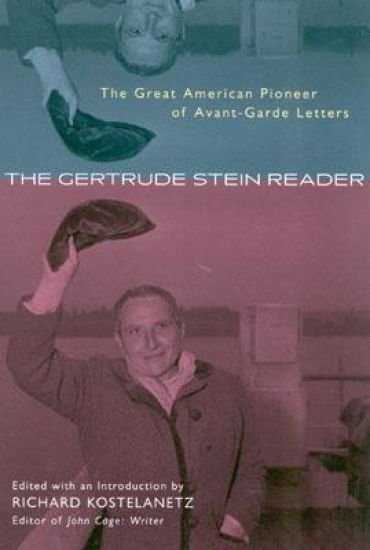
The Gertrude Stein Reader

The Gertrude Stein Reader

Richard Kostelanetz

Cooper Square Publishers Inc.,U.S.
2002
pokkari
The literary legacy of Gertrude Stein (1874-1946) consists of numerous works in which the traditional restraints of language are abandoned for spontaneous and surprising expression. Her writings challenge the reader, yet also offer an inviting liberation, and because of this they have not only endured but proven highly influential. The Gertrude Stein Reader collects fifty one of Stein's poems, stories, portraits, and plays, along with excerpts from Matisse, Picasso, and Gertrude Stein with Two Shorter Stories; A Book Concluding with As a Wife Has a Cow, A Love Story; Geography and Plays; An Acquaintance with a Description; and Useful Knowledge. The extensive introduction provides a brief biography and explains the impact her work had on subsequent writers and artists.
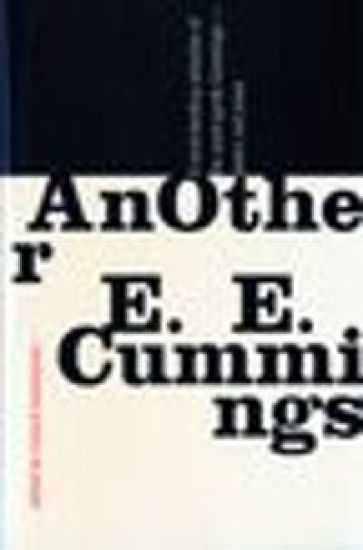
AnOther E.E. Cummings

AnOther E.E. Cummings

E. E. Cummings; Richard Kostelanetz

Liveright Publishing Corporation
2000
nidottu
As a poet, Cummings was a pioneer not only in linguistic and typographic inventions, but also in sound and concrete poetry. But his prose is no less experimental; he wrote memoirs, essays, and fiction that are constantly provocative and often radically experimental. To read the avant-garde Cummings is to read a writer who consistently broke with established norms, "never to rest and never to have: only to grow." To not read the avant-garde Cummings is to not read Cummings.
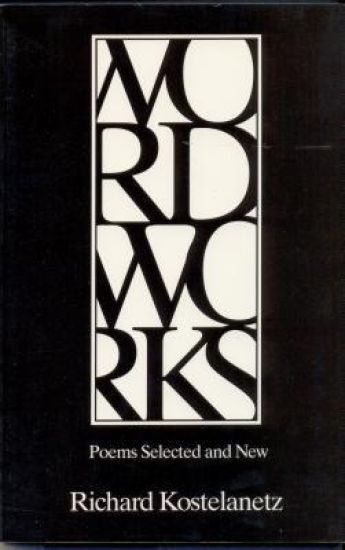
Wordworks

Wordworks

Richard Kostelanetz

BOA Editions, Limited
1994
sidottu
For more than twenty years, Richard Kostelanetz has been a consistent iconoclast and advocate of the avant-garde in American poetry. His visual (or "concrete") poems, his numerical, audio and video poems, as well as the more recent holographic poems, challenge the audience to expand traditional boundaries of time, space, language and genre, to ask more the "how" than the "what."
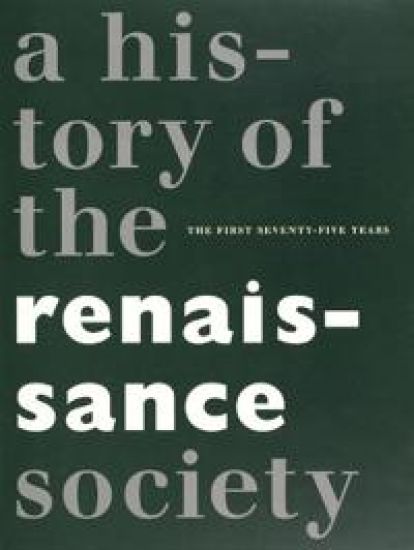
History of the Renaissance Society – The First Seventy–five Years

History of the Renaissance Society – The First Seventy–five Years

Jean Fulton; Richard Kostelanetz; Anne Rorimer; Joseph Scanlan; John Vinci

Renaissance Society at the University of Chicago
1994
sidottu
"What concerns me alone I only think, what concerns my friends I tell them, what can be of interest to only a limited public I write, and what the world ought to know is printed?" Georg Christoph Lichtenberg This major book commemorates the 75th anniversary of the Renaissance Society. The contents of the book were culled from all the Society's current records, its historical documents in the collection of The Archives of American Art of The Smithsonian Institution, and the permanent collections of this country's most renowned public museums. Several essays offer detailed and engaging histories of the Society and its context. John Vinci presents a personal rumination on the exhibition of Mies van der Rohe, and Anne Rorimer offers a typically brilliant account of Daniel Buren's in situ work and its later repercussions. Many of the book's 104 illustrations document what were the first U. S. museum exhibitions for some of the 20th century's most renowned artists such as Calder, Leger, Moholy-Nagy, van der Rohe, Orozco, Matta, Kosuth, Bourgeois, Pashke, and Mike Kelley. With documentation of every known exhibition, artist, publication and special event at The Renaissance Society from its founding in 1915 through 1990, this publication is a vital reference for contemporary art and exhibition in the 20th century.
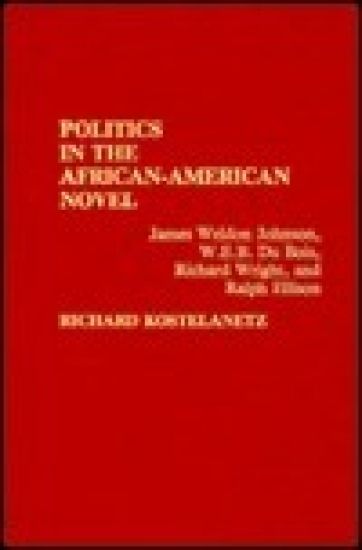
Politics in the African-American Novel

Politics in the African-American Novel

Richard Kostelanetz

Praeger Publishers Inc
1991
sidottu
One of America's most distinguished independent artists/intellectuals, Richard Kostelanetz, has written a prescient volume that uses, as a starting point, the philosopher Robin Collingwood's notion that the historian and the novelist have much in common, for both attempt to define the largest lines of historical development. Aside from the introduction and conclusion, which were specifically written for this publication, these insightful chapters on four outstanding African-American novelists were composed and appeared in journals in the late 1960s. Kostelanetz saw the writing on the wall and told readers about it more than twenty years ago. In his analysis of the novels written by pioneering Black novelists James Weldon Johnson (1871-1938), W. E. B. Du Bois (1868-1963), Richard Wright (1908-1960), and Ralph Ellison (1914-), Kostelanetz culls their political meanings and interprets experience suggestive of political meanings. Kostelanetz places these meanings into a chronological framework that transforms the book from a political or literary history into a history of ideas in literature. This painstaking analysis of fiction--to deduce themes that are then interpreted as intellectual history--is an original scholarly approach to these novels. After presenting a typology of political alternatives for African-America, Kostelanetz looks at the work of writer/diplomat/editor James Weldon Johnson, whose groundbreaking novel, Autobiography of an Ex-Colored Man, appeared in 1912. Chapter three analyzes the novels of writer/editor/teacher W. E. B. Du Bois, whose work promoted greater understanding of African-Americans. Richard Wright, hailed as the most eloquent spokesman for African-Americans of his generation upon publication of his powerful first novel, Native Son, is considered in the following chapter. Chapter five is devoted to Ralph Ellison whose first novel, The Invisible Man, won the National Book Award and achieved prominence as a primary text on the experience of Blacks in America. This close reading of fiction for political implications closes with an appendix of two essays also written in the 1960s about the figures and issues discussed in this study. The novels treated here retain a kind of eye-witness account from the front immediacy that, combined with Kostelanetz's enduring insights, will make Politics in the African-American Novel an important addition to courses in American history, African-American politics, or African-American literature. Informed general readers will also find much to ponder in this book.