Kirjojen hintavertailu – 12 903 725 kirjaa ja 27 kauppaa

Kirjailija

Richard L. Wilson

Kirjat ja teokset yhdessä paikassa: 5 kirjaa, julkaisuja vuosilta 1999–2023, suosituimpiin kuuluu Anticipatory Ethics and The Use of CRISPR in Humans. Vertaile teosten hintoja ja tarkista saatavuus suomalaisista kirjakaupoista.

Nimi esiintyy myös muodoissa: Richard L Wilson

5 kirjaa

Kirjojen julkaisuvuodet: 1999–2023.

Anticipatory Ethics and The Use of CRISPR in Humans

Anticipatory Ethics and The Use of CRISPR in Humans

Michael W. Nestor; Richard L. Wilson

Springer Nature Switzerland AG
2023
nidottu
The future of gene editing in humans will involve the use of CRISPR. How we think about the combination of the scientific, ethical, and moral aspects of this technology is paramount to the success or failure of CRISPR in humans. Unfortunately, the current scientific discussion around CRISPR in humans has left ethics trailing behind due to the rapid pace of innovation. New modes of ethics and stakeholder participation are needed to keep pace with rapid scientific advances and provide the necessary policy and ethical frameworks necessary to help CRISPR flourish as an important health care tool to treat human disease. This requires intense interdisciplinary collaboration and discussion between scientists and philosophers, policymakers and legal scholars, and the public. Dr. Michael W. Nestor (a neuroscientist who actively uses CRISPR in pre-clinical research) and Professor Richard Wilson (a philosopher who focuses on anticipatory ethics) set out to develop a new ethical approachconsidering the use of CRISPR in human targeted therapies. The field of anticipatory ethics is uniquely poised to tackle questions in fast-evolving technical areas where the pace of innovation outstrips traditional philosophical approaches. Furthermore, because of its “anticipatory” nature, this type of analysis provides the opportunity to look ahead and into the future concerning potential uses of CRISPR in humans, uses that are not currently possible. Nestor and Wilson collaborate both scientifically and philosophically in this book to forecast potential outcomes as the scientific and medical community goes beyond using CRISPR to correct genes that underlie diseases where a single gene is involved. Instead, Nestor and Wilson envision CRISPR in complex, multigenic disorders with a specific focus on the use of CRISPR to edit genes involved in mental traits like IQ or other cognitive characteristics. They argue that the use of CRISPR to modify genes that are potentially important for mental traits represents a particular category for special consideration from scientists, policymakers, the public, and other stakeholders. Nestor and Wilson explain why using CRISPR to alter mental states is very different from treating a disease like cancer by combining the latest scientific advancements with anticipatory ethics and philosophical phenomenology. Their analysis considers the role that mental states play in personhood and the lived experience-as genes that can change mental/cognitive attributes like IQ have wide-ranging effects on the lived experience in ways that are categorically different from other attributes. This book was written to set a non-exhaustive framework for shared understanding and discussion across disciplines and appeal to scientists and non-scientists alike. This appeal is made inclusively, inviting all stakeholders to engage in active dialogue about the appropriate context for using CRISPRand other gene-editing technologies in humans. It provides policy analysis and recommendations for assuring the most inclusive, equitable, and ethically sound use of CRISPR in humans, concerning its positive potential to treat mental conditions like depression, schizophrenia, Alzheimer’s disease, autism, and the potential to induce other cognitive enhancements.
Anticipatory Ethics and The Use of CRISPR in Humans

Anticipatory Ethics and The Use of CRISPR in Humans

Michael W. Nestor; Richard L. Wilson

Springer Nature Switzerland AG
2022
sidottu
The future of gene editing in humans will involve the use of CRISPR. How we think about the combination of the scientific, ethical, and moral aspects of this technology is paramount to the success or failure of CRISPR in humans. Unfortunately, the current scientific discussion around CRISPR in humans has left ethics trailing behind due to the rapid pace of innovation. New modes of ethics and stakeholder participation are needed to keep pace with rapid scientific advances and provide the necessary policy and ethical frameworks necessary to help CRISPR flourish as an important health care tool to treat human disease. This requires intense interdisciplinary collaboration and discussion between scientists and philosophers, policymakers and legal scholars, and the public. Dr. Michael W. Nestor (a neuroscientist who actively uses CRISPR in pre-clinical research) and Professor Richard Wilson (a philosopher who focuses on anticipatory ethics) set out to develop a new ethical approachconsidering the use of CRISPR in human targeted therapies. The field of anticipatory ethics is uniquely poised to tackle questions in fast-evolving technical areas where the pace of innovation outstrips traditional philosophical approaches. Furthermore, because of its “anticipatory” nature, this type of analysis provides the opportunity to look ahead and into the future concerning potential uses of CRISPR in humans, uses that are not currently possible. Nestor and Wilson collaborate both scientifically and philosophically in this book to forecast potential outcomes as the scientific and medical community goes beyond using CRISPR to correct genes that underlie diseases where a single gene is involved. Instead, Nestor and Wilson envision CRISPR in complex, multigenic disorders with a specific focus on the use of CRISPR to edit genes involved in mental traits like IQ or other cognitive characteristics. They argue that the use of CRISPR to modify genes that are potentially important for mental traits represents a particular category for special consideration from scientists, policymakers, the public, and other stakeholders. Nestor and Wilson explain why using CRISPR to alter mental states is very different from treating a disease like cancer by combining the latest scientific advancements with anticipatory ethics and philosophical phenomenology. Their analysis considers the role that mental states play in personhood and the lived experience-as genes that can change mental/cognitive attributes like IQ have wide-ranging effects on the lived experience in ways that are categorically different from other attributes. This book was written to set a non-exhaustive framework for shared understanding and discussion across disciplines and appeal to scientists and non-scientists alike. This appeal is made inclusively, inviting all stakeholders to engage in active dialogue about the appropriate context for using CRISPRand other gene-editing technologies in humans. It provides policy analysis and recommendations for assuring the most inclusive, equitable, and ethically sound use of CRISPR in humans, concerning its positive potential to treat mental conditions like depression, schizophrenia, Alzheimer’s disease, autism, and the potential to induce other cognitive enhancements.

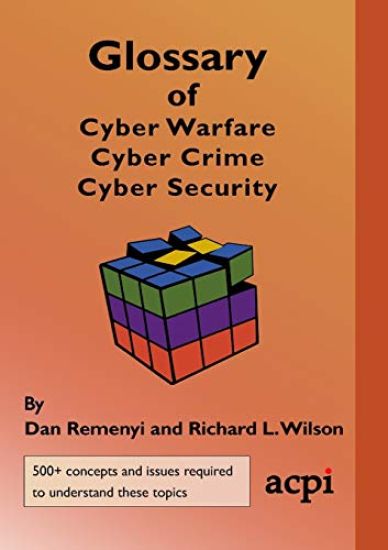
Glossary of Cyber Warfare, Cyber Crime and Cyber Security
There has always been some degree of controversy surrounding computers and computers have always been vulnerable. In the early days of computing there were cases of theft and criminal damage to new computer installations. Computers have been shot at and even bombed, causing extensive damage. Over the years there have been many attempts at computer fraud. One of the most celebrated was the so-called Salami Fraud where small amounts of money, which would be hardly noticed by any individual, were taken from a very large number of bank accounts, thus enriching the fraudsters. However, these were largely limited to corporate situations where the damage was contained. With the arrival of the personal computer and especially mobile devices such as laptops and smart phones the damage achievable by fraudsters and vandals and others wishing to inflict damage on elements of cyberspace has grown and a considerable number of people have had a lot of money swindled from them. In a similar vein computers are now also used as weapons to target other computers and electronic devices. The past 20 years has seen a massive escalation in the damage done in cyberspace and this has been accompanied by a growing concern about all aspects of Cyber Security. The ever increasing number of cyber attacks on individuals, organisations and national government agencies has reached epidemic proportions. It is not possible to know the exact extent of these attacks and the damage which they have done as no one wishes to advertise their vulnerability - even their past vulnerability. However, estimates suggest that the cost of these attacks have run into tens or even hundreds of billions of dollars. What is certain is that billions of dollars are being spent every year in order to improve cyber security.