Kirjojen hintavertailu – 12 903 725 kirjaa ja 27 kauppaa

Kirjailija

Richard Langham Smith

Kirjat ja teokset yhdessä paikassa: 5 kirjaa, julkaisuja vuosilta 1989–2021, suosituimpiin kuuluu Klassische Musik. Vertaile teosten hintoja ja tarkista saatavuus suomalaisista kirjakaupoista.

Nimi esiintyy myös muodoissa: Richard Langham-Smith

5 kirjaa

Kirjojen julkaisuvuodet: 1989–2021.

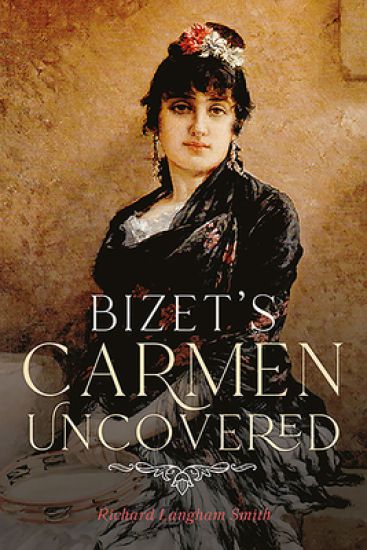
Bizet's Carmen Uncovered

Bizet's Carmen Uncovered

Richard Langham Smith

The Boydell Press
2021
sidottu
Bizet's Carmen Uncovered exposes the myths and stereotypes that so often surround this much loved opera by exploring its first staging, and the particularly Spanish contexts in which the opera was conceived, written, and staged. What were the forces that brought Carmen to the Operatic stage? There were certainly many: for example, the liberation of Spain from the Napoleonic rule in 1813; the subsequent emigration of Spanish artists and musicians to form an active community in Paris; the mid-century mushrooming of interest in visiting Spain facilitated by the establishment of railways. The first part of this book explores the reasons behind the French mania for Spain, and the second demonstrates how the travels and writings of Prosper Mérimée, particularly in his novella Carmen, but also in his earlier writings sent back to Paris from his first visit to Spain in the 1830s, were incorporated into the opera. What were the stories he incorporated into the fateful tale of the soldier who murders his gypsy lover? And how important was the Spanish background to this tragic tale? This book explores how the stereotypes of Andalusian-gypsy spectacle, banditry, and the fiestas of the bullfight contributed to the eventual success of Bizet's opera. How did Bizet and his librettists, Meilhac and Halévy -- and the scenographic team -- capture the spirit of Spain so strongly as to seduce opera-goers around the world? And how did it hybridise real Spanish music and French Opera with the essential 'moments' of Spanish life so important to Mérimée and his librettists? The original staging of the opera is used to examine both 'places' and characters, in particular of realities and mythologies about gypsies in the nineteenth century. It concludes with the first ways in which the opera reached the stage, both in terms of its scenography and how it was sung, played, and acted. Copiously illustrated with materials emanating from before the first production, the book reveals some of the realities of the Spain which went into this ground-breaking opera, to this day continually re-invented with new angles, new settings, and new interpretations.

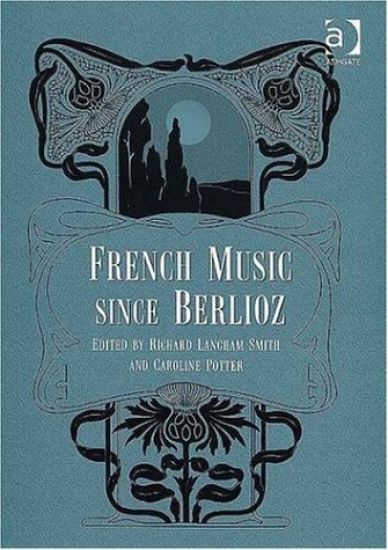
French Music Since Berlioz

French Music Since Berlioz

Richard Langham Smith; Caroline Potter

Routledge
2016
nidottu
French Music Since Berlioz explores key developments in French classical music during the nineteenth and twentieth centuries. This volume draws on the expertise of a range of French music scholars who provide their own perspectives on particular aspects of the subject. Déirdre Donnellon's introduction discusses important issues and debates in French classical music of the period, highlights key figures and institutions, and provides a context for the chapters that follow. The first two of these are concerned with opera in the nineteenth and twentieth centuries respectively, addressed by Thomas Cooper for the nineteenth century and Richard Langham Smith for the twentieth. Timothy Jones's chapter follows, which assesses the French contribution to those most Germanic of genres, nineteenth-century chamber music and symphonies. The quintessentially French tradition of the nineteenth-century salon is the subject of James Ross's chapter, while the more sacred setting of Paris's most musically significant churches and the contribution of their organists is the focus of Nigel Simeone's essay. The transition from the nineteenth to the twentieth century is explored by Roy Howat through a detailed look at four leading figures of this time: Fauré, Chabrier, Debussy and Ravel. Robert Orledge follows with a later group of composers, Satie & Les Six, and examines the role of the media in promoting French music. The 1930s, and in particular the composers associated with Jeune France, are discussed by Deborah Mawer, while Caroline Potter investigates Parisian musical life during the Second World War. The book closes with two chapters that bring us to the present day. Peter O'Hagan surveys the enormous contribution to French music of Pierre Boulez, and Caroline Potter examines trends since 1945. Aimed at teachers and students of French music history, as well as performers and the inquisitive concert- and opera-goer, French Music Since Berlioz is an essential companion for anyone interested in the culture of France.
French Music Since Berlioz

French Music Since Berlioz

Richard Langham Smith; Caroline Potter

Ashgate Publishing Limited
2006
sidottu
French Music Since Berlioz explores key developments in French classical music during the nineteenth and twentieth centuries. This volume draws on the expertise of a range of French music scholars who provide their own perspectives on particular aspects of the subject. Déirdre Donnellon's introduction discusses important issues and debates in French classical music of the period, highlights key figures and institutions, and provides a context for the chapters that follow. The first two of these are concerned with opera in the nineteenth and twentieth centuries respectively, addressed by Thomas Cooper for the nineteenth century and Richard Langham Smith for the twentieth. Timothy Jones's chapter follows, which assesses the French contribution to those most Germanic of genres, nineteenth-century chamber music and symphonies. The quintessentially French tradition of the nineteenth-century salon is the subject of James Ross's chapter, while the more sacred setting of Paris's most musically significant churches and the contribution of their organists is the focus of Nigel Simeone's essay. The transition from the nineteenth to the twentieth century is explored by Roy Howat through a detailed look at four leading figures of this time: Fauré, Chabrier, Debussy and Ravel. Robert Orledge follows with a later group of composers, Satie & Les Six, and examines the role of the media in promoting French music. The 1930s, and in particular the composers associated with Jeune France, are discussed by Deborah Mawer, while Caroline Potter investigates Parisian musical life during the Second World War. The book closes with two chapters that bring us to the present day. Peter O'Hagan surveys the enormous contribution to French music of Pierre Boulez, and Caroline Potter examines trends since 1945. Aimed at teachers and students of French music history, as well as performers and the inquisitive concert- and opera-goer, French Music Since Berlioz is an essential companion for anyone interested in the culture of France.
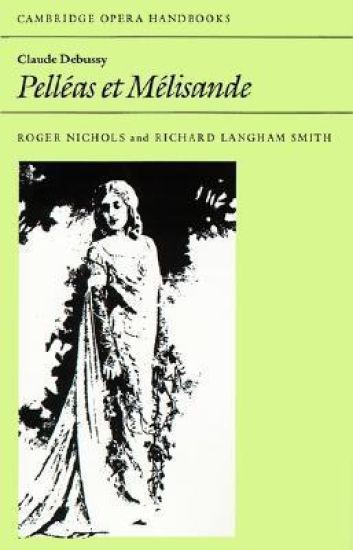
Claude Debussy: Pelléas et Mélisande

Claude Debussy: Pelléas et Mélisande

Roger Nichols; Richard Langham Smith

Cambridge University Press
1989
pokkari
The first comprehensive guide to Pelléas et Mélisande, Debussy’s only completed opera, this book is written by three of the leading authorities on French music of the period. As a background to the opera Richard Langham Smith discusses the play, by the Belgian dramatist Maeterlinck, and considers its literary roots. David Grayson then traces the genesis and composition of the opera, examining also the sketches and rejected versions in order to illuminate Debussy’s compositional strategies. A detailed synopsis by Roger Nichols, which considers carefully Debussy’s musical response to the text, forms a central chapter. The book then moves on to consider more detailed aspects of the style and language of the opera. The relationship between symbols and musical motives forms the basis of a chapter by Richard Langham Smith, and a subsequent chapter by him considers the themes of darkness and light and the key-schemes used to portray them. Two chapters by Roger Nichols on the various performances since 1902 and on the ideas of interpreters and commentators complete the text. The book concludes with a detailed bibliography and a discography.