Kirjojen hintavertailu – 12 859 818 kirjaa ja 27 kauppaa

Kirjailija

Richard Langston

Kirjat ja teokset yhdessä paikassa: 7 kirjaa, julkaisuja vuosilta 2007–2026, suosituimpiin kuuluu The Clean. Vertaile teosten hintoja ja tarkista saatavuus suomalaisista kirjakaupoista.

7 kirjaa

Kirjojen julkaisuvuodet: 2007–2026.

The Clean

The Clean

Richard Langston

FERAL HOUSE,U.S.
2026
nidottu
The definitive story of The Clean in their own words. Now, you said it was yesterday, yesterday's another day Heading round in make believe, I don't know if it's you or If it's me oh, I don't know, I don't know Tally ho, tally ho In 1978 in Dunedin, New Zealand, the Kilgour brothers, Hamish and David, and their schoolfriend Peter Gutteridge, got together to form a band called The Clean. When Robert Scott joined in 1980, the band found a combination that endured for nearly forty years. The Clean profoundly changed alternative music: hitting the New Zealand charts for months with a single made for $50, 'Tally Ho '; helping establish Flying Nun and a music scene independent of the big labels; pioneering a low-fi, do-it-yourself approach to rock music; and touring internationally to influence bands like Pavement and Yo La Tengo. Raw and immediate, this is the story as told by members of The Clean and their inner circle - fellow musicians such as Chris Knox, Martin Phillipps, Graeme Downes and Ira Kaplan, friends and family, pub promoters and sound engineers, and their good friend, Richard Langston. From teenagers in a Dunedin practice room to New York City on 9/11 - this is the band's history as it unfolds.
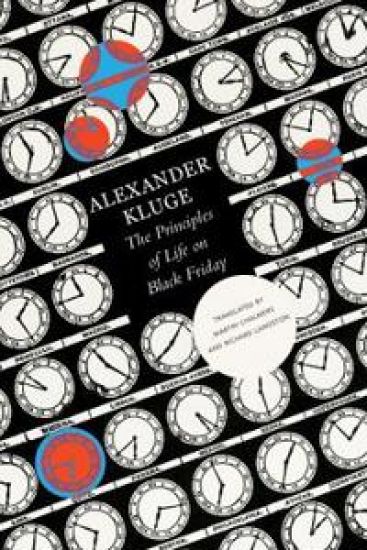
The Principles of Life on Black Friday – Chronicle of Emotions, Notebook 1

The Principles of Life on Black Friday – Chronicle of Emotions, Notebook 1

Alexander Kluge; Martin Chalmers; Richard Langston

SEAGULL BOOKS LONDON LTD
2023
sidottu
A highly readable and lighthearted, yet intellectual-stimulating exploration of the modern human condition. This volume concerns itself with the question of time, from the description of a brief fragment passing by in a matter of minutes to stories of the unexpected stock-market crash of 1929, a once-in-a-century event that Europeans call ‘Black Friday’ because Wall Street’s collapse reached the Old World one day later. Through this exploration of time, Kluge ponders some fundamental questions not altered by the passing of time: What can I trust? How can I protect myself? What should I be afraid of? Our age today has achieved a new kind of obscurity. We’ve encountered a pandemic. We’ve witnessed the Capitol riots. We see before us inflation, war, and a burning planet. We gaze at the world with suspense. What we need in our lives is orientation—just like ships that navigate the high seas. We might just find that in Kluge’s vignettes and stories.
The Patriot

The Patriot

Richard Langston

Camden House Inc
2021
pokkari
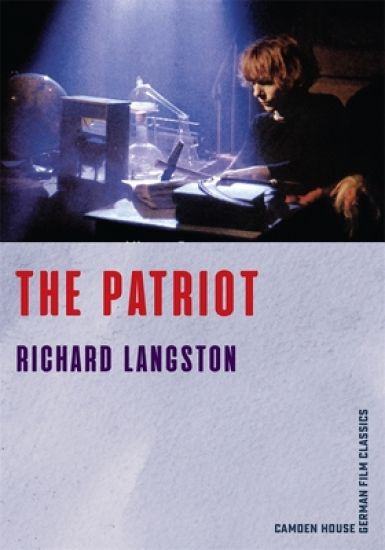
Revitalizes Alexander Kluge's classic 1979 film, showing it to be not just great storytelling but also an exploration of the poetic force of Frankfurt School Critical Theory. Alexander Kluge achieved his breakthrough at the 1966 Venice Biennale with his first feature, Yesterday Girl (Abschied von gestern), but it is arguably his 1979 film The Patriot (Die Patriotin) that first embodied the great heights his storytelling could reach. Titled after its heroine, the history teacher Gabi Teichert, The Patriot is, however, much more than just a curious story about a headstrong pedagogue intent on teaching kids a version of German history that does not end in war and death: it is one of the finest examples of Kluge's exploration of the poetic force of Frankfurt School Critical Theory. This book pursues The Patriot's conception as a cinematic extension of the theoretical agenda that Kluge and social philosopher Oskar Negt began developing just as the Frankfurt School's first generation was ending. It will guide twenty-first-century English-language readers past superficial interpretations of the film's engagement with German history. By asking how and why The Patriot brings the twin concepts of history and obstinacy - the human propensity to resist capitalism's forces of expropriation and alienation - to the screen, this book revitalizes Kluge's film for the new millennium.
Dark Matter

Dark Matter

Richard Langston

Verso Books
2020
nidottu
Collaborators for more than four decades, lawyer, author, filmmaker, and multimedia artist Alexander Kluge and social philosopher Oskar Negt are an exceptional duo in the history of Critical Theory precisely because their respective disciplines operate so differently. Dark Matter argues that what makes their contributions to the Frankfurt School so remarkable is how they think together in spite of these differences. Kluge and Negt's "gravitational thinking" balances not only the abstractions of theory with the concreteness of the aesthetic, but also their allegiances to Frankfurt School mentors with their fascination for other German, French, and Anglo-American thinkers distinctly outside the Frankfurt tradition. At the core of all their adventures in gravitational thinking is a profound sense that the catastrophic conditions of modern life are not humankind's unalterable fate. In opposition to modernity's disastrous state of affairs, Kluge and Negt regard the huge mass of dark matter throughout the universe as the lodestar for thinking together with others, for dark matter is that absolute guarantee that happier alternatives to our calamitous world are possible. As illustrated throughout Langston's study, dark matter's promise-its critical orientation out of catastrophic modernity-finds its expression, above all, in Kluge's multimedia aesthetic.
Dark Matter

Dark Matter

Richard Langston

Verso Books
2020
sidottu
Collaborators for more than four decades, lawyer, author, filmmaker, and multimedia artist Alexander Kluge and social philosopher Oskar Negt are an exceptional duo in the history of Critical Theory precisely because their respective disciplines operate so differently. Dark Matter argues that what makes their contributions to the Frankfurt School so remarkable is how they think together in spite of these differences. Kluge and Negt's "gravitational thinking" balances not only the abstractions of theory with the concreteness of the aesthetic, but also their allegiances to Frankfurt School mentors with their fascination for other German, French, and Anglo-American thinkers distinctly outside the Frankfurt tradition. At the core of all their adventures in gravitational thinking is a profound sense that the catastrophic conditions of modern life are not humankind's unalterable fate. In opposition to modernity's disastrous state of affairs, Kluge and Negt regard the huge mass of dark matter throughout the universe as the lodestar for thinking together with others, for dark matter is that absolute guarantee that happier alternatives to our calamitous world are possible. As illustrated throughout Langston's study, dark matter's promise-its critical orientation out of catastrophic modernity-finds its expression, above all, in Kluge's multimedia aesthetic.
Visions of Violence

Visions of Violence

Richard Langston

Northwestern University Press
2007
nidottu
Nazi Germany's book burnings, its campaign against ""degenerate art,"" and its persecution of experimental artists pushed the avant-garde to the brink of extinction. How the avant-garde came back, finding a new purpose in the wake of the war, is the subject of ""Visions of Violence"". An extreme faction of aesthetic modernity intent on bulldozing contemporary life, the avant-garde has regularly employed visions of violence in their push for societal and cultural renewal. But in the shadow of unparalleled war and genocide, such aesthetic violence lost its force. This book explores the reconfiguration of the avant-garde in response to the violent transformation of European reality. Citing the emergence of independent avant-garde practitioners in the place of the previous collective, Richard Langston considers six individual exemplars of Germany's post-fascist avant-garde - works that span the last six decades: painter, writer, and filmmaker Peter Weiss' appropriation of French surrealism in the fifties; writer Dieter Wellershoff's coterie of ""new realists""; artist WolfVostell's mediation and conflation of the experiences of the Auschwitz trials and the Vietnam War; poet and novelist Dieter Brinkmann's collages from the seventies; the multimedia displacements of Alexander Kluge; and the performative engagements of dramatists Christoph Schlingensief and Rene Pollesch. Taking stock of the evolution of Germany's post-fascist avant-gardes, Langston's book shows how the movement from Weiss to Pollesch exhibits the problems that both modernity and postmodernity pose for an aesthetic engagement of Germany's violent past.
Visions of Violence

Visions of Violence

Richard Langston

Northwestern University Press
2007
sidottu
Nazi Germany's book burnings, its campaign against ""degenerate art,"" and its persecution of experimental artists pushed the avant-garde to the brink of extinction. How the avant-garde came back, finding a new purpose in the wake of the war, is the subject of ""Visions of Violence"". An extreme faction of aesthetic modernity intent on bulldozing contemporary life, the avant-garde has regularly employed visions of violence in their push for societal and cultural renewal. But in the shadow of unparalleled war and genocide, such aesthetic violence lost its force. This book explores the reconfiguration of the avant-garde in response to the violent transformation of European reality. Citing the emergence of independent avant-garde practitioners in the place of the previous collective, Richard Langston considers six individual exemplars of Germany's post-fascist avant-garde - works that span the last six decades: painter, writer, and filmmaker Peter Weiss' appropriation of French surrealism in the fifties; writer Dieter Wellershoff's coterie of ""new realists""; artist WolfVostell's mediation and conflation of the experiences of the Auschwitz trials and the Vietnam War; poet and novelist Dieter Brinkmann's collages from the seventies; the multimedia displacements of Alexander Kluge; and the performative engagements of dramatists Christoph Schlingensief and Rene Pollesch. Taking stock of the evolution of Germany's post-fascist avant-gardes, Langston's book shows how the movement from Weiss to Pollesch exhibits the problems that both modernity and postmodernity pose for an aesthetic engagement of Germany's violent past.