Kirjojen hintavertailu – 12 903 725 kirjaa ja 27 kauppaa

Kirjailija

Richard M. Lerner

Kirjat ja teokset yhdessä paikassa: 18 kirjaa, julkaisuja vuosilta 1984–2026, suosituimpiin kuuluu Concepts and Theories of Human Development. Vertaile teosten hintoja ja tarkista saatavuus suomalaisista kirjakaupoista.

Nimi esiintyy myös muodoissa: Richard M. Lerner

18 kirjaa

Kirjojen julkaisuvuodet: 1984–2026.

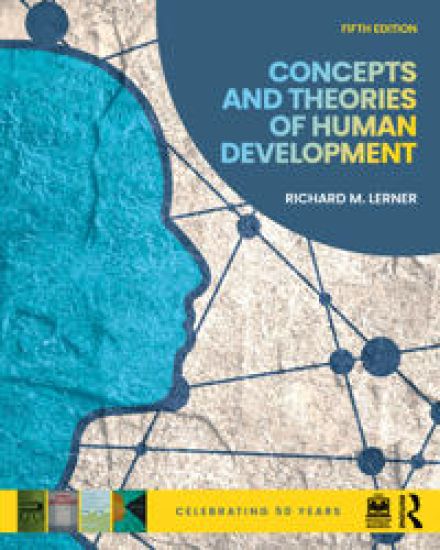
Concepts and Theories of Human Development

Concepts and Theories of Human Development

Richard M. Lerner

TAYLOR FRANCIS LTD
2026
nidottu
Celebrating 50 years since its initial publication, Concepts and Theories of Human Development provides the most comprehensive overview of the foundational theoretical contributions to understanding human development, and the influence of these contributions for contemporary research and application in developmental science. The book discusses the assumptions involved in such topics as the nature-nurture issue, the issue of continuity-discontinuity, dynamic, relational developmental systems (RDS)-based concepts and models, and the important role of philosophical ideas about theories – in particular, metatheories – in understanding the links between theory and research. Key features of this edition include: Two brand new chapters: ‘Developmental Methodology’, which explores the useful and problematic approaches to describing, explaining, and optimising individual development across time and place offering insights into common pitfalls and how to avoid them. ‘Applied Developmental Science’, which focuses on applying dynamic, RDS-based concepts to advance social justice, foster moral and character development, and strengthen democracy. A new exploration of what it means to be human, a theme that is woven throughout the entire text. Discussions on recent methodological innovations in developmental science, providing tools to better understand the unique, person-specific features of human life. An essential resource for students and professionals alike, this book has become the go-to resource for graduate students studying for their comprehensive exams on human development. The book is supported by a website featuring videos from the author and scholars in the field of human development, available at routledgelearning.com/conceptshumandev.
Concepts and Theories of Human Development

Concepts and Theories of Human Development

Richard M. Lerner

TAYLOR FRANCIS LTD
2026
sidottu
Celebrating 50 years since its initial publication, Concepts and Theories of Human Development provides the most comprehensive overview of the foundational theoretical contributions to understanding human development, and the influence of these contributions for contemporary research and application in developmental science. The book discusses the assumptions involved in such topics as the nature-nurture issue, the issue of continuity-discontinuity, dynamic, relational developmental systems (RDS)-based concepts and models, and the important role of philosophical ideas about theories – in particular, metatheories – in understanding the links between theory and research. Key features of this edition include: Two brand new chapters: ‘Developmental Methodology’, which explores the useful and problematic approaches to describing, explaining, and optimising individual development across time and place offering insights into common pitfalls and how to avoid them. ‘Applied Developmental Science’, which focuses on applying dynamic, RDS-based concepts to advance social justice, foster moral and character development, and strengthen democracy. A new exploration of what it means to be human, a theme that is woven throughout the entire text. Discussions on recent methodological innovations in developmental science, providing tools to better understand the unique, person-specific features of human life. An essential resource for students and professionals alike, this book has become the go-to resource for graduate students studying for their comprehensive exams on human development. The book is supported by a website featuring videos from the author and scholars in the field of human development, available at routledgelearning.com/conceptshumandev.
Individuals as Producers of Their Own Development

Individuals as Producers of Their Own Development

Richard M. Lerner

TAYLOR FRANCIS LTD
2024
nidottu
In the World Library of Psychologists series, international experts present career-long collections of what they judge to be their most interesting publications—extracts from books, key articles, research findings, and practical and theoretical contributions. Professor Richard M. Lerner has been prominent in the application of developmental science across the life span for half a century, investigating dynamic, relational development systems, and their potential impact on positive youth development (PYD) and social justice. In this collection, Professor Lerner presents the development of his theory of, and research about, relations between life-span human development and contextual or ecological change, exploring the mutually influential relations between humans and their peer, family, school, and community contexts. Including a specially written introduction, in which Professor Lerner reflects on the importance of mentorship and contextualises both the field and the evolution of his wide-ranging career, this collection will be a valuable resource for students and researchers of developmental psychology.
Whole-Child Development, Learning, and Thriving

Whole-Child Development, Learning, and Thriving

Pamela Cantor; Richard M. Lerner; Karen J. Pittman; Paul A. Chase; Nora Gomperts

Cambridge University Press
2021
pokkari
We discuss whole-child development, learning, and thriving through a dynamic systems theory lens that focuses on the United States and includes an analysis of historical challenges in the American public education system, including inequitable resources, opportunities, and outcomes. To transform US education systems, developmental and learning scientists, educators, policymakers, parents, and communities must apply the knowledge they have today to 1. challenge the assumptions and goals that drove the design of the current US education system, 2. articulate a revised, comprehensive definition of whole-child development, learning, and thriving that accepts rather than simplifies how human beings develop, 3. create a profound paradigm shift in how the purpose of education is described in the context of social, cultural, and political forces, including the impacts of race, privilege, and bias and 4. describe a new dynamic 'language' for measurement of both the academic competencies and the full set of 21st century skills.
Individuals as Producers of Their Own Development
In the World Library of Psychologists series, international experts present career-long collections of what they judge to be their most interesting publications—extracts from books, key articles, research findings, and practical and theoretical contributions. Professor Richard M. Lerner has been prominent in the application of developmental science across the life span for half a century, investigating dynamic, relational development systems, and their potential impact on positive youth development (PYD) and social justice. In this collection, Professor Lerner presents the development of his theory of, and research about, relations between life-span human development and contextual or ecological change, exploring the mutually influential relations between humans and their peer, family, school, and community contexts. Including a specially written introduction, in which Professor Lerner reflects on the importance of mentorship and contextualises both the field and the evolution of his wide-ranging career, this collection will be a valuable resource for students and researchers of developmental psychology.
Concepts and Theories of Human Development

Concepts and Theories of Human Development

Richard M. Lerner

TAYLOR FRANCIS LTD
2018
sidottu
Concepts and Theories of Human Development is the most comprehensive and in-depth overview of the foundational theoretical contributions to understanding human development and the influence of these contributions for contemporary research and application in developmental science. Since its initial publication in 1976, it has been an essential resource for students and professionals alike, and has become the go-to book for graduate students studying for their comprehensive exam on human development. In this new Fourth Edition, Richard M. Lerner concentrates his focus on advanced students and scholars already familiar with the basic elements of major psychological theories. The book discusses the assumptions involved in such topics as stage theories, the nature-nurture issue, the issue of continuity-discontinuity, and the important role of philosophical ideas about theories – in particular, metatheories – in understanding the links between theory and research. It particularly focuses on relational developmental systems (RDS) metatheory, exploring its roots in the 1930s, following its development into the present day, and contrasting it with the fundamentally flawed genetic reductionist models that continue to be circulated by scientists, the media, and the general public. It discusses implications of theory for research methods and for applications aimed at the promotion of health, positive development, and social justice among diverse people across the life span.
Handbook of Psychology, Developmental Psychology

Handbook of Psychology, Developmental Psychology

Irving B. Weiner; Richard M. Lerner; M. Ann Easterbrooks; Jayanthi Mistry

John Wiley Sons Inc
2012
sidottu
Psychology is of interest to academics from many fields, as well as to the thousands of academic and clinical psychologists and general public who can't help but be interested in learning more about why humans think and behave as they do. This award-winning twelve-volume reference covers every aspect of the ever-fascinating discipline of psychology and represents the most current knowledge in the field. This ten-year revision now covers discoveries based in neuroscience, clinical psychology's new interest in evidence-based practice and mindfulness, and new findings in social, developmental, and forensic psychology.
Family Diversity and Family Policy: Strengthening Families for America’s Children

Family Diversity and Family Policy: Strengthening Families for America’s Children

Richard M. Lerner; Elizabeth E. Sparks; Laurie D. McCubbin

Springer-Verlag New York Inc.
2010
nidottu
Family Diversity and Family Policy describes the dimensions of diversity which characterize the contemporary American family and discusses the implications for public policy and associated intervention programs linked to this diversity. The authors contend that if the programs and policies available to support families are to be most useful, they need to reflect the diversity of the families they intend to help. Beginning with a discussion of the historical and contemporary context of the American family, Family Diversity and Family Policy focuses on child poverty and argues that this topic may be usefully studied within the context of developmental systems theory. This theory systematically links the development of individuals to variations in their physical and social ecology, and is used as a framework for discussing: Contemporary challenges faced by parents charged with rearing adolescents, and the familial and societal issues that arise when the adolescents being reared are parents themselves. Current policy issues that arise from welfare debates in the United States and from recently-enacted welfare reform legislation. The importance for our nation of developing a comprehensive national youth policy. The authors draw implications for the design, delivery, and evaluation of diversity-sensitive policies and programs for families and youth, and offer a vision of how to link scholars, policy makers, and community members in multi-professional and multi-institutional collaborations promoting the positive development of American families and youth. Family Diversity and Family Policy is relevant to scholars and policy makers interested in human development, particularly of children and adolescents. In addition, it should be essential reading for practitioners and policy makers in government, private industry, and public and private social service organizations.
On the Nature of Human Plasticity

On the Nature of Human Plasticity

Richard M. Lerner

Cambridge University Press
2009
pokkari
To what extent are human beings capable of changing their physical characteristics and behavioural patterns over the course of their lives? This question has engaged scientists for decades: the fundamental issue is plasticity. In this wide-ranging book, Richard Lerner explores the relevant theory and empirical evidence in a variety of disciplines: molecular genetics, neuroanatomy, neurochemistry, evolutionary biology, anthropology, comparative and developmental psychology, and sociology. The processes studied by each of these disciplines show evidence of plasticity. Conclusions about plasticity have important implications for interventions aimed at enhancing human life, as well as for future research agendas. On the Nature of Human Plasticity will be a valuable resource for all those scientists concerned with human development at biological and social levels and for their students.
Family Diversity and Family Policy: Strengthening Families for America’s Children

Family Diversity and Family Policy: Strengthening Families for America’s Children

Richard M. Lerner; Elizabeth E. Sparks; Laurie D. McCubbin

Springer
1999
sidottu
Family Diversity and Family Policy describes the dimensions of diversity which characterize the contemporary American family and discusses the implications for public policy and associated intervention programs linked to this diversity. The authors contend that if the programs and policies available to support families are to be most useful, they need to reflect the diversity of the families they intend to help. Beginning with a discussion of the historical and contemporary context of the American family, Family Diversity and Family Policy focuses on child poverty and argues that this topic may be usefully studied within the context of developmental systems theory. This theory systematically links the development of individuals to variations in their physical and social ecology, and is used as a framework for discussing: Contemporary challenges faced by parents charged with rearing adolescents, and the familial and societal issues that arise when the adolescents being reared are parents themselves. Current policy issues that arise from welfare debates in the United States and from recently-enacted welfare reform legislation. The importance for our nation of developing a comprehensive national youth policy. The authors draw implications for the design, delivery, and evaluation of diversity-sensitive policies and programs for families and youth, and offer a vision of how to link scholars, policy makers, and community members in multi-professional and multi-institutional collaborations promoting the positive development of American families and youth. Family Diversity and Family Policy is relevant to scholars and policy makers interested in human development, particularly of children and adolescents. In addition, it should be essential reading for practitioners and policy makers in government, private industry, and public and private social service organizations.
Risks and Problem Behaviors in Adolescence

Risks and Problem Behaviors in Adolescence

Richard M. Lerner; Christine M. Ohannessian

CRC Press Inc
1999
sidottu
The articles in this volume illustrate how development is propelled by the bidirectional relations that occur between the person and all levels of the context. The authors argue that adolescent life is embedded in a complicated developmental system involving multiple features of the individual (e.g., biology, emotions, personality, and cognition) and the multiple levels of his or her social ecology (e.g., peers, family, school, the workplace, and the public policy and legal systems that structure and impact behavioural opportunities for and the actions of adolescents). These articles have important implications for the design of interventions aimed at adolescent problem behaviours.
Cognitive and Moral Development, Academic Achievement in Adolescence

Cognitive and Moral Development, Academic Achievement in Adolescence

Richard M. Lerner; Jasna Jovanovic

CRC Press Inc
1999
sidottu
This volume focuses on concepts central to the understanding of the key features of individuality which undergo significant transformations throughout the adolescent period: Personality, self, and ego. While rooted in distinct theoretical traditions, these three concepts, in combination, capture the core aspects of the formation of the individual's unique sense of self or identity, a psychosocial development fundamentally associated with adolescence. Consistent with the developmental-systems models of person-context relations at the forefront of current human development theory and research, the articles within this volume focus on the dynamic, reciprocal relations between youth and key socializing agents within their ecologies. Nevertheless, the articles represented in this volume illustrate that when attempting to understand the development of personality- and self-systems, scholars differ in the extent to which they place primary emphasis on the individual, on the context, or on the relationship between the two.
America's Youth in Crisis

America's Youth in Crisis

Richard M. Lerner

SAGE Publications Inc
1995
nidottu
Richard M. Lerner's work presents a powerful and emotive treatise on the crisis facing America's youth. Drawing on a wide range of statistical evidence to support his arguments, he graphically demonstrates the risks of drug and alcohol abuse, unsafe sexual practices, teenage pregnancy, school drop out and academic underachievement, delinquency, crime, and violence facing American youth at historically unprecedented levels. . . . This is an authoritative, well-researched piece of work that takes a refreshing and positive look to the future of action research in collaboration with empowered communities to provide for needs and treasure the community resources that have in the past been paid scant attention. America's Youth in Crisis is both forward thinking and imaginative and will challenge researchers, policymakers, and practitioners faced with the crisis of American youth. --Heather Leitch in Journal of Adolescence "Lerner's work presents a powerful and emotive treatise on the crisis facing America's youth. Drawing on a wide range of statistical evidence to support his arguments he graphically demonstrates the risks of drug and alcohol abuse, unsafe sexual practices, teenage pregnancy, school drop-out and academic under-achievement, deliquency, crime and violence facing American youth at historically unprecedented levels. Lerner calls for a comprehensive and integrated national policy on youth to address these risk factors which he sees as threatening the very fabric of American society. This is an authoritative, well-researched piece of work which takes a refreshing and positive look to the future of action research in collaboration with empowered communities to provide the needs, and treasure the community resources which have in the past been paid scant attention. It is both forward-thinking and imaginative and will challenge researchers, policy-makers and practitioners faced with crisis of American youth." --Heather Leitch in Journal of Adolescence Our nation's youth are at risk for drug and alcohol abuse, unsafe sexual practices, teen pregnancy, academic underachievement, delinquency, and crime and violence. What can be done to prevent these problems from occurring? Outlining a vigorous "call to arms," this volume describes the steps needed to overcome these potential problems by enhancing academic researchers' responsiveness to the needs of the community and encouraging them to apply the results of research findings to community outreach. After reviewing the problems that beset today's youth, Lerner offers a model, developmental contextualism, that provides a theoretical framework for viewing child and adolescent development in relation to specific features of environmental "context" such as family, neighborhood, society, culture, etc. This model is used to describe the problems and the potentials that are associated with the bidirectional relationships between youth and their contexts. Lerner asserts that by altering the context in which youth live, researchers can test the effectiveness of policies and/or programs in creating desired changes in children's and adolescents' behavior and development. Researchers and practitioners interested in child and adolescent development, family studies, child and family policy, and program evaluation will find this thought-provoking book useful in their studies and programs. "Brief and often abstract, the book first describes the crises facing America's children and adolescents... The ideas proposed by Lerner could transform programs for America's youth and revitalize applied research." --Choice "One of the nation's most eminent developmental psychologists has applied his mastery of adolescent research and theory to a new challenge. In America's Youth in Crisis he focuses his attention on solutions, showing how research and outreach come together in successful prevention programs." --Graham B. Spanier, Chancellor, University of Nebraska-Lincoln

America's Youth in Crisis

America's Youth in Crisis

Richard M. Lerner

SAGE Publications Inc
1995
sidottu
Richard M. Lerner's work presents a powerful and emotive treatise on the crisis facing America's youth. Drawing on a wide range of statistical evidence to support his arguments, he graphically demonstrates the risks of drug and alcohol abuse, unsafe sexual practices, teenage pregnancy, school drop out and academic underachievement, delinquency, crime, and violence facing American youth at historically unprecedented levels. . . . This is an authoritative, well-researched piece of work that takes a refreshing and positive look to the future of action research in collaboration with empowered communities to provide for needs and treasure the community resources that have in the past been paid scant attention. America's Youth in Crisis is both forward thinking and imaginative and will challenge researchers, policymakers, and practitioners faced with the crisis of American youth. --Heather Leitch in Journal of Adolescence "Lerner's work presents a powerful and emotive treatise on the crisis facing America's youth. Drawing on a wide range of statistical evidence to support his arguments he graphically demonstrates the risks of drug and alcohol abuse, unsafe sexual practices, teenage pregnancy, school drop-out and academic under-achievement, deliquency, crime and violence facing American youth at historically unprecedented levels. Lerner calls for a comprehensive and integrated national policy on youth to address these risk factors which he sees as threatening the very fabric of American society. This is an authoritative, well-researched piece of work which takes a refreshing and positive look to the future of action research in collaboration with empowered communities to provide the needs, and treasure the community resources which have in the past been paid scant attention. It is both forward-thinking and imaginative and will challenge researchers, policy-makers and practitioners faced with crisis of American youth." --Heather Leitch in Journal of Adolescence Our nation's youth are at risk for drug and alcohol abuse, unsafe sexual practices, teen pregnancy, academic underachievement, delinquency, and crime and violence. What can be done to prevent these problems from occurring? Outlining a vigorous "call to arms," this volume describes the steps needed to overcome these potential problems by enhancing academic researchers' responsiveness to the needs of the community and encouraging them to apply the results of research findings to community outreach. After reviewing the problems that beset today's youth, Lerner offers a model, developmental contextualism, that provides a theoretical framework for viewing child and adolescent development in relation to specific features of environmental "context" such as family, neighborhood, society, culture, etc. This model is used to describe the problems and the potentials that are associated with the bidirectional relationships between youth and their contexts. Lerner asserts that by altering the context in which youth live, researchers can test the effectiveness of policies and/or programs in creating desired changes in children's and adolescents' behavior and development. Researchers and practitioners interested in child and adolescent development, family studies, child and family policy, and program evaluation will find this thought-provoking book useful in their studies and programs. "Brief and often abstract, the book first describes the crises facing America's children and adolescents... The ideas proposed by Lerner could transform programs for America's youth and revitalize applied research." --Choice "One of the nation's most eminent developmental psychologists has applied his mastery of adolescent research and theory to a new challenge. In America's Youth in Crisis he focuses his attention on solutions, showing how research and outreach come together in successful prevention programs." --Graham B. Spanier, Chancellor, University of Nebraska-Lincoln
Final Solutions

Final Solutions

Richard M. Lerner

Pennsylvania State University Press
1992
pokkari
The nature-nurture debate continues to stir controversy in the social and behavioral sciences. How much of human behavior and development can be attributed to biology and how much to the environment? Can either be said to “determine” human development? And what are the implications of each view for society? In this important study, a noted developmental psychologist contributes to this debate by confronting the difficult issue of “doctrines” of human development and the consequences for society of deriving political programs and public policy from them. Beginning with the premise that scientific ideas are not neutral but can be used for either good or evil, Richard Lerner considers the recent history of one such idea, biological determinism, which at times has had the backing of respected scientists, intellectuals, and political leaders. During this century, biological determinism has been coupled with political philosophies that hold that some people are inherently better than others. This has meant that certain groups of people—Jews, Blacks, Native Americans, women—have been stigmatized because of supposedly innate, even “biological,” differences, with sometimes disastrous consequences. The most notorious instance was Nazi Germany, where “racial science,” given legitimacy by the scientific community, became a cornerstone of the Nazi “Final Solution.” Meanwhile, theories of biological determinism continue to find adherents within the scientific community. Konrad Lorenz, who was awarded a Nobel Prize in 1973, was a critical figure in the development of the most recent manifestation of biological determinism—sociobiology. Lerner examines the work of Lorenz and current sociobiologists and the implications of their claims for modern society. He fears that biological determinism may again be co-opted to serve the political agenda of today’s reactionary politicians. In fact, Lerner notes, sociobiologists have had to face the fact that organizations such as the fascist National Front party in Britain and its counterparts in France and the United States have selectively seized upon sociobiology to fuel their notions of genetically superior and inferior races.
Final Solutions

Final Solutions

Richard M. Lerner

Pennsylvania State University Press
1992
sidottu
The nature-nurture debate continues to stir controversy in the social and behavioral sciences. How much of human behavior and development can be attributed to biology and how much to the environment? Can either be said to “determine” human development? And what are the implications of each view for society? In this important study, a noted developmental psychologist contributes to this debate by confronting the difficult issue of “doctrines” of human development and the consequences for society of deriving political programs and public policy from them. Beginning with the premise that scientific ideas are not neutral but can be used for either good or evil, Richard Lerner considers the recent history of one such idea, biological determinism, which at times has had the backing of respected scientists, intellectuals, and political leaders. During this century, biological determinism has been coupled with political philosophies that hold that some people are inherently better than others. This has meant that certain groups of people—Jews, Blacks, Native Americans, women—have been stigmatized because of supposedly innate, even “biological,” differences, with sometimes disastrous consequences. The most notorious instance was Nazi Germany, where “racial science,” given legitimacy by the scientific community, became a cornerstone of the Nazi “Final Solution.” Meanwhile, theories of biological determinism continue to find adherents within the scientific community. Konrad Lorenz, who was awarded a Nobel Prize in 1973, was a critical figure in the development of the most recent manifestation of biological determinism—sociobiology. Lerner examines the work of Lorenz and current sociobiologists and the implications of their claims for modern society. He fears that biological determinism may again be co-opted to serve the political agenda of today’s reactionary politicians. In fact, Lerner notes, sociobiologists have had to face the fact that organizations such as the fascist National Front party in Britain and its counterparts in France and the United States have selectively seized upon sociobiology to fuel their notions of genetically superior and inferior races.
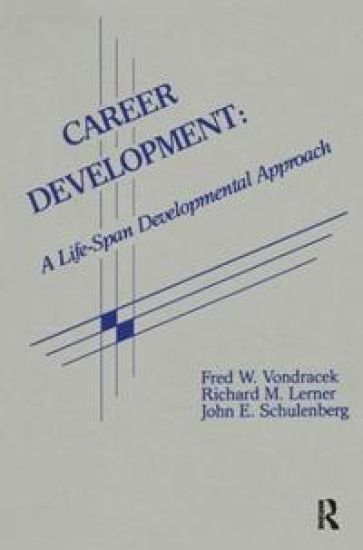
Career Development

Career Development

Fred W. Vondracek; Richard M. Lerner; John E. Schulenberg

Lawrence Erlbaum Associates Inc
1986
sidottu
This book places career development into the mainstream of human development research and theory. The result is a powerful synthesis of vocational psychology and the most recent advances in lifespan developmental psychology, thus offering a developmental-contextual framework for guiding theory and research in career development. Its chapters demonstrate the utility of this framework for the study of women's career development, health and careers, career intervention, and the selection and application of appropriate research methodologies. Scholars as well as intervention specialists should find this volume to be of great value. The adaption of this developmental-contextual framework for career development theory, research, and intervention may represent an important future for vocational psychology and the study of career development.
On the Nature of Human Plasticity

On the Nature of Human Plasticity

Richard M. Lerner

Cambridge University Press
1984
sidottu
To what extent are human beings capable of changing their physical characteristics and behavioural patterns over the course of their lives? This question has engaged scientists for decades: the fundamental issue is plasticity. In this wide-ranging book, Richard Lerner explores the relevant theory and empirical evidence in a variety of disciplines: molecular genetics, neuroanatomy, neurochemistry, evolutionary biology, anthropology, comparative and developmental psychology, and sociology. The processes studied by each of these disciplines show evidence of plasticity. Conclusions about plasticity have important implications for interventions aimed at enhancing human life, as well as for future research agendas. On the Nature of Human Plasticity will be a valuable resource for all those scientists concerned with human development at biological and social levels and for their students.