
Kirjailija
Richard M. Weaver
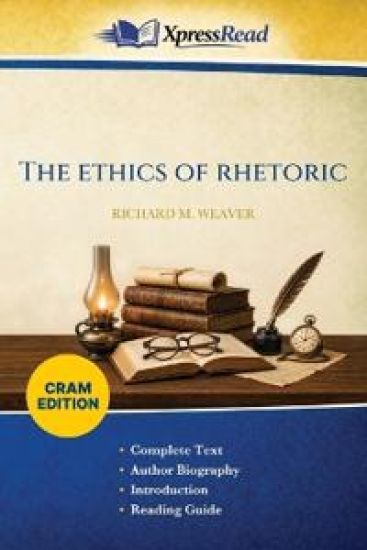
Kirjat ja teokset yhdessä paikassa: 13 kirjaa, julkaisuja vuosilta 1995–2026, suosituimpiin kuuluu The Ethics of Rhetoric (Cram Edition). Vertaile teosten hintoja ja tarkista saatavuus suomalaisista kirjakaupoista.
Nimi esiintyy myös muodoissa: Richard M Weaver
13 kirjaa
Kirjojen julkaisuvuodet: 1995–2026.
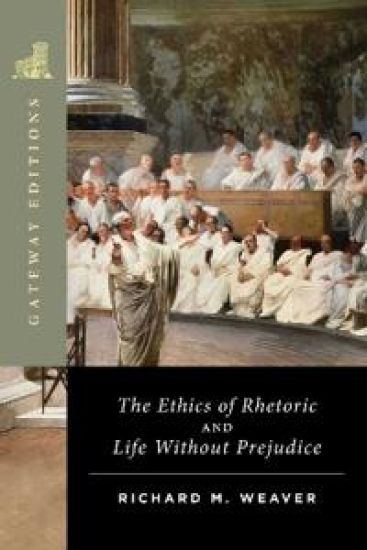
The Ethics of Rhetoric and Life Without Prejudice
Richard M. Weaver
REGNERY PUBLISHING INC
2025
pokkari
The landmark work The Ethics of Rhetoric and a selection of essays on language, modernity, education, and cultural freedom by scholar and rhetorician Richard Weaver, a leading figure in the rise of the modern conservative intellectual movement." As man speaks," said Seneca, "so is he." In The Ethics of Rhetoric, Richard Weaver demonstrates that rhetoric, the language used to move men to action, expresses or betrays the ultimate values of its user. Included alongside are a selection of essays previously published as Life Without Prejudice, with the title essay addressing how a single word can become a flail to beat enemies and make traditional distinctions taboo. Other essays included are "The Importance of Cultural Freedom," "Education and the Individual," "Two Types of American Individualism," "Reflections on Modernity," "The Best of Everything," "Up From Liberalism," and "Conservatism and Libertarianism: The Common Ground."
An essential work from scholar and rhetorician Richard Weaver, a leading figure in the rise of the modern conservative intellectual movement." In these valuable essays Weaver shows how the decline of the West is traceable to the loss of its ordering vision, and analyzes the forces that have contributed to that loss." - National Review"Visions of Order has attracted a large and growing body of admirers... This should not be surprising. The book includes several of Weaver's best essays... and its analyses of the nature of culture, the limits of science and technology, and the relationship between rhetoric and dialectic are of profound and lasting significance" - Ted J. Smith III, author of Steps Toward Restoration: The Consequences of Richard Weaver's Ideas"Weaver assaults the 'presentism,' scientism, and democratism that are subverting the high old order of our civilization and our human dignity." - Russell Kirk, author of The Conservative Mind
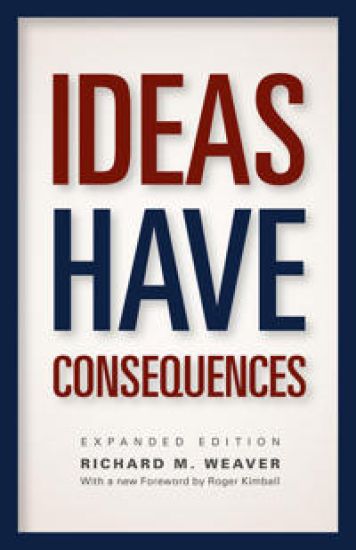
Ideas Have Consequences
Richard M. Weaver; Roger Kimball; Ted J. Smith
University of Chicago Press
2013
nidottu
Originally published in 1948, at the height of post-World War II optimism and confidence in collective security, Ideas Have Consequences uses "words hard as cannonballs" to present an unsparing diagnosis of the ills of the modern age. Widely read and debated at the time of its first publication, the book is now seen as one of the foundational texts of the modern conservative movement. In its pages, Richard M. Weaver argues that the decline of Western civilization resulted from the rising acceptance of relativism over absolute reality. In spite of increased knowledge, this retreat from the realist intellectual tradition has weakened the Western capacity to reason, with catastrophic consequences for social order and individual rights. But Weaver also offers a realistic remedy. These difficulties are the product not of necessity but of intelligent choice. And, today, as decades ago, the remedy lies in the renewed acceptance of absolute reality and the recognition that ideas-like actions-have consequences. This expanded edition of the classic work contains a foreword by New Criterion editor Roger Kimball that offers insight into the rich intellectual and historical contexts of Weaver and his work and an afterword by Ted J. Smith III that relates the remarkable story of the book's writing and publication.
Weaver's "Ethics of Rhetoric, " originally published in 1953, has been called his most important statement on the ethical and cultural role of rhetoric. A strong advocate of cultural conservatism, Weaver (1910-1953) argued strongly for the role of liberal studies in the face of what he saw as the encroachments of modern scientific and technological forces in society. He was particularly opposed to sociology. In rhetoric he drew many of his ideas from Plato, especially his "Phaedrus." As a result, all the main strands of Weaver's thought can be seen in this volume, beginning with his essay on the "Phaedrus" and proceeding through his discussion of evolution in the 1925 Scopes "Monkey Trial." In addition, this book includes studies of Lincoln, Burke, and Milton, and remarks about sociology and some proposals for modern rhetoric. Each essay poses issues still under discussion today.
The Ethics of Rhetoric is a book written by Richard M. Weaver that explores the ethical considerations of using language and persuasion to influence others. Weaver argues that rhetoric has the power to both uplift and degrade society, and that it is the responsibility of the rhetorician to use language in a way that promotes moral and ethical values. The book is divided into two parts. The first part examines the history of rhetoric and its role in society, while the second part focuses on the ethical principles that should guide the use of rhetoric. Weaver draws on classical and Christian philosophy to develop his argument, and he emphasizes the importance of using language to promote truth, justice, and beauty. Throughout the book, Weaver provides numerous examples of how rhetoric has been used for both good and evil throughout history. He also discusses the challenges that modern society faces in using rhetoric ethically, particularly in the realm of politics and advertising. Overall, The Ethics of Rhetoric is a thought-provoking exploration of the power of language and the ethical responsibilities of those who use it. It is a must-read for anyone interested in the intersection of language, ethics, and society. This scarce antiquarian book is a facsimile reprint of the old original and may contain some imperfections such as library marks and notations. Because we believe this work is culturally important, we have made it available as part of our commitment for protecting, preserving, and promoting the world's literature in affordable, high quality, modern editions, that are true to their original work.
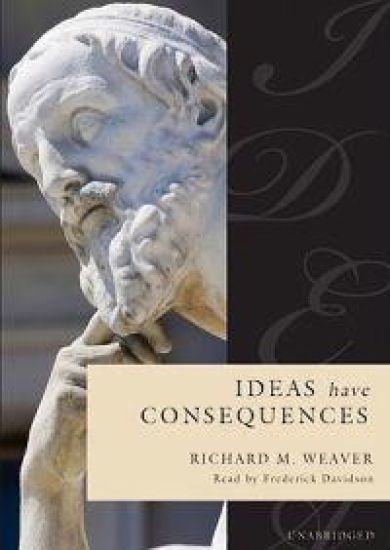
Richard M. Weaver taught English for many years at the University of Chicago, returning home to Weaverville, North Carolina each summer to plow his ancestral land. Out of his love of language and devotion to tradition, Weaver developed profound insights into the nature and the purpose of life. Ideas Have Consequences is the fruit of these twin disciplines. In what has become a classic work, Weaver asserts that the catastrophes of our age are the product not of necessity but of unintelligent choice. The cure lies in the right use of man's reason, in the renewed acceptance of an absolute reality, and in the recognition that ideas, like actions, have consequences.
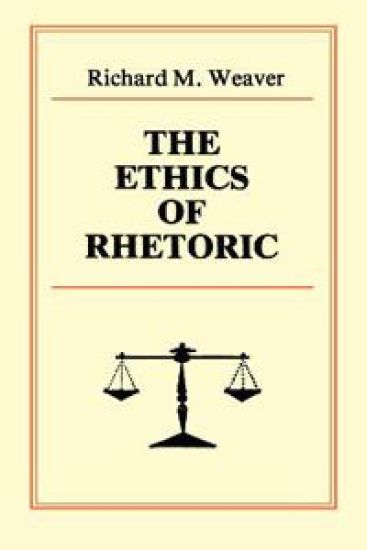
Weaver's Ethics of Rhetoric, originally published in 1953, has been called his most important statement on the ethical and cultural role of rhetoric. A strong advocate of cultural conservatism, Weaver (1910-1953) argued strongly for the role of liberal studies in the face of what he saw as the encroachments of modern scientific and technological forces in society. He was particularly opposed to sociology. In rhetoric he drew many of his ideas from Plato, especially his Phaedrus. As a result, all the main strands of Weaver's thought can be seen in this volume, beginning with his essay on the Phaedrus and proceeding through his discussion of evolution in the 1925 Scopes "Monkey Trial." In addition, this book includes studies of Lincoln, Burke, and Milton, and remarks about sociology and some proposals for modern rhetoric. Each essay poses issues still under discussion today.