Kirjojen hintavertailu – 12 859 827 kirjaa ja 27 kauppaa

Kirjailija

Richard Martin

Kirjat ja teokset yhdessä paikassa: 40 kirjaa, julkaisuja vuosilta 1974–2026, suosituimpiin kuuluu Formula for Electromagnetic Candy. Vertaile teosten hintoja ja tarkista saatavuus suomalaisista kirjakaupoista.

40 kirjaa

Kirjojen julkaisuvuodet: 1974–2026.

The Management of Procedure-Induced Anxiety in Children

The Management of Procedure-Induced Anxiety in Children

Richard Martin

Cambridge University Press
2021
pokkari
Procedure induced anxiety affects the majority of children undergoing medical intervention and has been directly linked to behaviour disturbances, psychological trauma, phobias and symptoms of PTSD. Despite this, there is currently no formal training relating to the management of procedure induced anxiety for medical personnel caring for children. A distillation of more than eighty years of research, this textbook examines the nature, prevalence and consequences of anxiety in children, alongside evidence-based strategies for its effective management. Designed as a training manual, it includes a comprehensive account of positive and negative aspects of behaviour that contribute to the successful management of anxious children. Chapters cover topics such as non-verbal and verbal communication, enhanced communication management strategies, support of children with autistic spectrum disorder, ADHD, learning difficulties, the use of premedication and the role that families play. Essential reading for anaesthetists and paediatricians and a valuable resource for any practitioner working with children.
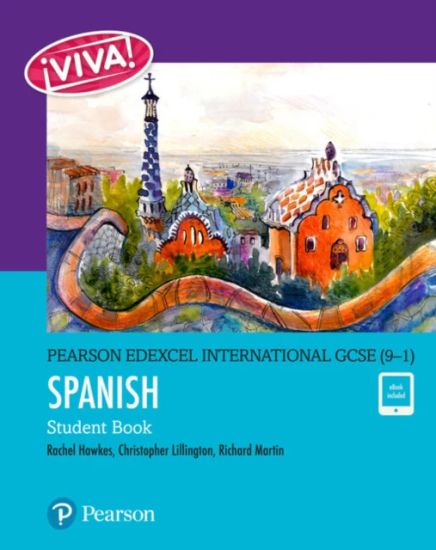
Pearson Edexcel International GCSE (9–1) Spanish Student Book

Pearson Edexcel International GCSE (9–1) Spanish Student Book

Christopher Lillington; Rachel Hawkes; Richard Martin

Edexcel Limited
2020
muu
Written specifically for Pearson Edexcel International GCSE 9-1 in Spanish Student Book with 3-year access to digital ActiveBook (eBook) Developed for international students Fully matched to the latest Pearson Edexcel specification Designed to supply students with the best preparation possible for the examination Online Teacher Resource Pack and Audio Pack also available, providing further planning, teaching and assessment support Written by a highly experienced author, Pearson Edexcel International GCSE (9–1) Spanish: Viva Student Book provides comprehensive coverage of the latest Pearson Edexcel specification. The Student Book has been developed with progression, international relevance and support at its core. Based on the successful ? Viva! course, with a structured approach to grammar and vocabulary which supports independent language use, the cultural content motivates and brings languages to life. Thorough exam preparation, practice and revision sections for every module include questions in the format of the assessments in the exam. Extra focus on the grammar task in the International GCSE exam, and plenty of ‘Exam Hints’ throughout support students in developing their exam technique to ensure the best possible learner outcomes. Three-year access to the eBook is included.
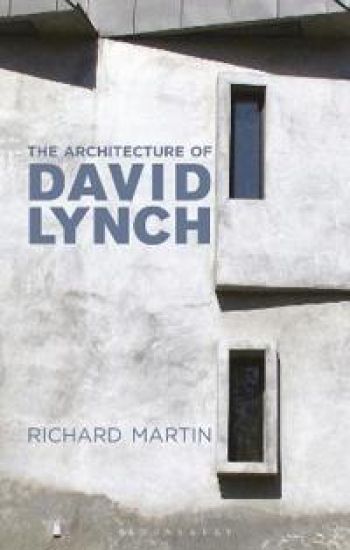
The Architecture of David Lynch

The Architecture of David Lynch

Richard Martin

Bloomsbury Visual Arts
2019
nidottu

Halvin toimitettuna 50,50 €

From the Red Room in Twin Peaks to Club Silencio in Mulholland Drive, the work of David Lynch contains some of the most remarkable spaces in contemporary culture. Richard Martin’s compelling study is the first sustained critical assessment of the role architecture and design play in Lynch’s films. Martin combines original research at Lynchian locations in Los Angeles, London and Lódz with insights from architects including Adolf Loos, Le Corbusier and Jean Nouvel and urban theorists such as Jane Jacobs and Edward Soja. In analyzing the towns, cities, homes, roads and stages found in Lynch’s work, Martin not only reveals their central importance for understanding this controversial and distinctive film-maker, but also suggests how Lynch’s films can provide a deeper understanding of the places and spaces in which we live.
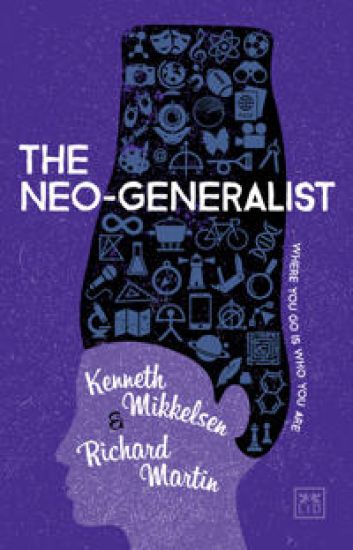
The Neo-Generalist

The Neo-Generalist

Kenneth Mikkelsen; Richard Martin

LID Publishing
2019
nidottu
Have you encountered difficulties describing what you do to other people? Have you ever labelled yourself in order to be understood? Is there a difference in the way that a generalist and a specialist can stay relevant? If you had to design an approach to education fit for the twenty-first century, what would it look like? How do you live a life of meaning if you live in more than one world? During an era still dominated by hyperspecialism and experts with 'the one right answer', the neo-generalist defies easy classification. They are tricksters who traverse multiple domains, living between categories and labels. Encompassing rather than rejecting, the neo-generalist is both specialist and generalist; a restless multidisciplinarian who is forever learning. The neo-generalist brings together diverse people, synthesising ideas and practice, addressing the big issues that confront us in order to shape a better future. They are curious, responsive, connective. In The Neo-Generalist, Kenneth Mikkelsen and Richard Martin examine what it is like to be in frequent motion on the specialist-generalist continuum. To illustrate their idea, they draw on stories from numerous disciplines and cultures; from business, art, science, education, activism and sport. In so doing, they explore the characteristics and behaviours of individuals who give expression to their neo-generalism, highlighting the social and organizational benefits they enable. These are border-crossing leaders, innovators, creators and explorers who are already stewarding tomorrow's world.
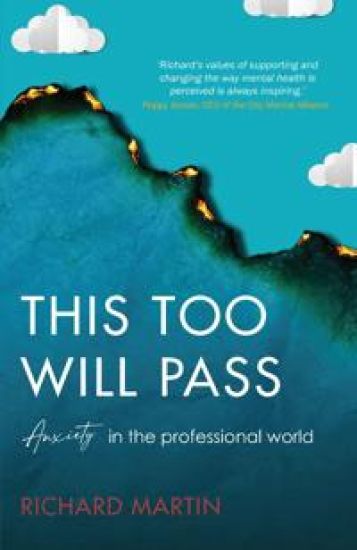
This Too Will Pass

This Too Will Pass

Richard Martin

Trigger Publishing
2019
pokkari
What happens when your world falls apart? How do you start again? By all markers, Richard Martin's life was a success: he was happily married, a great father, and lived a fulfilling life, professionally and personally. But the pressures of a high-flying legal career, his increasing social commitments, and family illness all took their toll. Richard pulls no punches in describing his breakdown and the crushing social anxiety that left him scared to even answer the front door. As his life crumbled around him, Richard fought hard to get to grips with the mental illness taking over his life. This is his inspirational story...
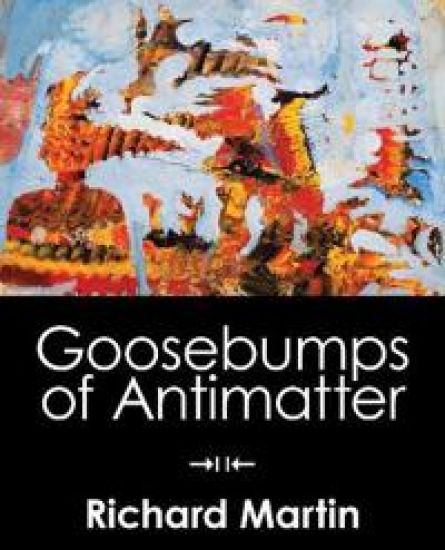
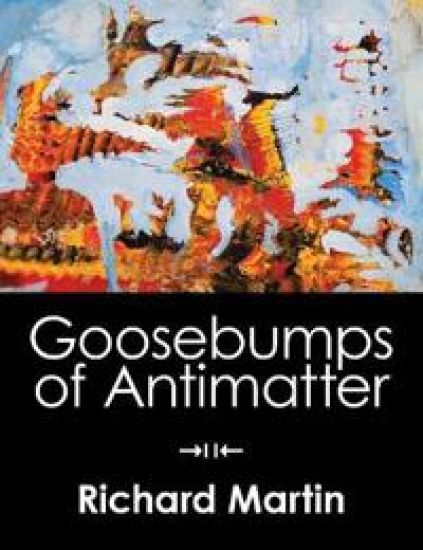
Goosebumps of Antimatter

Goosebumps of Antimatter

Richard Martin

Spuyten Duyvil
2018
pokkari
Edward Dorn was tasked by his teacher Olson's obsession with his teacher Pound's Cantos to write a poem containing history, which he subverted by humor ("Entrapment is this society's sole activity--& only laughter can blow it to rags."). Gunslinger, the historical poem containing humor Dorn invented, may be the closest predecessor to boink Dealing cards at Slinger's table, Dick Martin proposes "Television is the olive in the martini of chain reaction," a line Dorn would have traded on. By comparison, the emergent distraction of funny cowboy poems is merely another noisy fight down the bar. Martin's brand of humor, like the late master's, is determinedly social. Only the clinically mad tell jokes to themselves, and even then Artaud kept on writing for the stage. As neurotically self-absorbed as boink 's speaker is, Dick Martin is paradoxically one of our unblinking social critics--and part of the power of his book derives from his relentless re-estimations of his fate as a plastic card-carrying member of the popular culture it has taken a century for late capitalism to manifest. from Rich Blevins' review of boink (see Appendix A) Richard Martin's Marks does a remarkable thing: it makes metaphysical absurdities sound as conversational as a good joke. What looks like a surrealist writing his will and sounds like an irrepressible stand-up comedian is actually, fresh, green, recognizably original poetry. Guy Davenport, author of The death of Picasso I had great fun reading Richard Martin's stories. They're so relentlessly perverse, so acridly playful. They're driven by a remorselessly exact self-consciousness that refuses to accept the limits of its own powers of expression, a kind of anti-textuality that keeps pulling the rug out from under itself. Stephen-Paul Martin, author of The Ace of Lightning
Goosebumps of Antimatter

Goosebumps of Antimatter

Richard Martin

Spuyten Duyvil
2018
sidottu
Edward Dorn was tasked by his teacher Olson's obsession with his teacher Pound's Cantos to write a poem containing history, which he subverted by humor ("Entrapment is this society's sole activity--& only laughter can blow it to rags."). Gunslinger, the historical poem containing humor Dorn invented, may be the closest predecessor to boink Dealing cards at Slinger's table, Dick Martin proposes "Television is the olive in the martini of chain reaction," a line Dorn would have traded on. By comparison, the emergent distraction of funny cowboy poems is merely another noisy fight down the bar. Martin's brand of humor, like the late master's, is determinedly social. Only the clinically mad tell jokes to themselves, and even then Artaud kept on writing for the stage. As neurotically self-absorbed as boink 's speaker is, Dick Martin is paradoxically one of our unblinking social critics--and part of the power of his book derives from his relentless re-estimations of his fate as a plastic card-carrying member of the popular culture it has taken a century for late capitalism to manifest. from Rich Blevins' review of boink (see Appendix A) Richard Martin's Marks does a remarkable thing: it makes metaphysical absurdities sound as conversational as a good joke. What looks like a surrealist writing his will and sounds like an irrepressible stand-up comedian is actually, fresh, green, recognizably original poetry. Guy Davenport, author of The death of Picasso I had great fun reading Richard Martin's stories. They're so relentlessly perverse, so acridly playful. They're driven by a remorselessly exact self-consciousness that refuses to accept the limits of its own powers of expression, a kind of anti-textuality that keeps pulling the rug out from under itself. Stephen-Paul Martin, author of The Ace of Lightning
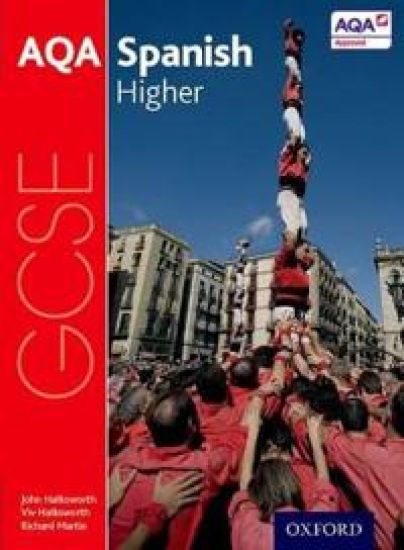
AQA GCSE Spanish: Higher Student Book

AQA GCSE Spanish: Higher Student Book

John Halksworth; Viv Halksworth; Richard Martin

Oxford University Press
2016
nidottu
Please note this book is suitable for any student studying: Exam board: AQA Level: GCSE Subject: Spanish First teaching: 2016 First exams: 2018 AQA GCSE Spanish delivers the breadth and rigour required to develop the productive skills students need to manipulate language confidently and help them to prepare for assessments. This Student Books has been approved by AQA. The audio to accompany this book is available to purchase on CD. It is also available to institutions via Kerboodle.
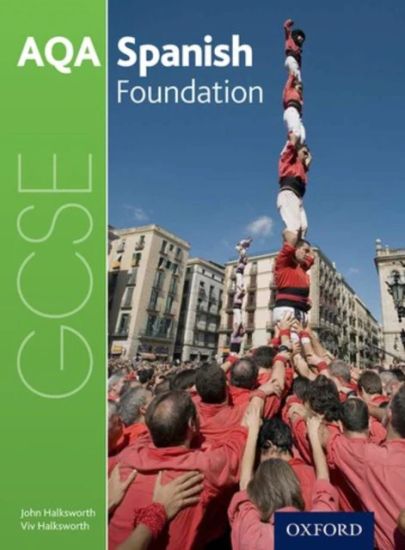
AQA GCSE Spanish: Foundation Student Book

AQA GCSE Spanish: Foundation Student Book

John Halksworth; Vivien Halksworth; Richard Martin

Oxford University Press
2016
nidottu
Please note this book is suitable for any student studying: Exam board: AQA Level: GCSE Subject: Spanish First teaching: 2016 First exams: 2018 AQA GCSE Spanish delivers the breadth and rigour required to develop the productive skills students need to manipulate language confidently and help them to prepare for assessments. This Student Books has been approved by AQA. The audio to accompany this book is available to purchase on CD. It is also available to institutions via Kerboodle.
Techniques in the Neighborhood of Sleep

Techniques in the Neighborhood of Sleep

Richard Martin

Spuyten Duyvil Publishing
2015
nidottu
Satire, humor, a surreal trippiness, a Spicer fan, many books of poetry-imagine your school principal is a poet Richard Martin's Techniques in the Neighborhood of Sleep is wonderful. As an insomniac for all my wakefulness I don't think I've written a poem about that. "I went to sleep in a haystack of thought." " now I am addressing you as if you were me". His poems are "the legacy of what blossoms at night," "the IQ of sleep" "a pathological liar/not a member of Congress," the "ramblings of a disassociated man." When he quotes Rimbaud, "...to attain the unknown by disorganizing all the senses," he touches on something at the brilliant heart of his own poetry. "Creator inside us without an agenda." "Love is now/The heart prefers spontaneity." "Contact High Context High/Content High," "the mind shifts as language shifts/Language shifts the mind." "Once I wanted to dissolve into love/so I did" "Language is the main character." I'm inspired, gonna write my insomniac poem finally. Sharon Doubiago The lines of Richard Martin's poems have the crisp offhandedness of wire brushes deftly applied to drum skin. Indeed, they are musical, sensational and breed philosophical considerations. The lines seem to want to slip by unassumingly but that you pause on them because the words they are written in recall so appropriately a world you know--a world that they illuminate and thus add to, rather than describe. Whole poems work that way, with a power and fascination that seem to have come from nowhere, or just around the corner. Bill Berkson
The Architecture of David Lynch

The Architecture of David Lynch

Richard Martin

Bloomsbury Academic
2014
sidottu

Halvin toimitettuna 218,30 €

From the Red Room in Twin Peaks to Club Silencio in Mulholland Drive, the work of David Lynch contains some of the most remarkable spaces in contemporary culture. Richard Martin’s compelling study is the first sustained critical assessment of the role architecture and design play in Lynch’s films. Martin combines original research at Lynchian locations in Los Angeles, London and Lódz with insights from architects including Adolf Loos, Le Corbusier and Jean Nouvel and urban theorists such as Jane Jacobs and Edward Soja. In analyzing the towns, cities, homes, roads and stages found in Lynch’s work, Martin not only reveals their central importance for understanding this controversial and distinctive film-maker,but also suggests how Lynch’s films can provide a deeper understanding of the places and spaces in which we live.
SuperFuel

SuperFuel

Richard Martin

Palgrave Macmillan
2013
nidottu
At the dawn of the atomic age, uranium and thorium were equally important as the elements of choice in researching nuclear energy - either one could have powered the world's reactors. But it was uranium that won out, and thorium, which is far cleaner, safer, and more abundant than uranium, was relegated to the dustbin of science. With it went the possibility of creating a low-risk nuclear energy source to power our planet. Now, as the world searches for cheap, non-carbon-emitting energy sources, thorium is reemerging as an overlooked solution. As one of the first energy experts to promote the development of thorium, award-winning science writer Richard Martin combines science, new historical research, and a timely business narrative to show how we can wean ourselves off our fossil-fuel addiction and shift to a lower-risk energy source. At once a big think book and a science manifesto, SuperFuel challenges us to look back at what could have been different in history as well as forward to an energy revolution in the making.
Superfuel

Superfuel

Richard Martin

Palgrave Macmillan
2012
sidottu
In this groundbreaking account of an energy revolution in the making, award-winning science writer Richard Martin introduces us to thorium, a radioactive element and alternative nuclear fuel that is far safer, cleaner, and more abundant than uranium. At the dawn of the Atomic Age, thorium and uranium seemed to be in close competition as the fuel of the future. Uranium, with its ability to undergo fission and produce explosive material for atomic weapons, won out over its more pacific sister element, relegating thorium to the dustbin of science. Now, as we grapple with the perils of nuclear energy and rogue atomic weapons, and mankind confronts the specter of global climate change, thorium isreemerging as the overlooked energy source that can wean us off our fossil-fuel addiction and avert the risk of nuclear meltdown. The Untold Story of Thorium: *Thorium-powered reactors produce zero nuclear waste and can produce electricity that's much cheaper and cleaner than burning coal. *Thorium can't be used in nuclear weapons. *Thorium power was developed in the U. S. during the Cold War, and we even ran a thorium-fueled reactor for five years. *France, Norway, Canada, Brazil, Russia, and, most importantly, India and China, are building thoriumbased reactors. India plans to produce the bulk of its power from thorium reactors by 2030, while China is attempting to build a domestic industry that will license thorium technology to other nations. *A small group of activists and outsiders is working, with the help of Silicon Valley investors, to build a thorium-power industry in the United States.
Development Poverty and Politics

Development Poverty and Politics

Richard Martin; Ashna Mathema

Routledge
2011
nidottu
Top down . . . bottom up . . . what works? This book explores development from theperspective of the poor. Who are they? What lives do they live? What matters tothem? And most importantly, what can they do about it? Martin and Mathema debate how people can be given legitimate control of theirown environment, and how governments can work with them. How do communitiesand conditions drive behavior? What interventions are appropriate and how can weapproach development imaginatively? This is not about usurping governance – but revisiting structures that the developedworld has come to accept, and placing the power of decision in the hands of thepeople it affects. Nor it is about money . . . it’s about people, and about how we can make our worldwork for everyone.
Development Poverty and Politics

Development Poverty and Politics

Richard Martin; Ashna Mathema

Routledge
2009
sidottu
Top down . . . bottom up . . . what works? This book explores development from theperspective of the poor. Who are they? What lives do they live? What matters tothem? And most importantly, what can they do about it? Martin and Mathema debate how people can be given legitimate control of theirown environment, and how governments can work with them. How do communitiesand conditions drive behavior? What interventions are appropriate and how can weapproach development imaginatively? This is not about usurping governance – but revisiting structures that the developedworld has come to accept, and placing the power of decision in the hands of thepeople it affects. Nor it is about money . . . it’s about people, and about how we can make our worldwork for everyone.