Kirjojen hintavertailu – 12 859 818 kirjaa ja 27 kauppaa

Kirjailija

Richard Miles

Kirjat ja teokset yhdessä paikassa: 19 kirjaa, julkaisuja vuosilta 1991–2026, suosituimpiin kuuluu Kunskap och information : den mänskliga intelligensen potential och fara. Vertaile teosten hintoja ja tarkista saatavuus suomalaisista kirjakaupoista.

19 kirjaa

Kirjojen julkaisuvuodet: 1991–2026.

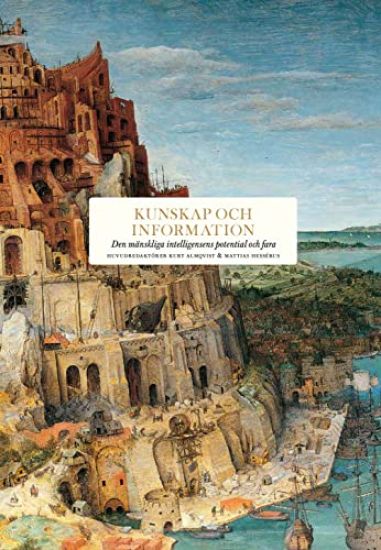
Kunskap och information : den mänskliga intelligensen potential och fara

Kunskap och information : den mänskliga intelligensen potential och fara

Mark Pagel; Mark Plotkin; John Hemming; Jessica Frazier; Richard Miles; Erica Benner; Peter Burke; Nathan Shachar; Suzana Herculano-Houzel; Mariano Sigman; Martin Ingvar; Michael Goodman; Gill Bennett; Simon Mayall; Maria Borelius; Andrew Keen; Nicholas Carr; Peter Frankopan; Christopher Coker; Janne Haaland Matláry; Elisabeth Kendall; Clarie Lehmann; David Goodhart; Brendan O´Neill; Fraser Nelson; Iain Martin; Adrian Wooldridge; S.J. M. Antoni J. Ucerler

Bokförlaget Stolpe
2021
sidottu
Vi har kommit långt från de religioner, myter och grundarberättelser som lade grunden till människans tidiga förståelse av världen och allting i den, och våra kunskaper har på senare tid ökat exponentiellt. I den här boken diskuterar ledande forskare inom konst och vetenskap hur kunskap och information har bevarats och förmedlats i historien, vilket leder oss fram till dagens digitala tidsålder och de många utmaningar som den ställer oss inför, inte minst beträffande våra persondata. Kommer vårt informationssamhälle, under växande spänning mellan en kunskapselit och dem som känner sig utestängda från offentlig diskussion och beslutsfattande, liksom under ökad friktion om tolkningsfrihet och yttrandefrihet i den akademiska världen, att bli en upplysningstid eller går vi in i en ny mörk tid för kunskapen? Texterna i den här illustrerade antologin härrör från det internationellt välrenommerade Engelsbergsseminariet 2018. Huvudredaktörer är Kurt Almqvist och Mattias Hessérus.
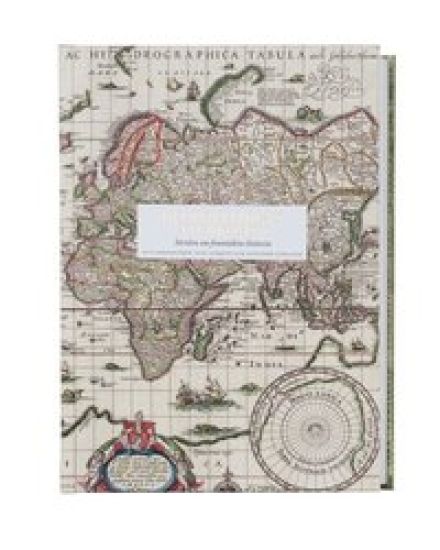
Geopolitikens återkomst : striden om framtidens historia

Geopolitikens återkomst : striden om framtidens historia

Jeremy Black; Philip Bobbitt; Michael Broers; Roger Crowley; Gregory Feifer; Noah Feldman; Jonathan Fenby; David Frum; Gabriel Gorodetsky; Peter Heather; Josef Joffe; Anna-Lena Laurén; John H. Maurer; Sean McMeekin; Walter Russell Mead; Richard Miles; Fraser Nelson; Richard Overy; Lincoln Paine; Andrew Preston; Morris Rossabi; Charly Salonius-Pasternak; Norman Stone; Barry Strauss; Mikael Wigell

Bokförlaget Stolpe
2021
sidottu
Det var inte länge sedan idén om att vi nått historiens slut vann kraft och spridning: tanken att människans sociokulturella evolution nått fram till en punkt där den knappast kunde nå längre. Ett kvartssekel senare verkar denna optimism ha försvunnit. I stället bevittnar vi nu geopolitikens återkomst. Ett tjugotal experter utforskar i denna antologi hur vi hamnade där vi är idag men också vart vi kan tänkas vara på väg. Huvudredaktörer är Kurt Almqvist och Alexander Linklater.
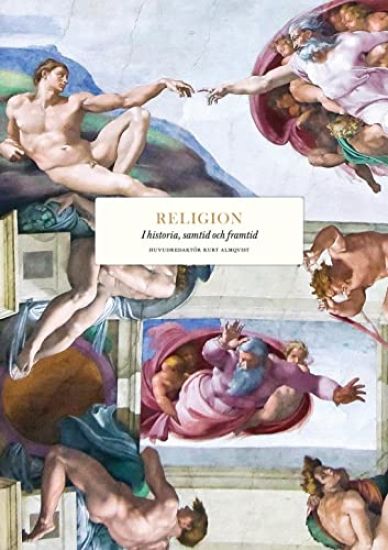
Religion : i historia, samtid och framtid

Religion : i historia, samtid och framtid

Janne Haaland Matlary; Daniel T. Potts; Julius J. Lipner; Robin Osborne; John Scheid; Martin Goodman; Diarmaid Macculloch; Elaine Pagels; Reza Aslan; Wouter J. Hanegraaff; Gary Lachman; Malise Ruthven; Marco Pasi; William O’Reilly; Ariel Glucklich; Wolfgang Palaver; Mona Siddiqui; Candida R. Moss; Esther Benbassa; Richard Miles; A.N. Wilson; Jessica Frazier; Simon May; Armin W. Geertz; Harvey Whitehouse; Pär Stenbäck; Benedetta Berti; Göran Rosenberg; Jayne Svenungsson; Adrian Wooldridge; Chakravarthi Ram-Prasad

Bokförlaget Stolpe
2020
sidottu
Tron på en styrande, övergripande, himmelsk princip har följt människan genom historien. Mer än 80 procent av världens befolkning har idag en religiös tillhörighet och även i sekulära stater fortsätter religionen att spela en viktig roll. Det går inte att förstå politik och internationella relationer idag utan att inkludera religionen som en aspekt av det kulturella sammanhanget. Essäerna i denna antologi, som härrör från Engelsbergsseminariet 2014, spänner över en mångfald ämnen i dagens såväl som gårdagens samhällen. De utforskar religionen i relation till människans villkor och skildrar hur den manifesterar sig i individens egna upplevelser. För att förstå oss själva behöver vi också förstå religionen.
Politik och ideologier : perspektiv från Engelbergsseminariet 2011

Politik och ideologier : perspektiv från Engelbergsseminariet 2011

Ulrike Ackermann; Scott Atran; James Bartolomew; Michael Bentley; Paul Berman; Vernon Bogdanor; Nick Boles; Robert Cooper; Stephan Eisel; Richard J Evans; Michael Freeden; David Frum; Dick Harrison; Anna Jardfeldt; Oliver Kamm; Robert D Kaplan; John Keane; Johan Lagerkvist; Mark Leonard; John Lloyd; Hisham Melhem; Richard Miles; Kenneth Minogue; Minxin Pei; Malise Ruthven; Roger Scruton; Per Schlingman; Nathan Shachar; Robert J Shapiro; Maria Wetterstrand

Bokförlaget Atlantis
2012
sidottu
Ideologiernas död har förutspåtts ett flertal gånger under åren, men gång på gång har vi också sett gamla ideologier återvända under nya beteckningar. I denna bok behandlar vi både nuet och det förflutna. Vi belyser en del av de politiska idéer och system i historien som fortsätter att utöva inflytande på samtiden. Vi granskar också den auktoritära statskapitalismen, som i fallet Kina, och ställer frågan om den är hållbar. Om så är fallet, hur kommer den att inverka på världen? Kommer den att bli förebilden, precis som liberal demokrati under lång tid har varit det för många människor och nationer? Kommer islamism, främlings- och invandrarfientliga partier och andra rörelser i marginalen av det politiska och ideologiska spektrumet i Europa, USA och den islamiska världen att befästa den rådande ordningen eller undergräva tilltron till den? Vilka är globaliseringens konsekvenser för politik och ideologi? Kommer svaret att bli ett världsparlament, en världsomfattande miljörörelse eller olika strömningar med religion som gemensam nämnare? Eller kommer vi kanske i stället att få se ett annat gammalt spöke återvända: nationalismen? Boken ingår i serien Engelsbergsseminarierna och utges i samarbete med Bokförlaget Atlantis och Axel och Margaret Ax:son Johnsons stiftelse för almännyttiga ändamål.
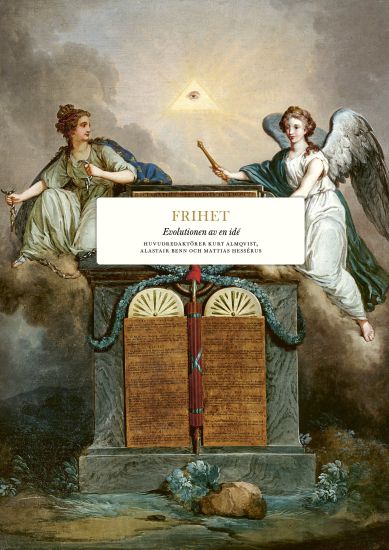
Frihet : evolutionen av en idé

Frihet : evolutionen av en idé

Kemi Badenoch; John Bew; Adrian Bradshaw; Hal Brands; Richard Chartres; Christopher Coker; Marie Kawthar Daouda; Peter Frankopan; Jessica Frazier; Francis Gavin; Matthew Goodwin; Katja Hoyer; Jeremy Jennings; Robert Johnson; Alexander Lee; Margaret MacMillan; Janne Haaland Matláry; Richard Miles; Fraser Nelson; Jesse Norman; Iuliia Osmolovska; Charly Salonius-Pasternak; Agnès C. Poirier; Alina Polyakova; Sergey Radchenko; Juliet Samuel; Mary Sarotte; Kori Schake; Mark J. Schiefsky; Brendan Simms; Alexander McCall Smith

Bokförlaget Stolpe
2024
sidottu
Hur har idén om frihet utvecklats och förändrats under århundradena? Vad betyder frihet idag och vad behöver vi göra för att behålla de friheter som generationer män och kvinnor har kämpat, och till och med dött, för? Frihet är en grundförutsättning för att ett samhälle ska frodas och utvecklas. Dess historia är brokig: mänsklighetens eviga kamp mot ödet, våra förfäder som outtröttligt stred för att upprätta tanke- och religionsfrihet, demokratiska friheter i samhället i stort och kampen mot auktoritära regimer och tyranner världen över. I denna essäsamling utforskar ledande akademiker, författare och historiker vad frihet har betytt genom tiderna. De reflekterar över detta ständigt pågående drama och varför vi så villigt offrar oss för friheten när den hotas.
The Kingdom of Iron and Rust: Crisis and the Quest for a New Golden Age in the Roman Empire
An exciting new history of the Roman Empire's struggle for survival in a turbulent era rocked by crises, when the specter of its decline and fall loomed over it as never before. Rome's decline, as historian Cassius Dio famously put it, "from a kingdom of gold to one of iron and rust," seemed inevitable. After a brilliant Golden Age, the ominous specter of crisis, chaos, and collapse loomed over the Roman Empire. The first cracks began to appear during the celebrated rule of Marcus Aurelius with a series of bloody wars against marauding barbarians who smashed through the Empire's northern frontiers. In the succeeding decades the Empire was rocked by a series of bloody usurpations, civil wars, barbarian attacks, epidemics and economic woes. In The Kingdom of Iron and Rust, Richard Miles examines the impact of these military, political, social, and economic setbacks on the Roman Empire during the third and fourth centuries AD. These crises were often conflated and exaggerated by emperors and religious and intellectual elites to promote their own aims and agendas. By endlessly prophesising the decline and fall of the Empire, these leaders manipulated public opinion by promoting themselves as saviours who would lead Rome into a new golden age. Miles argues that this catastrophising, although often a cynical political ploy, created the conditions for a series of visionary emperors to implement the radical reforms required to revitalise the Roman Empire at a time when its dominance was under threat as never before from internal fragmentation and external foes. In this sweeping history that takes readers from sprawling army bases in the Sahara to the blood-drenched halls of the imperial court, from the high-brow philosophical schools to the apocalypse-obsessed religious cults, Miles demonstrates how the Roman obsession with their empire's inevitable demise acted as a self-fulfilling prophecy. Miles asks the question of whether it was only through crisis, both real and imagined, that the imperial behemoth that was the Roman Empire managed to sustain its greatness.
Your Own Stranger

Your Own Stranger

Richard Miles

Onion River Press
2023
pokkari
Text to come, text to come, text to come, text to come, text to come, text to come, text to come, text to come, text to come, text to come, text to come, text to come, text to come, text to come, text to come, text to come, text to come, text to come, text to come, text to come, text to come, text to come, text to come, text to come, text to come, text to come, text to come,
Alight

Alight

Richard Miles

Onion River Press
2023
pokkari
Poems/meditations on the conjunctions of space and time, the fluidity and unity of existence and the nature of innocence, death and salvation. Also perceptions on daily walks and views and perspectives from the top of his childhood maple tree that the author bore his entire life.
Alternative Dispute Resolution in the Regulatory Process

Alternative Dispute Resolution in the Regulatory Process

Deirdre McCarthy Gallagher; Richard Miles; Jerrilynne Purdy

Michigan State University Press
2020
nidottu
An in-depth look at the institutionalization of alternative dispute resolution (ADR) processes in the federal and state regulatory arenas over the past twenty-five years, this volume showcases the value of these processes and highlights the potential for their expanded application and growth. It describes ADR techniques, how to use them, and how to integrate them into existing processes, using examples from the Federal Energy Regulatory Commission and three state utility regulatory commissions. The book recounts ADR successes, recognizing that traditional litigative methods may not always meet the needs of agencies, the parties, or the public. Institutionalizing these processes requires a systematic commitment to different approaches to problem-solving and, ultimately, cultural change. The authors spearheaded initiatives to integrate these processes and skills at the federal level. Drawing from valuable insights gained from their experience, the authors introduce a versatile new ADR system design model, the Voices of Value, which aims to enhance input, creativity, and effectiveness in regulatory and other public arenas as well as the private sector.
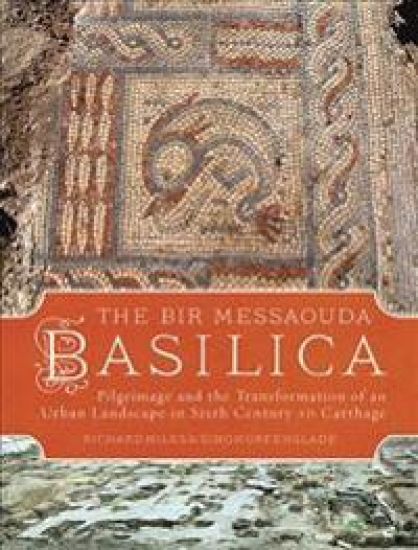
The Bir Messaouda Basilica

The Bir Messaouda Basilica

Richard Miles; Simon Greenslade

Oxbow Books
2019
sidottu
This volume charts the radical transformation of an inner city neighbourhood in late antique Carthage which was excavated over a five-year period by a team from the University of Cambridge. Bordering the main thoroughfare leading from the Brysa Hill to the ports, the neighbourhood remained primarily a residential one from the second century until 530s AD when a substantial basilica was constructed over the eastern half of the insula. Further extensive modifications were made to the basilica half-a-century later when the structures on the western half of the insula were demolished and the basilica greatly enlarged with the addition of a new east-west aisles, a large monumental baptistery and a crypt. By carefully reconstructing the complex architectural plan of this innovative building, this study shows how the re-modelled Bir Messaouda basilica was transformed into a major pilgrimage centre overturning established tradition that located such complexes outside the city walls. The Bir Messaouda basilica provides important insights into the transition between Vandal and Byzantine control of the city, the development of a new Christian inter-mural urban landscape in the sixth century AD, and the significance of the pilgrimage in reinforcing ecclesiastical authority in post-Justinianic North Africa.
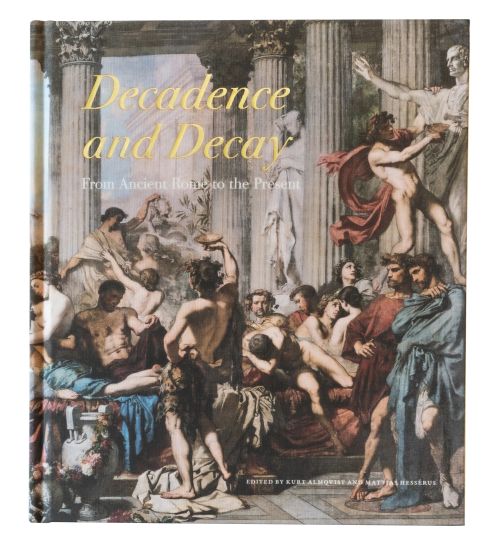
Decadence and decay : from ancient Rome to the present

Decadence and decay : from ancient Rome to the present

Faramerz Dabhiowala; Melanie Grundmann; Richard Whatmore; Mattias Hessérus; Adoreé Villany; Andrew Huddleston; Saul David; Andrew Preston; Daniela Cammack; Pernille Røge; Adam Tooze; J.R. McNeill; Jonathan Rees; Robert Beuregard; William O’Reilly; Michael Nelson; Peter Heather; Robert Coates-Stephans; Neil McLynn; Richard Miles

Bokförlaget Stolpe
2019
sidottu

Halvin toimitettuna 40,40 €

The fear of living in the end times has a long history. In Decadence and Decay, a group of distinguished international scholars describe how societies over time have handled and interpreted the concept of decline. In times of unrest and transition, declinism the notion that a culture or civilisation is headed towards irreversible decline tends to capture the public imagination. The essays in this volume address how notions of decadence and decay have been used both as opprobrium and as a form of self-definition and empowerment an instrument to protect individualism against collectivistic oppression. From ancient Rome to the present, ideas and expressions of decadence and decay have played a critical role in how we perceive the world.
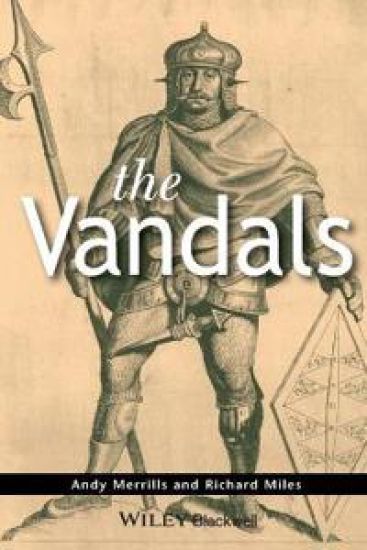
The Vandals

The Vandals

Andrew Merrills; Richard Miles

John Wiley Sons Inc
2014
nidottu

Halvin toimitettuna 44,60 €

The Vandals is the first book available in the English Language dedicated to exploring the sudden rise and dramatic fall of this complex North African Kingdom. This complete history provides a full account of the Vandals and re-evaluates key aspects of the society including: Political and economic structures such as the complex foreign policy which combined diplomatic alliances and marriages with brutal raidingThe extraordinary cultural development of secular learning, and the religious struggles that threatened to tear the state apartThe nature of Vandal identity from a social and gender perspective.
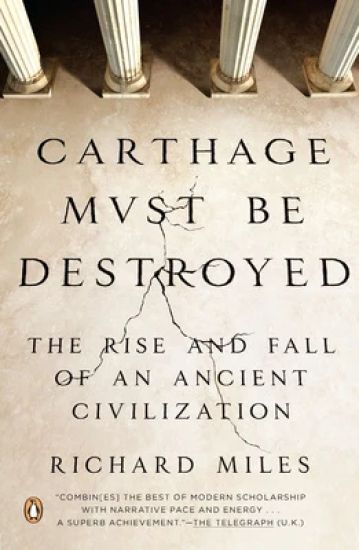
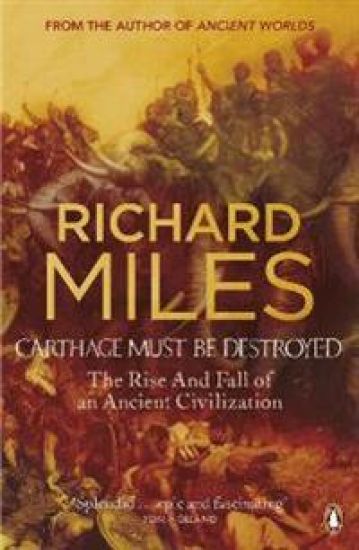
Carthage Must Be Destroyed: The Rise and Fall of an Ancient Civilization

Carthage Must Be Destroyed: The Rise and Fall of an Ancient Civilization

Richard Miles

PENGUIN BOOKS
2012
nidottu

Halvin toimitettuna 22,80 €

The first full-scale history of Hannibal's Carthage in decades and "a convincing and enthralling narrative." (The Economist ) Drawing on a wealth of new research, archaeologist, historian, and master storyteller Richard Miles resurrects the civilization that ancient Rome struggled so mightily to expunge. This monumental work charts the entirety of Carthage's history, from its origins among the Phoenician settlements of Lebanon to its apotheosis as a Mediterranean empire whose epic land-and-sea clash with Rome made a legend of Hannibal and shaped the course of Western history. Carthage Must Be Destroyed reintroduces readers to the ancient glory of a lost people and their generations-long struggle against an implacable enemy.
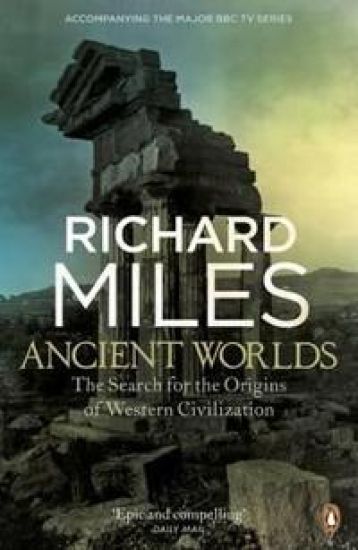
Ancient Worlds

Ancient Worlds

Richard Miles

Penguin Books Ltd
2011
pokkari
Accompanying the major BBC TV series, Richard Miles's Ancient Worlds tells the epic story of civilization, and the cities that made us who we are. The path of human progress is one of enlightenment and cruelty, achievement and bloodshed, creation and destruction. Here Richard Miles reaches back into our distant past to bring alive its most glorious and terrible people and places: from the first ever city in Mesopotamia to the death cults of Egypt, from the Phoenician seafarers who invented the alphabet to the brutal Assyrian empire, and on to the great city-states of Athens and Rome. By choosing to live together with strangers in vast urban settings, Miles shows, humans harnessed the very best and the worst of ourselves, setting civilization in motion and forging the modern world. 'Epic and compelling' Daily Mail 'An epic, spanning five millennia and half the globe' Daily Telegraph 'Engaging ... full of interesting things about the radical social experiment of the city-state, and the new ways of living it permitted' Independent 'Ancient Worlds really does put flesh on the bones of history and Richard Miles brings long lost cities to life' Observer Richard Miles is the author of Carthage Must Be Destroyed: The Rise and Fall of an Ancient Civilization. A six-part TV series of Ancient Worlds was broadcast on BBC2 in 2011. He teaches classics at the University of Sydney and was previously a Newton Trust Lecturer in the Faculty of Classics and Fellow and Director of Studies at Trinity Hall, University of Cambridge.
Carthage Must Be Destroyed

Carthage Must Be Destroyed

Richard Miles

Penguin Books Ltd
2011
pokkari

Halvin toimitettuna 22,00 €

Richard Miles's Carthage Must Be Destroyed: The Rise and Fall of Ancient Civilization charts one of the bloodiest dramas of the Ancient World: the devastating struggle to the death between Carthage and Rome. In an epic series of battles, the mighty empires of Carthage and Rome vied for supremacy of the Mediterranean - before the Carthaginians finally buckled and their great capital city was razed to the ground, burning for six days and nights, its inhabitants slaughtered or enslaved. Carthage Must Be Destroyed tells the story of this lost empire - from its origins in Lebanon to its apotheosis as the greatest sea-power of its age - and brings to life legendary figures such as the military genius Hannibal, who led his troops across the Alps and almost toppled Roman power, but would ultimately lead his people to disaster. 'Splendid ... epic and fascinating' Tom Holland 'An enthralling narrative' Economist 'The Carthaginians finally get their due ... well-paced and compelling ... In bringing the real Carthage to the fore, Carthage Must Be Destroyed makes a substantial contribution to the field' Financial Times 'Lively and compelling' Literary Review 'Thoughtful and meticulous ... fascinating' Guardian 'A superb achievement' Sunday Telegraph Richard Miles is Professor of Classics at the University of Sydney and a Fellow of Trinity Hall, Cambridge University. He has written widely on Punic, Roman and Vandal North Africa and has directed archaeological excavations in Carthage and Rome. He is also the author of Ancient Worlds and the presenter and writer of the series Ancient Worlds for BBC2.
Neuronal Networks of the Hippocampus

Neuronal Networks of the Hippocampus

Roger D. Traub; Richard Miles

Cambridge University Press
2008
pokkari
The questions of how a large population of neurons in the brain functions, how synchronized firing of neurons is achieved, and what factors regulate how many and which neurons fire under different conditions form the central theme of this book. Using a combined experimental-theoretical approach unique in neuroscience, the authors present important techniques for the physiological reconstruction of a large biological neuronal network. They begin by discussing experimental studies of the CA3 hippocampal region in vitro, focusing on single-cell and synaptic electrophysiology, particularly the effects a single neuron exerts on its neighbours. This is followed by a description of a computer model of the system, first for individual cells then for the entire detailed network, and the model is compared with experiments under a variety of conditions. The results shed significant light into the mechanisms of epilepsy, electroencephalograms, and biological oscillations and provide an excellent test case for theories of neural networks. Researchers in neurophysiology and physiological psychology, physicians concerned with epilepsy and related disorders, and researchers in computational neuroscience will find this book an invaluable resource.
Neuronal Networks of the Hippocampus

Neuronal Networks of the Hippocampus

Roger D. Traub; Richard Miles

Cambridge University Press
1991
sidottu
The questions of how a large population of neurons in the brain functions, how synchronized firing of neurons is achieved, and what factors regulate how many and which neurons fire under different conditions form the central theme of this book. Using a combined experimental-theoretical approach unique in neuroscience, the authors present important techniques for the physiological reconstruction of a large biological neuronal network. They begin by discussing experimental studies of the CA3 hippocampal region in vitro, focusing on single-cell and synaptic electrophysiology, particularly the effects a single neuron exerts on its neighbours. This is followed by a description of a computer model of the system, first for individual cells then for the entire detailed network, and the model is compared with experiments under a variety of conditions. The results shed significant light into the mechanisms of epilepsy, electroencephalograms, and biological oscillations and provide an excellent test case for theories of neural networks. Researchers in neurophysiology and physiological psychology, physicians concerned with epilepsy and related disorders, and researchers in computational neuroscience will find this book an invaluable resource.