

Kirjailija
Richard Moon
Kirjat ja teokset yhdessä paikassa: 5 kirjaa, julkaisuja vuosilta 2018–2026, suosituimpiin kuuluu Moon on a Spoon. Vertaile teosten hintoja ja tarkista saatavuus suomalaisista kirjakaupoista.
5 kirjaa
Kirjojen julkaisuvuodet: 2018–2026.
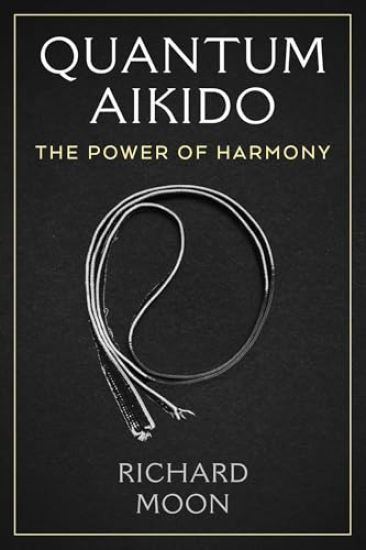
Quantum Aikido
Richard Moon
INNER TRADITIONS BEAR AND COMPANY
2026
pokkari
Halvin toimitettuna 22,90 €
How modern physics confirms the energetic power Aikido• Draws on quantum mechanics and physics, like wave–particle duality and the unified field theory, to define the energetics of Aikido• Explores concepts of Aikido such as musubi (to tie together), connection, and reconciliation to re-link the individual with the universal• Provides lessons for everyday life to enhance personal and professional relationships and diffuse threatening situationsAikido is a martial art that offers a philosophy of harmonizing energy. The techniques of Aikido focus on aligning oneself with the world in total harmony and this begins by winning over the discord in our own minds. Richard applies the insights of quantum mechanics to explore key concepts of Aikido such as musubi (to tie together), connection, unification, and reconciliation to re-link the individual with the universal. As quantum physics and Aikido reveal, the dualism of two conflicting opposites is an illusion. It is the unified field of the two that creates life and from which reality emanates. The essential teaching of Quantum Aikido is to live as an expression of the single source of yin and yang rather than in polarity, or bouncing between the two. Embodying this teaching transforms one’s experience of life from being a struggle to a dance. These lessons can be applied in everyday life to enhance personal and professional relationships and diffuse threatening situations. The author’s creative, flow-oriented approach shows how to negotiate challenges by absorbing and using the energy of any given situation to create innovative solutions. This state of being exercises whole-brain thinking and self-reflexivity to help readers develop the measured temperament of a warrior. Readers will learn how to tap energetic sources so that each moment is an opportunity to resolve problems with spontaneous creativity. Learn to become spontaneous and free with the energetics of Quantum Aikido. By offering ways to unify our being and live in acceptance and harmony, this book opens doorways to transformation and positive change.
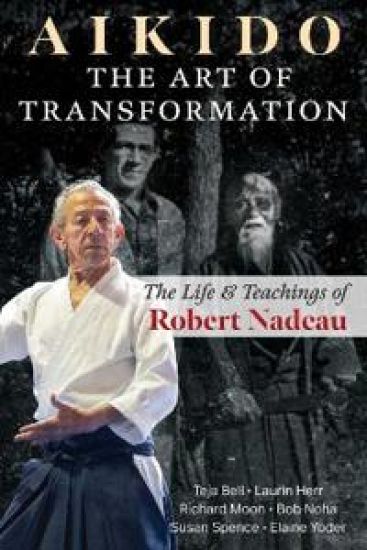
Aikido: The Art of Transformation
Teja Bell; Laurin Herr; Richard Moon; Bob Noha; Susan Spence; Elaine Yoder
INNER TRADITIONS BEAR AND COMPANY
2024
pokkari
Firsthand accounts of the life, practice, and teachings of pioneering Aikido master Robert Nadeau, direct disciple of Aikido founder Morihei Ueshiba • Explores Nadeau’s personal journey and pioneering role in the spread of Aikido, including firsthand accounts and historical photographs published for the first time • Explains Nadeau’s unique teaching, his core concepts, and basic practices centered on energy refinement, direct experience and inner transformation • Presents inspiring personal stories about Nadeau contributed by students, including Dan Millman, Richard Strozzi-Heckler, Peter Ralston, and Renée Gregorio A widely influential figure in the development of Aikido in America, Robert Nadeau is known as one of the few American direct disciples of Aikido’s founder Morihei Ueshiba Osensei. Now an 8th dan Aikido master teacher, Nadeau has taught generations of students, and several have become prominent teachers in their own right. However, he has never written about his life or philosophy, always reserving his most pointed lessons for those who practice with him in person. This book tells the story of Robert Nadeau’s life journey and his distinctive approach to teaching Aikido as a way to access the inner energetic aspects of the art, a transformational approach with universal applications in daily life, even for non-Aikidoists. The authors explore Nadeau’s early interest in martial arts and all things spiritual as a teenager in California in the 1950s, his seminal training under Morihei Ueshiba at Aikido Hombu Dojo in Tokyo in the 1960s, and the following six decades of training, experimenting, refining, and teaching as he worked to introduce Aikido to the wider world, even beyond the traditional dojo. They lay out Nadeau’s core concepts, describe his simple-but-effective practices for personal development, and convey his time-tested approach to the inner training at the heart of Aikido in a very accessible way. They also include first-person accounts from Nadeau’s students, including Dan Millman, Richard Strozzi-Heckler, Peter Ralston, and Renée Gregorio, who recall their personal experiences of training with him, retell conversations with him, and describe insights and lessons learned, sharing how he affected their lives, sometimes quite profoundly. Bringing the story of Robert Nadeau’s life into focus, this book presents, for the first time, the profound lessons and deep impact of a pioneering teacher who’s been central to the spread of Aikido in the West.

To allow or restrict hate speech is a hotly debated issue in many societies. While the right to freedom of speech is fundamental to liberal democracies, most countries have accepted that hate speech causes significant harm and ought to be regulated. Richard Moon examines the application of hate speech laws when religion is either the source or target of such speech. Moon describes the various legal restrictions on hate speech, religious insult, and blasphemy in Canada, Europe and elsewhere, and uses cases from different jurisdictions to illustrate the particular challenges raised by religious hate speech. The issues addressed are highly topical: speech that attacks religious communities, specifically anti-Muslim rhetoric, and hateful speech that is based on religious doctrine or scripture, such as anti-gay speech. The book draws on a rich understanding of freedom of expression, the harms of hate speech, and the role of religion in public life.

To allow or restrict hate speech is a hotly debated issue in many societies. While the right to freedom of speech is fundamental to liberal democracies, most countries have accepted that hate speech causes significant harm and ought to be regulated. Richard Moon examines the application of hate speech laws when religion is either the source or target of such speech. Moon describes the various legal restrictions on hate speech, religious insult, and blasphemy in Canada, Europe and elsewhere, and uses cases from different jurisdictions to illustrate the particular challenges raised by religious hate speech. The issues addressed are highly topical: speech that attacks religious communities, specifically anti-Muslim rhetoric, and hateful speech that is based on religious doctrine or scripture, such as anti-gay speech. The book draws on a rich understanding of freedom of expression, the harms of hate speech, and the role of religion in public life.