Kirjojen hintavertailu – 12 903 725 kirjaa ja 27 kauppaa

Kirjailija

Richard Ned Lebow

Kirjat ja teokset yhdessä paikassa: 39 kirjaa, julkaisuja vuosilta 1984–2027, suosituimpiin kuuluu Justice and International Order. Vertaile teosten hintoja ja tarkista saatavuus suomalaisista kirjakaupoista.

39 kirjaa

Kirjojen julkaisuvuodet: 1984–2027.

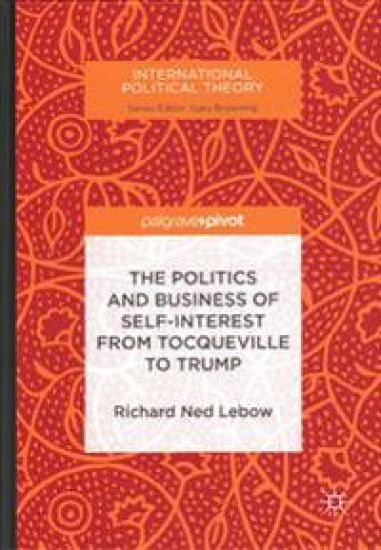
The Politics and Business of Self-Interest from Tocqueville to Trump

The Politics and Business of Self-Interest from Tocqueville to Trump

Richard Ned Lebow

Springer International Publishing AG
2017
sidottu
Self-interest is an important human motive and this book explores its evolution in the United States and its consequences for politics, business, and personal relationships. In the postwar era American understandings of self-interest have moved away from Alexis de Tocqueville’s concept of “self-interest well-understood” – in which people recognize that their interests are served by the success of the community of which they are part – towards “individualism” – by which he meant narrow framing that often leads people to pursue their interests at the expense of the community. The book documents this evolution through qualitative and quantitative content analysis of presidential speeches, television sitcoms and popular music, before exploring its negative consequences for democracy.

Avoiding War, Making Peace

Avoiding War, Making Peace

Richard Ned Lebow

Springer International Publishing AG
2017
nidottu
This book recapitulates and extends Ned Lebow’s decades’ long research on conflict management and resolution. It updates his critique of conventional and nuclear deterrence, analysis of reassurance, and the conditions in which international conflicts may be amenable to resolution, or failing that, a significant reduction in tensions. This text offers a holistic approach to conflict management and resolution by exploring interactions among deterrence, reassurance, and diplomacy, and how they might most effectively be staged and combined.
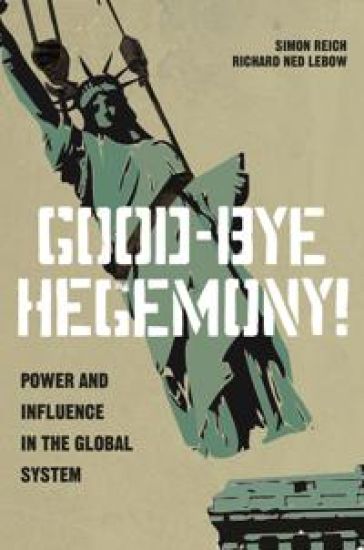
Good-Bye Hegemony!

Good-Bye Hegemony!

Simon Reich; Richard Ned Lebow

Princeton University Press
2014
pokkari
Many policymakers, journalists, and scholars insist that U. S. hegemony is essential for warding off global chaos. Good-Bye Hegemony! argues that hegemony is a fiction propagated to support a large defense establishment, justify American claims to world leadership, and buttress the self-esteem of voters. It is also contrary to American interests and the global order. Simon Reich and Richard Ned Lebow argue that hegemony should instead find expression in agenda setting, economic custodianship, and the sponsorship of global initiatives. Today, these functions are diffused through the system, with European countries, China, and lesser powers making important contributions. In contrast, the United States has often been a source of political and economic instability. Rejecting the focus on power common to American realists and liberals, the authors offer a novel analysis of influence. In the process, they differentiate influence from power and power from material resources. Their analysis shows why the United States, the greatest power the world has ever seen, is increasingly incapable of translating its power into influence. Reich and Lebow use their analysis to formulate a more realistic place for America in world affairs.
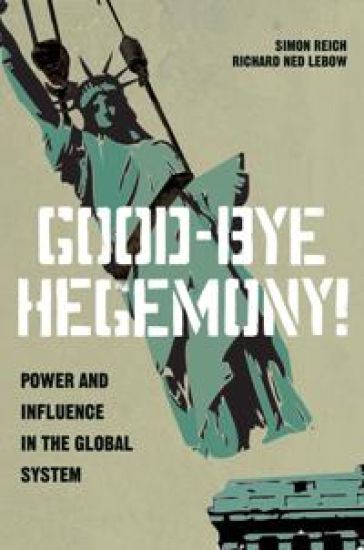
Good-Bye Hegemony!

Good-Bye Hegemony!

Simon Reich; Richard Ned Lebow

Princeton University Press
2014
sidottu
Many policymakers, journalists, and scholars insist that U. S. hegemony is essential for warding off global chaos. Good-Bye Hegemony! argues that hegemony is a fiction propagated to support a large defense establishment, justify American claims to world leadership, and buttress the self-esteem of voters. It is also contrary to American interests and the global order. Simon Reich and Richard Ned Lebow argue that hegemony should instead find expression in agenda setting, economic custodianship, and the sponsorship of global initiatives. Today, these functions are diffused through the system, with European countries, China, and lesser powers making important contributions. In contrast, the United States has often been a source of political and economic instability. Rejecting the focus on power common to American realists and liberals, the authors offer a novel analysis of influence. In the process, they differentiate influence from power and power from material resources. Their analysis shows why the United States, the greatest power the world has ever seen, is increasingly incapable of translating its power into influence. Reich and Lebow use their analysis to formulate a more realistic place for America in world affairs.
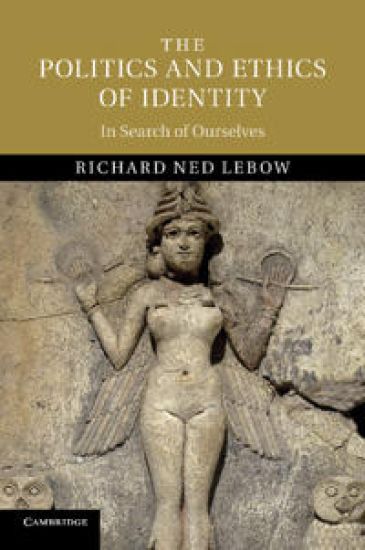
The Politics and Ethics of Identity

The Politics and Ethics of Identity

Richard Ned Lebow

Cambridge University Press
2014
pokkari
We are multiple, fragmented, and changing selves who, nevertheless, believe we have unique and consistent identities. What accounts for this illusion? Why has the problem of identity become so central in post-war scholarship, fiction, and the media? Following Hegel, Richard Ned Lebow contends that the defining psychological feature of modernity is the tension between our reflexive and social selves. To address this problem Westerners have developed four generic strategies of identity construction that are associated with four distinct political orientations. Lebow develops his arguments through comparative analysis of ancient and modern literary, philosophical, religious, and musical texts. He asks how we might come to terms with the fragmented and illusionary nature of our identities and explores some political and ethical implications of doing so.
Constructing Cause in International Relations

Constructing Cause in International Relations

Richard Ned Lebow

Cambridge University Press
2014
sidottu
Cause is a problematic concept in social science, as in all fields of knowledge. We organise information in terms of cause and effect to impose order on the world, but this can impede a more sophisticated understanding. In his latest book, Richard Ned Lebow reviews understandings of cause in physics and philosophy and concludes that no formulation is logically defensible and universal in its coverage. This is because cause is not a feature of the world but a cognitive shorthand we use to make sense of it. In practice, causal inference is always rhetorical and must accordingly be judged on grounds of practicality. Lebow offers a new approach - 'inefficient causation' - that is constructivist in its emphasis on the reasons people have for acting as they do, but turns to other approaches to understand the aggregation of their behaviour. This novel approach builds on general understandings and idiosyncratic features of context.
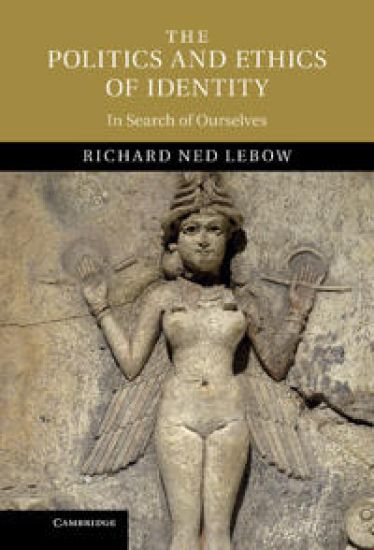
The Politics and Ethics of Identity

The Politics and Ethics of Identity

Richard Ned Lebow

Cambridge University Press
2012
sidottu
We are multiple, fragmented, and changing selves who, nevertheless, believe we have unique and consistent identities. What accounts for this illusion? Why has the problem of identity become so central in post-war scholarship, fiction, and the media? Following Hegel, Richard Ned Lebow contends that the defining psychological feature of modernity is the tension between our reflexive and social selves. To address this problem Westerners have developed four generic strategies of identity construction that are associated with four distinct political orientations. Lebow develops his arguments through comparative analysis of ancient and modern literary, philosophical, religious, and musical texts. He asks how we might come to terms with the fragmented and illusionary nature of our identities and explores some political and ethical implications of doing so.
Why Nations Fight

Why Nations Fight

Richard Ned Lebow

Cambridge University Press
2010
pokkari
Four generic motives have historically led states to initiate war: fear, interest, standing, and revenge. Using an original data set, Richard Ned Lebow examines the distribution of wars across three and a half centuries and argues that, contrary to conventional wisdom, only a minority of these were motivated by security or material interest. Instead, the majority are the result of a quest for standing, and for revenge - an attempt to get even with states who had previously made successful territorial grabs. Lebow maintains that today none of these motives are effectively served by war - it is increasingly counterproductive - and that there is growing recognition of this political reality. His analysis allows for more fine-grained and persuasive forecasts about the future of war as well as highlighting areas of uncertainty.
Why Nations Fight

Why Nations Fight

Richard Ned Lebow

Cambridge University Press
2010
sidottu
Four generic motives have historically led states to initiate war: fear, interest, standing, and revenge. Using an original data set, Richard Ned Lebow examines the distribution of wars across three and a half centuries and argues that, contrary to conventional wisdom, only a minority of these were motivated by security or material interest. Instead, the majority are the result of a quest for standing, and for revenge - an attempt to get even with states who had previously made successful territorial grabs. Lebow maintains that today none of these motives are effectively served by war - it is increasingly counterproductive - and that there is growing recognition of this political reality. His analysis allows for more fine-grained and persuasive forecasts about the future of war as well as highlighting areas of uncertainty.
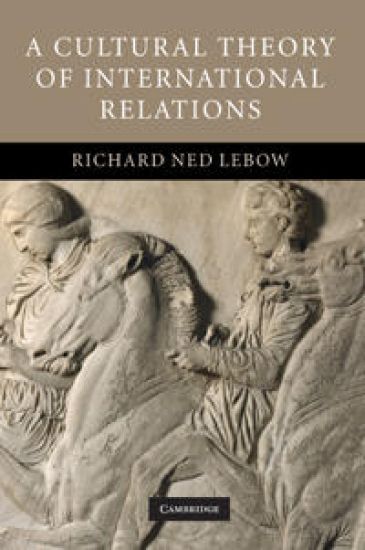
A Cultural Theory of International Relations

A Cultural Theory of International Relations

Richard Ned Lebow

Cambridge University Press
2008
pokkari
In this volume, Richard Ned Lebow introduces his own constructivist theory of political order and international relations based on theories of motives and identity formation drawn from the ancient Greeks. His theory stresses the human need for self-esteem, and shows how it influences political behavior at every level of social aggregation. Lebow develops ideal-type worlds associated with four motives: appetite, spirit, reason and fear, and demonstrates how each generates a different logic concerning cooperation, conflict and risk-taking. Expanding and documenting the utility of his theory in a series of historical case studies, ranging from classical Greece to the war in Iraq, he presents a novel explanation for the rise of the state and the causes of war, and offers a reformulation of prospect theory. This is a novel theory of politics by one of the world's leading scholars of international relations.
A Cultural Theory of International Relations

A Cultural Theory of International Relations

Richard Ned Lebow

Cambridge University Press
2008
sidottu
In this volume, Richard Ned Lebow introduces his own constructivist theory of political order and international relations based on theories of motives and identity formation drawn from the ancient Greeks. His theory stresses the human need for self-esteem, and shows how it influences political behavior at every level of social aggregation. Lebow develops ideal-type worlds associated with four motives: appetite, spirit, reason and fear, and demonstrates how each generates a different logic concerning cooperation, conflict and risk-taking. Expanding and documenting the utility of his theory in a series of historical case studies, ranging from classical Greece to the war in Iraq, he presents a novel explanation for the rise of the state and the causes of war, and offers a reformulation of prospect theory. This is a novel theory of politics by one of the world's leading scholars of international relations.
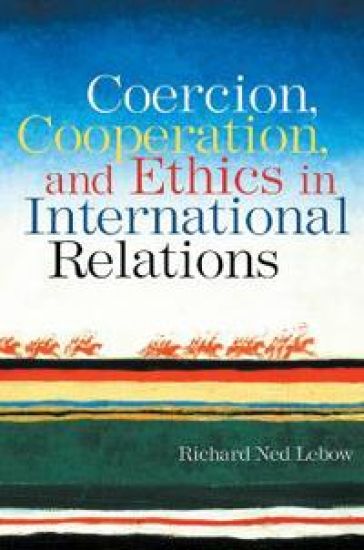
Coercion, Cooperation, and Ethics in International Relations
This volume brings together the recent essays of Richard Ned Lebow, one of the leading scholars of international relations and US foreign policy. Lebow's work has centred on the instrumental value of ethics in foreign policy decision making and the disastrous consequences which follow when ethical standards are flouted. Unlike most realists who have considered ethical considerations irrelevant in states' calculations of their national interest, Lebow has argued that self interest, and hence, national interest can only be formulated intelligently within a language of justice and morality. The essays here build on this pervasive theme in Lebow's work by presenting his substantive and compelling critique of strategies of deterrence and compellence, illustrating empirically and normatively how these strategies often produce results counter to those that are intended. The last section of the book, on counterfactuals, brings together another set of related articles which continue to probe the relationship between ethics and policy. They do so by exploring the contingency of events to suggest the subjective, and often self-fulfilling, nature of the frameworks we use to evaluate policy choices.
Coercion, Cooperation, and Ethics in International Relations
This volume brings together the recent essays of Richard Ned Lebow, one of the leading scholars of international relations and US foreign policy. Lebow's work has centred on the instrumental value of ethics in foreign policy decision making and the disastrous consequences which follow when ethical standards are flouted. Unlike most realists who have considered ethical considerations irrelevant in states' calculations of their national interest, Lebow has argued that self interest, and hence, national interest can only be formulated intelligently within a language of justice and morality. The essays here build on this pervasive theme in Lebow's work by presenting his substantive and compelling critique of strategies of deterrence and compellence, illustrating empirically and normatively how these strategies often produce results counter to those that are intended. The last section of the book, on counterfactuals, brings together another set of related articles which continue to probe the relationship between ethics and policy. They do so by exploring the contingency of events to suggest the subjective, and often self-fulfilling, nature of the frameworks we use to evaluate policy choices.
The Tragic Vision of Politics

The Tragic Vision of Politics

Richard Ned Lebow

Cambridge University Press
2003
sidottu
Is it possible to preserve national security through ethical policies? Richard Ned Lebow seeks to show that ethics are actually essential to the national interest. Recapturing the wisdom of classical realism through a close reading of the texts of Thucydides, Clausewitz and Hans Morgenthau, Lebow argues that, unlike many modern realists, classic realists saw close links between domestic and international politics, and between interests and ethics. Lebow uses this analysis to offer a powerful critique of post-Cold War American foreign policy. He also develops an ontological foundation for ethics and makes the case for an alternate ontology for social science based on Greek tragedy's understanding of life and politics. This is a topical and accessible book, written by a leading scholar in the field.
The Art of Bargaining

The Art of Bargaining

Richard Ned Lebow

Johns Hopkins University Press
1996
sidottu
Bargaining for what we want or need is a part of our everyday lives. But how often do we stop to consider all the factors that go into the bargaining process? How often do we look at the strategies and tactics available to us? And how often do we hurt our own position by failing to do so? In The Art of Bargaining, Richard Ned Lebow draws on his years of experience with the United States government, NATO, and numerous European and American businesses to explain the principles of negotiation-from buying a car to planning business mergers to signing an international treaty. Unlike studies that examine only what is said and done at the negotiation table, The Art of Bargaining looks at the context in which negotiation takes place-and shows why some of the most critical decisions about bargaining are made even before the parties sit down to talk. Lebow begins with a discussion of the nature of bargaining and why people choose to bargain. Because bargaining is a strategy, it is imperative to consider the end goal before deciding on the means for achieving it. Lebow explores the relationship between bargaining and its goals and compares the bargaining process with some other strategies-such as coercion or threats-that can achieve similar goals. An in-depth study of the decision to negotiate reveals that there are three distinct approaches to the process: coordination (mutual accommodation of both parties' interests); punishment (the use of threats to influence agreement); and reward (making agreements seem more attractive through incentives). Lebow explains how all three approaches can be used effectively once the context of the negotiation has been properly analyzed. Using concrete examples of negotiation from everyday life as well as world politics, The Art of Bargaining provides the reader with ways to increase bargaining leverage, analyze the strategies and goals of bargaining opponents, and overcome the obstacles that present themselves at the negotiation table.
We All Lost the Cold War

We All Lost the Cold War

Richard Ned Lebow; Janice Gross Stein

Princeton University Press
1995
pokkari
Drawing on recently declassified documents and extensive interviews with Soviet and American policy-makers, among them several important figures speaking for public record for the first time, Ned Lebow and Janice Stein cast new light on the effect of nuclear threats in two of the tensest moments of the Cold War: the Cuban Missile Crisis of 1962 and the confrontations arising out of the Arab-Israeli war of 1973. They conclude that the strategy of deterrence prolonged rather than ended the conflict between the superpowers.
Psychology and Deterrence

Psychology and Deterrence

Robert Jervis; Richard Ned Lebow; Janice Gross Stein

Johns Hopkins University Press
1989
pokkari

Halvin toimitettuna 37,90 €

Now available in paperback, Psychology and Deterrence reveals deterrence strategy's hidden and generally simplistic assumptions about the nature of power and aggression, threat and response, and calculation and behavior in the international arena.
Nuclear Crisis Management: A Dangerous Illusion

Nuclear Crisis Management: A Dangerous Illusion

Richard Ned LeBow

CORNELL UNIVERSITY PRESS
1988
nidottu
Richard Ned Lebow spells out the implications of historical experience for American perceptions of the place of crisis management in superpower strategic relations. identifying and discussing three reasons for the outbreak of World War I--preemption, loss of control, and miscalculated escalation--he argues that all three are equally serious threats to peace and survival. He documents how psychological stress in past crises has induced erratic, dysfunctional behavior from national leaders, even paralysis. A nuclear crisis, he argues, would generate even more acute stress because of the unprecedented destructiveness of nuclear weapons and the extreme time pressure that leaders are likely to face.
Between Peace and War

Between Peace and War

Richard Ned Lebow

Johns Hopkins University Press
1984
pokkari
When is war is the result of a nation's deliberate decision to advance its vital interests by force of arms? When is it brought about by miscalculation? What causes policy-makers to misjudge the consequences of their actions? This book takes up these and other questions in a comparative study of the origins, politics, and outcomes of international crisis based on data from 27 historical cases.