

Kirjailija
Richard Nelson
Kirjat ja teokset yhdessä paikassa: 85 kirjaa, julkaisuja vuosilta 1989–2026, suosituimpiin kuuluu Rodney's Wife. Vertaile teosten hintoja ja tarkista saatavuus suomalaisista kirjakaupoista.
85 kirjaa
Kirjojen julkaisuvuodet: 1989–2026.
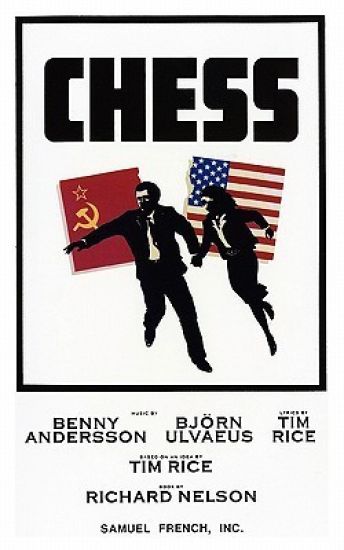
Book by Richard Nelson. Lyrics by Tim Rice. Music by Bjorn Ulvaeus and Benny AnderssonMusical / 9m 2f 1f child plus ensemble / Scenery: Var. sets. The collaborators on Chess are giants of rock music and rock musicals and they have created a complex rock opera that played to full Broadway houses and standing ovations. Here the ancient game becomes a metaphor for romantic rivalries competitive gamesmanship super power politics and international intrigues. The pawns in this drama form a
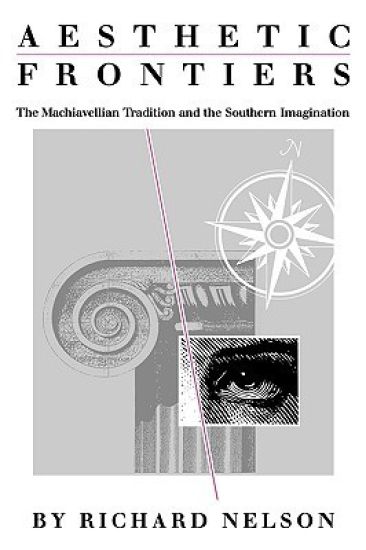
In this stirring book Richard Nelson offers a new interpretation of the transformation of Anglo-American intellectual and aesthetic culture since 1890. He shows that southern intellectuals--aesthetic theorists, literary critics, historians, and political thinkers--confronted head on the tensions Machiavelli observed between power and value, creativity and tradition, and romanticism and realism while seeking a cultural ideal that balances politics and aesthetics. The Antebellum South, the most militant hotbed of republicanism in the antebellum period, remained at the center of the effort to undergo revision after 1890. In the work of New Agrarians and the New Critics Nelson sees intellectuals of the South attempting to gain aesthetic distance from a rejected heroic tradition of republicanism while at the same time reinforcing many of its ideals. He shows that literary devices such as irony form a powerful aesthetic formula in the work of such figures as Frederick Jackson Turner, Tom Watson, Thomas Dixon, Jr., W. J. Cash, C. Vann Woodward, Langston Hughes, Allen Tate, and Robert Penn Warren. Each of these, he shows, explored the inner contradictions of a Machiavellian tradition, with its desire to preserve both authority and innovation. Confronting a series of crises beginning with the perceived loss of the frontier in the 1890s and culminating in the complete separation of politics and aesthetics during World War II, these agrarian critics, as Nelson perceives them, south to transform political decay into aesthetic vitality. By drawing upon and transforming formulas like the southern romance, the jeremiad, and the metaphor of the frontier, these thinkers intuitively drew upon the Machiavellian aesthetic of reinventing the heroic idea in order to preserve political authority that has lost its legitimacy.
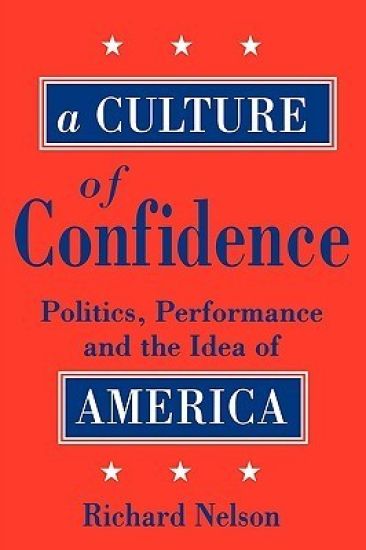
Compelled by the ubiquitous power of mass entertainment, politics has adopted theatrical language and the rhetoric of performance as the strategy for winning public favor. We have come to expect the politicians we elect to be performers. Now, more than at any other time in American history, we conceive the world of politics to be a world of theatre in which every politician's campaign must sell us something. In this persuasive study of culture politics, Richard Nelson examines the concept of confidence and doubt as the cement that holds the nation together. He explores confidence in its dual meanings--of trusting faith and of deception, guile, and illusion. His book confirms that our national identity is deeply imbued by both. One binds the populace through development of trust and personalism. The other leads to national crises through disillusionment and doubt. To explore this duality, Nelson draws on a diverse set of examples from intellectual and mass cultures. These include (1)reconsidering the role of performance in civil religion in America through the prisms of Edmund Burke and Max Weber, (2) Will Herberg's prophetic role in transforming the Protestant ethic into the Judeo--Christian ethic and in rejecting the possibility of an authentic self, (3) the common languages of religion and entertainment in Reinhold Niebuhr and film maker Frank Capra, and in the Cold War new evangelism of Fulton J. Sheen, Oral Roberts, and Billy Graham, (4) the American Adam and the politics of confidence in the Bush-Clinton and Gingrich election campaigns, (5) the cult of personality in the careers of Ronald Reagan, Normal Mailer, and James Baldwin. Nelson argues that through the influence of the artist, the advertiser, and the actor, as well as from the liberal-conservative tension that exists in the dual meaning of confidence, we derive our idea of America.
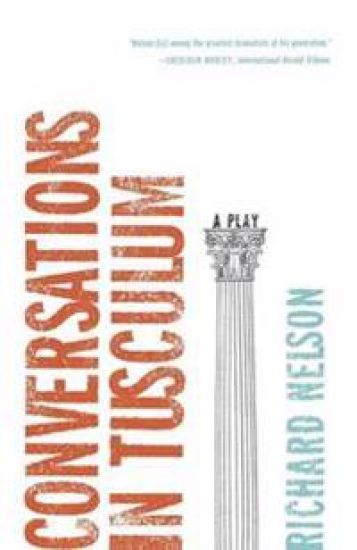
A riveting new work about power and the abuse of power in ancient Rome that has startling resonance with our age, Conversations in Tusculum reimagines the intense interaction among Brutus, Cassius, and Cicero leading up to the assassination of Julius Caesar, the leader they had once followed into battle but whom they have come to despise. Passionate in their beliefs but torn by their sense of loyalty, they struggle to continue believing in him despite their fear that his actions may pose great dangers to the nation. Conversations in Tusculum had its world premiere at the Public Theater in New York City in March 2008."

The Left is personified in Richard Nelson's idealistic and intellectual characters, whose fascinating friendships are as fraught as the political history through which they've lived. "You can't watch LEFT] without thinking about Lillian Hellman, Mary McCarthy, and Diana Trilling. Richard Nelson ... hasn't brought the famous, undignified Hellman/McCarthy/Trilling feud directly onstage, but he invokes their noisy ghosts. They resonate. It's uncanny. Imagine I'M NOT RAPPAPORT with Simon Gray's wit and Doris Lessing's brains. We first meet Marianne, a retired college president, and Eddie, who writes essays on pornography for The New York Review of Books, in the Adirondacks. They are waiting for Elinor, an editor at a Manhattan publishing house, to arrive by motorboat and explain her memoir. In her memoir, Elinor savages her oldest friend, Marianne, as typical of a whole class of I'm-all-right-Jack Upper West side intellectuals who betrayed their youthful idealism in the dreary Cold War years. Eddie, an ex-husband as well as an ex-radical, has been deleted, even from Elinor's index. From the beginning of their m nage trois, Eddie has always been the odd man out. LEFT] is as much consumed by female friendship as it is by left history. Almost immediately, we flash back fifty years to their first visit to the Adirondacks, fresh from college politics in the middle of the Spanish Civil War, looking for money to start a magazine a lot like Partisan Review. We'll go back and forth the rest of the play, until all six of them, the pure of heart and their revised editions, are in the same room, at the same time, a crowd of regrets. These people talk about Joseph Stalin and the Sierra Club, Amnesty International and Saran Wrap, South Africa and skinny-dipping. What they're really talking about is friendship in history. If the person is political, how much so, at what cost and is there any forgiveness? I felt like a spy, switching sides so often in my sympathies." -John Leonard, New York Magazine
Designed for young audiences but especially suitable for eight to fifteen-year-olds, KENNETH'S FIRST PLAY takes us on an imaginative journey into the history of Western theater. As young Kenneth (who with a few changes of lines provided by the playwrights can also be a female character named Katie) encounters his first play as a bored audience member, his whole view of theater changes once he steps accidentally onto the stage and into the frame of the play. Now as a character in many different dramas he discovers a world of excitement and pure delight: the theater of the ancient Greeks, a day in Shakespeare's theater, an encounter with a play by Anton Chekhov. By getting out of his seat and becoming an active part of the theater experience, Kenneth learns about the language of plays, their special joy, and why the classics are great. Included with the text are the authors' commentary and notes about the script and its production.
Long an associate of the Royal Shakespeare Company, American playwright Richard Nelson has been praised by critics on both sides of the Atlantic, and has been awarded the Olivier Award for his play Goodnight Children Everywhere and a Tony Award for his adaptation of James Joyce's "The Dead." Included in this volume are his latest play, Madame Melville, which received rave reviews during its London run starring Macaulay Culkin and Irene Jacob, and The General from America, which ponders the emotional conflicts that Benedict Arnold faced before deciding to hand over George Washington to the British. Madame Melville, set in Paris in 1966, before that city exploded in protest, presents the story of a fifteen-year-old American, Carl, and his beautiful teacher, Claudie Melville. The Daily Telegraph praised Madame Melville as "a play about art, music, friendship and the irrecoverable, unforgettable moment when an adolescent realizes that the world is full of wonder." The General from America provides a rich portrait of Benedict Arnold. Nelson's account of Arnold's search for love and country, and his discovery of only compromise and despair, will haunt readers and audiences.

"When it comes to deer, wildness is the greatest truth. And tameness is a tender, innocent lie." So writes Richard Nelson, award-winning author of The Island Within, in this far-ranging and deeply personal look at our complex relationship with this most beautiful, but amazingly elusive, creature. Heart and Blood: Living with Deer in America begins with the author tracking a deer on a remote island off the Alaskan coast. From there he takes us on a kaleidoscopic journey, visiting such disparate territories of the deer as a hunting ranch in Texas; a state park in California; a Wisconsin forest on opening day of the hunting season; Fire Island, New York; and the suburbs of Denver--where the deer have become so numerous that they pose hazards to landscape, motorist, and pedestrian alike. Nelson examines the physiology of the deer, explaining how its unique digestive system and grazing habits have enabled it to thrive in the varied environments of the United States, whether wild, suburban, or urban. He investigates the different methods of controlling the deer's skyrocketing numbers, from the more "humane methods of relocation and sterilization, to hunting--in all its forms. Nelson also explores the role of the deer in traditional Native American life, takes us with him on a hunt, and awes us as he witnesses the birth of a fawn--an event rarely seen by humans. By the end of this journey we understand the deep reverence in which the author holds this magnificent animal. For to know the deer is to glimpse the hidden heart of wildness itself. In Heart and Blood, Richard Nelson has produced a book of outstanding insight and intelligence that brings us closer to our natural world and, in the process, closer to our own true nature

The book of Joshua has many textual problemsprimarily differences between the Hebrew and Greek texts. Much of the inconsistency stems from the varied forms of storytelling in the book, including the war narratives, folktales, sermons, and city lists. In this commentary, now available in a new casebound edition, Richard D. Nelson addresses Joshua's textual issues while offering historical, literary, and theological insights. The Old Testament Library provides fresh and authoritative treatments of important aspects of Old Testament study through commentaries and general surveys. The contributors are scholars of international standing.

Easy Field Guide to Triassic, Jurassic & Cretaceous Reptiles & Dinosaurs of Arizona
Sharon Nelson; Richard Nelson
Primer Publishers,U.S.
1997
nidottu
Basic books covering the common plants and animals of Arizona. Includes descriptions and line drawings to aid in identification.
A Chronology and Glossary of Propaganda in the United States
Richard Nelson
Greenwood Press
1996
sidottu
The first of three volumes that will serve as a comprehensive and inclusive finding tool, this work defines propaganda in an uncertain postmodern information age. Linked to the U. S. Constitution, mass media, and business, the role propaganda plays must be understood in terms of an information-based economy. An extensive chronology of propaganda-related events, plus an A-Z guide defining hundreds of important terms (some ill-defined in context, such as backdoor contact and spin doctor), combine to meet an immediate need for an easy-to-use resource that not only credibly defines the field but stimulates new research. Americans have had a love-hate relationship with propaganda since before the nation itself existed. The thesis of this work is that propaganda is as American as apple pie. The right to persuade and communicate is enshrined in the First Amendment to the U. S. Constitution. The technologies and business aspects of mass media that shape culture around the world were perfected in America; hundreds of thousands of people find employment in various persuasion industries. Propaganda is becoming even more essential to maintaining social cohesion in a multiculturally diverse society. The three volumes in this series act as a finding tool that distinctively crossed over artificial barriers to open new approaches to understanding the phenomenon that defines our time. This work clarifies what propaganda is or is not as it knives through the confusion surrounding the imprecise terminology and lack of historical background to often associated with its study.

Easy Field Guide to Southwestern Snakes
Sharon Nelson; Richard Nelson
Primer Publishers,U.S.
1996
nidottu
In clear and concise language and drawings, these booklets describe the common species the reader is likely to come across in Southwestern terrain.

Easy Field Guide to Common Desert Cactus
Sharon Nelson; Richard Nelson
Primer Publishers,U.S.
1996
nidottu
In clear and concise language and drawings, these booklets describe the common species the reader is likely to come across in Southwestern terrain.