Kirjojen hintavertailu – 12 859 827 kirjaa ja 27 kauppaa

Kirjailija

Richard Niesche

Kirjat ja teokset yhdessä paikassa: 8 kirjaa, julkaisuja vuosilta 2011–2025, suosituimpiin kuuluu Social, Critical and Political Theories for Educational Leadership. Vertaile teosten hintoja ja tarkista saatavuus suomalaisista kirjakaupoista.

8 kirjaa

Kirjojen julkaisuvuodet: 2011–2025.

School Autonomy Reform and Social Justice in Australian Public Schooling

School Autonomy Reform and Social Justice in Australian Public Schooling

Amanda Keddie; Katrina MacDonald; Brad Gobby; Jill Blackmore; Jane Wilkinson; Scott Eacott; Richard Niesche

TAYLOR FRANCIS LTD
2025
sidottu
This book explores the social justice implications of school autonomy reform within the context of public education in Australia. It is situated within and framed by global concerns about how public schools are navigating their ‘autonomy’ within increasingly marketised education systems. Drawing on extensive interviews with stakeholders and five in depth case study schools, the book calls attention to the ways in which the intentions of school autonomy reform to offer schools more freedom to make their own decisions and manage their own responsibilities have become increasingly contained by the market imperatives of economic e?ciency, competition and public accountability driving state and national education systems. We build on and enrich existing research in this area that highlights how market imperatives continue to exacerbate inequality within and between schools and their systems. An essential read for researchers and policymakers worldwide, the book provides insight into how education systems can better support public schools to mobilise their autonomy in socially just ways.
School Autonomy Reform and Social Justice in Australian Public Schooling

School Autonomy Reform and Social Justice in Australian Public Schooling

Amanda Keddie; Katrina MacDonald; Brad Gobby; Jill Blackmore; Jane Wilkinson; Scott Eacott; Richard Niesche

TAYLOR FRANCIS LTD
2025
nidottu
This book explores the social justice implications of school autonomy reform within the context of public education in Australia. It is situated within and framed by global concerns about how public schools are navigating their ‘autonomy’ within increasingly marketised education systems. Drawing on extensive interviews with stakeholders and five in depth case study schools, the book calls attention to the ways in which the intentions of school autonomy reform to offer schools more freedom to make their own decisions and manage their own responsibilities have become increasingly contained by the market imperatives of economic e?ciency, competition and public accountability driving state and national education systems. We build on and enrich existing research in this area that highlights how market imperatives continue to exacerbate inequality within and between schools and their systems. An essential read for researchers and policymakers worldwide, the book provides insight into how education systems can better support public schools to mobilise their autonomy in socially just ways.
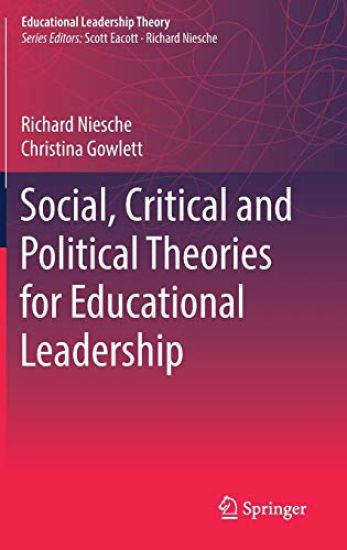
Social, Critical and Political Theories for Educational Leadership

Social, Critical and Political Theories for Educational Leadership

Richard Niesche; Christina Gowlett

Springer Verlag, Singapore
2020
nidottu
This book makes the case for the continued and expanded use of social, critical and political theories in the field of educational leadership. It helps readers understand educational leadership by introducing them to a wide variety of theoretical and philosophical approaches and positions. The book incorporates a rich blend of ideas and concepts, and compares and contrasts the approaches discussed. The content largely focuses on four educational thinkers: Michel Foucault, Judith Butler, Bernard Stiegler and Karen Barad. The chapters do not cover each thinker’s oeuvre exhaustively, but instead provide a brief overview of his/her ideas, while also helping readers understand a particular aspect of the educational leadership discourse. Each chapter also provides supplementary reading recommendations for those interested in pursuing these ideas in more depth.
Social, Critical and Political Theories for Educational Leadership

Social, Critical and Political Theories for Educational Leadership

Richard Niesche; Christina Gowlett

Springer Verlag, Singapore
2019
sidottu
This book makes the case for the continued and expanded use of social, critical and political theories in the field of educational leadership. It helps readers understand educational leadership by introducing them to a wide variety of theoretical and philosophical approaches and positions. The book incorporates a rich blend of ideas and concepts, and compares and contrasts the approaches discussed. The content largely focuses on four educational thinkers: Michel Foucault, Judith Butler, Bernard Stiegler and Karen Barad. The chapters do not cover each thinker’s oeuvre exhaustively, but instead provide a brief overview of his/her ideas, while also helping readers understand a particular aspect of the educational leadership discourse. Each chapter also provides supplementary reading recommendations for those interested in pursuing these ideas in more depth.
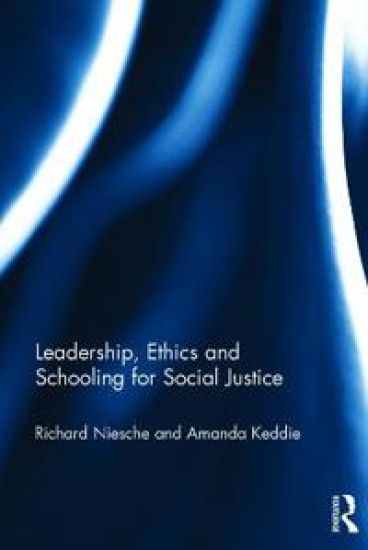
Leadership, Ethics and Schooling for Social Justice

Leadership, Ethics and Schooling for Social Justice

Richard Niesche; Amanda Keddie

Routledge
2015
sidottu
Issues of social justice and equity in the field of educational leadership have become more salient in recent years. The unprecedented diversity, uncertainty and rapid social change of the contemporary global era are generating new and unfamiliar equity questions and challenges for schools and their leaders. In order to understand the moral and ethical complexity of work undertaken in the name of social justice and equity in diverse contexts, this book uses a range of different theoretical tools from the work of Michel Foucault. Rather than a prescriptive, best practice approach to leadership and social justice, this book draws on Foucault’s four-fold ethical framework, and specifically, the notions of advocacy, truth-telling and counter-conduct to critically examine the leadership work undertaken in case studies in schools in Australia and England. Our approach makes transparent the ethical work that leaders in these contexts conduct on themselves towards creating schools that can address the equity challenges of the present climate. It illuminates and enables critical analysis of the moral imperatives shaping the equity work of school leaders and, in particular, the possibilities for transformative leadership that can work to create schools and school systems that are more socially just. Overall, the book’s key aims are to: Provide an innovative and comprehensive theorising of leadership for social justice in contemporary times; Explicate the utility of key elements of Foucault’s theorising of the ethical self to the domain of educational leadership; and Provide significant practical insight into the social justice possibilities of school leadership in contemporary times through two in depth case studies
Deconstructing Educational Leadership

Deconstructing Educational Leadership

Richard Niesche

Routledge
2015
nidottu
Jacques Derrida and Jean-François Lyotard constitute two of the most notable figures of poststructuralist thought and philosophy of the postmodern period. Both worked to reveal instabilities and uncertainty, and to destabilise assumptions and self-evident traditions for the purposes of reflection, creativity and innovative thinking. This significant volume explores the key concepts central to the work of Derrida and Lyotard in relation to educational leadership, and reveals how these ideas challenge existing structures, hierarchies and models of thought. Derrida’s notions of difference and deconstruction, and Lyotard’s concepts of language games, performativity and the differend, are specifically used to inform provocative and insightful critiques of the positivist assumptions and knowledge construction in the field of educational leadership. The book provides concrete examples of the application of theories to policy, literature and empirical data, and identifies ideas which continue to impact contemporary practices of educational leadership and management. Included in the book:- why bring Derrida and Lyotard to ELMA?- a Lyotardian politics of the standards movement in educational leadership- managing performance- witnessing deconstructions of the leader-follower binary in ELMA- limitations and critiques of Derrida and Lyotard. This important volume in the series will be of value to all those working and researching in the field of Educational Leadership, Management and Administration.
Deconstructing Educational Leadership

Deconstructing Educational Leadership

Richard Niesche

Routledge
2013
sidottu
Jacques Derrida and Jean-François Lyotard constitute two of the most notable figures of poststructuralist thought and philosophy of the postmodern period. Both worked to reveal instabilities and uncertainty, and to destabilise assumptions and self-evident traditions for the purposes of reflection, creativity and innovative thinking. This significant volume explores the key concepts central to the work of Derrida and Lyotard in relation to educational leadership, and reveals how these ideas challenge existing structures, hierarchies and models of thought. Derrida’s notions of difference and deconstruction, and Lyotard’s concepts of language games, performativity and the differend, are specifically used to inform provocative and insightful critiques of the positivist assumptions and knowledge construction in the field of educational leadership. The book provides concrete examples of the application of theories to policy, literature and empirical data, and identifies ideas which continue to impact contemporary practices of educational leadership and management. Included in the book:- why bring Derrida and Lyotard to ELMA?- a Lyotardian politics of the standards movement in educational leadership- managing performance- witnessing deconstructions of the leader-follower binary in ELMA- limitations and critiques of Derrida and Lyotard. This important volume in the series will be of value to all those working and researching in the field of Educational Leadership, Management and Administration.
Foucault and Educational Leadership

Foucault and Educational Leadership

Richard Niesche

Routledge
2011
sidottu
School principals are increasingly working in an environment of work intensification, high stakes testing, accountability pressures and increased managerialism. Rather than searching for the latest leadership fad or best practice model, this book suggests that in order to better understand these pressures, the work of educational leadership requires more sophisticated theorisation of these practices. In so doing, the book draws upon the work of Michel Foucault to provoke new thought into how the principalship is lived and ‘disciplined’ in ways that produce both contradictions and tensions for school principals. Amidst claims of a shortage of applicants for principal positions in a number of Western countries, what is required are more sophisticated and nuanced tools with which to understand the pressures and constraints that face principals in their work on a daily basis. This book provides a powerful example of theory working through practice to move beyond traditional approaches to school leadership. Key features of the book:provides a well theorised analysis of leadership practicesacknowledges the messy reality of life for school principalsprovides key insights to the ‘real’ work that principals undertake every dayexamines the production of principals’ subjectivities in education, foregrounding issues of gender and raceincludes the principals’ voices through rich interview data. The book will be of significant interest to principals and those working and researching in educational leadership, including researchers in the field and academics who teach into educational leadership and administration courses. The book will also be of great interest to those working with the ideas of Foucault in education.