Kirjojen hintavertailu – 12 877 721 kirjaa ja 26 kauppaa

Kirjailija

Richard Overy

Kirjat ja teokset yhdessä paikassa: 52 kirjaa, julkaisuja vuosilta 1997–2026, suosituimpiin kuuluu Geopolitikens återkomst : striden om framtidens historia. Vertaile teosten hintoja ja tarkista saatavuus suomalaisista kirjakaupoista.

52 kirjaa

Kirjojen julkaisuvuodet: 1997–2026.

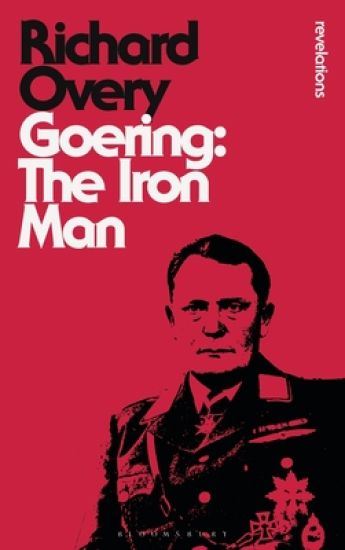
Goering

Goering

Richard Overy

Bloomsbury Academic
2020
nidottu
Published in the Bloomsbury Revelations series and featuring a new preface by the author, this classic biography by acclaimed historian Richard Overy takes the reader on a chilling journey into the heart of Hitler's inner circle. Hermann Goering was Hitler's most loyal supporter, his designated successor and the second most powerful man in the Third Reich. One of the main architects of the Nazi regime, he was also instrumental in the creation of the Gestapo and directly ordered the Final Solution. But who was the man behind the carefully-constructed mask? Self-indulgent and ruthless, sybaritic and brutal, egotistical yet capable of self-effacement, weak-willed yet fiercely calculating, Goering was a contradictory, complex and often bufoonish character. He styled himself as the 'Iron Man' but was known to wear togas, fur coats and faux-medieval hunting outfits. A brilliant World War I fighter pilot, military leader and mercurial Luftwaffe commander, he also loved the opera and took a perverse pride in his ill-gotten, infamous art collection. Richard Overy illuminates the many facets of Goering's personality and charts his story from his golden days as Hitler's most trusted commander to his failures and loss of power after the Battle of Britain, his sensational trial at Nuremberg and his ignominious death by suicide on the eve of his execution.
World War II: The Essential History, Volume 1

World War II: The Essential History, Volume 1

Richard Overy

Welbeck Publishing Group
2020
sidottu
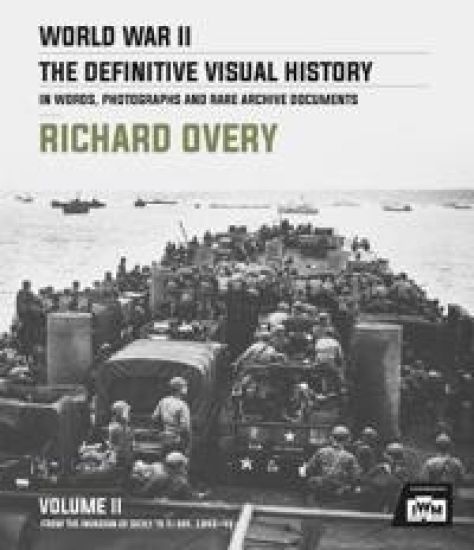
Published to commemorate the 80th anniversary of VE Day, this is an outstanding illustrated history of the Second World War written by one of Britain's foremost historians and expert on the Second World War. From the very start of the war when the Axis powers reigned supreme, conquering Europe and moving East, through to the atomic bombs on Hiroshima and Nagasaki and the eventual end of the six long years of war. Recall first hand the extraordinary dramas of the Battle of the Bulge, D-Day and the brutal race to Berlin that finally extinguished the Third Reich. With dozens of specially commissioned maps and specially photographed memorabilia and expert text, this is your ultimate guide to the Second World War.
World War II: The Essential History, Volume 2

World War II: The Essential History, Volume 2

Richard Overy

Welbeck Publishing Group
2020
sidottu
Published to commemorate the 80th anniversary of VE Day, this is an outstanding illustrated history of the Second World War written by one of Britain's foremost historians and expert on the Second World War. From the very start of the war when the Axis powers reigned supreme, conquering Europe and moving East, through to the atomic bombs on Hiroshima and Nagasaki and the eventual end of the six long years of war. Recall first hand the extraordinary dramas of the Battle of the Bulge, D-Day and the brutal race to Berlin that finally extinguished the Third Reich. With dozens of specially commissioned maps and specially photographed memorabilia and expert text, this is your ultimate guide to the Second World War.
War: A History in 100 Battles

War: A History in 100 Battles

Richard Overy

William the 4th
2019
cd
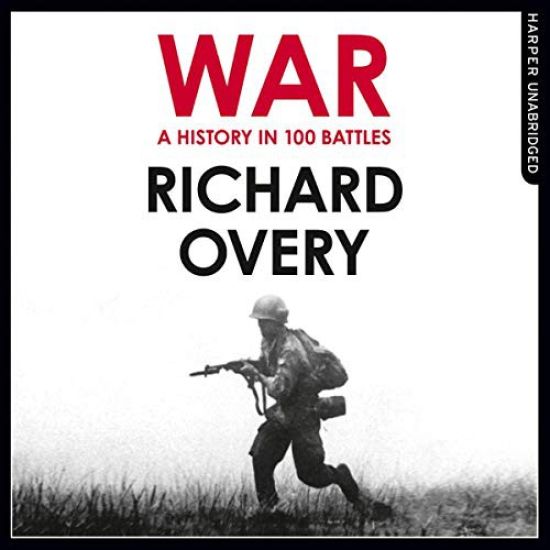
Choosing just one hundred battles from recorded human history is a challenge. Not just because it is necessary to cover almost 6,000 years of history, but because men have fought each other almost continuously for millennia. Anyone who knows anything about the history of war may be disappointed at what has had to be left out. However, each of the 100 memorable battles described shows both how the nature of armed combat has changed over human history, and also how, despite changes in technology, organisation or ideas, many things have remained the same. It is an old adage that you can win a battle but lose a war. The battles featured here almost always resulted in victory for one side or another, but the victor did not necessarily win the war. Some battles are decisive in that broader historical sense, others are not. The further back in time, the more likely it is that an enemy could be finished off in one blow. The wars of the modern age, between major states, have involved repeated battles until one side was battered into submission. Some of the great generals of the recent past - Napoleon, Robert E Lee, Erich von Manstein - have been on the losing side but are remembered nonetheless for their generalship. Some on the winning side have all but disappeared from the history books or from public memory. Equally, in many battles, the issue is not victory or defeat, but what the battle can tell us about the history of warfare itself. New weapons, new tactics, new ways of organising armed forces can have a sudden impact on the outcome of a battle. But so too can leadership, or the effects of a clever deception, or raw courage. That is why the book has been divided up into clear themes which apply equally to the battles of the ancient world as they do to the battles of today. As Professor Richard Overy laments: "Battle is not a game to plug into a computer but a piece of living history, messy, bloody and real. That, at least, has not changed in 6,000 years."
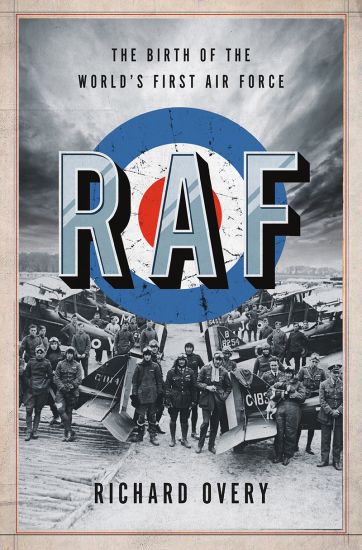
RAF

RAF

Richard Overy

WW Norton Co
2019
nidottu
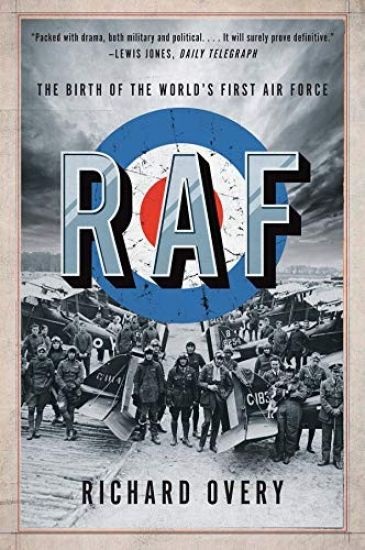
This compact, masterful work by an outstanding historian marks a pivotal moment in military history: the birth of Britain's Royal Air Force. Writing with great clarity, Richard Overy shows how the RAF emerged from the deadly stalemate of trench warfare during World War I. With German bombers attacking British cities by 1917, Prime Minister David Lloyd George and his minister of munitions, Winston Churchill, navigated the organizational breakthrough that made the RAF an independent force in spring 1918. The RAF would prove highly influential in the development of air power around the world.
Birth of the RAF, 1918

Birth of the RAF, 1918

Richard Overy

Penguin Books Ltd.
2019
pokkari

Halvin toimitettuna 18,70 €

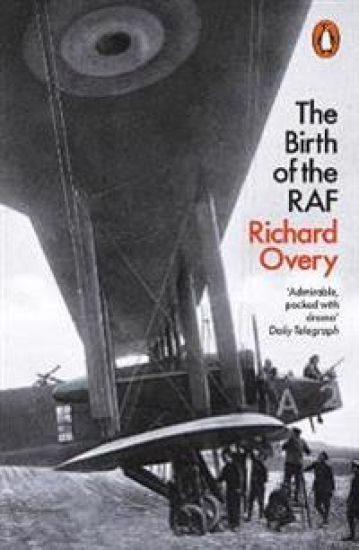
'Fascinating, full of original material and shrewd insights ... a masterful historian of air power' Leo McKinstry, Literary ReviewThe RAF was the world's first air force. This is the story of its founding in 1918, as a response to the new terror of aerial warfare, the struggles to keep it alive amid controversy and opposition, its crucial role in the Second World War and its unique place in Britain's history.'Brilliantly lucid' Noel Malcolm, Daily Telegraph'Richard Overy is to be congratulated on creating a concise exposition of the formation of the RAF ... this is a book that makes you think' Peter Hart, BBC History Magazine'A skilful pocket history of the founding of the Royal Air Force in 1918 ... a fine introduction' Kirkus Reviews
RAF

RAF

Richard Overy

WW Norton Co
2018
sidottu
The birth of the Royal Air Force during World War I marked a pivotal moment in modern military and political history. With Europe's western front frozen in a bloody stalemate of trench warfare, both sides sought some means of directly attacking enemy resources and morale. The new technologies of air power were used at first for reconnaissance of enemy positions for artillery strikes. By 1917 German bombers had begun raids on British cities, including an attack on London that killed hundreds, with eighteen schoolchildren among the casualties. Public outrage in Britain sparked a call for air defense and spurred political support for an independent air ministry. Prime Minister David Lloyd George and his minister of munitions, Winston Churchill, led the debates over how to shape Britain's air power during the war. The immediate path to an independent RAF is a fascinating story of political, bureaucratic, and personal rivalries. By the end of World War I, the RAF was launching effective bombing campaigns on industrial and military targets in western Germany. It survived postwar retrenchment thanks largely to Churchill, who as colonial secretary gave the RAF special responsibility for enforcing imperial control in the Middle East, especially in the new League of Nations mandates of Palestine, Transjordan, and Iraq. The RAF helped to shape the way air power developed not just in Britain but notably in Germany and the United States. The massive bombing campaigns of World War II against civilian and industrial targets in major cities are rooted in this history. This compact book shows a master historian at work. In command of the archival sources, at home in all dimensions of the story, Richard Overy crafts an engrossing narrative of this turning point in our history.
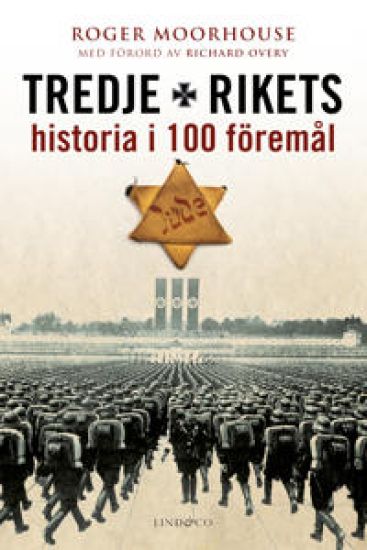
Tredje rikets historia i 100 föremål

Tredje rikets historia i 100 föremål

Roger Moorhouse; Richard Overy

Lind Co
2017
sidottu
Intresset för Hitlers Tredje rike tycks omättligt. Att närma sig litteraturen om andra världskriget är en utmaning, men här åskådliggörs historien på ett nyskapande och tillgängligt sätt genom 100 föremål. Denna avslöjande guide till Tredje riket är skriven av några av de ledande historikerna på området. Bland föremålen märks Hitlers Mercedes, Wehrmachts toalettpapper, Nürnbergs rättssalar, Tigerstridsvagnen, Järnkorset, svastikan och Mein Kampf. ROGER MOORHOUSE är historiker med inriktning på Tredje riket. Hans hyllade och prisbelönta böcker, bland andra Uppdrag: Döda Hitler (Fischer & Co, 2009) och Berlin i krig (Fischer & Co, 2011), förenar stilistisk elegans med akademisk kunskap och analys. TIM NEWARK har utkommit med flera militärhistoriska böcker, var tidigare långvarig redaktör för tidskriften Military Illustrated och har skrivit manus till sju tv-dokumentärer.
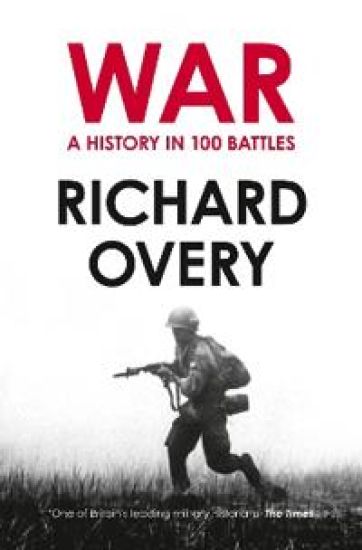
War

War

Richard Overy

Harpercollins Publishers
2016
pokkari
The object of this book is to introduce readers to a whole range of military history which has all the drama, dangers, horrors and excitement that we associate with Stalingrad or the Somme. Battles are acute moments of history whenever and wherever they have been fought. Through them we can understand how warfare and world history have evolved.
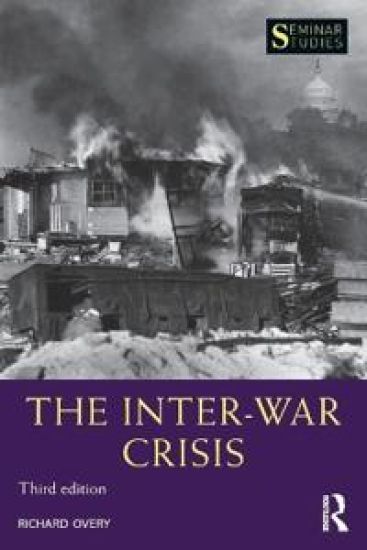
The Inter-War Crisis

The Inter-War Crisis

Richard Overy

Routledge
2016
sidottu
The Inter-War Crisis is a concise yet analytical overview of the rapidly-changing world between 1918 and 1939, covering the political, economic and social instability that resulted from the First World War and the eventual descent towards the fresh upheaval of the Second World War. Revised throughout and containing a new range of illustrations, this third edition covers topics such as the Russian Revolution, the Wall Street Crash of 1929, the concepts of the ‘end of civilization‘ and the decline of the West, cultural and scientific responses to an age of anxiety and fear, and the ways in which dictatorship came to replace democracy across so much of Europe. Global in focus, it offers thematic discussions, close analysis of a range of case studies and a clear over-arching narrative structure that guides the reader from the close of one war to the beginning of the next. Also including a selection of over thirty primary source documents, maps, a chronology of events, a glossary of key terms, a Who’s Who of important figures and an extensive and updated guide to further reading, this book is an essential introduction for students of the inter-war period.
The Inter-War Crisis

The Inter-War Crisis

Richard Overy

Routledge
2016
nidottu

Halvin toimitettuna 59,20 €

The Inter-War Crisis is a concise yet analytical overview of the rapidly-changing world between 1918 and 1939, covering the political, economic and social instability that resulted from the First World War and the eventual descent towards the fresh upheaval of the Second World War. Revised throughout and containing a new range of illustrations, this third edition covers topics such as the Russian Revolution, the Wall Street Crash of 1929, the concepts of the ‘end of civilization‘ and the decline of the West, cultural and scientific responses to an age of anxiety and fear, and the ways in which dictatorship came to replace democracy across so much of Europe. Global in focus, it offers thematic discussions, close analysis of a range of case studies and a clear over-arching narrative structure that guides the reader from the close of one war to the beginning of the next. Also including a selection of over thirty primary source documents, maps, a chronology of events, a glossary of key terms, a Who’s Who of important figures and an extensive and updated guide to further reading, this book is an essential introduction for students of the inter-war period.
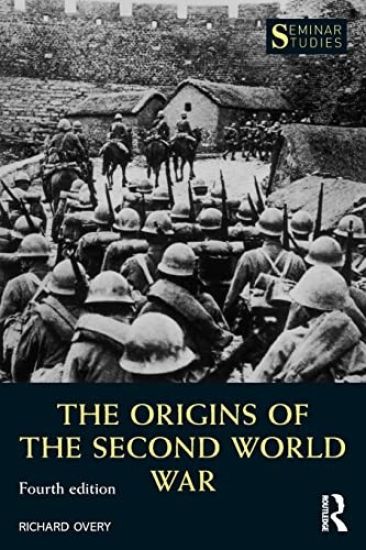
The Origins of the Second World War
Exploring the reasons why the Second World War broke out in September 1939 and why a European conflict developed into a war that spanned the globe, The Origins of the Second World War argues that this was not just ‘Hitler’s War’ but one that had its roots and origins in the decline of the old empires of Britain and France and the rise of ambitious new powers in Germany, Italy and Japan who wanted large empires of their own. This fourth edition has been revised throughout, covering the origins of the war from its background in the First World War to its expansion to embrace the Soviet Union, Japan and the United States by the end of 1941. Creating a comprehensive and analytical narrative while remaining a succinct overview of the subject, this book takes a thematic approach to the complex range of events that culminated in global warfare, discussing factors such as economic rivalry, rearmament and domestic politics and emphasising that any explanation of the outbreak of hostilities must be global in scope. Containing updated references and primary source documents alongside a glossary, a chronology of key events and a Who’s Who of important figures, this book is an invaluable introduction for any student of this fascinating period.
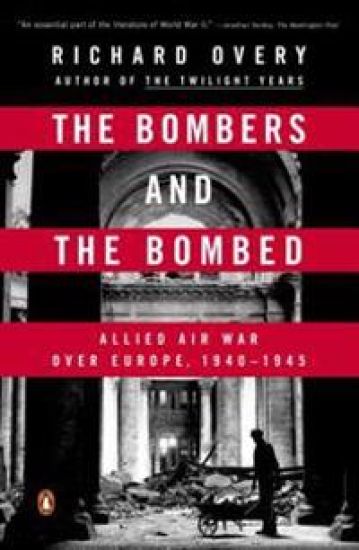
The Bombers and the Bombed: Allied Air War Over Europe, 1940-1945
"An essential part of the literature of World War II." --Jonathan Yardley, The Washington Post From acclaimed World War II historian Richard Overy comes this startling new history of the controversial Allied bombing war against Germany and German-occupied Europe. In the fullest account yet of the campaign and its consequences, Overy assesses not just the bombing strategies and pattern of operations, but also how the bombed communities coped with the devastation. This book presents a unique history of the bombing offensive from below as well as from above, and engages with moral questions that still resonate today.
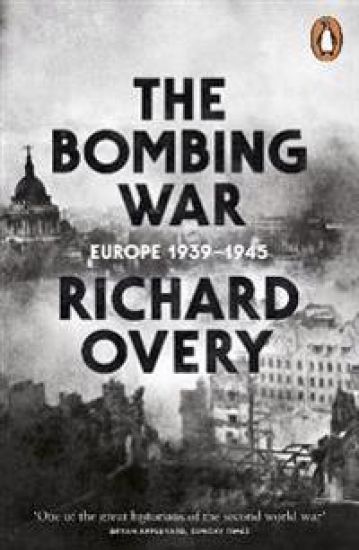
The Bombing War

The Bombing War

Richard Overy

Penguin Books Ltd
2014
pokkari

Halvin toimitettuna 24,40 €

The ultimate history of the Blitz and bombing in the Second World War, from Wolfson Prize-winning historian and author Richard OveryThe use of massive fleets of bombers to kill and terrorize civilians was an aspect of the Second World War which continues to challenge the idea that Allies specifically fought a 'moral' war. For Britain, bombing became perhaps its principal contribution to the fighting as, night after night, exceptionally brave men flew over occupied Europe destroying its cities. The Bombing War radically overhauls our understanding of the War. It is the first book to examine seriously not just the most well-known parts of the campaign, but the significance of bombing on many other fronts - the German use of bombers on the Eastern Front for example (as well as much newly discovered material on the more familiar 'Blitz' on Britain), or the Allied campaigns against Italian cities. The result is the author's masterpiece - a rich, gripping, picture of the Second World War and the terrible military, technological and ethical issues that relentlessly drove all its participants into an abyss.
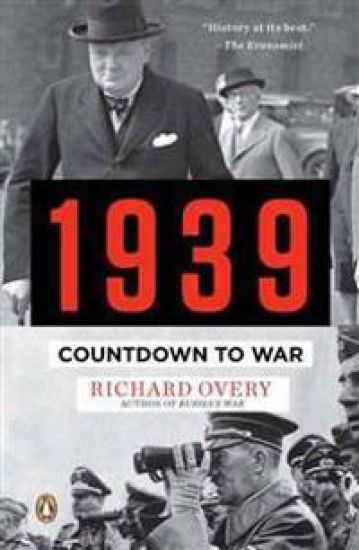
1939: Countdown to War

1939: Countdown to War

Richard Overy

PENGUIN BOOKS
2011
nidottu
"Overy's book is easily the best account of Europe's descent into...death and destruction." --Evening Standard (London)A brilliantly concise narrative of the days leading to the outbreak of history's greatest conflagration, 1939 takes readers hour by hour through the nail-biting decisions that determined the fate of millions. Richard Overy, a leading historian of the period, masterfully recreates the jockeying for advantage that set Europe's greatest powers on a collision course. Would Stalin join Hitler in a bid to divide Poland and flout the West? Would Britain and France succeed in forcing Germany to reason? And how far would a defiant Poland push its claim to exist? In the summer of 1939, the course of events was anything but assured, as this exceptionally absorbing book drives home.
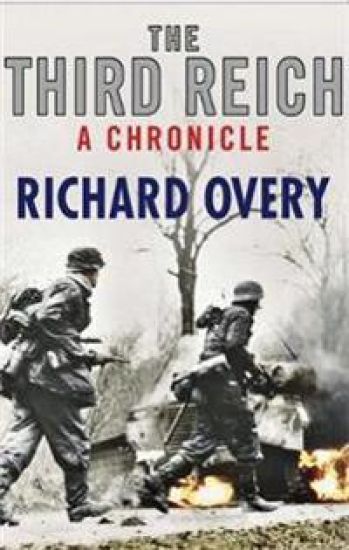
The Third Reich

The Third Reich

Richard Overy

Quercus Publishing
2011
pokkari
The Third Reich was the name Hitler and the Nazi Party gave to the dictatorship that began in 1933 and ended twelve years later with the utter destruction of Germany and Hitler's suicide. Defined by the messianic, iconic figure of the Führer, the Third Reich was one of the pivotal periods of the modern age. From small beginnings in the 1920s, Hitler's movement came to dominate German society in the 1930s, bringing with it the militarization of German society, the apparatus of state terror and a policy of violent discrimination against political opponents, the so-called 'asocials': gypsies, homosexuals, and, above all, the Jews. The history of the Reich is bound up with territorial aggression, total war and genocide. The end result was the complete defeat of Germany and the annihilation of millions of Europeans, a historical drama without precedent that still lies as a shadow over modern-day Germany. Richard Overy charts the rise and fall of Nazi power in a compelling narrative of the period, amplified by extensive quotations from documents, letters, diaries and oral testimony, and accompanied by many original and striking images of the era. There are also fact boxes which explore many of the important aspects of the Third Reich in greater detail. Authoritative, informative and sumptuously illustrated, written by a scholar steeped in knowledge of the period, The Third Reich brings the bloody realities of war, conquest and genocide vividly to life. It is an ideal book for anyone fascinated by the stormy history of the twentieth century, World War II and the age of dictators.
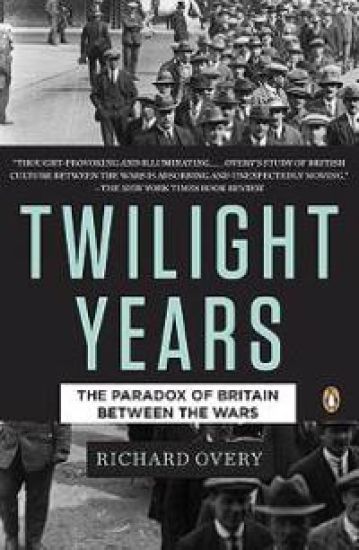
The Twilight Years: The Paradox of Britain Between the Wars
"Thought-provoking and illuminating... Overy's study of British culture between the wars is absorbing and unexpectedly moving." -The New York Times Book Review Original, entertaining, and ever-surprising, The Twilight Years tells the story of how an abiding fear of war influenced English life in the aftermath of World War I. Britain had become a laboratory for modern thought and experimentations, from eugenics to Freud's unconscious. And drawing upon these innovative ideas and concepts, intellectuals, politicians, scientists, and artists-among them Arnold Toynbee, Aldous Huxley, and H. G. Wells-grappled with a creeping fear that the West was staring down the end of civilization. The Twilight Years speaks to the frightening power of ideas in a rapidly changing world.
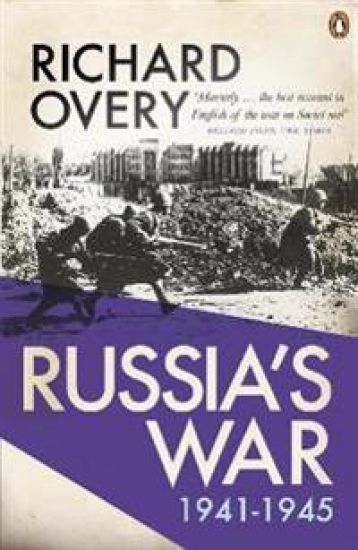
Russia's War

Russia's War

Richard Overy

Penguin Books Ltd
2010
pokkari

Halvin toimitettuna 18,70 €

In Russia's War: 1941-1945, Richard Overy re-creates the Soviet Union's apocalyptic struggle against Nazi Germany, from the point of view both of the troops and of the ordinary civilians. In the course of human history there has probably been no more terrible place than Eastern Europe in 1941-45. Estimates of total Soviet military and civilian deaths in the period now stand at more than 25 million. Yet without the Soviet war effort, it is unlikely that Germany could have ever been defeated. Drawing on a recent wealth of evidence to account for the Soviet Union's remarkable victory against invading forces, Richard Overy's Russia's War is a fascinating account of the epic struggle that turned the tide of the Second World War. 'Masterly ... a vivid account' Robert Service, Independent 'A dramatic and exciting tale ... His set-piece descriptions of such visions of Hell as Stalingrad, the 900-day siege of Leningrad and the crucial battle of Kursk are as fascinating as they are horrifying' Alan Judd, Sunday Times 'Overy is a first-class military historian ... Now, we have an authoritative British account that understands both sides, without illusions' Norman Stone, Spectator 'Excellent ... Overy tackles this huge, complex and multifaceted story with the vital gifts of clarity and brevity' Antony Beevor, Literary Review Richard Overy is Professor of History at the University of Exeter. His books include Why the Allies Won, Russia's War, The Battle of Britain, The Morbid Age and The Dictators, which won the Wolfson and the Hessell Tiltman Prizes for history in 2005.