Kirjailija
Richard Parker
Kirjat ja teokset yhdessä paikassa: 42 kirjaa, julkaisuja vuosilta 1993–2026, suosituimpiin kuuluu I Am Richard Parker. Vertaile teosten hintoja ja tarkista saatavuus suomalaisista kirjakaupoista.
42 kirjaa
Kirjojen julkaisuvuodet: 1993–2026.
School leadership can be both immensely rewarding and deeply challenging. Headteachers are under intense pressure when dealing with issues that can range from dealing with difficult parents and the aftermath of tragedy or scandal, to the day-to-day challenges of juggling the many different priorities involved in keeping the school, students and staff, moving forward. In their inspirational new book experienced headteachers Richard Parker and David Middlewood, bring together the personal and professional experiences of successful headteachers and principals, from both primary and secondary schools, to provide a real life guide to the challenge of leadership in education. The focus of the book is not on idealised theories of leadership but on the pragmatic realities faced by school leaders today. It provides practical guidance and advice on key areas including: - Ideas and strategies for effective leadership - Juggling priorities and avoiding possible distractions - The importance of people-centred leadership - Transferable skills and the unique nature of the job - Maintaining passion and optimism and minimising fear and apprehension - Developing leadership skills without losing your individual personality and values The Reality of School Leadership is a must read for all current and aspiring leaders, eager to reap the rewards of the challenging profession of headship.

The Improbable Return of Coco Chanel: As Witnessed by Her Assistant, Richard Parker
Richard Parker
eBook Bakery
2012
nidottu
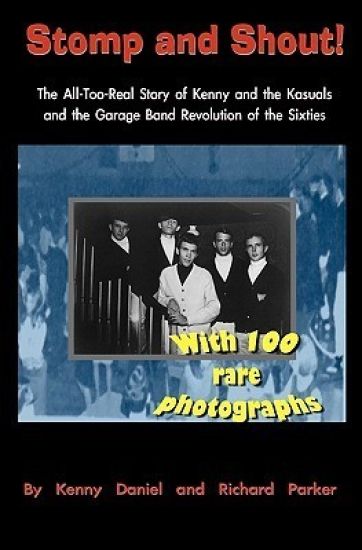
Stomp and Shout: The All-Too-Real Story of Kenny and the Kasuals and the Garage Band Revolution of the Sixties
Richard Parker; Kenny Daniel
Oomph Media, LLC
2011
nidottu
Leading and Managing Extended Schools
David Middlewood; Richard Parker
SAGE Publications Inc
2009
sidottu
'This is a stimulating and well-researched book that will interest anyone who cares about how our schools should evolve' - Matters Arising 'What are schools for? What happens when school walls come tumbling down, and school and community become inextricably linked, offering a range of extended provision to young people and opportunities for lifelong learning to adults? How would you lead such a school? David Middlewood and Richard Parker draw upon their personal and researched experience, to explore school leadership within a community which has an extended school at its heart. This is an engaging and purposeful book for researchers and practitioners alike' - Professor Ann Briggs, Newcastle University, Chair of BELMAS This book shows leaders of all types of schools how to become effective in extended schooling and fulfil 'Every Child Matters' (ECM) requirements, by building on and adapting their current practices. The authors explain the context of Extended Schools, in the UK and elsewhere, and outline the features of effectiveness in schools and their leaders. The authors provide practical advice using case studies from a range of settings which show what can be achieved across a wide variety of contexts. 'Points to consider' give advice to readers at all levels, covering staffing and resourcing, as well as the creation and development of successful partnerships in the community. This book is an essential resource for leaders beginning in extended schools, and leaders already working in extended schools across nursery, primary and secondary settings. It is also relevant to governors, inspectors and advisers and leaders studying masters and doctorate courses in Leadership and Education Policy.
Leading and Managing Extended Schools
David Middlewood; Richard Parker
SAGE Publications Inc
2009
nidottu
'This is a stimulating and well-researched book that will interest anyone who cares about how our schools should evolve' - Matters Arising 'What are schools for? What happens when school walls come tumbling down, and school and community become inextricably linked, offering a range of extended provision to young people and opportunities for lifelong learning to adults? How would you lead such a school? David Middlewood and Richard Parker draw upon their personal and researched experience, to explore school leadership within a community which has an extended school at its heart. This is an engaging and purposeful book for researchers and practitioners alike' - Professor Ann Briggs, Newcastle University, Chair of BELMAS This book shows leaders of all types of schools how to become effective in extended schooling and fulfil 'Every Child Matters' (ECM) requirements, by building on and adapting their current practices. The authors explain the context of Extended Schools, in the UK and elsewhere, and outline the features of effectiveness in schools and their leaders. The authors provide practical advice using case studies from a range of settings which show what can be achieved across a wide variety of contexts. 'Points to consider' give advice to readers at all levels, covering staffing and resourcing, as well as the creation and development of successful partnerships in the community. This book is an essential resource for leaders beginning in extended schools, and leaders already working in extended schools across nursery, primary and secondary settings. It is also relevant to governors, inspectors and advisers and leaders studying masters and doctorate courses in Leadership and Education Policy.
Sexuality, Health and Human Rights
Sonia Corrêa; Rosalind Petchesky; Richard Parker
Routledge
2008
nidottu
This new work surveys how rapid changes taking place at the start of the twenty-first century in social, cultural, political and economic domains impact on sexuality, health and human rights. The relationships between men, women and children are changing quickly, as are traditional family structures and gender norms. What were once viewed as private matters have become public, and an array of new social movements – transgender, intersex, sex worker, people living with HIV – have come into the open. The book is split into three sections: Global ‘Sex’ Wars – discusses the notion of sexualities, its political landscapes internationally, and the return of religious fervour and extremism Epistemological Challenges and Research Agendas – examines modern ‘scientific’ understandings of sexuality, its history and the way in which AIDS has drawn attention to sexuality The Promises and Limits of Sexual Rights – discusses human rights approaches to sexuality, their strengths and limitations and new ways of imagining erotic justiceOffering a unique framework for understanding this new world, set in the context of the major theoretical debates of recent decades, this book will be of interest to professionals, advocates and policy researchers and is suitable for a wide range of courses covering areas such as gender studies, human sexuality, public health and social policy.
Sexuality, Health and Human Rights
Sonia Corrêa; Rosalind Petchesky; Richard Parker
Routledge
2008
sidottu
This new work surveys how rapid changes taking place at the start of the twenty-first century in social, cultural, political and economic domains impact on sexuality, health and human rights. The relationships between men, women and children are changing quickly, as are traditional family structures and gender norms. What were once viewed as private matters have become public, and an array of new social movements – transgender, intersex, sex worker, people living with HIV – have come into the open. The book is split into three sections: Global ‘Sex’ Wars – discusses the notion of sexualities, its political landscapes internationally, and the return of religious fervour and extremism Epistemological Challenges and Research Agendas – examines modern ‘scientific’ understandings of sexuality, its history and the way in which AIDS has drawn attention to sexuality The Promises and Limits of Sexual Rights – discusses human rights approaches to sexuality, their strengths and limitations and new ways of imagining erotic justiceOffering a unique framework for understanding this new world, set in the context of the major theoretical debates of recent decades, this book will be of interest to professionals, advocates and policy researchers and is suitable for a wide range of courses covering areas such as gender studies, human sexuality, public health and social policy.
This pioneering collection of ten ethnographically rich essays signals the emergence of a new paradigm of social analysis committed to understanding and analyzing social oppression in the context of sexuality and gender. The contributors, an interdisciplinary group of social scientists representing anthropology, sociology, public health, and psychology, illuminate the role of sexuality in producing and reproducing inequality, difference, and structural violence among a range of populations in various geographic, historical, and cultural arenas. In particular, the essays consider racial minorities including Hispanics, Koreans, and African Americans; discuss disabled people; examine issues including substance abuse, sexual coercion, and HIV/AIDS; and delve into other topics including religion and politics. Rather than emphasizing sexuality as an individual trait, the essays view it as a social phenomenon, focusing in particular on cultural meaning and real-world processes of inequality such as racism and homophobia. The authors address the complex and challenging question of how the research under discussion here can make a real contribution to the struggle for social justice.
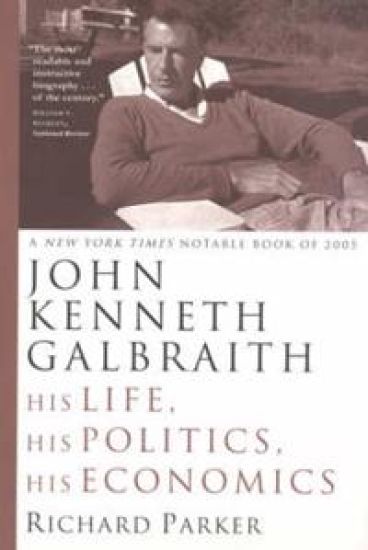
John Kenneth Galbraith (1908-2006) was one of America's most famous economists for good reason. From his acerbic analysis of America's "private wealth and public squalor" to his denunciation of the wars in Vietnam and Iraq, Galbraith consistently challenged "conventional wisdom" (a phrase he coined). He did so as a witty commentator on America's political follies and as a versatile author of bestselling books--such as The Affluent Society and The New Industrial State--that warn of the dangers of deregulated markets, corporate greed, and inattention to the costs of our military power. Here, in the first full-length biography of Galbraith and his times, Richard Parker provides not only a nuanced portrait of this extraordinary man, but also an important reinterpretation of twentieth-century public policy and economic practices." Whatever you may think of his ideas, John Kenneth Galbraith has led an extraordinary life. . . . Doing justice to this life story requires an outsize biography, one that not only tells Mr. Galbraith's tale but sets it on the broader canvas of America's political and economic evolution. And Richard Parker's book does just that."--Economist"Parker's book is more than a chronicle of Galbraith's life; it's a history of American politics and policy from FDR through George W. Bush. . . . It will make readers more economically and politically aware."--USA Today "The most readable and instructive biography of the century."--William F. Buckley, National Review"The story of this man's life and work is wonderfully rendered in this magnum opus, and offers an antidote to the public ennui, economic cruelty, and government malfeasance that poison life in America today."--James Carroll, Boston Globe
Creating a Learning School
David Middlewood; Richard Parker; Jackie Beere
SAGE Publications Inc
2005
sidottu
'Improving the quality of learning and teaching is the most important thing that school leaders do. This book contains much that will help the reader in that enterprise. It reflects the fact that much of what we know about effective, high-quality schools is already 'out there' in schools across the country. The book mines that gold. It is full of good sense, a treasure chest of helpful ideas which have the credibility of being grounded in case-study material, and in the experience of the authors, two of whom are practising headteachers. The book sets out the principles underpinning the Learning School, but offers also a strong pragmatic focus and is organized so that it can be dipped into and something worthwhile easily found. It sets out practical and specific steps to creating the Learning School and will support change and improvement in the professional practices involved in making a school a stimulating learning environment for adults as well as students' - Dr Martin J Coles, Assistant Director, National College for School Leadership '[C]learly set out, passionately and well-written, covering much material, full of interesting insights, as one might expect from two head teachers and an acknowledged expert in the field... Lots of interesting thoughts and ideas, written in an accessible style. I would certainly recommend this book to my students' - ESCalate The schools of the 21st century cannot continue to apply the techniques of the 20th century. 'New Learning' dispenses with outdated preoccupations with tests, targets, and leadership from above, and focuses on independence of learning and structural flexibility within schools. The authors give a complete overview of how schools can adapt to meet changing needs. They look at the teacher as learner, learning outside the classroom, and the nature of leadership in learning schools, and provide practical solutions to the problems of staffing, resourcing and assessment. This book is an invaluable resource for all mid-to-upper level managers in schools, anyone aspiring to these positions, or anyone who takes a longterm view of the future of educational practice.
Creating a Learning School
David Middlewood; Richard Parker; Jackie Beere
SAGE Publications Inc
2005
nidottu
'Improving the quality of learning and teaching is the most important thing that school leaders do. This book contains much that will help the reader in that enterprise. It reflects the fact that much of what we know about effective, high-quality schools is already 'out there' in schools across the country. The book mines that gold. It is full of good sense, a treasure chest of helpful ideas which have the credibility of being grounded in case-study material, and in the experience of the authors, two of whom are practising headteachers. The book sets out the principles underpinning the Learning School, but offers also a strong pragmatic focus and is organized so that it can be dipped into and something worthwhile easily found. It sets out practical and specific steps to creating the Learning School and will support change and improvement in the professional practices involved in making a school a stimulating learning environment for adults as well as students' - Dr Martin J Coles, Assistant Director, National College for School Leadership '[C]learly set out, passionately and well-written, covering much material, full of interesting insights, as one might expect from two head teachers and an acknowledged expert in the field... Lots of interesting thoughts and ideas, written in an accessible style. I would certainly recommend this book to my students' - ESCalate The schools of the 21st century cannot continue to apply the techniques of the 20th century. 'New Learning' dispenses with outdated preoccupations with tests, targets, and leadership from above, and focuses on independence of learning and structural flexibility within schools. The authors give a complete overview of how schools can adapt to meet changing needs. They look at the teacher as learner, learning outside the classroom, and the nature of leadership in learning schools, and provide practical solutions to the problems of staffing, resourcing and assessment. This book is an invaluable resource for all mid-to-upper level managers in schools, anyone aspiring to these positions, or anyone who takes a longterm view of the future of educational practice.
Based on long-term field research carried out over more than 15 years, Beneath the Equator examines the changing shape of male homosexuality and the emergence of diverse and vibrant gay communities in urban Brazil. Drawing on detailed ethnographic description of multiple sexual worlds organized around street cruising and impersonal sex, male prostitution, transgender performances, gay commercial markets and establishments, gay rights activism and AIDS service provision, Richard Parker examines the changing sexual identities, cultures and communities that have taken shape in Brazil in recent years. Also includes 15 maps.
Democracy--its aspirations, its dangers--is what, most fundamentally, our Constitution is about. The question, Richard Parker argues in this powerful book, is how to imagine our democracy. Provocative in style and substance, this manifesto challenges orthodoxies of constitutional legal studies, particularly the idea that constitutionalism and populist democracy stand opposed. Parker presents a populist argument. He contends that the mission of constitutional law should be to promote, not limit, the expression of ordinary political energy--thus to extend, rather than constrain, majority rule. At the root of the matter, Parker finds a question of "sensibility"--assumptions and attitudes about the political energy of ordinary people. He approaches this sensibility in a novel way, through a work of fiction about politics, Thomas Mann's Mario and the Magician. Offering two "takes" on the story, Parker shows how it evokes--and elucidates--our deepest, most problematic attitudes about popular political energy in our own democracy. He goes on to elaborate these attitudes within our practice of constitutional argument. This is a book about the people, and for the people, a reimagination of constitutional law's populist potential. It will disorient--then reorient--the thinking of everyone who is concerned about democracy and the Constitution.