Kirjojen hintavertailu – 12 903 725 kirjaa ja 27 kauppaa

Kirjailija

Richard Price

Kirjat ja teokset yhdessä paikassa: 190 kirjaa, julkaisuja vuosilta 1974–2026, suosituimpiin kuuluu Theodore of Sykeon. Vertaile teosten hintoja ja tarkista saatavuus suomalaisista kirjakaupoista.

190 kirjaa

Kirjojen julkaisuvuodet: 1974–2026.

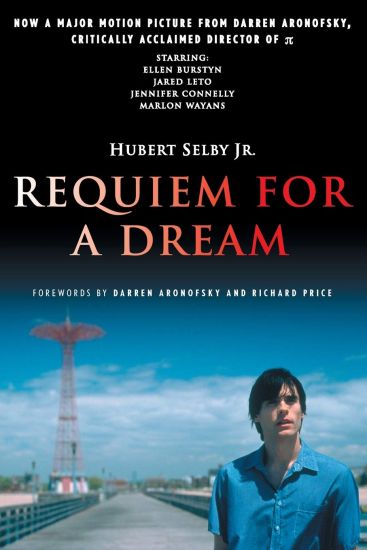
Requiem for a Dream

Requiem for a Dream

Darren Aronofsky; Hubert Selby; Richard Price

Thunder's Mouth Press
1999
pokkari
Over twenty years after its first publication in 1978, Requiem for a Dream makes it to the big screen in a major motion picture starring Ellen Burstyn, Jennifer Connelly, Marlon Wayans, Jared Leto, and Christopher McDonald. Directed by Darren Aronofsky, the highly acclaimed director of Pi, the movie was released in November 2000. In this searing novel, two young hoods, Harry and Tyrone, and a girlfriend fantasize about scoring a pound of uncut heroin and getting rich. But their habit gets the better of them, consumes them and destroys their dreams. "Selby's place is in the front rank of American novelists. His work has the power, the intimacy with suffering and morality, the honesty and moral urgency of Dostoevsky's... To understand Selby's work is to understand the anguish of America." -- The New York Times Book Review
Breaks

Breaks

Richard Price

Bloomsbury Publishing PLC
1999
nidottu
Peter "Speedo" Keller is the first college graduate in his working-class family - majoring in English, minoring as class clown. His lurching entrance into adult life includes a fantasy-arousing interlude as a telephone sales solicitor and a mind-deadening stint at the post office.
Bloodbrothers

Bloodbrothers

Richard Price

Bloomsbury Publishing PLC
1999
pokkari
Stony De Coco is 18 and the son of a pugnacious construction worker who expects his son to follow in his footsteps. But Stony is determined to break loose from this belligerent life despite opposition from everyone else in his family.
Ladies Man

Ladies Man

Richard Price

Bloomsbury Publishing PLC
1998
pokkari
Abandoned by his live-in girlfriend, Kenny Becker, an unemployed door-to-door salesman, sets off to explore his new freedom, and his journey takes him through singles bars, peep shows, massage parlours, and other questionable destinations in New York's underground. By the author of CLOCKERS.
On the Mall

On the Mall

richard Price

Indiana University Press
1995
sidottu
ÒOn the Mall engrossing, nuanced, productively and honestly critical in the best sense of the term; well written. Ó ÑRichard BaumanTwo well-know anthropologists examine the practice of exhibiting people, 1990s style, within the broader history of living exhibitionsÑfrom those at nineteenth-century colonial exhibitions and world's fairs to twentieth-century circus side-shows. Engaged by the Smithsonian's Festival of American Folklofe as ÒpresentersÓ for a group of Òtradition-bearers,Ó they recount the ups and downs of their day-to-day experience trying to build bridges between African American Maroons from the Suriname forest and U. S. festival-goers on the Washington Mall. Finding the role of cultural mediators by turns exhilarating, exhausting, annoying, eye-opening, frustrating, fascinating, and alienating, they reflect on a range of issues relating to how folklorists, anthropologists, and museum curators go about the business of representing others, as well as ourselves.
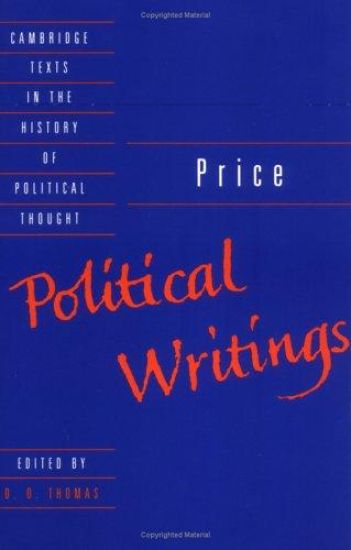
Price: Political Writings

Price: Political Writings

Richard Price

Cambridge University Press
1992
pokkari
Richard Price (1723-1791) was an eminent Welsh philosopher and Dissenting Minister. His political pamphlets won him considerable fame in the eighteenth century as a supporter of the American rebels in their struggle for independence, and for the enthusiasm with which he greeted the opening events of the French Revolution. It was this enthusiasm which provoked Edmund Burke into writing Reflections on the Revolution in France. Price is noteworthy as a defender of freedom of thought (especially on religious matters), as a proponent of parliamentary reform, and as an advocate of a minimalist conception of government. He espoused the doctrine of natural rights and the principle of self-government. This book is a collection of Price's most important pamphlets of the period 1759-1789, and is accompanied by a comprehensive introduction putting Price’s work in context, complete bibliographical material, a chronology, and biographical notes on persons mentioned in the texts.
Price: Political Writings

Price: Political Writings

Richard Price

Cambridge University Press
1992
sidottu
Richard Price (1723-1791) was an eminent Welsh philosopher and Dissenting Minister. His political pamphlets won him considerable fame in the eighteenth century as a supporter of the American rebels in their struggle for independence, and for the enthusiasm with which he greeted the opening events of the French Revolution. It was this enthusiasm which provoked Edmund Burke into writing Reflections on the Revolution in France. Price is noteworthy as a defender of freedom of thought (especially on religious matters), as a proponent of parliamentary reform, and as an advocate of a minimalist conception of government. He espoused the doctrine of natural rights and the principle of self-government. This 1992 book is a collection of Price's most important pamphlets of the period 1759–89, and is accompanied by a comprehensive introduction putting Price's work in context, complete bibliographical material, a chronology, and biographical notes on persons mentioned in the texts.
Alabi's World

Alabi's World

Richard Price

Johns Hopkins University Press
1990
pokkari
In the early 18th century, the Dutch colony of Suriname was the envy of all others in the Americas. There, seven hundred Europeans lived off the labor of over four thousand enslaved Africans. Owned by men hell-bent for quick prosperity, the rich plantations on the Suriname river became known for their heights of planter comfort and opulence-and for their depths of slave misery. Slaves who tried to escape were hunted by the planter militia. If found they were publicly tortured. (A common punishment was for the Achilles tendon to be removed for a first offense, the right leg amputated for a second.) Resisting this cruelty first in small numbers, then in an ever increasing torrent, slaves began to form outlaw communities until nearly one out of every ten Africans in Suriname was helping to build rebel villages in the jungle. Alabi's World relates the history of a nation founded by escaped slaves deep in the Latin American rain forest. It tells of the black men and women's bloody battles for independence, their uneasy truce with the colonial government, and the attempt of their great leader, Alabi, to reconcile his people with white law and a white God. In a unique historical experiment, Richard Price presents this history by weaving together four voices: the vivid historical accounts related by the slaves' descendants, largely those of Alabi's own villagers, the Saramaka; the reports of the often exasperated colonial officials sent to control the slave communities; the otherworldly diaries of the German Moravian missionaries determined to convert the heathen masses; and the historian's own, mediating voice. The Saramaka voices in these pages recall a world of powerful spirits-called obia's-and renowned heroes, great celebrations and fierce blood-feuds. They also recall, with unconcealed relish, successes in confounding the colonial officials and in bending the treaty to the benefit of their own people. From the opposite side of the negotiations, the colonial Postholders speak of the futility of trying to hold the village leaders to their vow to return any further runaway slaves. Equally frustrated, the Moravian missionaries describe the rigors of their proselytising efforts in the black villages-places of licentiousness and idol-worship that seemed to be "a foretaste of what hell must be like." Among their only zealous converts was Alabi, who stood nearly alone in his attempts to bridge the cultural gap between black and white-defiantly working to lead his people on the path toward harmony with their former enemies. From the confluence of these voices-set throughout the book in four different typefaces-Price creates a fully nuanced portrait of the collision of cultures. It is a confrontation, he suggests, that was enacted thousands of times across the slaveholding Americas as white men strained to suppress black culture and blacks resisted- determined to preserve their heritage and beliefs.