Kirjojen hintavertailu – 12 903 724 kirjaa ja 27 kauppaa

Kirjailija

Richard Pringle

Kirjat ja teokset yhdessä paikassa: 6 kirjaa, julkaisuja vuosilta 2006–2026, suosituimpiin kuuluu Foucault, Sport and Exercise. Vertaile teosten hintoja ja tarkista saatavuus suomalaisista kirjakaupoista.

6 kirjaa

Kirjojen julkaisuvuodet: 2006–2026.

Foucault, Sport and Exercise

Foucault, Sport and Exercise

Pirkko Markula-Denison; Richard Pringle

Routledge
2006
nidottu
Michel Foucault’s work profoundly influences the way we think about society, in particular how we understand social power, the self, and the body. This book gives an innovative and entirely new analysis of is later works making it a one-stop guide for students, exploring how Foucauldian theory can inform our understanding of the body, domination, identity and freedom as experienced through sport and exercise. Divided into three themed parts, this book considers:Foucault’s ideas and key debatesFoucault’s theories to explore power relations, the body, identity and the construction of social practices in sport and exercisehow individuals make sense of the social forces surrounding them, considering physical activity, fitness and sport practices as expressions of freedom and sites for social change. Accessible and clear, including useful case studies helping to bring the theory to real-life, Foucault, Sport and Exercise considers cultures and experiences in sports, exercise and fitness, coaching and health promotion. In addition to presenting established Foucauldian perspectives and debates, this text also provides innovative discussion of how Foucault’s later work can inform the study and understanding of sport and the physically active body.
Campus Whisper Networks

Campus Whisper Networks

Janet Hinson Shope; Richard Pringle

RUTGERS UNIVERSITY PRESS
2026
sidottu
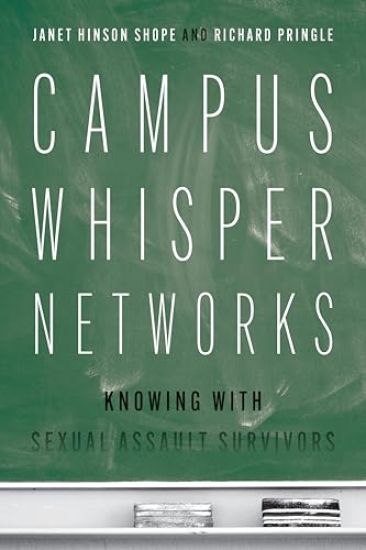
Campus Whisper Networks examines how personal knowledge about student sexual assault circulates within college campus communities. Based upon both qualitative and quantitative survey data, Janet Shope and Richard Pringle's research demonstrates that students who have been sexually assaulted tell someone -almost always a friend. Most college students know someone who has been assaulted. Simply knowing, by means of relationships, that one or more peers have been assaulted affects the knowers, and the effects reverberate unevenly across campuses. Shope and Pringle highlight the structural properties that prohibit relational knowledge from becoming official institutional knowledge, confining it to whispers and secrecy within informal spheres of knowledge. The rules governing the circulation of such knowledge create an uneven epistemic field of sexual assault. This uneven field is consequential for the communities, affecting survivors and their confidants and shaping student views of the college community. Campus Whisper Networks demonstrates how personal and institutional avoidance, both the “need to not know” and “no need to know,” create knowledge gaps that hide the community’s wounds and prevent personal knowledge from becoming social knowledge.
Campus Whisper Networks

Campus Whisper Networks

Janet Hinson Shope; Richard Pringle

RUTGERS UNIVERSITY PRESS
2026
nidottu
Campus Whisper Networks examines how personal knowledge about student sexual assault circulates within college campus communities. Based upon both qualitative and quantitative survey data, Janet Shope and Richard Pringle's research demonstrates that students who have been sexually assaulted tell someone -almost always a friend. Most college students know someone who has been assaulted. Simply knowing, by means of relationships, that one or more peers have been assaulted affects the knowers, and the effects reverberate unevenly across campuses. Shope and Pringle highlight the structural properties that prohibit relational knowledge from becoming official institutional knowledge, confining it to whispers and secrecy within informal spheres of knowledge. The rules governing the circulation of such knowledge create an uneven epistemic field of sexual assault. This uneven field is consequential for the communities, affecting survivors and their confidants and shaping student views of the college community. Campus Whisper Networks demonstrates how personal and institutional avoidance, both the “need to not know” and “no need to know,” create knowledge gaps that hide the community’s wounds and prevent personal knowledge from becoming social knowledge.
Sport and the Social Significance of Pleasure

Sport and the Social Significance of Pleasure

Richard Pringle; Robert E. Rinehart; Jayne Caudwell

Routledge
2017
nidottu
This innovative text's critical examination foregrounds the prime reason why so many people participate in or watch sport – pleasure. Although there has been a "turn" to emotions and affect within academia over the last two decades, it has been somewhat remiss that pleasure, as an integral aspect of human life, has not received greater attention from sociologists of sport, exercise and physical education. This book addresses this issue via an unabashed examination of sport and the moving body via a "pleasure lens." It provides new insights about the production of various identities, power relations and social issues, and the dialectical links between the socio-cultural and the body. Taking a wide-sweeping view of pleasure - dignified and debauched, distinguished and mundane – it examines topics as diverse as aging, health, fandom, running, extreme sports, biopolitics, consumerism, feminism, sex and sexuality. In drawing from diverse theoretical approaches and original empirical research, the text reveals the social and political significance of pleasure and provides a more rounded, dynamic and sensual account of sport.
Sport and the Social Significance of Pleasure

Sport and the Social Significance of Pleasure

Richard Pringle; Robert E. Rinehart; Jayne Caudwell

Routledge
2015
sidottu
This innovative text's critical examination foregrounds the prime reason why so many people participate in or watch sport – pleasure. Although there has been a "turn" to emotions and affect within academia over the last two decades, it has been somewhat remiss that pleasure, as an integral aspect of human life, has not received greater attention from sociologists of sport, exercise and physical education. This book addresses this issue via an unabashed examination of sport and the moving body via a "pleasure lens." It provides new insights about the production of various identities, power relations and social issues, and the dialectical links between the socio-cultural and the body. Taking a wide-sweeping view of pleasure - dignified and debauched, distinguished and mundane – it examines topics as diverse as aging, health, fandom, running, extreme sports, biopolitics, consumerism, feminism, sex and sexuality. In drawing from diverse theoretical approaches and original empirical research, the text reveals the social and political significance of pleasure and provides a more rounded, dynamic and sensual account of sport.
Foucault, Sport and Exercise

Foucault, Sport and Exercise

Pirkko Markula-Denison; Richard Pringle

Routledge
2006
sidottu
Michel Foucault’s work profoundly influences the way we think about society, in particular how we understand social power, the self, and the body. This book gives an innovative and entirely new analysis of is later works making it a one-stop guide for students, exploring how Foucauldian theory can inform our understanding of the body, domination, identity and freedom as experienced through sport and exercise. Divided into three themed parts, this book considers:Foucault’s ideas and key debatesFoucault’s theories to explore power relations, the body, identity and the construction of social practices in sport and exercisehow individuals make sense of the social forces surrounding them, considering physical activity, fitness and sport practices as expressions of freedom and sites for social change. Accessible and clear, including useful case studies helping to bring the theory to real-life, Foucault, Sport and Exercise considers cultures and experiences in sports, exercise and fitness, coaching and health promotion. In addition to presenting established Foucauldian perspectives and debates, this text also provides innovative discussion of how Foucault’s later work can inform the study and understanding of sport and the physically active body.