Kirjojen hintavertailu – 12 903 725 kirjaa ja 27 kauppaa

Kirjailija

Richard Saull

Kirjat ja teokset yhdessä paikassa: 7 kirjaa, julkaisuja vuosilta 2001–2024, suosituimpiin kuuluu Capital, Race and Space, Volume II. Vertaile teosten hintoja ja tarkista saatavuus suomalaisista kirjakaupoista.

7 kirjaa

Kirjojen julkaisuvuodet: 2001–2024.

Capital, Race and Space, Volume II

Capital, Race and Space, Volume II

Richard Saull

Haymarket Books
2024
pokkari
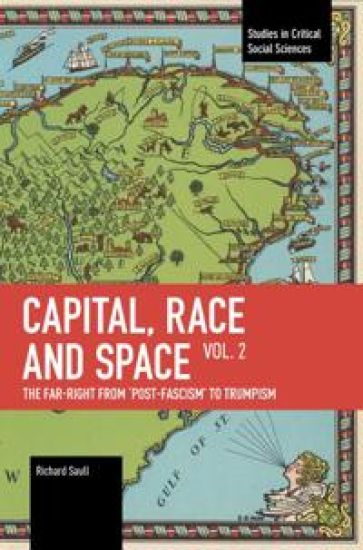
In this second volume of Capital, Race and Space, Richard Saull offers an international historical sociology of the Western far-right from the end of World War II to its contemporary manifestations in Trumpism and Brexit. Focusing on its international causal dimensions, Saull draws on the theory of uneven and combined development to provide a distinct and original explanation of the evolution and mutations of the 'post-fascist' far-right. Despite the transformed geopolitical context of capitalist development after 1945 – with decolonization and the end inter-imperial rivalry – the far-right continued to be intimately connected to the consolidation of the anti-communist liberal order. Thereafter, the far-right also formed an important, if contradictory, element within the neoliberal historical bloc that emerged in the 1980s and has been the main ideo-political beneficiary of the 2007-8 neoliberal crisis.

Capital, Race and Space, Volume I: The Far Right from Bonapartism to Fascism
In this first volume of Capital, Race and Space, Richard Saull offers an international historical sociology of the European far-right from its origins in the 1848 revolutions to fascism. Providing a distinct and original explanation of the evolution and mutations of the far-right Saull emphasizes its international causal dimensions through the prism of uneven and combined development. Focusing on the twin (political and economic) transformations that dominated the second half of the nineteenth century the book discusses the connections between class, race, and geography in the evolution of far-right movements and how the crises in the development of a liberal world order were central to the advance of the far-right ultimately helping to produce fascism. Volumes I and II of Capital, Race and Space were shortlisted for the 2024 BISA IPEG book prize (for best book published in the field of IPE in 2023), and subsequently recognised by the IPEG Book Prize Committee as Highly Commended. The shortlisted books represent the very best of IPE scholarship, cutting across disciplinary boundaries and addressing timely topics.
The Cold War and After

The Cold War and After

Richard Saull

Pluto Press
2007
pokkari
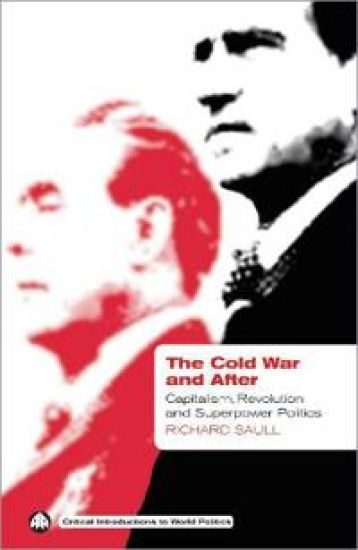
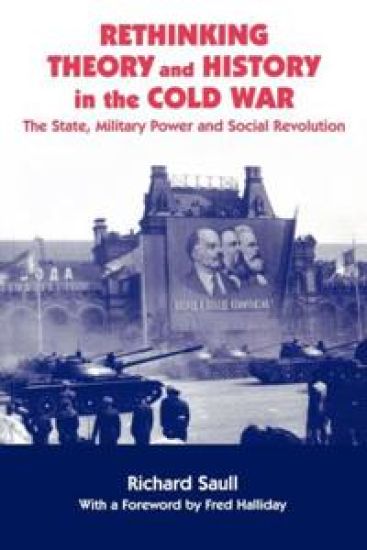
The Cold War is often presented as an international power struggle between the Soviet Union and the US. Richard Saull challenges this assumption. He broadens our understanding of the defining political conflict of the twentieth-century by stressing the social and ideological differences of the superpowers and how these differences conditioned their international behaviour. Saull argues that US-Soviet antagonism was part of a wider conflict between capitalism and communism involving states and social forces other than the superpowers. The US was committed to containing revolutionary and communist movements that emerged out of uneven capitalist development. In highlighting the socio-economic and ideological dimensions of the Cold War, Saull not only provides a richer history of the Cold War than mainstream approaches, but is also able to explain why revolutionary domestic transformations caused international crises. Tracing the origins of new resistance to American global power, Saull's book provides an ideal alternative perspective on the Cold War and its end.
The Cold War and After

The Cold War and After

Richard Saull

Pluto Press
2007
sidottu
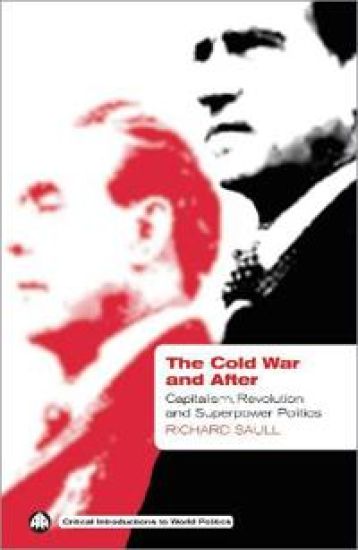
The Cold War is often presented as an international power struggle between the Soviet Union and the US. Richard Saull challenges this assumption. He broadens our understanding of the defining political conflict of the twentieth-century by stressing the social and ideological differences of the superpowers and how these differences conditioned their international behaviour. Saull argues that US-Soviet antagonism was part of a wider conflict between capitalism and communism involving states and social forces other than the superpowers. The US was committed to containing revolutionary and communist movements that emerged out of uneven capitalist development. In highlighting the socio-economic and ideological dimensions of the Cold War, Saull not only provides a richer history of the Cold War than mainstream approaches, but is also able to explain why revolutionary domestic transformations caused international crises. Tracing the origins of new resistance to American global power, Saull's book provides an ideal alternative perspective on the Cold War and its end.
The War on Terrorism and the American 'Empire' after the Cold War
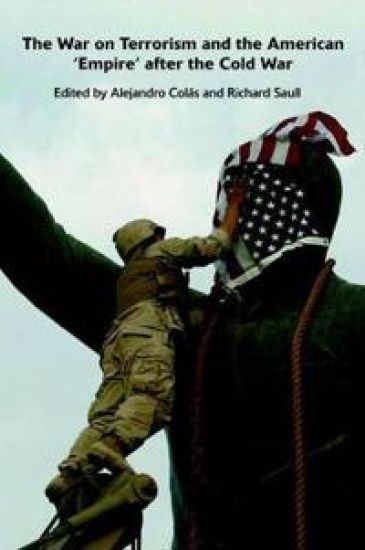
This new study shows how the American-led ‘war on terror’ has brought about the most significant shift in the contours of the international system since the end of the Cold War. A new ‘imperial moment’ is now discernible in US foreign policy in the wake of the neo-conservative rise to power in the USA, marked by the development of a fresh strategic doctrine based on the legitimacy of preventative military strikes on hostile forces across any part of the globe. Key features of this new volume include:* an alternative, critical take on contemporary US foreign policy* a timely, accessible overview of critical thinking on US foreign policy, imperialism and war on terror* the full spectrum of critical view sin a single volume* many of these essays are now ‘contemporary classics’The essays collected in this volume analyse the historical, socio-economic and political dimensions of the current international conjuncture, and assess the degree to which the war on terror has transformed the nature and projection of US global power. Drawing on a range of critical social theories, this collection seeks to ground historically the analysis of global developments since the inception of the new Bush Presidency and weigh up the political consequences of this imperial turn. This book will be of great interest for all students of US foreign policy, contemporary international affairs, international relations and politics.
The War on Terrorism and the American 'Empire' after the Cold War
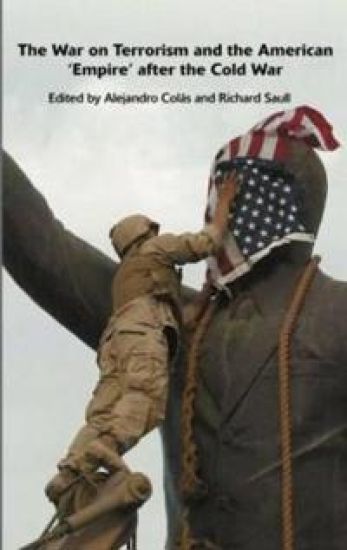
This new study shows how the American-led ‘war on terror’ has brought about the most significant shift in the contours of the international system since the end of the Cold War. A new ‘imperial moment’ is now discernible in US foreign policy in the wake of the neo-conservative rise to power in the USA, marked by the development of a fresh strategic doctrine based on the legitimacy of preventative military strikes on hostile forces across any part of the globe. Key features of this new volume include:* an alternative, critical take on contemporary US foreign policy* a timely, accessible overview of critical thinking on US foreign policy, imperialism and war on terror* the full spectrum of critical view sin a single volume* many of these essays are now ‘contemporary classics’The essays collected in this volume analyse the historical, socio-economic and political dimensions of the current international conjuncture, and assess the degree to which the war on terror has transformed the nature and projection of US global power. Drawing on a range of critical social theories, this collection seeks to ground historically the analysis of global developments since the inception of the new Bush Presidency and weigh up the political consequences of this imperial turn. This book will be of great interest for all students of US foreign policy, contemporary international affairs, international relations and politics.