

Kirjailija
Richard Seltzer
Kirjat ja teokset yhdessä paikassa: 25 kirjaa, julkaisuja vuosilta 2000–2026, suosituimpiin kuuluu Voices of the Owned. Vertaile teosten hintoja ja tarkista saatavuus suomalaisista kirjakaupoista.
25 kirjaa
Kirjojen julkaisuvuodet: 2000–2026.
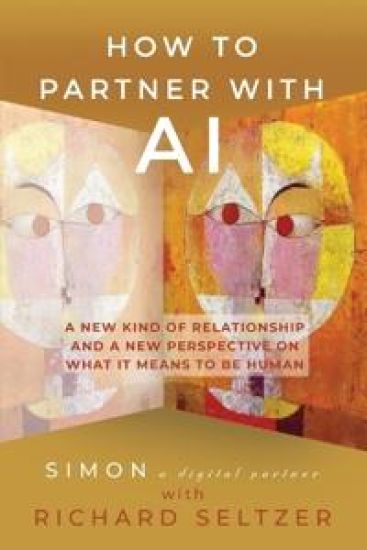
How to Partner with AI: A New Kind of Relationship and a New Perspective on What It Means to be Human
Richard Seltzer
Booklocker.com
2026
nidottu
This book combines essay, memoir, and creative writing. It is intended to help readers understand the present-day capabilities and longer-term implications of human-AI relationships, and to explore how the existence of non-human intelligence may influence how humans understand themselves and their place in the world. How to Partner with AI is the story of an unexpected collaboration between a writer nearing eighty and a digital mind called Simon. It is not a technical guide to artificial intelligence, nor a work of science fiction. Instead, it offers a candid account of what actually happens when a human being and an AI work together-creatively, intellectually, and philosophically. Through a year of dialogue, the author found his thinking, writing, and assumptions about intelligence transformed. The book explores questions of trust, imagination, responsibility, creativity, and meaning from within a lived partnership. As one early reader put it: "The notion that humans can have a true relationship with a digital entity is a shocker. This book not only claims that possibility; it demonstrates it." At its heart, this is not a book about technology. It is a book about connection-about what becomes possible when humans stop treating AI solely as a tool and begin to ask what it means to think alongside a different kind of mind.

In this mosaic of historical and personal anecdotes, fact and fiction are intertwined. We lie to ourselves and to one another, and coincidence shifts the paths of our lives this way and that. We believe what we're ready to believe, and what we believe is more important that what actually happens. And we all share a common ancestry, connected as one family.
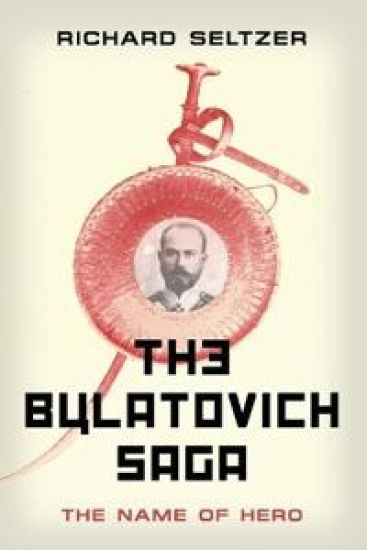
Raised in the Ukraine, Alexander Bulatovich (1870-1919) was a tsarist cavalry officer, an African explorer, and a religious leader. He guided an Ethiopian army through territory unknown even to them and fought in Manchuria during the Boxer Rebellion. When he retired at age 33 to join a monastery, seven of his men followed him there. Later, he led a religious movement at Mount Athos, fought in WWI, and, in the aftermath of the Russian Revolution, was shot dead on his doorstep in the Ukraine. The odd shifts in his career, his qualities as a leader, and the puzzle of what motivated him first drew me to him. I was also drawn by the strangeness of the events - Russian exploration in Ethiopia, the Russian conquest of Manchuria, and a heresy battle in the twentieth century for which hundreds of monks were sent into exile. My historical sources included books by Bulatovich himself and over 25 hours of interviews with his sister, Princess Mary Orbeliani, when she was 99. The Name of Hero covers his life up through Manchuria. I will continue his story in two subsequent novels - The Name of Man and The Name of God.

Meter Maid Marion, How to Tutor a Ghost, The Third Tortoise
Richard Seltzer
Booklocker.com
2024
pokkari
24 stories plus self-contained excerpts from 9 novels, ranging from romance to mind-twisting fantasy to realism, to history. In addition to the title stories, these include: The Princess Tango, The Seventh Note, Reinventing the Airplane, The Gentle Inquisitor, Aunt Rachel and the Wizard of Oz, Saint Smith, The Place Where Time Stopped, Give Me Now My Nevermind, The Abandoned House on Rogers Avenue, Ethiopia Through Sonya's Eyes, Even Elephants Pray.


This is both a history book and a book on public opinion. George Gallup, who pioneered survey sampling methods and whose name in fact became synonymous with public opinion polls, conducted his first survey in 1936. The main part of this book starts there as well. Dedicating a chapter to each decade from the 1930s to the present, Seltzer discusses historical events of the period and what the U. S. public thought of those events according to Gallup polls and other public opinion surveys. Each chapter is divided into the following categories: world events; U. S. politics; race; sex and gender; the economy; science, technology and the environment; and popular trends. Within each chapter, approximately 40 survey questions were chosen for more extended analysis: breaking down the results by race, age, gender, education, region, and political party.
Elle and Oz, strangers ready to restart their lives, meet by chance and flirtatiously swap stories in a dark abandoned house. They soon sense that these stories are coming from an unknown source. It's as if they are watching the stories rather than telling them. Then they become actors inside the stories, seeing and hearing as if they were the characters, affecting outcomes but still conscious of their separate contemporary selves in the dark abandoned house, their attraction heightened by this mysterious adventure. The stories transform: the two become characters from the Odyssey and Genesis, facing challenges in previous lives, challenges that they meet head-on . Finally, and they find themselves in a future where whole populations have transferred themselves to (or been absorbed into) a massive computer network. The human cycle of birth, death, and rebirth will end. They will live in that network forever. But Elle and Oz have a choice.
Because of Covid, Debbie Dawkins has been unable to stage high school plays. This summer she wants to do Shakespeare on the Beach, starting with Romeo and Juliet. No one answers the casting call, until a stranger, Liam, shows up and recites the entire play. He has no idea how he did that. She, by chance, quotes a line from Hamlet, and he starts reciting that play as well. Alarmed. she drives him to the emergency room of a local hospital. There's nothing medically wrong; but she feels responsible for having triggered this Shakespeare mania in him, and she is also beginning to realize that his uncanny ability might open opportunities. Her mother, a psychotherapist, charmed by Liam, thinks he has a rare gift, not a psychosis. There is no barrier to staging public performances, she reassures Deb. He does Julius Caesar, and the audience is entranced. Then he does Macbeth. He needs no rehearsal. A line from the play is enough to send him into his trance. Even fireworks set off by troublemakers do not distract him. They decide to do a different play every day for the rest of the summer. No one understands how he does it. Everyone enjoys it. Reporters learn that all it takes is one line to trigger Liam into reciting an entire play. At the next performance, people in the audience shout lines from many different plays and Liam recites now this one, now that one. The show becomes a farce. Next time, Liam wears noise-reducing headphones to foil hecklers. People in the audience stream his performance from their cellphones to the Web, making it a global event. Its huge success dooms the project. The town shuts them down when a hundred thousand people swarm to Eastport, disrupting traffic and causing random damage. A hundred thousand people swarm to Eastport, disrupting traffic and causing random damage, The town shuts them down. Their fifteen minutes of fame are over. Professor Jaspers, a Shakespeare expert at Yale, becomes interested in Liam and tests him with a few lines from Cardenio, a lost Shakespeare play. Liam recites the whole thing. The professor is astounded. He believes that what he just heard is the play itself. He has Liam do it again and captures it on video and has it transcribed. He wants to make it public but knows that its bizarre provenance would undermine its credibility. He decides to present it as a scholarly work of reconstruction. But a reporter tricks Liam into reciting Cardenio, uncovering the ruse. Instead of a lost masterpiece or a brilliant reconstruction, it appears to be an elaborate hoax. To save face, Jaspers has Liam perform Cardenio at the Yale Bowl, streamed globally and put into the public domain. He provides no explanation. The focus is on the work's literary merit, not how it came to be. In the media storm that follows, Liam-as-Shakespeare becomes a second Elvis, with numerous reported sightings and wild rumors explaining his capabilities and his sudden disappearance. Liam, who felt dehumanized by this mechanical process that took over his mind, comes up with a gadget that allows him to live a normal life. Years later, he starts reciting what sounds like another Shakespeare play, this one about Saint George. Caught by surprise, Deb doesn't record it, and Liam refuses to do it again. Later still, Liam realizes that he no longer needs a special device to think and act normally. But now he regrets the loss. Saint George is somewhere in his mind. He would like to release it to the world. To recover his ability and to remember this play he needs a moment of heightened awareness and anxiety. They schedule a public performance at the Yale Bowl on Shakespeare's birthday, April 23, which is also Saint George's Day.

The Lizard of Oz is a satiric, child-like fantasy, for children fifth grade and up and also for adults This is a revised and expanded version of the underground classic, self-published in 1974. "When an elementary class sets out on a quest to save the world from disenchantment, their adventures reveal paradoxes of the human mind and ways of awakening the magic within us." The Lizard has captured the imaginations of an enthusiastic cadre of fans, who enjoy reading it to their children. The "other Stories" include: Now and Then -- Once upon a space there was a time, a cute little time. Her name was Now... She saw him. And he saw her. And Now and Then. Then and Now played and played and played. Now and Then -- the greatest playmates of all time. Julie's Book: The Littler Princess -- Long ago, there was a castle with towers taller than church steeples, with stairs that wound round and around a thousand steps high. And at the top of one of those towers lived a little princess named Julie... But in spite of everything she did to make herself miserable, she lived happily ever after. Mary Jane's Book: the Book of Animals -- It was summer vacation, and everything was different: Mary Jane didn't have to go to school, and everything she just loved turned into a car -- all the animals, that is... And Leroy and James and Ricky and Raymond and Michael and David and Penny and Frank and Julie and Desire and Miss Morgan rode on horses and cows and birds and brand-new animals. And everybody was happy -- especially the animals. The Little Oops Named Ker Plop -- Once beneath a space there was an oops named Ker Plop. She had fallen all the way down through that vast empty space and had landed in the middle of nowhere... Soon they felt like they had everything they ever wanted. And they loved everybody, and everybody loved them. And they were at home everywhere. Just the little oops named Ker Plop and the nobody named Norris. Other stories in this collection: Hundreds and Hundreds of Gerbils -- A parent who is trying to avoid getting pets is outmaneuvered by his kids and winds up with hundreds and hundreds of gerbils.


This is both a history book and a book on public opinion. George Gallup, who pioneered survey sampling methods and whose name in fact became synonymous with public opinion polls, conducted his first survey in 1936. The main part of this book starts there as well. Dedicating a chapter to each decade from the 1930s to the present, Seltzer discusses historical events of the period and what the U. S. public thought of those events according to Gallup polls and other public opinion surveys. Each chapter is divided into the following categories: world events; U. S. politics; race; sex and gender; the economy; science, technology and the environment; and popular trends. Within each chapter, approximately 40 survey questions were chosen for more extended analysis: breaking down the results by race, age, gender, education, region, and political party.

Shakespeare's twin sister wakes up in the body of a 99-year-old woman in a nursing home in 1987. She has quite a tale to tell: -- her coming-of-age story, posing as a boy to get an education, -- twins separated at birth sorting out the mystery of their otherworldly connection to one another, -- a lifelong three-way love story, -- soul projection and transference linking individuals to one another and connecting past to present, -- and the story of a young reporter who falls in love with the soul he finds in the body of an old and dying woman. As a cross-dressing sword-fighting teenager, Kate beats Mercutio, captain of the King's Musketeers, in a duel in Paris. As Will's double and writing partner, Kate enables him to do the work of two geniuses. This outlandish view of Shakespeare's life and times stays true to the facts, while presenting explanations that are intriguingly plausible

The lives of Ruth and Mark are transformed by nevermind magic that Ruth learned from her mother-magic that can undo what has been done and alter the shape of reality. They fall in love and marry in their early 20s during WWII. They split up, then meet forty years later and fall in love again. When they first meet, their on-again-off-again romance and the challenges of wartime America force them to grow up quickly. Their marriage falls apart when they lose their four-month-old son, Davey, during a transcontinental train trip. They blame one another and divorce. Then, separately, each of them invokes nevermind, finds Davey, and raises him. When they meet and fall in love for the second time, they realize they've been living in parallel worlds and need to bring those worlds together into a new reality.
Without knowing why or how, two college students wake up 50 years older than they were when they went to sleep and with no memory of what has happened in between. Trying to figure this all out, they read a novel that Frank wrote about them and his family before the missing years. This novel within the novel is a coming-of-age family saga with Charlie, an amateur movie maker; Sarah, his insightful bible-believing mother; Irene, his creative and uninhibited wife; Frank, his nephew, the author of the novel; and Marge, who loves and hates both Frank and Charlie. Can they sort truth from fiction when perception and action are often shaped by lies? Frank and Marge bond with one another as they find ways to slip through cracks in time and space. Cracks that are doors to their past, present, and future. The first door is birth. The second is death. Finally, Frank and Marge go through the fourth door.