Kirjailija
Richard Stevens
Kirjat ja teokset yhdessä paikassa: 17 kirjaa, julkaisuja vuosilta 2002–2022, suosituimpiin kuuluu Restoring Western Ranges and Wildlands (Volume 1, Chapters 1-17, Index). Vertaile teosten hintoja ja tarkista saatavuus suomalaisista kirjakaupoista.
17 kirjaa
Kirjojen julkaisuvuodet: 2002–2022.
On a midsummer night in 1969 under a full moon, Richard L. Stevens helped capture a Viet Cong guerrilla leader named Hoang Thi Nu, the "Vietnamese Annie Oakley." What he saw her do that night, leaping into a river and running through gunfire, and what she endured afterwards in captivity, changed Stevens's mind about what humans are capable of, and about war. Stevens was the sole American advisor to a South Vietnamese unit of 105 "ex"-Viet Cong whose mission was to uncover enemy activity along the Ho Chi Minh Trail, and this fast-paced, real-life adventure story captures the frenzied and fearful flavor of a war in which it was often difficult to know who the enemy was. Trail to Redemption is a story of betrayal, capture, interrogation, imprisonment and escape, and the intertwining paths of a Vietnamese woman warrior and a former U. S. Marine. Above all, it is a story of personal courage, love, and respect.

A tale of friendship and war, of love and hatred, of survival and loss. Transpiring across time and space, on two separate worlds, spanning over seven hundred years of history and incorporating other planes of existence. Quintin is lost and drifting throughout the ages with no memory of what or who he is. Hunted by sinister Minions of the Dark, Quintin seems painfully unaware that he alone is the last of an order of interstellar knights - guardians of galactic peace.
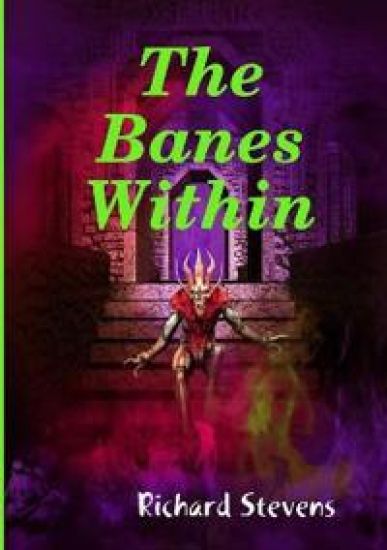
In a dark land sealed by ancient powers, evil reigns unchallenged. Nature is warped and tortured, the land defiled and deadened. Heroes are almost unheard of and life is harsh, survival not assured. Monsters, daemons and undead horrors roam free. Powerful beings manipulate and dominate those they consider weaker than themselves. In this imprisoned world, dark secrets lie waiting to be discovered. Hidden answers to the inescapable truths of the Banes within ..
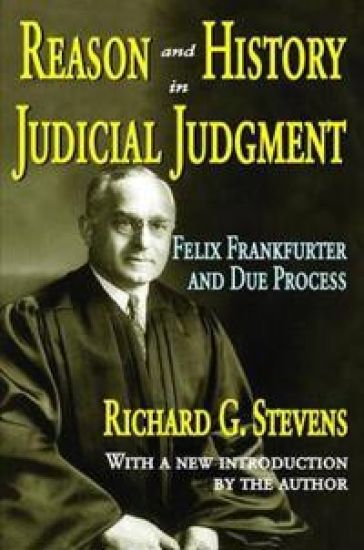
Stevens sees three crises in American judicial statesmanship. The first was the crisis of the founding. The well being of the country was subjected to grave danger, culminating in the crisis of the Civil War, and a refoundation was required. During the mid twentieth century The United States faced the possibility of destruction, World War II, and the finding of malfeasance of the nation in the office of the president. The constant excitement of contest with antagonists makes it difficult to say whether the current crisis of the Supreme Court is merely a continuation or a whole new problem. The political leaders who resolved the first crisis and founded the Republic bequeathed as a part of that foundation the United States Supreme Court. During the subsequent history of the country, and with respect to its crises, the Court played a large part. Whether or not it does so well in the current period depends upon the quality of its judicial statesmanship. The judge is a person who acts. But it is considered action and considered action is based on prior understanding. The character of the Court's understanding, or direction, reveales itself in the course of its division over the application of the "due process" clause to state criminal proceedings. Frankfurter's view is problematic. If Western civilization is to be preserved, it must be because it is worth preserving. If it is worth preserving it must be because it is good. If so, can it be preserved by reliance upon and reference to itself, or must reliance not be placed upon that by virtue of which the thing to be preserved is worthy of preservation? This problem is not new to Western civilization. Much has been written about Frankfurter, and common descriptions of the terms "restraint" and "pragmatism" to characterize his doctrines. Previous treatments of these doctrines now available have not seemed adequate. The intention of Reason and History in Judicial Judgment is to treat them as ethical problems rather than as self-explaining conclusions.
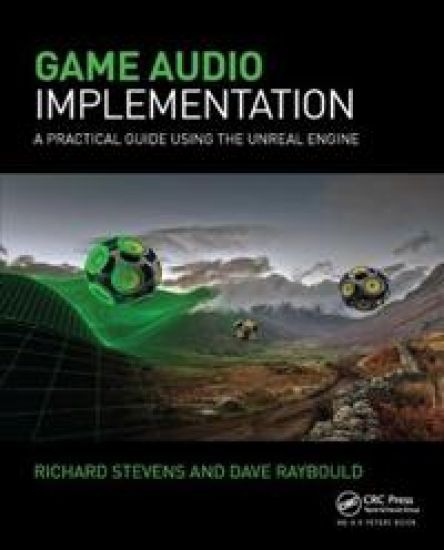
Game Audio Implementation offers a unique practical approach to learning all about game audio. If you've always wanted to hear your sound or music in a real game then this is the book for you. Each chapter is accompanied by its own game level where you can see the techniques and theories in action before working through over 70 exercises to develop your own demo level. Taking you all the way from first principles to complex interactive systems in the industry standard Unreal Engine you‘ll gain the skills to implement your sound and music along with a deep transferable knowledge of the principles you can apply across a range of other game development tools. The accompanying website (www.gameaudioimplementation.com) includes: 12 downloadable demonstration games A unique exercise level for you to develop for your portfolio An up-to-date online bibliography with further reading for each chapter A free sound library with hundreds of game SFX
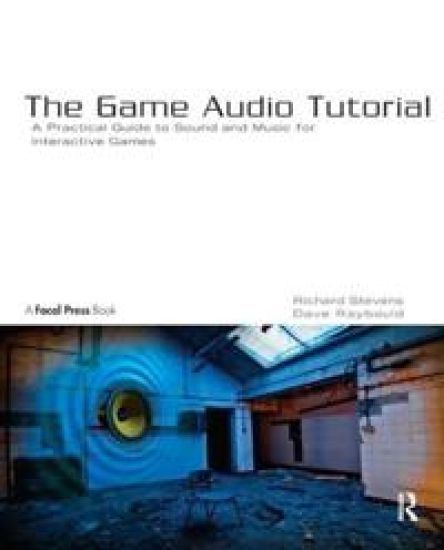
Design and implement video game sound from beginning to end with this hands-on course in game audio. Music and sound effects speak to players on a deep level, and this book will show you how to design and implement powerful, interactive sound that measurably improves gameplay. If you are a sound designer or composer and want to do more than just create audio elements and hand them over to someone else for insertion into the game, this book is for you. You'll understand the game development process and implement vital audio experiences-not just create music loops or one-off sound effects. The Game Audio Tutorial isn't just a book-you also get a powerful website (www.thegameaudiotutorial.com), which includes:
The Declaration of Independence and Constitution of the United States of America
Richard Stevens
Hansebooks
2017
pokkari
Game Audio Implementation offers a unique practical approach to learning all about game audio. If you've always wanted to hear your sound or music in a real game then this is the book for you. Each chapter is accompanied by its own game level where you can see the techniques and theories in action before working through over 70 exercises to develop your own demo level. Taking you all the way from first principles to complex interactive systems in the industry standard Unreal Engine© you’ll gain the skills to implement your sound and music along with a deep transferable knowledge of the principles you can apply across a range of other game development tools. The accompanying website (www.gameaudioimplementation.com) includes: 12 downloadable demonstration gamesA unique exercise level for you to develop for your portfolioAn up-to-date online bibliography with further reading for each chapterA free sound library with hundreds of game SFX
Restoring Western Ranges and Wildlands (Volume 1, Chapters 1-17, Index)
Richard Stevens; Nancy L. Shaw
Createspace Independent Publishing Platform
2012
nidottu
Restoring Western Ranges and Wildlands (Volume 3, Chapters 24-29, Appendices, Index)
Richard Stevens; Nancy L. Shaw
Createspace Independent Publishing Platform
2012
nidottu
Restoring Western Ranges and Wildlands (Volume 2, Chapters 18-23, Index)
Richard Stevens; Nancy L. Shaw
Createspace Independent Publishing Platform
2012
nidottu
Design and implement video game sound from beginning to end with this hands-on course in game audio. Music and sound effects speak to players on a deep level, and this book will show you how to design and implement powerful, interactive sound that measurably improves gameplay. If you are a sound designer or composer and want to do more than just create audio elements and hand them over to someone else for insertion into the game, this book is for you. You'll understand the game development process and implement vital audio experiences-not just create music loops or one-off sound effects. The Game Audio Tutorial isn't just a book-you also get a powerful website (www.thegameaudiotutorial.com), which includes:
Stevens sees three crises in American judicial statesmanship. The first was the crisis of the founding. The well being of the country was subjected to grave danger, culminating in the crisis of the Civil War, and a refoundation was required. During the mid twentieth century The United States faced the possibility of destruction, World War II, and the finding of malfeasance of the nation in the office of the president. The constant excitement of contest with antagonists makes it difficult to say whether the current crisis of the Supreme Court is merely a continuation or a whole new problem. The political leaders who resolved the first crisis and founded the Republic bequeathed as a part of that foundation the United States Supreme Court. During the subsequent history of the country, and with respect to its crises, the Court played a large part. Whether or not it does so well in the current period depends upon the quality of its judicial statesmanship. The judge is a person who acts. But it is considered action and considered action is based on prior understanding. The character of the Court's understanding, or direction, reveales itself in the course of its division over the application of the "due process" clause to state criminal proceedings. Frankfurter's view is problematic. If Western civilization is to be preserved, it must be because it is worth preserving. If it is worth preserving it must be because it is good. If so, can it be preserved by reliance upon and reference to itself, or must reliance not be placed upon that by virtue of which the thing to be preserved is worthy of preservation? This problem is not new to Western civilization. Much has been written about Frankfurter, and common descriptions of the terms "restraint" and "pragmatism" to characterize his doctrines. Previous treatments of these doctrines now available have not seemed adequate. The intention of Reason and History in Judicial Judgment is to treat them as ethical problems rather than as self-explaining conclusions.
A beautifully written exposition of Freud's ideas and how they emerged from the zeitgeist of the age, Stevens offers students and general readers a stimulating and uniquely balanced assessment of Freud's work. He also examines its implications for society and for understanding the person. The best and most readable introduction to Freud available.
Erik Erikson has been described as 'probably the most significant post-Freudian thinker' with a 'unique and profound vision'. Al Gore was his student, Bill Clinton a great admirer. Getting to grips with his complex ideas however is no easy task. This book provides a comprehensive and in-depth road map to Erikson's work and is ideal for all students of Psychology. Stevens lucidly and authoritatively analyses his ideas about childhood development, adolescence, identity, the life cycle and his psychobiographical studies of Luther and Gandhi. This penetrating critique of Erikson's work reveals how relevant his ideas are today.
Writing Better Requirements
Ian Alexander; Richard Stevens
Addison-Wesley Educational Publishers Inc
2002
nidottu
Well-written requirements are crucial to systems of all kinds: you are unlikely to get what you want unless you ask for it. This book explains and demonstrates exactly what requirements are for, and how to write them