Kirjojen hintavertailu – 12 903 725 kirjaa ja 27 kauppaa

Kirjailija

Richard Swedberg

Kirjat ja teokset yhdessä paikassa: 14 kirjaa, julkaisuja vuosilta 1990–2019, suosituimpiin kuuluu Max Weber and the Idea of Economic Sociology. Vertaile teosten hintoja ja tarkista saatavuus suomalaisista kirjakaupoista.

14 kirjaa

Kirjojen julkaisuvuodet: 1990–2019.

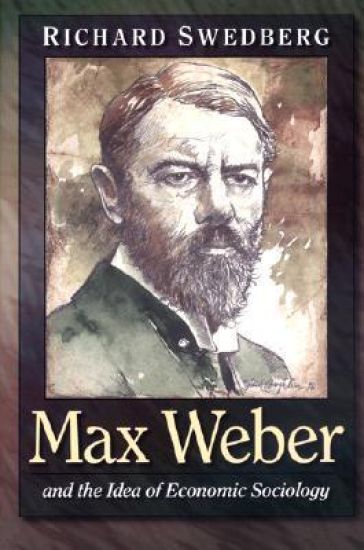
Max Weber and the Idea of Economic Sociology

Max Weber and the Idea of Economic Sociology

Richard Swedberg

Princeton University Press
2000
pokkari
While most people are familiar with The Protestant Ethic and the Spirit of Capitalism, few know that during the last decade of his life Max Weber (1864-1920) also tried to develop a new way of analyzing economic phenomena, which he termed "economic sociology." Indeed, this effort occupies the central place in Weber's thought during the years just before his death. Richard Swedberg here offers a critical presentation and the first major study of this fascinating part of Weber's work. This book shows how Weber laid a solid theoretical foundation for economic sociology and developed a series of new and highly evocative concepts. He not only investigated economic phenomena but also linked them clearly with political, legal, and religious phenomena. Swedberg also demonstrates that Weber's approach to economic sociology addresses a major problem that has haunted economic analysis since the nineteenth century: how to effectively unite an interest-driven type of analysis (popular with economists) with a social one (of course preferred by sociologists). Exploring Weber's views of the economy and how he viewed its relationship to politics, law, and religion, Swedberg furthermore discusses similarities and differences between Weber's economic sociology and present-day thinking on the same topic. In addition, the author shows how economic sociology has recently gained greater credibility as economists and sociologists have begun to collaborate in studying problems of organizations, political structures, social problems, and economic culture more generally. Swedberg's book will be sure to further this new cooperation.
Joseph A. Schumpeter

Joseph A. Schumpeter

Richard Swedberg

Polity Press
1993
nidottu
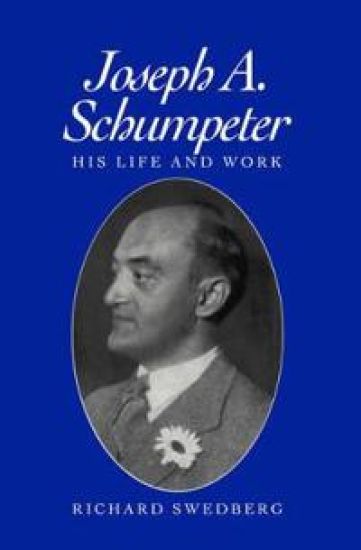
Joseph A. Schumpeter (1883-1950) is one of the most celebrated authors on the economics and sociology of the twentieth century. Richard Swedberg's new biography provides an engaging and vivid account of Schumpeter's varied life, including his ventures into politics and private banking as well as his academic career. As a backdrop to these, Swedberg also discusses Schumpeter's tragic personal life. This book provides a thorough overview of Schumpeter's writings, and also introduces previously unpublished material based on his letters and interviews. Swedberg emphasizes that Schumpeter saw economics as a form of social investigation, consisting of four fields: economic theory, economic sociology, economic history and statistics. The author describes and analyses Schumpeter's theory of social classes and modern states as well as his more famous theory of the entrepreneur.
The Sociology of Economic Life

The Sociology of Economic Life

Mark Granovetter; Richard Swedberg

Routledge
2019
sidottu
This book incorporates classic and contemporary readings in economic sociology and related disciplines to provide students with a broad understanding of the many dimensions of economic life. It discusses Max Weber's key concepts in economics and sociology.
Tocqueville's Political Economy

Tocqueville's Political Economy

Richard Swedberg

Princeton University Press
2018
pokkari
Alexis de Tocqueville (1805-59) has long been recognized as a major political and social thinker as well as historian, but his writings also contain a wealth of little-known insights into economic life and its connection to the rest of society. In Tocqueville's Political Economy, Richard Swedberg shows that Tocqueville had a highly original and suggestive approach to economics--one that still has much to teach us today. Through careful readings of Tocqueville's two major books and many of his other writings, Swedberg lays bare Tocqueville's ingenious way of thinking about major economic phenomena. At the center of Democracy in America, Tocqueville produced a magnificent analysis of the emerging entrepreneurial economy that he found during his 1831-32 visit to the United States. More than two decades later, in The Old Regime and the Revolution, Tocqueville made the complementary argument that it was France's blocked economy and society that led to the Revolution of 1789. In between the publication of these great works, Tocqueville also produced many lesser-known writings on such topics as property, consumption, and moral factors in economic life. When examined together, Swedberg argues, these books and other writings constitute an interesting alternative model of economic thinking, as well as a major contribution to political economy that deserves a place in contemporary discussions about the social effects of economics.
The Max Weber Dictionary

The Max Weber Dictionary

Richard Swedberg; Ola Agevall

Stanford University Press
2016
sidottu
Max Weber is one of the world's most important social scientists, but he is also one of the most notoriously difficult to understand. This revised, updated, and expanded edition of The Max Weber Dictionary reflects up-to-the-moment threads of inquiry and introduces the most recent translations and references. Additionally, the authors include new entries designed to help researchers use Weber's ideas in their own work; they illuminate how Weber himself thought theorizing should occur and how he went about constructing a theory. More than an elementary dictionary, however, this work makes a contribution to the general culture and legacy of Weber's work. In addition to entries on broad topics like religion, law, and the West, the completed German definitive edition of Weber's work (Max Weber Gesamtausgabe) necessitated a wealth of new entries and added information on topics like pragmatism and race and racism. Every entry in the dictionary delves into Weber scholarship and acts as a point of departure for discussion and research. As such, this book will be an invaluable resource to general readers, students, and scholars alike.
The Max Weber Dictionary

The Max Weber Dictionary

Richard Swedberg; Ola Agevall

Stanford University Press
2016
pokkari
Max Weber is one of the world's most important social scientists, but he is also one of the most notoriously difficult to understand. This revised, updated, and expanded edition of The Max Weber Dictionary reflects up-to-the-moment threads of inquiry and introduces the most recent translations and references. Additionally, the authors include new entries designed to help researchers use Weber's ideas in their own work; they illuminate how Weber himself thought theorizing should occur and how he went about constructing a theory. More than an elementary dictionary, however, this work makes a contribution to the general culture and legacy of Weber's work. In addition to entries on broad topics like religion, law, and the West, the completed German definitive edition of Weber's work (Max Weber Gesamtausgabe) necessitated a wealth of new entries and added information on topics like pragmatism and race and racism. Every entry in the dictionary delves into Weber scholarship and acts as a point of departure for discussion and research. As such, this book will be an invaluable resource to general readers, students, and scholars alike.
Sociologi genom litteratur : skönlitteraturens möjligheter och samhällsvetenskapens begränsningar

Sociologi genom litteratur : skönlitteraturens möjligheter och samhällsvetenskapens begränsningar

Ola Agevall; Göran Ahrne; Patrik Aspers; Reza Azarian; Paavo Bergman; Stina Bergman Blix; Alexandra Bogren; Christofer Edling; Hedvid Ekerwald; Marie Evertsson; Mats Franzén; Magnus Haglunds; Carl-Göran Heidegren; Antoinette Hetzler; Bo Isenberg; Magnus Karlsson; Jonas Lindström; Gunnar Olofsson; Anders Persson; Abby Petersson; Jens Rydgren; Lambros Roumbanis; Lisbeth Stenberg; Lotta Stern; Mikaela Sundberg; Stefan Svallfors; Richard Swedberg; Mria Törnqvist; Denny Vågeröd; Åsa Wettergren; Malin Åkerström

Arkiv förlag/A-Z förlag
2015
nidottu
Den här boken är en hyllning till skönlitteraturens rikedom och till den sociologiska fantasin. Skönlitteraturen illustrerar samhällsvetenskapliga kärnresonemang, den väcker nya frågor om människans existentiella villkor och den sprider nytt ljus över vårt sätt att se på världen. Men trots att samhällsvetenskapen kan sägas ha uppstått under samma epok som den moderna litteraturen, och trots att de har fascinationen inför samhället och det s­ociala samspelet gemensamt, så har skönlitteraturen märkligt nog inte någon naturlig plats i samhällsvetarens verktygslåda. Sociologi genom litteratur tjänar både som en reflektion över samhällsvetenskapens egenart och som en inbjudan till samhällsvetare att använda skönlitteraturen som ett fönster mot den sociala verkligheten. Bokens redaktörer, Christofer Edling och Jens Rydgren, är professorer i sociologi vid Lunds respektive Stockholms universitet. Författarna representerar flera generationer av i dag verksamma svenska sociologer. Medverkande författare: Ola Agevall, Göran Ahrne, Patrik Aspers, Reza Azarian, Paavo Bergman, Stina Bergman Blix, Alexandra Bogren, Christofer Edling, Hedvig Ekerwald, Marie Evertsson, Mats Franzén, Magnus Haglunds, Carl-Göran Heidegren, Antoinette Hetzler, Bo Isenberg, Magnus Karlsson, Jonas Lindström, Gunnar Olofsson, Anders Persson, Abby Peterson, Jens Rydgren, Lambros Roumbanis, Lisbeth Stenberg, Lotta Stern, Mikaela Sundberg, Stefan Svallfors, Richard Swedberg, Maria Törnqvist, Denny Vågerö, Åsa Wettergren, Malin Åkerström.
The Art of Social Theory

The Art of Social Theory

Richard Swedberg

Princeton University Press
2015
pokkari

Halvin toimitettuna 38,20 €

In the social sciences today, students are taught theory by reading and analyzing the works of Karl Marx, Max Weber, and other foundational figures of the discipline. What they rarely learn, however, is how to actually theorize. The Art of Social Theory is a practical guide to doing just that. In this one-of-a-kind user's manual for social theorists, Richard Swedberg explains how theorizing occurs in what he calls the context of discovery, a process in which the researcher gathers preliminary data and thinks creatively about it using tools such as metaphor, analogy, and typology. He guides readers through each step of the theorist's art, from observation and naming to concept formation and explanation. To theorize well, you also need a sound knowledge of existing social theory. Swedberg introduces readers to the most important theories and concepts, and discusses how to go about mastering them. If you can think, you can also learn to theorize. This book shows you how. Concise and accessible, The Art of Social Theory features helpful examples throughout, and also provides practical exercises that enable readers to learn through doing.
The Art of Social Theory

The Art of Social Theory

Richard Swedberg

Princeton University Press
2014
sidottu
In the social sciences today, students are taught theory by reading and analyzing the works of Karl Marx, Max Weber, and other foundational figures of the discipline. What they rarely learn, however, is how to actually theorize. The Art of Social Theory is a practical guide to doing just that. In this one-of-a-kind user's manual for social theorists, Richard Swedberg explains how theorizing occurs in what he calls the context of discovery, a process in which the researcher gathers preliminary data and thinks creatively about it using tools such as metaphor, analogy, and typology. He guides readers through each step of the theorist's art, from observation and naming to concept formation and explanation. To theorize well, you also need a sound knowledge of existing social theory. Swedberg introduces readers to the most important theories and concepts, and discusses how to go about mastering them. If you can think, you can also learn to theorize. This book shows you how. Concise and accessible, The Art of Social Theory features helpful examples throughout, and also provides practical exercises that enable readers to learn through doing.
The Sociology of Economic Life

The Sociology of Economic Life

Mark Granovetter; Richard Swedberg

Westview Press Inc
2011
nidottu
This book incorporates classic and contemporary readings in economic sociology and related disciplines to provide students with a broad understanding of the many dimensions of economic life. It discusses Max Weber's key concepts in economics and sociology.
Tocqueville's Political Economy

Tocqueville's Political Economy

Richard Swedberg

Princeton University Press
2009
sidottu
Alexis de Tocqueville (1805-59) has long been recognized as a major political and social thinker as well as historian, but his writings also contain a wealth of little-known insights into economic life and its connection to the rest of society. In Tocqueville's Political Economy, Richard Swedberg shows that Tocqueville had a highly original and suggestive approach to economics--one that still has much to teach us today. Through careful readings of Tocqueville's two major books and many of his other writings, Swedberg lays bare Tocqueville's ingenious way of thinking about major economic phenomena. At the center of Democracy in America, Tocqueville produced a magnificent analysis of the emerging entrepreneurial economy that he found during his 1831-32 visit to the United States. More than two decades later, in The Old Regime and the Revolution, Tocqueville made the complementary argument that it was France's blocked economy and society that led to the Revolution of 1789. In between the publication of these great works, Tocqueville also produced many lesser-known writings on such topics as property, consumption, and moral factors in economic life. When examined together, Swedberg argues, these books and other writings constitute an interesting alternative model of economic thinking, as well as a major contribution to political economy that deserves a place in contemporary discussions about the social effects of economics.
Principles of Economic Sociology

Principles of Economic Sociology

Richard Swedberg

Princeton University Press
2007
pokkari
The last fifteen years have witnessed an explosion in the popularity, creativity, and productiveness of economic sociology, an approach that traces its roots back to Max Weber. This important new text offers a comprehensive and up-to-date overview of economic sociology. It also advances the field theoretically by highlighting, in one analysis, the crucial economic roles of both interests and social relations. Richard Swedberg describes the field's critical insights into economic life, giving particular attention to the effects of culture on economic phenomena and the ways that economic actions are embedded in social structures. He examines the full range of economic institutions and explicates the relationship of the economy to politics, law, culture, and gender. Swedberg notes that sociologists too often fail to properly emphasize the role that self-interested behavior plays in economic decisions, while economists frequently underestimate the importance of social relations. Thus, he argues that the next major task for economic sociology is to develop a theoretical and empirical understanding of how interests and social relations work in combination to affect economic action. Written by an author whose name is synonymous with economic sociology, this text constitutes a sorely needed advanced synthesis--and a blueprint for the future of this burgeoning field.
Organisationer och samhälle - - Analytiska perspektiv

Organisationer och samhälle - - Analytiska perspektiv

Göran Ahrne; Peter Hedström; Lotta Stern; Richard Swedberg

Studentlitteratur AB
1999
nidottu
Analysen av hur människors interaktion organiseras är central för att förstå samhällsutvecklingens förutsättningar i stort. Forskningen om organisationer har under senare år även blivit en av de mest spännande och vitala delarna av samtida samhällsforskning. Organisationsteori associeras ofta med handböcker i ledarskap och hur man ska skapa framgångsrika företag. Men det är inte den sortens organisationsteori som denna bok handlar om. Här presenteras i stället en mer kritisk och analytisk organisationsteori som försöker analysera och förklara varför organisationer ser ut och agerar som de gör. Varför präglas vissa organisationer av en inneboende tröghet, medan andra organisationer lyckas anpassa sig till en föränderlig omgivning? Hur kan intressemotsättningar mellan olika koalitioner av organisationsmedlemmar överbryggas och ersättas med tillit och förtroende? Boken ger vägledning i såväl klassiska organisationsperspektiv som i de mest inflytelserika samtida riktningarna inom organisationsforskningen. Boken är avsedd att användas i grundläggande kurser i organisationsteori inom hela det samhällsvetenskapliga och ekonomiska fältet.
Economics and Sociology

Economics and Sociology

Richard Swedberg

Princeton University Press
1990
pokkari
The boundary between economics and sociology is presently being redefined--but how, why, and by whom? Richard Swedberg answers these questions in this thought-provoking book of conversations with well-known economists and sociologists. Among the economists interviewed are Gary Becker, Amartya Sen, Kenneth Arrow, and Albert O. Hirschman; the sociologists include Daniel Bell, Harrison White, James Coleman, and Mark Granovetter. The picture that emerges is that economists and sociologists have paid little attention to each other during most of the twentieth century: social problems have been analyzed as if they had no economic dimension and economic problems as if they had no social dimension. Today, however, there is a dialogue between the two fields, as economists take on social topics and as sociologists become interested in rational choice and "new economic sociology." The interviewees describe how they came to challenge the present separation between economics and sociology, what they think of the various proposals to integrate the fields, and how they envision the future. The author summarizes the results of the conversations in the final chapter. The individual interviews also serve as superb introductions to the work of these scholars.