Kirjojen hintavertailu – 12 859 819 kirjaa ja 27 kauppaa
Kirjailija
Richard Tipping
Kirjat ja teokset yhdessä paikassa: 4 kirjaa, julkaisuja vuosilta 2010–2022, suosituimpiin kuuluu The Land Was Forever: 15000 Years in North-East Scotland. Vertaile teosten hintoja ja tarkista saatavuus suomalaisista kirjakaupoista.
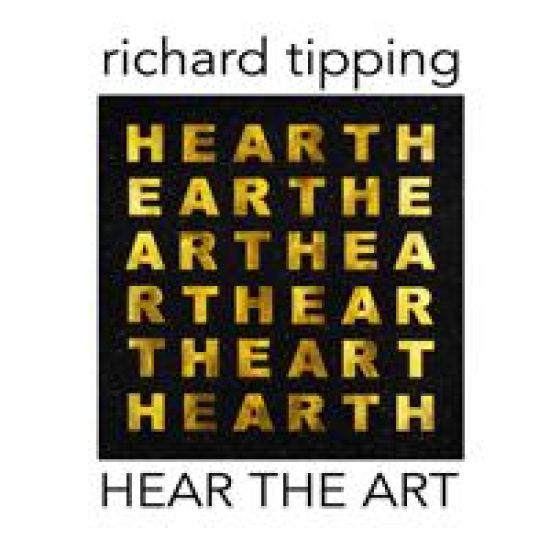
Hear the Art is the essential poetry-as-art collection, loaded with Richard Kelly Tipping's elegant, wry and telling poems made as sculpture and picture. Tipping works with poetic language in visual forms and physical media ranging from animated neon, slump glass, engraved marble and screenprint to large-scale public sculptures in steel, granite and electric lights. Typographic designs move off the page, becoming independent poem-objects until - while living in the artworld as things - they are photographed, and return to the page. This book is full of realised ideas, a rich panoply of word art demanding to be seen, heard and remembered." These word games and aphorisms are as memorable as they are original and delightful." - Marjorie Perloff"The very best in the field - and the best thinker on the subject as well." - John Kinsella
Archaeological evidence for settlement and land use in early medieval Scottish upland landscapes remains largely undiscovered. This study records only the second excavation of one important and distinctive house form, the Pitcarmicktype building, in the hills of north-east Perth and Kinross. Excavation of seven turf buildings at Lair in Glen Shee has confirmed the introduction of Pitcarmick buildings in the early 7th century AD. Clusters of these at Lair, and elsewhere in the hills, are interpreted as integrated, spatially organised farm complexes comprising byre-houses and outbuildings. Their form has more to do with contemporary traditions across the North Sea than with local styles. There is a close link between 7th-century climatic amelioration and their spread across the hills, and it is argued that this was a purposeful re-occupation of a neglected landscape. Pitcarmick buildings were constructed and lived in by precocious, knowledgeable, and prosperous farming communities. Pollen analysis has shown the upland economy to have been arable as well as pastoral, and comparable contemporary economic ‘recovery’ is suggested from similar analyses across Scotland. The farms at Lair were stable and productive until the 11th century when changes, poorly understood, saw their demise.
Eight sites were excavated along the route of the Aberdeen Western Peripheral Route between Balmedy to Tipperty. The sites are mostly multi-period. One site on the banks of the River Dee, revealed nine phases of activity extending from the Upper Palaeolithic through to the post-Medieval. Extensive specialist analysis has been undertaken on all sites, along with a programme of radiocarbon dating, OSL dating and Bayesian analysis. During the excavations, it was apparent how the specific landscape of each site was key to the activities taking place there, the periods and duration of activity and the extent to which people were passing through or settling. This was chosen as the overarching theme for analysis and publication, and the geological and topographical background is woven through the presentation of each site. Broadly speaking, the landscape ‘units’ identified were the River Dee valley, the Dee-Don uplands, a second upland zone around one specific site, the River Don valley, and the coastal plains. In addition to the individual site- evidence, a concluding chapter expands on three themes highlighted through the work; Mobility (looking at the temporary/permanent nature of interaction), ‘Gaps’ (periods of time or parts of the landscape which seem unexpectedly blank and the reasons for this), and Methodologies (looking at the specific methods used to identify, test and excavate the sites and consider learnings for future linear projects). Full versions of all specialist reports, the original assessment reports and relevant catalogues are provided digitally through ADS and cross-referenced throughout the text.