Kirjojen hintavertailu – 12 903 725 kirjaa ja 27 kauppaa

Kirjailija

Richard W. Etulain

Kirjat ja teokset yhdessä paikassa: 24 kirjaa, julkaisuja vuosilta 1996–2027, suosituimpiin kuuluu Stegner. Vertaile teosten hintoja ja tarkista saatavuus suomalaisista kirjakaupoista.

Nimi esiintyy myös muodoissa: Richard W Etulain

24 kirjaa

Kirjojen julkaisuvuodet: 1996–2027.

The American West

The American West

Richard W. Etulain; Michael P. Malone

Bison Books
2007
pokkari
The American West is the only book-length historical overview of the post-1900 American West. This balanced, comprehensive account of the modern West skillfully delineates the changes and resulting complexities that characterize the twentieth-century West. The authors consider the ways in which urban, service, and computer-related industries have replaced rural, extractive, and agricultural economies. They also trace the steps by which western politics shifted from New Deal principles to more conservative, Republican policies. The book examines the roles of racial and ethnic groups in the recent West, emphasizing the challenges facing Native Americans, Hispanics, Asians, and African Americans in the region. Other chapters discuss western women, families, and urban developments. Thorough coverage of cultural topics—literature, art, films, religion, and education—includes lively descriptions of important individuals and memorable events. This Bison Books edition, which features a new chapter covering the mid-1980s to 2005 and bibliographic essays on books about the modern American West, offers the most up-to-date discussion of the contemporary American West available.
Beyond the Missouri

Beyond the Missouri

Richard W. Etulain

University of New Mexico Press
2006
nidottu
This new historical overview tells the dramatic story of the American West from its prehistory to the present. A narrative history, it covers the region from the North Dakota-to-Texas states to the Pacific Coast. This West has always been home to richly diverse cultural groups, including today's growing numbers of Indian, Hispanic, and Asian Americans. Other distinctions have marked the Western past: first, the differences among prehistoric peoples and among hundreds of Indian tribes at first white contact; next, the varied western subcultures that emerged in the nineteenth and twentieth centuries; third the social, cultural, and political complexities of the West in the late twentieth and early twenty-first centuries. In ""Beyond the Missouri"", Richard Etulain provides a fresh, balanced narrative of this geographically and culturally vast area and emphasises two themes: change and complexity. His perspective is neither the too-optimistic, homogenised position of the Turnerian school of historians nor the less optimistic, conflicted approach of the Revisionist Western historians. Etulain begins his study with a discussion of western landscapes and Native inhabitants. He next examines the Spanish Southwest, colonial rivalries, mountain men, missionaries, and the Oregon Trail. Then Etulain looks at Mormons, miners, western communities, ranching and farming, and transportation networks. He treats western frontier social patterns and cultures and contributes several chapters on the modern West, including the pre-World War II and the Cold War Wests. Etulain concludes with today's continuing search for an American West. Each of the fifteen chapters contains a helpful list of suggested readings.
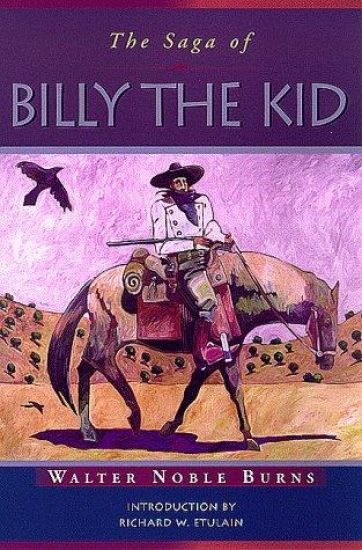
The Saga of Billy the Kid

The Saga of Billy the Kid

Walter Noble Burns; Richard W. Etulain

University of New Mexico Press
1999
sidottu
First published in 1926, this entertaining and dramatic biography forever installed outlaw Billy the Kid in the pantheon of mythic heroes from the Old West and is still considered the single most influential portrait of Billy in this century. Saga focuses on the Kid's life and experiences in the bloody war between the Murphy-Dolan and Tunstall-McSween gangs in and around Lincoln, New Mexico, between 1878 and paints the Kid as a boyish Robin Hood or romantic knight galvanised into a life of crime and killing by the war's violence and bloodshed. Billy represented the romantic and anarchic Old West that the march of civilisation was rapidly displacing1881. Burns, his destroyer was Pat Garrett, the courageous sheriff of Lincoln County. Garrett's shooting of Billy in 1881 hastened the closing of the American frontier. Walter Noble Burns's 'Saga of Billy the Kid' kindled a fascination in Billy the Kid that survives to this day. Richard W. Etulain's foreword discusses the singular importance of Saga in the historical literature on Billy the Kid and the Lincoln County War.
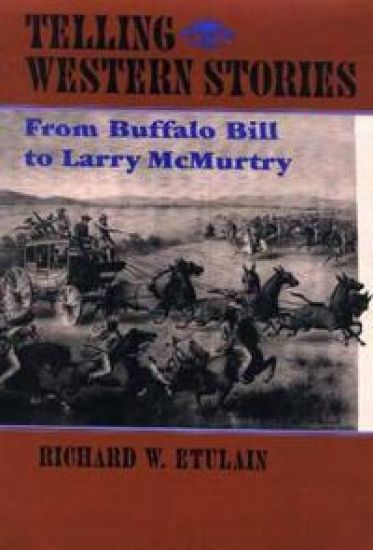
Telling Western Stories

Telling Western Stories

Richard W. Etulain

University of New Mexico Press
1999
nidottu
What has the western of literature and film contributed to American culture? Richard Etulain, the leading cultural historian of the West, answers that question by tracing four distinct storytelling traditions and exploring the indelible images each has left in the public's mind over the past 125 years. Our images of cowboys, lawmen, outlaws, and Indians come from a collage of sources, including Buffalo Bill, Frederick Jackson Turner, Calamity Jane, Mary Hallock Foote, Geronimo, Mourning Dove, Owen Wister, Zane Grey, Walter Noble Burns, John Ford, Louis L'Amour, Wallace Stegner, Patricia Nelson Limerick, Leslie Marmon Silko, and Larry McMurtry. Etulain begins with the dominant image conveyed in Wild West shows and dime novels of the late nineteenth century--the West as a place of adventure and danger. In the early twentieth century stories by women and Indians appeared, but they were soon overlooked and not rediscovered until the 1970s. The period from the 1920s to the 1950s represents the classic era of western movies and novels--of cavalry charges to save the day and heroes in white hats. But since the 1960s a counter story has emerged, one of ambiguity and complexity that often turned upside down our notions about what really mattered in how we look at the West. Etulain carefully explores why stories of the frontier and American West still rival those of the American Civil War as the country's most popular tales, and he shows how narratives that persisted relatively unchanged for a century have moved in notable new directions since the 1960s.