Kirjojen hintavertailu – 12 903 725 kirjaa ja 27 kauppaa

Kirjailija

Richard Weisman

Kirjat ja teokset yhdessä paikassa: 4 kirjaa, julkaisuja vuosilta 1985–2022, suosituimpiin kuuluu Showing Remorse. Vertaile teosten hintoja ja tarkista saatavuus suomalaisista kirjakaupoista.

4 kirjaa

Kirjojen julkaisuvuodet: 1985–2022.

Study Guide for Goldfrank's Toxicologic Emergencies

Study Guide for Goldfrank's Toxicologic Emergencies

Rana Biary; Mary Howland; Silas W. Smith; Richard Weisman; Neal Lewin; Lewis Goldfrank; Robert Hoffman

McGraw-Hill Education
2022
nidottu
The hands-on study companion for the most respected, rigorous medical toxicology text availableGoldfrank's Toxicologic Emergencies has long been the go-to guide for accurately diagnosing and effectively treating poisoned and overdosed patients. Now, this practical companion provides everything you need to get even more out of Goldfrank’s. Study Guide for Goldfrank's Toxicologic Emergencies provides 1,400 questions with answers for testing your knowledge-a process that increases information retention and serves as invaluable practice for board exams. Each chapter has its own question set using both general factual and case-based questions. The guide is ideal for students, nurses, pharmacists, and physicians. Study Guide for Goldfrank's Toxicologic Emergencies covers:General approaches to the poisoned patientPrinciples of medical toxicologyClinical basis of medical toxicologyPoison prevention and educationResearch principlesLegal and forensic considerations

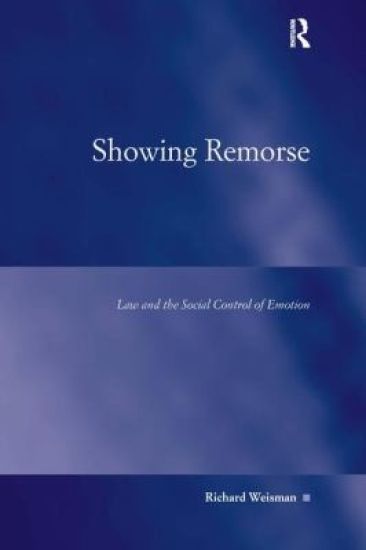
Showing Remorse

Showing Remorse

Richard Weisman

Routledge
2016
nidottu
Whether or not wrongdoers show remorse and how they show remorse are matters that attract great interest both in law and in popular culture. In capital trials in the United States, it can be a question of life or death whether a jury believes that a wrongdoer showed remorse. And in wrongdoings that capture the popular imagination, public attention focuses not only on the act but on whether the perpetrator feels remorse for what they did. But who decides when remorse should be shown or not shown and whether it is genuine or not genuine? In contrast to previous academic studies on the subject, the primary focus of this work is not on whether the wrongdoer meets these expectations over how and when remorse should be shown but on how the community reacts when these expectations are met or not met. Using examples drawn from Canada, the United States, and South Africa, the author demonstrates that the showing of remorse is a site of negotiation and contention between groups who differ about when it is to be expressed and how it is to be expressed. The book illustrates these points by looking at cases about which there was conflict over whether the wrongdoer should show remorse or whether the feelings that were shown were sincere. Building on the earlier analysis, the author shows that the process of deciding when and how remorse should be expressed contributes to the moral ordering of society as a whole. This book will be of interest to those in the fields of sociology, law, law and society, and criminology.
Showing Remorse

Showing Remorse

Richard Weisman

Ashgate Publishing Limited
2014
sidottu
Whether or not wrongdoers show remorse and how they show remorse are matters that attract great interest both in law and in popular culture. In capital trials in the United States, it can be a question of life or death whether a jury believes that a wrongdoer showed remorse. And in wrongdoings that capture the popular imagination, public attention focuses not only on the act but on whether the perpetrator feels remorse for what they did. But who decides when remorse should be shown or not shown and whether it is genuine or not genuine? In contrast to previous academic studies on the subject, the primary focus of this work is not on whether the wrongdoer meets these expectations over how and when remorse should be shown but on how the community reacts when these expectations are met or not met. Using examples drawn from Canada, the United States, and South Africa, the author demonstrates that the showing of remorse is a site of negotiation and contention between groups who differ about when it is to be expressed and how it is to be expressed. The book illustrates these points by looking at cases about which there was conflict over whether the wrongdoer should show remorse or whether the feelings that were shown were sincere. Building on the earlier analysis, the author shows that the process of deciding when and how remorse should be expressed contributes to the moral ordering of society as a whole. This book will be of interest to those in the fields of sociology, law, law and society, and criminology.
Witchcraft, Magic and Religion in Seventeenth Century Massachusetts

Witchcraft, Magic and Religion in Seventeenth Century Massachusetts

Richard Weisman

University of Massachusetts Press
1985
nidottu
The Salem witchcraft persecutions are one of the most well-known events in history, but there is more to the story. In this book, Weisman explores the social, political, and religious implications of witchcraft. He ventures outside of the usual studies of the Salem trials to provide a comprehensive understanding of 17th-century Massachusetts witchcraft as a whole. In the first section, an attempt is made to explicate the logic and meaning of the two major interpretive frameworks of witchcraft in terms of which the category was understood by inhabitants of Massachusetts Bay. The second and third sections of this study deal with the sources of support and resistance to collective actions against witchcraft prior to the Salem trials and during the Salem trials respectively.