Kirjojen hintavertailu – 12 903 725 kirjaa ja 27 kauppaa

Kirjailija

Richard Weitz

Kirjat ja teokset yhdessä paikassa: 19 kirjaa, julkaisuja vuosilta 2005–2025, suosituimpiin kuuluu The New China-Russia Alignment. Vertaile teosten hintoja ja tarkista saatavuus suomalaisista kirjakaupoista.

19 kirjaa

Kirjojen julkaisuvuodet: 2005–2025.

The New China-Russia Alignment

The New China-Russia Alignment

Richard Weitz

BLOOMSBURY PUBLISHING PLC
2024
nidottu
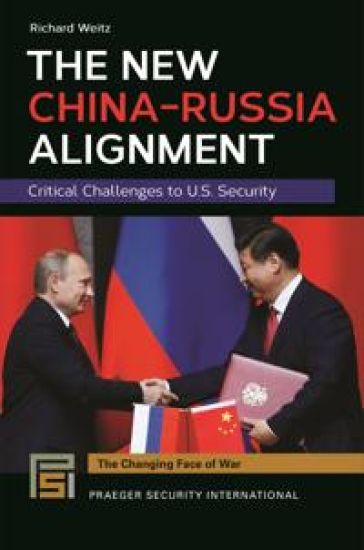
This volume identifies the main drivers of the current Sino-Russian relationship, assesses whether—and under what conditions—China and Russia would cooperate more extensively and effectively against American interests, and recommends U. S. policies that could prevent such an outcome. Most experts argue that economic interdependence, nuclear weapons, and the U. S. contribution to maintaining the global commons mean that China and Russia will generally accept U. S. military superiority and U. S. political supremacy in managing global affairs. An agreement between these two powerful countries to work against the United States, however, would greatly increase its vulnerabilities. Relations between the governments of China and Russia with the U. S. have worsened in past years. Identifying the various pathways, events, and political, economic, and military drivers that could shape the dynamics of the China-Russia relationship is of critical importance to U. S. security. This book examines the sources, nuances, and manifestations of the ongoing Sino-Russian relationship in order to recommend strategy and policy that could work to U. S. advantage. Written by an author who traveled extensively in both countries in order to conduct research and expert interviews for the work, the book covers the latest developments to include the major changes in Chinese foreign policy under President Xi Jinping and ongoing relations with Russian President Vladimir Putin.
The New China-Russia Alignment

The New China-Russia Alignment

Richard Weitz

Praeger Publishers Inc
2022
sidottu
This volume identifies the main drivers of the current Sino-Russian relationship, assesses whether—and under what conditions—China and Russia would cooperate more extensively and effectively against American interests, and recommends U. S. policies that could prevent such an outcome. Most experts argue that economic interdependence, nuclear weapons, and the U. S. contribution to maintaining the global commons mean that China and Russia will generally accept U. S. military superiority and U. S. political supremacy in managing global affairs. An agreement between these two powerful countries to work against the United States, however, would greatly increase its vulnerabilities. Relations between the governments of China and Russia with the U. S. have worsened in past years. Identifying the various pathways, events, and political, economic, and military drivers that could shape the dynamics of the China-Russia relationship is of critical importance to U. S. security. This book examines the sources, nuances, and manifestations of the ongoing Sino-Russian relationship in order to recommend strategy and policy that could work to U. S. advantage. Written by an author who traveled extensively in both countries in order to conduct research and expert interviews for the work, the book covers the latest developments to include the major changes in Chinese foreign policy under President Xi Jinping and ongoing relations with Russian President Vladimir Putin.
Promoting U.S.-Indian Defense Cooperation
This monograph analyzes one of the most crucial U. S. security relationships. India is the most populous democracy, while the United States is the oldest. India's growing global influence generates new partnership opportunities regarding counterterrorism, regional security, foreign arms sales, and international defense interoperability. The U. S.-Indian relationship has greatly improved under recent U. S. Presidential administrations, with bipartisan support in the U. S. national security community. The previous Obama administration continued the process of building U. S.-Indian military ties that began after the Cold War. Recent progress has included deepening defense-industrial collaboration, increasing intelligence sharing, expanding cooperation into East Asia, and normalizing U. S.-Indian nuclear ties. With the advent of a new U. S. Presidential administration, the value of strong U. S.-Indian security ties persists.
Revitalising US-Russian Security Cooperation
Russia and the United States are the most important countries for many vital security issues. They possess the worlds largest nuclear weapons arsenals, are involved in the principal regional conflicts, and have lead roles in opposing international terrorism and weapons proliferation. Despite persistent differences on many questions, mutual interests consistently drive Russians and Americans to work together to overcome these impediments. This Adelphi paper argues that opportunities for improving further security cooperation between Russia and the United States exist but are limited. Near-term results in the areas of formal arms control or ballistic missile defences are unlikely. The two governments should focus on improving and expanding their joint threat reduction and nonproliferation programmes, enhancing their military-to-military dialogue regarding Central Asia and defence industrial cooperation, and deepening their antiterrorist cooperation, both bilaterally and through NATO. Using more market incentives, expanding reciprocity and equal treatment, and limiting the adverse repercussions from disputes over Iran would facilitate progress. Russia and the United States will not soon become close allies, but they should be able to achieve better security ties given that, on most issues, their shared interests outweigh those that divide them.
Reforming U.S. Export Controls Reforms: Advancing U.S. Army Interests

Reforming U.S. Export Controls Reforms: Advancing U.S. Army Interests

Richard Weitz; Strategic Studies Institute; U.S. Army War College

Lulu.com
2015
nidottu
The U. S. defense export system is in need of significant reform to reduce the impact of its core inefficiencies and weaknesses. The International Traffic in Arms Regulations (ITAR) create serious problems for the U. S. defense industry and thereby weaken U. S. national security in several important ways. While the ITAR is mostly successful in preventing U. S. arms from being used against the United States and its allies, the manner in which the ITAR regulations are enforced presents excessive barriers to U. S. firms that impede their ability to compete in the global defense market. These firms are important contractors to the U. S. military, and their success enables the United States to maintain a technological and industrial advantage. Additionally, when U. S. allies choose to purchase defense products from ITAR-free firms based outside of the United States, U. S. Army interoperability with foreign forces decreases.
Parsing Chinese-Russian Military Exercises

Parsing Chinese-Russian Military Exercises

Richard Weitz; Strategic Studies Institute; U.S. Army War College

Lulu.com
2015
nidottu
China and Russia have two of the world's most powerful militaries, and their growing defense cooperation has long been a subject of interest to the United States. Studying their military exercises provides insights for several questions of critical importance for the U. S. Army: What are the evolving power-projection capabilities of the Chinese and Russian armed forces? How have their tactics, techniques, and procedures evolved over time? How do the Chinese and Russian militaries conduct joint operations, from planning to execution? What is their level of operational interoperability-physical and otherwise? How might they conduct a future counterterrorist or counterinsurgency campaign in Central Asia, or maintain regional security in the region following the withdrawal of most North Atlantic Treaty Organization combat forces from Afghanistan? This monograph helps us to answer these questions, as well as consider the broader nature of the trilateral relationship between China, Russia, and the United States.
The Reserve Policies of Nations: A Comparative Analysis

The Reserve Policies of Nations: A Comparative Analysis

Richard Weitz; Strategic Studies Institute

Lulu.com
2014
nidottu
While the American defense community has naturally been preoccupied with the extensive transformation of the U. S. reserve components in recent years, equally critical developments in the reserve policies of the world's other major military powers have received less attention. The inevitability of continued American engagement with these countries means that their changing policies are highly relevant to the United States. American defense planners should therefore keep abreast of ongoing alterations in these countries' reserve components and, in certain cases, might wish to adjust their own forces and policies in response. The Reserve Policies of Nations provides a comprehensive assessment of these issues as well as a wealth of data on recent developments affecting the reserve policies of many of the world's leading military powers: Australia, Britain, Canada, China, France, Germany, Israel, Japan, and Russia.
Russian-American Security Cooperation After St. Petersburg: Challenges and Opportunities
President Vladimir Putin's recent speech at the Munich Security Conference, in which he accused the United States of pursuing an American-dominated world order without regard for international law and morality, vividly demonstrated the extent to which political relations between Russia and the United States have frayed in recent years. For their part, American observers criticize the Putin administration for weakening Russia's opposition parties, restricting broadcast media, and impeding nongovernmental organizations (NGOs). They also fault Russia's military and nuclear cooperation with Iran and its overbearing energy policies towards other countries. Many people in the United States and elsewhere called on President George W. Bush to boycott the July 2006 G-8 summit in St. Petersburg to protest these developments.
China-Russia Security Relations: Strategic Parallelism Without Partnership or Passion?
Chinese-Russian security relations directly concern many subjects of interest to the Strategic Studies Institute. These areas include regional conflicts, nonproliferation issues, and military force balances. Given the importance of these two countries in international affairs, however, almost any foreign policy action of their governments affects some American national interest. For almost 2 decades, China and Russia have been strengthening their security ties. Nonetheless, as this monograph makes clear, the relationship between Beijing and Moscow remains in flux. In some cases, they share overlapping interests. In other instances, they compete for power and wealth, particularly for oil and gas resources. Many factors will affect Sino-Russian ties- including developments within China and Russia as well as external events. As part of this mix, American policies will also have some impact on the future foreign behavior of both countries.
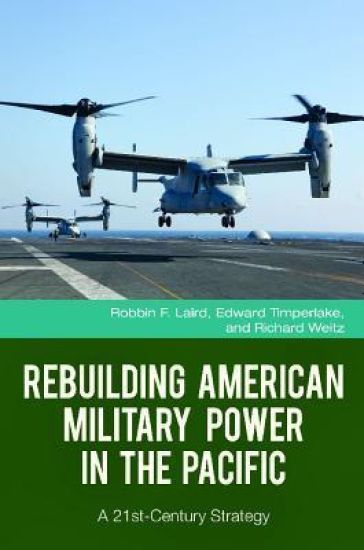
Rebuilding American Military Power in the Pacific

Rebuilding American Military Power in the Pacific

Robbin F. Laird; Edward Timperlake; Richard Weitz

Praeger Publishers Inc
2013
sidottu
This volume examines how the U. S. military must rebuild in the wake of Iraq/Afghanistan, and refocus its power projection to face the new challenges emerging in the Pacific and with China. Rebuilding American Military Power in the Pacific: A 21st-Century Strategy provides an all-encompassing look at the challenges facing the United States in shaping a 21st-century Pacific strategy: dealing with the growing Chinese colossus, the unpredictable nuclear challenge presented by North Korea, the dynamic of the Arctic opening, and maintaining the security of the conveyor belt of goods and services in the Pacific. Can the United States successfully train and prepare for the 21st century, and break free from the mindset that determined its strategies in the previous century? The authors of the work explain why a carefully considered, fully modernized Pacific strategy is a key element for the evolution of American military power—and why shaping an effective air and maritime strategy in the Pacific as well as globally is the crucial challenge facing the U. S. military and the policy community. Written by authors with significant access to the media, think tanks, and high-level politicians, the book provides an insider's look at how American military leaders are building out relevant capabilities in the Pacific to defend America and its allies, and it contains extensive interviews with those leaders.
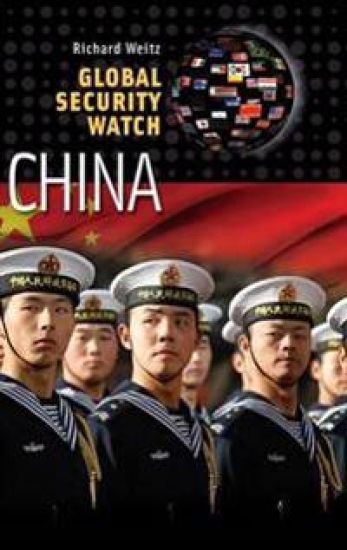
Global Security Watch—China

Global Security Watch—China

Richard Weitz

Praeger Publishers Inc
2013
sidottu
This book presents a comprehensive overview of China's main foreign and defense policies, providing students, policy makers, and general readers with an up-to-date assessment of this most important country. Global Security Watch—China presents a comprehensive overview of the main foreign and defense policies of the People's Republic of China, emphasizing the political-military developments in the modern era since the 1989 Tiananmen Square incident. It provides a historical overview in the first chapter, followed by information on the domestic factors that affect Chinese national security, such as economics, society, and politics; China's external objectives; its global energy strategy; and its defense policies and security objectives. Drawing upon a wide variety of domestic and foreign primary sources, the work details China's policies and its relationships with the United States, Europe, the Middle East, Latin America, Asia, and Eurasia. It includes biographical sketches of select individuals of importance to modern Chinese history, such as Mao Zedong and Deng Xiaoping. Appropriate for audiences ranging from university students to policy makers to general readers, this book is an excellent resource for academic libraries and suitable as a textbook for courses on contemporary Chinese politics and international relations.

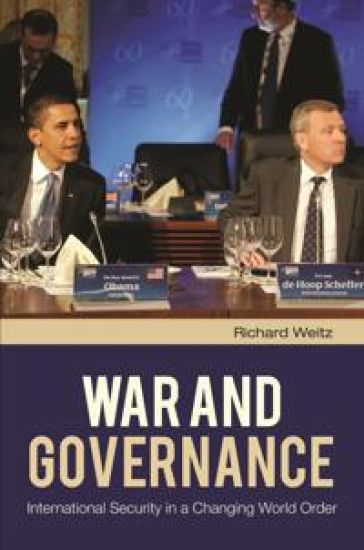
War and Governance

War and Governance

Richard Weitz

Praeger Publishers Inc
2011
sidottu
An insightful and expert assessment examines how best to end—and avert—wars. How do we avoid war? To arrive at an answer, master analyst Richard Weitz explores the ways nations, international organizations, and individuals have sought to bring order to an inherently disorderly phenomenon—potential and actual violent conflict among organized political entities. Specifically, War and Governance: International Security in a Changing World Order analyzes a number of critical issues such as whether regional security institutions have distinct advantages and liabilities in promoting international security, as compared with universal organizations like the United Nations. Other important questions are addressed, as well. How will international organizations, such as the UN, EU, and NATO, change the nature of war in the 21st century—and be changed by it? What role might less formal institutions and nongovernmental organizations play in peacemaking? Will the nation-state remain the most important international security actor? The book ends with a gap analysis that identifies incongruities between international needs and capabilities—and suggests ways to overcome them.
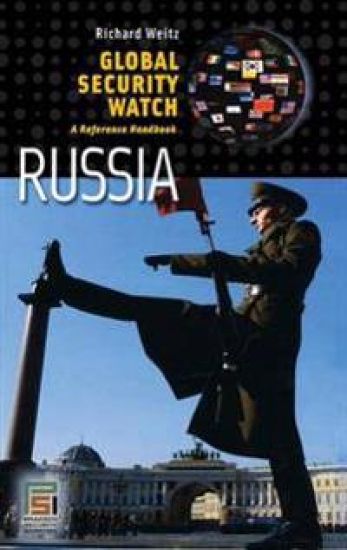
Global Security Watch—Russia

Global Security Watch—Russia

Richard Weitz

Praeger Publishers Inc
2009
sidottu
This book offers an expert analysis of Russia’s foreign and military defense policies since the Federation was established in the aftermath of the collapse of the Soviet Union. To help readers understand the current state of this crucially important country, Global Security Watch—Russia: A Reference Handbook provides a comprehensive overview of the main foreign and defense policies of the Russian Federation. Global Security Watch—Russia focuses on political-military developments in the nation that emerged in the aftermath of the Soviet Union’s collapse in December 1991. The book looks at a variety of factors that characterize Russia’s position in world security matters, such as its leading position as an arms exporter and its still-overwhelming nuclear capability. Coverage includes critical recent events, such as the growing alienation between Russia and the West, the August 2008 Georgian War, and the effects of the global financial crisis on Russia’s vulnerable economy. Contains excerpts from leaders' key speeches as well as Russia's seminal foreign policy and defense conceptsIncludes a comprehensive chronology, in essay format, of political-military developments in Russia since 1991
Revitalising US-Russian Security Cooperation
Russia and the United States are the most important countries for many vital security issues. They possess the world’s largest nuclear weapons arsenals, are involved in the principal regional conflicts, and have lead roles in opposing international terrorism and weapons proliferation. Despite persistent differences on many questions, mutual interests consistently drive Russians and Americans to work together to overcome these impediments. This Adelphi paper argues that opportunities for improving further security cooperation between Russia and the United States exist but are limited. Near-term results in the areas of formal arms control or ballistic missile defences are unlikely. The two governments should focus on improving and expanding their joint threat reduction and nonproliferation programmes, enhancing their military-to-military dialogue regarding Central Asia and defence industrial cooperation, and deepening their antiterrorist cooperation, both bilaterally and through NATO. Using more market incentives, expanding reciprocity and equal treatment, and limiting the adverse repercussions from disputes over Iran would facilitate progress. Russia and the United States will not soon become close allies, but they should be able to achieve better security ties given that, on most issues, their shared interests outweigh those that divide them.