

Kirjailija
Richard White
Kirjat ja teokset yhdessä paikassa: 64 kirjaa, julkaisuja vuosilta 1981–2027, suosituimpiin kuuluu Finishing Nature. Vertaile teosten hintoja ja tarkista saatavuus suomalaisista kirjakaupoista.
64 kirjaa
Kirjojen julkaisuvuodet: 1981–2027.


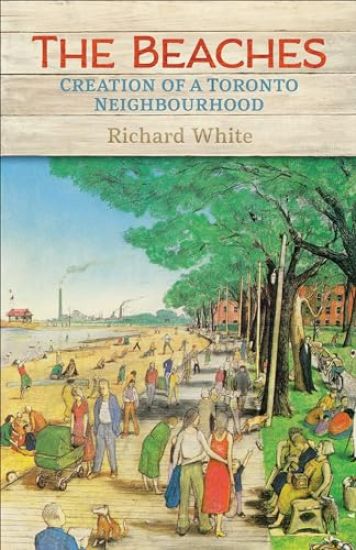
The Beaches is one of Toronto’s best known and most admired neighbourhoods. It has no striking works of architecture or splendid public spaces, no must-see galleries or public institutions, and no associations with historic events or great celebrities – the sort of things that create neighbourhood reputations and draw visitors. It does, however, have an attractive character, and it is this character that Richard White seeks to understand, offering insights into how it came to be and why it has endured. With an eye to the broader historical context, The Beaches recounts the neighbourhood’s initial colonial settlement, its development as a lakeside recreational community in the late nineteenth century, its emergence as a streetcar suburb after 1900, its maturation in the 1920s and 1930s, its relative decline in the 1950s and 1960s, and its revival in the 1970s and beyond. Utilizing a wide range of archival records, including council minutes, plans of subdivision, newspapers, public land records, city directories, assessment rolls, and historical photographs – as well as the present-day landscape – The Beaches reveals the various forces, public and private, local and international, that shaped this cherished urban neighbourhood.
The Beaches is one of Toronto’s best known and most admired neighbourhoods. It has no striking works of architecture or splendid public spaces, no must-see galleries or public institutions, and no associations with historic events or great celebrities – the sort of things that create neighbourhood reputations and draw visitors. It does, however, have an attractive character, and it is this character that Richard White seeks to understand, offering insights into how it came to be and why it has endured. With an eye to the broader historical context, The Beaches recounts the neighbourhood’s initial colonial settlement, its development as a lakeside recreational community in the late nineteenth century, its emergence as a streetcar suburb after 1900, its maturation in the 1920s and 1930s, its relative decline in the 1950s and 1960s, and its revival in the 1970s and beyond. Utilizing a wide range of archival records, including council minutes, plans of subdivision, newspapers, public land records, city directories, assessment rolls, and historical photographs – as well as the present-day landscape – The Beaches reveals the various forces, public and private, local and international, that shaped this cherished urban neighbourhood.

In 1885 Jane and Leland Stanford co-founded a university to honour their recently deceased young son. After her husband’s death in 1893, Jane Stanford, a devoted spiritualist who expected the university to inculcate her values, steered Stanford into eccentricity and public controversy for more than a decade. In 1905 she was murdered in Hawaii, a victim, according to the Honolulu coroner’s jury, of strychnine poisoning. With her vast fortune the university’s lifeline, the Stanford president and his allies quickly sought to foreclose challenges to her bequests by constructing a story of death by natural causes. The cover-up gained traction in the murky labyrinths of power, wealth and corruption of Gilded Age San Francisco. The murderer walked. Deftly sifting the scattered evidence and conflicting stories of suspects and witnesses, Richard White gives us the first full account of Jane Stanford’s murder and its cover-up. Against a backdrop of the city’s machine politics, rogue policing, tong wars and heated newspaper rivalries, White’s search for the murderer draws us into Jane Stanford’s imperious household and the academic enmities of the university. Although Stanford officials claimed that no one could have wanted to murder Jane, we meet several people who had the motives and the opportunity to do so. One of these, we discover, also had the means...
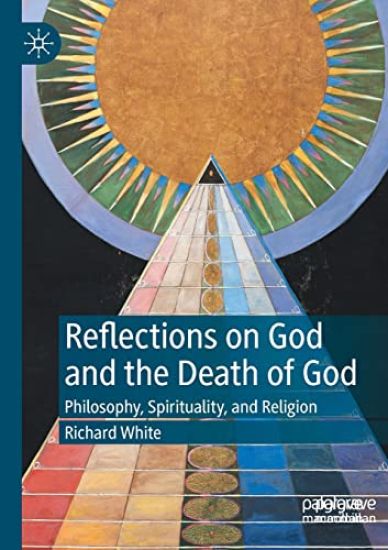
What is God? What does it mean to believe in God? What happens to God after the death of God? This book examines “the death of God” from a philosophical standpoint. It focuses on monotheism, polytheism, and nature, and it discusses the renewed importance of spirituality—and the “spiritual but not religious”—in response to the death of God. In recent years, religious belief has been in decline, but secularism cannot satisfy our spiritual needs. We are now living in a “post-secular” age in which the relationship between philosophy, spirituality, and religion must be re-examined. As an exploratory essay, this book engages the reader at a profound level, and considers a variety of modern thinkers, including Nietzsche, Hegel, Freud, Levinas, Assmann, and Buber. It offers a sustained meditation on the origin of God, the death of God, and the future of “God” as a guiding ideal.

In 1885 Jane and Leland Stanford co-founded a university to honour their recently deceased young son. After her husband’s death in 1893, Jane Stanford, a devoted spiritualist who expected the university to inculcate her values, steered Stanford into eccentricity and public controversy for more than a decade. In 1905 she was murdered in Hawaii, a victim, according to the Honolulu coroner’s jury, of strychnine poisoning. With her vast fortune the university’s lifeline, the Stanford president and his allies quickly sought to foreclose challenges to her bequests by constructing a story of death by natural causes. The cover-up gained traction in the murky labyrinths of power, wealth and corruption of Gilded Age San Francisco. The murderer walked. Deftly sifting the scattered evidence and conflicting stories of suspects and witnesses, Richard White gives us the first full account of Jane Stanford’s murder and its cover-up. Against a backdrop of the city’s machine politics, rogue policing, tong wars and heated newspaper rivalries, White’s search for the murderer draws us into Jane Stanford’s imperious household and the academic enmities of the university. Although Stanford officials claimed that no one could have wanted to murder Jane, we meet several people who had the motives and the opportunity to do so. One of these, we discover, also had the means...

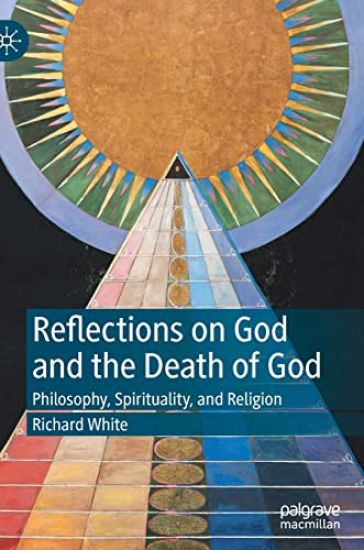
What is God? What does it mean to believe in God? What happens to God after the death of God? This book examines “the death of God” from a philosophical standpoint. It focuses on monotheism, polytheism, and nature, and it discusses the renewed importance of spirituality—and the “spiritual but not religious”—in response to the death of God. In recent years, religious belief has been in decline, but secularism cannot satisfy our spiritual needs. We are now living in a “post-secular” age in which the relationship between philosophy, spirituality, and religion must be re-examined. As an exploratory essay, this book engages the reader at a profound level, and considers a variety of modern thinkers, including Nietzsche, Hegel, Freud, Levinas, Assmann, and Buber. It offers a sustained meditation on the origin of God, the death of God, and the future of “God” as a guiding ideal.

Spiritual Philosophers: From Schopenhauer to Irigaray
Richard White
Bloomsbury Academic
2021
nidottu
How does thinking illuminate the spiritual view of life? How does a close examination of key spiritual thinkers help us to live in the modern world? And in what way does philosophy enhance spirituality? In this book, Richard White answers these questions by analysing a range of important philosophers, from Schopenhauer in the first half of the 19th century to Irigaray in the present day. Each chapter examines the work of a single writer and one closely associated theme, such as Nietzsche on generosity, Benjamin on wisdom, and Derrida on mourning. The author looks at philosophy and spirituality in the tradition of continental philosophy, and he views spirituality as something that can be separated from religion. With the rise of reductive scientific materialism becoming ever more prevalent in modern society, White seeks to recover the idea of a spiritual tradition which is not otherworldly but philosophical in nature. The thinkers discussed in this book articulate some of the deepest possibilities of human existence. Spiritual Philosophers offers an approach to philosophy as a spiritual practice, which the author sees as an integral part of our life. As a pioneering work in an emerging field – the philosophy of spirituality -- this book contributes to several key debates surrounding spirituality, theology and the role of philosophy in the contemporary world.
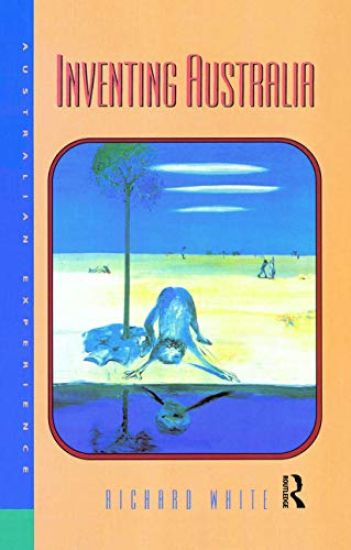
'To be Australian': what can that mean? Inventing Australia sets out to find the answers by tracing the images we have used to describe our land and our people - the convict hell, the workingman's paradise, the Bush legend, the 'typical' Australian from the shearer to the Bondi lifesaver, the land of opportunity, the small rich industrial country, the multicultural society. The book argues that these images, rather than describing an especially Australian reality, grow out of assumptions about nature, race, class, democracy, sex and empire, and are 'invented' to serve the interests of particular groups. There have been many books about Australia's national identity; this is the first to place the discussion within an historical context to explain how Australians' views of themselves change and why these views change in the way they do.

This book is about Tommy overcoming being bullying and solving ways for others not to be bullied.

In volume 25 of the Arrington Lecture Series, Richard White discusses the transcontinental railroad’s impact on Utah’s environment, culture, and political atmosphere. In the 150 years since the completion of the Pacific Railroad, there have been lasting implications across the West, including for the early members of The Church of Jesus Christ of Latter-day Saints settlers. The Arrington Lecture series, established by one of the twentieth-century West's most distinguished historians, Leonard Arrington, has become a leading forum for prominent historians to address topics related to Mormon history. Utah State University hosts the Leonard J. Arrington Mormon History Lecture Series through the Merrill-Cazier Library Special Collections and Archives department.
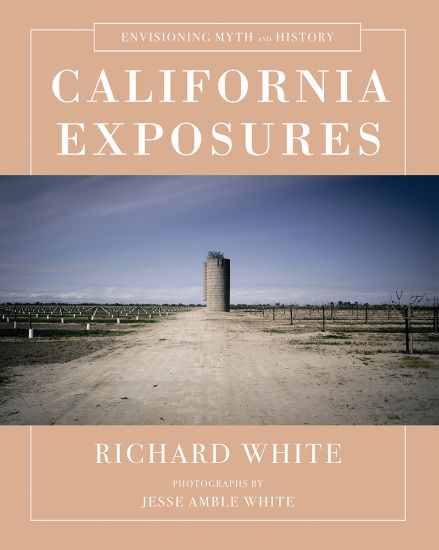
“This is the West, sir. When the legend becomes fact, print the legend.” This indelible quote from The Man Who Shot Liberty Valance applies especially well to California, where legend has so thoroughly become fact that it is visible in everyday landscapes. Our foremost historian of the West, Richard White, never content to “print the legend,” collaborates here with his son, a talented photographer, in excavating the layers of legend built into California’s landscapes. Together they expose the bedrock of the past, and the history they uncover is astonishing. Jesse White’s evocative photographs illustrate the sites of Richard’s historical investigations. A vista of Drakes Estero conjures the darkly amusing story of the Drake Navigators Guild and its dubious efforts to establish an Anglo-Saxon heritage for California. The restored Spanish missions of Los Angeles frame another origin story in which California’s native inhabitants, civilized through contact with friars, gift their territories to white settlers. But the history is not so placid. A quiet riverside park in the Tulare Lake Basin belies scenes of horror from when settlers in the 1850s transformed native homelands into American property. Near the lake bed stands a small marker commemorating the Mussel Slough massacre, the culmination of a violent struggle over land titles between local farmers and the Southern Pacific Railroad in the 1870s. Tulare is today a fertile agricultural county, but its population is poor and unhealthy. The California Dream lives elsewhere. The lake itself disappeared when tributary rivers were rerouted to deliver government-subsidized water to big agriculture and cities. But climate change ensures that it will be back—the only question is when.

Spiritual Philosophers: From Schopenhauer to Irigaray
Richard White
Bloomsbury Academic
2020
sidottu
How does thinking illuminate the spiritual view of life? How does a close examination of key spiritual thinkers help us to live in the modern world? And in what way does philosophy enhance spirituality? In this book, Richard White answers these questions by analysing a range of important philosophers, from Schopenhauer in the first half of the 19th century to Irigaray in the present day. Each chapter examines the work of a single writer and one closely associated theme, such as Nietzsche on generosity, Benjamin on wisdom, and Derrida on mourning. The author looks at philosophy and spirituality in the tradition of continental philosophy, and he views spirituality as something that can be separated from religion. With the rise of reductive scientific materialism becoming ever more prevalent in modern society, White seeks to recover the idea of a spiritual tradition which is not otherworldly but philosophical in nature. The thinkers discussed in this book articulate some of the deepest possibilities of human existence. Spiritual Philosophers offers an approach to philosophy as a spiritual practice, which the author sees as an integral part of our life. As a pioneering work in an emerging field – the philosophy of spirituality -- this book contributes to several key debates surrounding spirituality, theology and the role of philosophy in the contemporary world.
The Republic for Which It Stands
Richard White
Oxford University Press Inc
2019
nidottu
Halvin toimitettuna 26,60 €
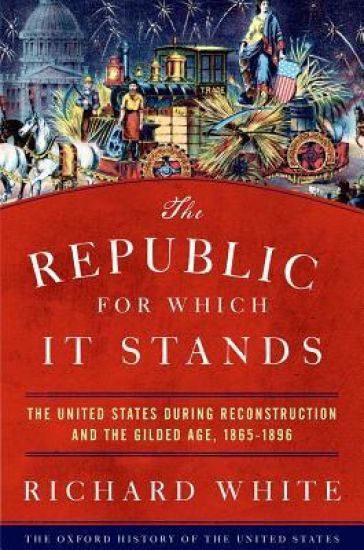
The Oxford History of the United States is the most respected multivolume history of the American nation. In the newest volume in the series, The Republic for Which It Stands, acclaimed historian Richard White offers a fresh and integrated interpretation of Reconstruction and the Gilded Age as the seedbed of modern America. At the end of the Civil War the leaders and citizens of the victorious North envisioned the country's future as a free-labor republic, with a homogenous citizenry, both black and white. The South and West were to be reconstructed in the image of the North. Thirty years later Americans occupied an unimagined world. The unity that the Civil War supposedly secured had proved ephemeral. The country was larger, richer, and more extensive, but also more diverse. Life spans were shorter, and physical well-being had diminished, due to disease and hazardous working conditions. Independent producers had become wage earners. The country was Catholic and Jewish as well as Protestant, and increasingly urban and industrial. The "dangerous" classes of the very rich and poor expanded, and deep differences -- ethnic, racial, religious, economic, and political -- divided society. The corruption that gave the Gilded Age its name was pervasive. These challenges also brought vigorous efforts to secure economic, moral, and cultural reforms. Real change -- technological, cultural, and political -- proliferated from below more than emerging from political leadership. Americans, mining their own traditions and borrowing ideas, produced creative possibilities for overcoming the crises that threatened their country. In a work as dramatic and colorful as the era it covers, White narrates the conflicts and paradoxes of these decades of disorienting change and mounting unrest, out of which emerged a modern nation whose characteristics resonate with the present day.

In life there are times when we are overwhelmed by what is happening around and within us. It is like being caught in floodwaters with no way out. King David describes his life this way in Psalm 69. To the neck and rising explores his thoughts, feelings, emotions and attitudes throughout the Psalm. The journey that David takes is not dissimilar to ours and can provide us with valuable personal insights. Choices we make while in the place of the floodwaters determine whether we remain in that place of emotional turmoil or we begin to make steps towards recovery.

In life there are times when we are overwhelmed by what is happening around and within us. It is like being caught in floodwaters with no way out. King David describes his life this way in Psalm 69. To the neck and rising explores his thoughts, feelings, emotions and attitudes throughout the Psalm. The journey that David takes is not dissimilar to ours and can provide us with valuable personal insights. Choices we make while in the place of the floodwaters determine whether we remain in that place of emotional turmoil or we begin to make steps towards recovery.