Kirjojen hintavertailu – 12 859 818 kirjaa ja 27 kauppaa

Kirjailija

Richard Wilk

Kirjat ja teokset yhdessä paikassa: 8 kirjaa, julkaisuja vuosilta 1997–2018, suosituimpiin kuuluu Home Cooking in the Global Village. Vertaile teosten hintoja ja tarkista saatavuus suomalaisista kirjakaupoista.

8 kirjaa

Kirjojen julkaisuvuodet: 1997–2018.

Seafood

Seafood

Shingo Hamada; Richard Wilk

Routledge
2018
nidottu
Seafood draws on controversial themes in the interdisciplinary field of food studies, with case studies from different eras and geographic regions. Using familiar commodities, this accessible book will help students understand cutting-edge issues in sustainability and ask readers to think about the future of an industry that has lain waste to its own resources. Examining the practical aspects of fisheries and seafood leads the reader through discussions of the core elements of anthropological method and theory, and the book concludes with discussions of sustainable seafood and current efforts to save what is left of marine ecosystems. Students will be encouraged to think about their own seafood consumption through project assignments that challenge them to trace the commodity chains of the seafood on their own plates. Seafood is an ideal book for courses on food and culture, economic anthropology, and the environment.

Seafood

Seafood

Shingo Hamada; Richard Wilk

Routledge
2018
sidottu
Seafood draws on controversial themes in the interdisciplinary field of food studies, with case studies from different eras and geographic regions. Using familiar commodities, this accessible book will help students understand cutting-edge issues in sustainability and ask readers to think about the future of an industry that has lain waste to its own resources. Examining the practical aspects of fisheries and seafood leads the reader through discussions of the core elements of anthropological method and theory, and the book concludes with discussions of sustainable seafood and current efforts to save what is left of marine ecosystems. Students will be encouraged to think about their own seafood consumption through project assignments that challenge them to trace the commodity chains of the seafood on their own plates. Seafood is an ideal book for courses on food and culture, economic anthropology, and the environment.
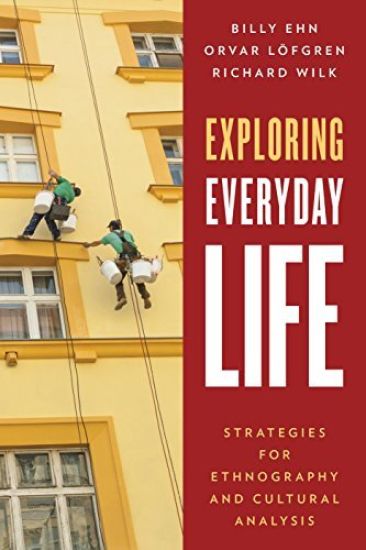
Exploring Everyday Life

Exploring Everyday Life

Billy Ehn; Orvar Löfgren; Richard Wilk

Rowman Littlefield Publishers
2015
sidottu
The numerous tasks and routines that shape our daily existence can seem mundane, even invisible—and yet they play an extremely powerful role in structuring and reproducing society. Exploring Everyday Life casts light on these so-called trivialities, serving as both a guide to the invisible world of the everyday and an instruction manual for first-time explorers. Ehn, Lofgren, and Wilk demonstrate how to use a broad array of ethnographic tools to discover, map, and document new and unexplored territories and guide readers through the process of cultural analysis. Their concrete examples shed light on how a study or paper assignment can evolve and point to how cultural analysis of everyday life can be practically applied in business, government, and other arenas outside of academia.
Exploring Everyday Life

Exploring Everyday Life

Billy Ehn; Orvar Löfgren; Richard Wilk

Rowman Littlefield Publishers
2015
nidottu

Halvin toimitettuna 57,80 €

The numerous tasks and routines that shape our daily existence can seem mundane, even invisible—and yet they play an extremely powerful role in structuring and reproducing society. Exploring Everyday Life casts light on these so-called trivialities, serving as both a guide to the invisible world of the everyday and an instruction manual for first-time explorers. Ehn, Lofgren, and Wilk demonstrate how to use a broad array of ethnographic tools to discover, map, and document new and unexplored territories and guide readers through the process of cultural analysis. Their concrete examples shed light on how a study or paper assignment can evolve and point to how cultural analysis of everyday life can be practically applied in business, government, and other arenas outside of academia.
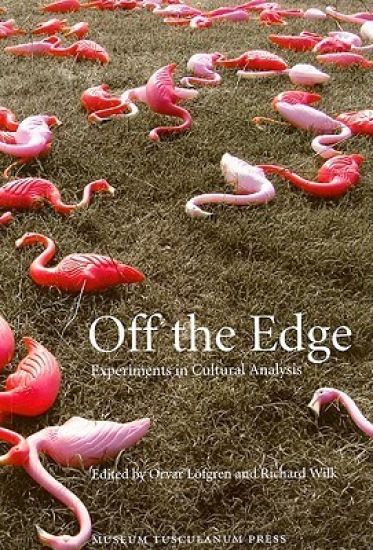
Off the Edge

Off the Edge

Orvar Lofgren; Richard Wilk

Museum Tusculanum Press
2006
nidottu
Have you ever heard of the cream effect or witnessed the power of cultural backdraft? Have you watched the slow process of fossilisation or used the tactics of cultural stealth? You might be waiting for just the right word to describe what you have seen and done. This collection revitalises the study of the cultural processes of stability and change. The 25 essays invent new processes for a rapidly changing world. They illustrate how different perspectives enrich cultural analysis and add a bit of playfulness and experimentation to a longstanding academic issue. The authors -- from anthropology, European ethnology, sociology and cultural studies -- are peeking into blind spots and looking under the furniture in order to understand why and how some kinds of social life become visible, while so many others remain unseen. This book will inspire researchers and students to develop new approaches in cultural analysis.
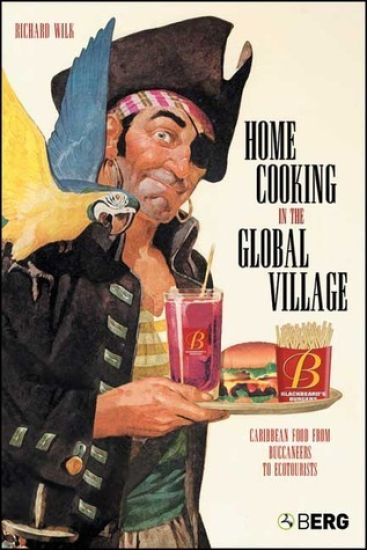
Home Cooking in the Global Village

Home Cooking in the Global Village

Richard Wilk

Berg Publishers
2006
sidottu
Winner of the Society for Economic Anthropology Annual Book Prize 2008. Belize, a tiny corner of the Caribbean wedged into Central America, has been a fast food nation since buccaneers and pirates first stole ashore. As early as the 1600s it was already caught in the great paradox of globalization: how can you stay local and relish your own home cooking, while tasting the delights of the global marketplace? Menus, recipes and bad colonial poetry combine with Wilk's sharp anthropological insight to give an important new perspective on the perils and problems of globalization.
Home Cooking in the Global Village

Home Cooking in the Global Village

Richard Wilk

Berg Publishers
2006
nidottu
Winner of the Society for Economic Anthropology Annual Book Prize 2008. Belize, a tiny corner of the Caribbean wedged into Central America, has been a fast food nation since buccaneers and pirates first stole ashore. As early as the 1600s it was already caught in the great paradox of globalization: how can you stay local and relish your own home cooking, while tasting the delights of the global marketplace? Menus, recipes and bad colonial poetry combine with Wilk's sharp anthropological insight to give an important new perspective on the perils and problems of globalization.
Household Ecology

Household Ecology

Richard Wilk

Northern Illinois University Press
1997
pokkari
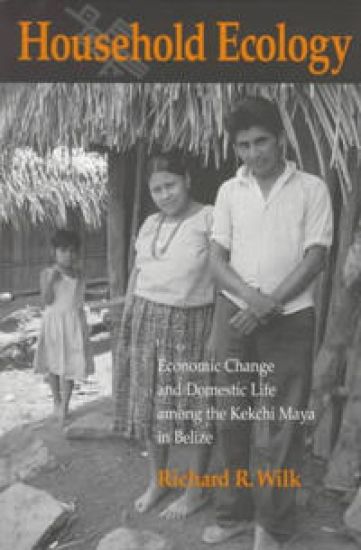
Development and economic change are often seen as destructive to the family and to other traditional forms of social organization. Wilk's study of household ecology reveals that the Kekchi Maya of Belize have responded by creating new forms of family organization, working together to face challenges posed by development. Not merely survivors of an ancient splendor, the Kekchi Maya build upon their rich heritage to approach such problems as ethnic strife and rainforest destruction as creative agents. Wilk combines a wealth of detail on agricultural calendars, hunting practices, land tenure, and labor exchanges in a general interpretation of cultural and ecological transformation. He provides a comprehensive analysis of how tropical farmers survive in the difficult rainforest environment, tracing the ingenuity and adaptability of Mayan culture. Fully incorporating the historical context of ecological processes, he documents the importance of household organization in shaping the trajectory of ecological change and shows how delicate this adaptation can be. Analyzing household response to localized economic and ecological settings, Wilk argues that the transformation of the rural economy and of Mayan culture proceeds through the conjunction of global and local processes. The Kekchi refuse to fit into the models of economic evolution set forth in existing scholarship. This sensitive and well-written study challenges current orthodoxies about economic and social change and suggests new approaches to rural development and household ecology.