Kirjojen hintavertailu – 12 903 735 kirjaa ja 27 kauppaa

Kirjailija

Rick Hendricks

Kirjat ja teokset yhdessä paikassa: 8 kirjaa, julkaisuja vuosilta 1997–2024, suosituimpiin kuuluu Pablo Abeita. Vertaile teosten hintoja ja tarkista saatavuus suomalaisista kirjakaupoista.

8 kirjaa

Kirjojen julkaisuvuodet: 1997–2024.

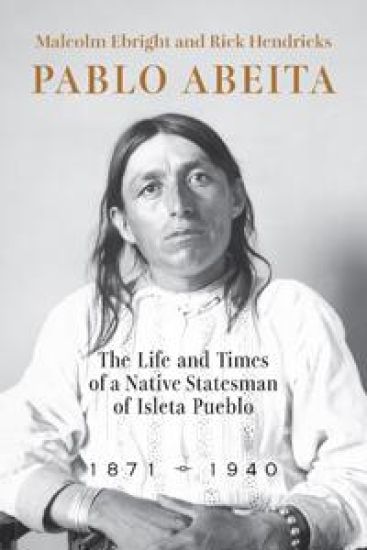
Pablo Abeita

Pablo Abeita

Malcolm Ebright; Rick Hendricks

UNIVERSITY OF NEW MEXICO PRESS
2024
pokkari
This is the first biography of a Pueblo leader, Pablo Abeita, a man considered the most important Native leader in the Southwest in his day. Abeita was a strong advocate for Isleta and the other eighteen New Mexico pueblos during the periods of assimilation, boarding schools, and the reform of US Indian policy. Working with some of the most progressive Indian agents in New Mexico, with other Pueblo leaders, and with advocacy groups, he received funding for much-needed projects, such as a bridge across the Rio Grande at Isleta. To achieve these ends, Abeita testified before Congress and was said to have met, and in some cases befriended, nearly every US president from Benjamin Harrison to Franklin D. Roosevelt. Abeita dealt with many issues that are still relevant today, including reform of US Indian policy, boarding schools, and Pueblo sovereignty. Pablo Abeita's story is one of a people still living on their ancestral homelands, struggling to protect their land and water, and ultimately thriving as a modern pueblo.
Pablo Abeita

Pablo Abeita

Malcolm Ebright; Rick Hendricks

UNIVERSITY OF NEW MEXICO PRESS
2023
sidottu
Pablo Abeita is the first biography of Pablo Abeita, a man considered the most important Native leader in the Southwest in his day. Abeita was a strong advocate for Isleta and the other eighteen New Mexico pueblos during the periods of assimilation, boarding schools, and the reform of US Indian policy. Working with some of the most progressive Indian agents in New Mexico, with other Pueblo leaders, and with advocacy groups, he received funding for much-needed projects, such as a bridge across the Rio Grande at Isleta. To achieve these ends, Abeita testified before Congress and was said to have met, and in some cases befriended, nearly every US president from Benjamin Harrison to Franklin D. Roosevelt. Abeita dealt with many issues that are still relevant today, including reform of US Indian policy, boarding schools, and Pueblo sovereignty. Pablo Abeita's story is one of a people still living on their ancestral homelands, struggling to protect their land and water, and ultimately thriving as a modern pueblo.
Pueblo Sovereignty

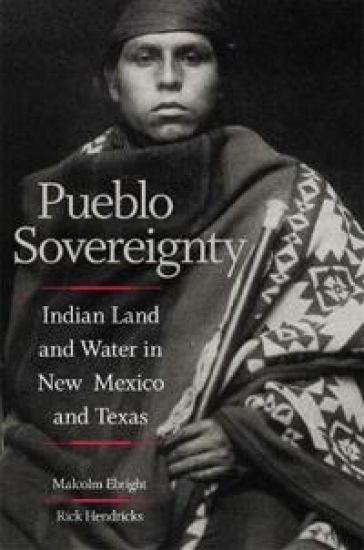
Pueblo Sovereignty

Malcolm Ebright; Rick Hendricks

UNIVERSITY OF OKLAHOMA PRESS
2022
nidottu
Over five centuries of foreign rule—by Spain, Mexico, and the United States—Native American pueblos have confronted attacks on their sovereignty and encroachments on their land and water rights. How five New Mexico and Texas pueblos did this, in some cases multiple times, forms the history of cultural resilience and tenacity chronicled in Pueblo Sovereignty by two of New Mexico’s most distinguished legal historians, Malcolm Ebright and Rick Hendricks. Extending their award-winning work Four Square Leagues, Ebright and Hendricks focus here on four New Mexico Pueblo Indian communities—Pojoaque, Nambe, Tesuque, and Isleta—and one now in Texas, Ysleta del Sur. The authors trace the complex tangle of conflicting jurisdictions and laws these pueblos faced when defending their extremely limited land and water resources. The communities often met such challenges in court and, sometimes, as in the case of Tesuque Pueblo in 1922, took matters into their own hands. Ebright and Hendricks describe how—at times aided by appointed Spanish officials, private lawyers, priests, and Indian agents—each pueblo resisted various non-Indian, institutional, and legal pressures; and how each suffered defeat in the Court of Private Land Claims and the Pueblo Lands Board, only to assert its sovereignty again and again. Although some of these defenses led to stunning victories, all five pueblos experienced serious population declines. Some were even temporarily abandoned. That all have subsequently seen a return to their traditions and ceremonies, and ultimately have survived and thrived, is a testimony to their resilience. Their stories, documented here in extraordinary detail, are critical to a complete understanding of the history of the Pueblos and of the American Southwest.
Pueblo Sovereignty

Pueblo Sovereignty

Malcolm Ebright; Rick Hendricks

University of Oklahoma Press
2019
sidottu
Over five centuries of foreign rule - by Spain, Mexico, and the United States - Native American pueblos have confronted attacks on their sovereignty and encroachments on their land and water rights. How five New Mexico and Texas pueblos did this, in some cases multiple times, forms the history of cultural resilience and tenacity chronicled in Pueblo Sovereignty by two of New Mexico's most distinguished legal historians, Malcolm Ebright and Rick Hendricks. Extending their award-winning work Four Square Leagues, Ebright and Hendricks focus here on four New Mexico Pueblo Indian communities - Pojoaque, Nambe, Tesuque, and Isleta - and one now in Texas, Ysleta del Sur. The authors trace the complex tangle of conflicting jurisdictions and laws these pueblos faced when defending their extremely limited land and water resources. The communities often met such challenges in court and, sometimes, as in the case of Tesuque Pueblo in 1922, took matters into their own hands. Ebright and Hendricks describe how - at times aided by appointed Spanish officials, private lawyers, priests, and Indian agents - each pueblo resisted various non-Indian, institutional, and legal pressures; and how each suffered defeat in the Court of Private Land Claims and the Pueblo Lands Board, only to assert its sovereignty again and again. Although some of these defenses led to stunning victories, all five pueblos experienced serious population declines. Some were even temporarily abandoned. That all have subsequently seen a return to their traditions and ceremonies, and ultimately have survived and thrived, is a testimony to their resilience. Their stories, documented here in extraordinary detail, are critical to a complete understanding of the history of the Pueblos and of the American Southwest.
Four Square Leagues

Four Square Leagues

Malcolm Ebright; Rick Hendricks; Richard W. Hughes

University of New Mexico Press
2015
nidottu
Winner of the 2014 Southwest Book Award from the Border Regional Library Association This long-awaited book is the most detailed and up-to-date account of the complex history of Pueblo Indian land in New Mexico, beginning in the late seventeenth century and continuing to the present day. The authors have scoured documents and legal decisions to trace the rise of the mysterious Pueblo League between 1700 and 1821 as the basis of Pueblo land under Spanish rule. They have also provided a detailed analysis of Pueblo lands after 1821 to determine how the Pueblos and their non-Indian neighbors reacted to the change from Spanish to Mexican and then to US sovereignty. Characterized by success stories of protection of Pueblo land as well as by centuries of encroachment by non-Indians on Pueblo lands and resources, this is a uniquely New Mexican history that also reflects issues of indigenous land tenure that vex contested territories all over the world.
The Witches of Abiquiu

The Witches of Abiquiu

Malcolm Ebright; Rick Hendricks

University of New Mexico Press
2006
nidottu
The Witchcraft Outbreak at Abiquiu, New Mexico, occurred between 1756 and 1766, five decades after the witchcraft trials at Salem, Massachusetts. The Genizaro (hispanicized Indian) land grant of Abiquiu was the crown jewel of Governor Velez Cachupin's plan to achieve peace for the benefit of the early New Mexican colonists. The governor's strategy involved allowing the Pueblo Indians to retain their religious ceremonies. In opposition to the Governor's plan, Father Juan Jose Toledo complained that the Genizaros had bewitched him. Governor Velez Cachupin convened a meeting of religious leaders who deliberated and forwarded the case to the Inquisition in Mexico City. In a strange twist of fate, the Inquisition eventually charged Father Toledo with heretical practices and removed him.
The Navajos in 1705

The Navajos in 1705

Rick Hendricks

University of New Mexico Press
1997
nidottu
This long-lost journal, now available in paperback, gives a unique look into the old Navajo country. Recently rediscovered, it is both the earliest and only extensive eyewitness account of the traditional Navajo homeland in the eighteenth century. It reveals new information on Hispanic New Mexico and relations with the Indians. For the first twenty days in August of 1705, Roque Madrid led about 100 Spanish soldiers and citizens together with some 300 Pueblo Indian allies on a 312-mile march in retaliation for Navajo raiding. The bilingual text permits appreciation of the unusually literate and dramatic journal. Historical and archeological data are carefully tapped to retrace the route.""This account sets a new standard for the publication of such documents. . . . I consider it a gem.""--David M. Brugge, author of The Navajo-Hopi Land Dispute
Blood on the Boulders

Blood on the Boulders

Diego De Vargas; John L. Kessell; Rick Hendricks; Meredith D. Dodge

University of New Mexico Press
1998
sidottu
Having retaken Santa Fe by force of arms late in 1693, Diego de Vargas faces unrelenting challenges, waging active warfare against defiant Pueblo Indian resisters while maintaining peace with Pueblo allies; providing homes, food, and supplies for 1,500 unsure colonists; and bidding unceasingly for greater support from viceregal authorities in Mexico City. At the head of combined units of Spanish and Pueblo fighting men, the governor in 1694 leads repeated assaults on castle-like fortified sites. Through combat, prisoner exchange, and negotiation, he reestablishes the kingdom. Franciscans reopen some of the missions. Vargas founds the villa of Santa Cruz de la Canada. Pueblos north and west of Santa Fe rebel again in 1696; wearily, Vargas reports more blood on the boulders. Through The Journals of don Diego de Vargas, translated from official and private correspondence, we are drawn back, through conflict and compromise, into New Mexico's formative era.