Kirjojen hintavertailu – 12 859 819 kirjaa ja 27 kauppaa

Kirjailija

Rick Stiggins

Kirjat ja teokset yhdessä paikassa: 4 kirjaa, julkaisuja vuosilta 2013–2017, suosituimpiin kuuluu Seven Strategies of Assessment for Learning. Vertaile teosten hintoja ja tarkista saatavuus suomalaisista kirjakaupoista.

4 kirjaa

Kirjojen julkaisuvuodet: 2013–2017.

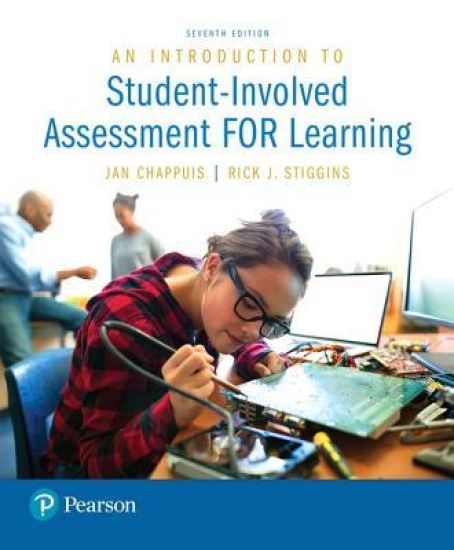
Introduction to Student-Involved Assessment FOR Learning, An
Helps learners understand how they can improve student achievement by integrating instruction and assessment. Learners should understand and be able to do the following assessment tasks upon completingStudent-Involved Assessment FOR Learning: (1) establish clear learning targets as the basis for instruction and assessment, (2) select assessment methods that align with those learning targets, (3) select and/or create high-quality assessments that accurately measure student progress to the learning targets, (4) clearly communicate assessment results to learners for both formative and summative purposes, and (5) involve students in the assessment process to develop their capabilities to be self-directed learners. Note: This is the standalone book
The Perfect Assessment System

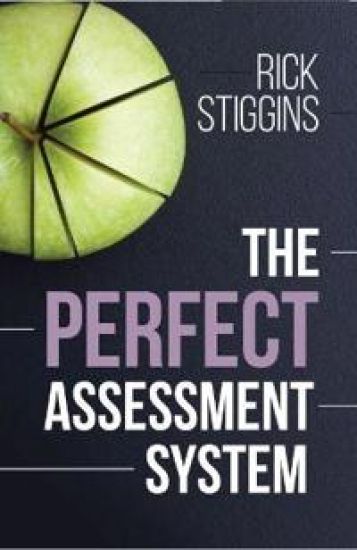
The Perfect Assessment System

Rick Stiggins

Association for Supervision Curriculum Development
2017
nidottu
It's time to move our assessment practices from the 1950s to the century we're living in. It's time to invest in our teachers and local school leaders instead of in more tests. It's time to help all students understand how to unleash their strengths and gain a sense of themselves as learners capable of choosing their own paths to success. In The Perfect Assessment System, Rick Stiggins calls for the ground-up redevelopment of assessment in U. S. education. Speaking from more than 40 years of experience in the field—and speaking for all learners who hope to succeed, the teachers who want them to succeed, and the local school leaders whose aspirations for success have been thwarted by assessment traditions—Stiggins maps out the adjustments in practice and culture necessary to generate both accurate accountability data and the specific evidence of individual mastery that will support sound instructional decision making and better learning in the classroom. He addresses:Assessment purpose—how (and why) to clarify the reason for every assessment and the users it will serve. Learning targets to be assessed—how to make sure we focus on the right competencies and set consistent definitions of success. Assessment quality—how to ensure every assessment, at every level, is an excellent one. Communication of assessment results—how to share information in ways that best support diverse purposes. Assessment impact—how to link assessment to truly productive, universal student motivation. We have not yet begun to explore assessment's true potential to enhance both school quality and student well-being. Stiggins kicks off this critical conversation and charts a course for a new system that promises much higher levels of student success at a fraction of our current testing costs. The door is open for assessment reform; here is a bold plan for getting it right.
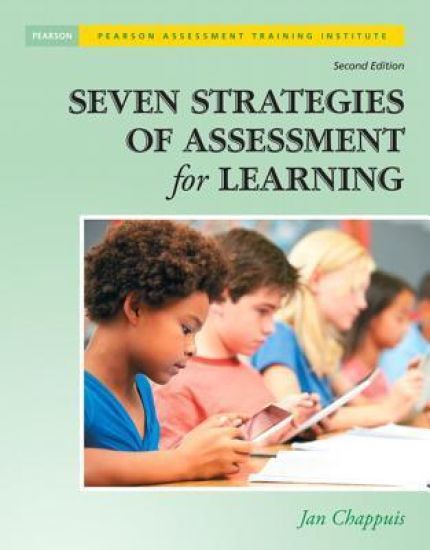
Seven Strategies of Assessment for Learning

Seven Strategies of Assessment for Learning

Jan Chappuis; Rick Stiggins

Pearson
2014
nidottu
In Seven Strategies of Assessment Learning, author Jan Chappuis gives K to 12 classroom teachers an incisive look at seven practical strategies structured around three essential questions—Where am I going? Where am I now? and How can I close the gap? Complete with research-based recommendations about assessment practices for improving student achievement, the book is sequenced to help teachers easily weave formative assessment practices into daily teaching and assessment activities at all levels. After introducing the strategies and the research base for formative assessment practices, the remaining chapters explain each strategy in detail, provide a research-based rationale for using the strategy, describe how the strategy can be applied in contexts ranging from kindergarten through high school in a range of subject areas, and offer instructions for carrying out core procedures and suggestions for adaptations. The new features new, more recent research, extended examples of the strategies, and improved features that make the text easier to use for collaborative learning. The Enhanced Pearson eText features embedded video, Discussion Questions, Reflection Journal, and Defining Assessments. This title is also available as a loose-leaf packaged with the Enhanced Pearson eText. To order the Enhanced Pearson eText packaged with a loose-leaf version, use ISBN 013405895X. Invigorate learning with the Enhanced Pearson eText*The Enhanced Pearson eText provides a rich, interactive learning environment designed to improve student mastery of content with embedded video, Discussion Questions, Reflection Journal, and Defining Assessments. The Enhanced Pearson eText is also available without a print version of the textbook. Instructors, visit pearsonhighered.com/etextbooks to register for your digital examination copy. Students, register for or purchase your eText at pearsonhighered.com/etextbooks. *The Enhanced eText features are only available in the Pearson eText format. They are not available in third-party eTexts or downloads.