Kirjojen hintavertailu – 12 903 725 kirjaa ja 27 kauppaa

Kirjailija

Rick W. Sturdevant

Kirjat ja teokset yhdessä paikassa: 3 kirjaa, julkaisuja vuosilta 2012–2024, suosituimpiin kuuluu GPS Declassified. Vertaile teosten hintoja ja tarkista saatavuus suomalaisista kirjakaupoista.

3 kirjaa

Kirjojen julkaisuvuodet: 2012–2024.

The Last Thirty Seconds

The Last Thirty Seconds

David K. Stumpf; Rick W. Sturdevant

University of Arkansas Press
2024
sidottu
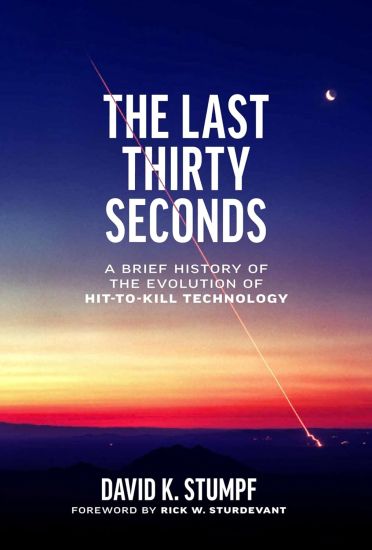
In March 1983, as the world’s superpowers continued aggressively stockpiling nuclear weapons, President Ronald Reagan described his vision for a world no longer confronted with the concept of mutually assured destruction. A year later the Strategic Defense Initiative was established, followed soon after by the creation of the Strategic Defense Initiative Organization (SDIO). The SDIO was tasked with the development and coordination of missile technologies designed for the strategic defense against civilization’s most dangerous invention, one that carried with it the threat of nuclear destruction—intercontinental ballistic missiles. In The Last Thirty Seconds: A Brief History of the Evolution of Hit-to-Kill Technology, David K. Stumpf details the development of one of many possible solutions for ballistic missile defense commonly known as hit-to-kill. Hit-to-kill is a nonnuclear technique using kinetic energy, rather than explosives, to destroy reentry vehicles carrying chemical, biological, or nuclear warheads. It is the centerpiece of the United States’ current ballistic missile defense systems and has proven invaluable in the conflict between Ukraine and Russia as well as in the ongoing conflict with the Houthi rebels in the Red Sea. While much of the subject remains classified, this detailed study will be welcomed for its substantial references and the inclusion of newly declassified material.

GPS Declassified

GPS Declassified

Richard D. Easton; Eric F. Frazier; Rick W. Sturdevant

Potomac Books Inc
2013
sidottu
GPS Declassified examines the development of GPS from its secret, Cold War military roots to its emergence as a worldwide consumer industry. Drawing on previously unexplored documents, Richard D. Easton and Eric F. Frazier examine how military rivalries influenced the creation of GPS and shaped public perceptions about its origin. Since the United States’ first program to launch a satellite in the late 1950s, the nation has pursued dual paths into space-one military and secret, the other scientific and public. Among the many commercial spinoffs this approach has produced, GPS arguably boasts the greatest impact on our daily lives. Told by a son of a navy insider-whose work helped lay the foundations for the system-and a science and technology journalist, the story chronicles the research and technological advances required for the development of GPS. Easton and Frazier note how the technology moved from the laboratory and the battlefield to the dashboard and the smartphone, and they raise the specter of how this technology and its surrounding industry affect public policy. Insights into how the system works and how it fits into a long history of advances in navigation tie into discussions of the myriad applications for GPS.