Kirjojen hintavertailu – 12 871 019 kirjaa ja 27 kauppaa

Kirjailija

Rico Isaacs

Kirjat ja teokset yhdessä paikassa: 8 kirjaa, julkaisuja vuosilta 2011–2022, suosituimpiin kuuluu Nation-Building and Identity in the Post-Soviet Space. Vertaile teosten hintoja ja tarkista saatavuus suomalaisista kirjakaupoista.

8 kirjaa

Kirjojen julkaisuvuodet: 2011–2022.

Political Opposition in Authoritarianism

Political Opposition in Authoritarianism

Rico Isaacs

Springer International Publishing AG
2022
sidottu
How might political opposition shape regime outcomes over time in an authoritarian system? Most studies on political opposition in authoritarian contexts tend to focus on the agency of the regime over and above that of the political opposition. Using Albert Hirschman’s framework of exit, voice and loyalty, this book examines the case of Kazakhstani opposition agency over 30 years to explore the extent to which political opposition in Kazakhstan has shaped the dynamics of authoritarian regime development in the country. What the analysis reveals is that in Kazakhstan the regime has tended to treat formal institutional political opposition as neither a credible nor non-credible threat. Consequently, the Kazakhstani regime has always responded to opposition exit and voice with sanctions and institutional adaption which strengthened the regime in the short to medium term, but left them exposed to spontaneous, grassroots non-institutional opposition in the longer term. This spontaneous grassroots opposition emerged in Kazakhstan as a series of ‘shocks’ crystalised in the 2011 events in Zhanaozen, the 2016 land protests, the 2019 election protests and the events of ‘qandy qantar’ (bloody January) in 2022. What this book illustrates is how authoritarian regimes which treat opposition threats ambiguously are likely to end up in a continuous state of instability because the feedback provided by opposition agency disappears leaving the regime susceptible to spontaneous opposition.
Film and Identity in Kazakhstan

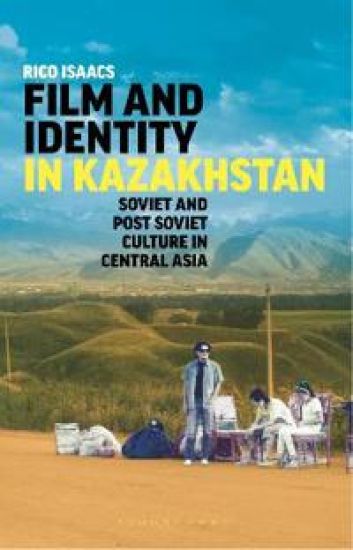
Film and Identity in Kazakhstan

Rico Isaacs

BLOOMSBURY PUBLISHING PLC
2022
nidottu
Cinema and nationalism are two fundamentally modern phenomena, but how have films shaped our understanding of the creation -the 'imagining' - of Central-Asian nations? Here, Rico Isaacs uses cinema as an analytical lens to explore how the Kazakh national identity has been constructed and contested. Drawing on an analysis of Kazakh films from the last century, and featuring new interviews with directors and critics involved in the Central Asian film industry, his book traces the construction of nationalism within Kazakh cinema from the country's inception as a Soviet Republic to a modern independent nation. Isaacs identifies four narratives since the collapse of the Soviet Union: a warrior-like 'ethnic' narrative rooted in the 18th Century struggles against the Mongolian Oirat tribes; a 'civic' inspired narrative cemented in the Stalinist deportations of the 1930s and 40s; a religious narrative founded within the mystic and philosophical religion of Tengrism and the cult of the Sky God; and a socio-economic narrative which roots Kazakh nationhood and identity in contemporary social divisions, the lived day-to-day experiences of ordinary citizens and the struggles they face with authority. These last two tropes demonstrate how cinema has emerged as a site of dissent against the country's authoritarian regime under President Nazarbayev. Film and Identity in Kazakhstan advances our understanding of Kazakhstan and nationalism by demonstrating the multiple and inessential character of each, and illustrates the important role of cinema in contesting political power in the post-Soviet space.
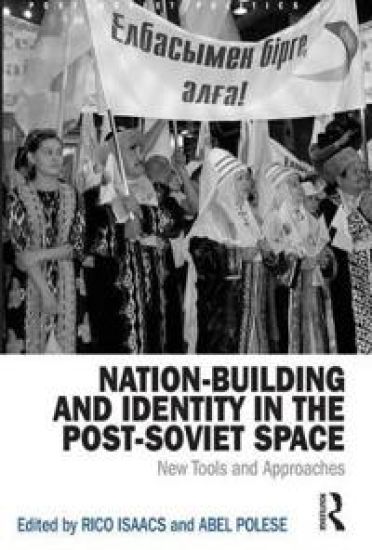
Nation-Building and Identity in the Post-Soviet Space
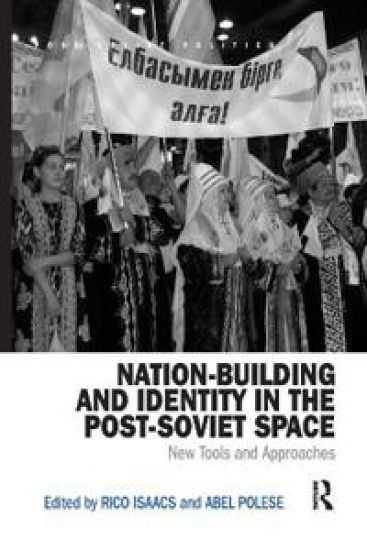
Nation-building as a process is never complete and issues related to identity, nation, state and regime-building are recurrent in the post-Soviet region. This comparative, inter-disciplinary volume explores how nation-building tools emerged and evolved over the last twenty years. Featuring in-depth case studies from countries throughout the post-Soviet space it compares various aspects of nation-building and identity formation projects. Approaching the issue from a variety of disciplines, and geographical areas, contributors illustrate chapter by chapter how different state and non-state actors utilise traditional instruments of nation-construction in new ways while also developing non-traditional tools and strategies to provide a contemporary account of how nation-formation efforts evolve and diverge.
Politics

Politics

Barrie Axford; Victoria Browne; Richard Huggins; Rico Isaacs

Routledge
2018
nidottu

Halvin toimitettuna 60,60 €

The eagerly awaited third edition of this highly respected and user-friendly text for introductory courses has been thoroughly updated to reflect the world today. Politics: An Introduction provides stimulating coverage of topics essential to the understanding of contemporary politics. It offers students necessary guidance on ways of studying and understanding politics, and illustration of the many different sites at which politics is construed and conducted. Ideal for students taking combined degrees at introductory level in politics and the social sciences, it emphasises the individual and social dimension of politics and covers theories and concepts in an accessible way. Fundamentally, it helps students see the political, and its relevance, in their lives. Key features include: a revised introduction considering ‘what is politics’ and how we understand and approach its study clear and well-organised coverage of political theory, political behaviour, institutions and the policy process carefully crafted in-text chapter features such as ‘consider this’ thought-provoking scenarios, ‘think points’, keyword definitions, chapter summaries, and exercises designed to enliven and extend the learning experience stimulating, up-to-date examples and case studies from across the globe, such as ‘fake news’, online activism, the rise of populism, culture wars, ‘fertility tourism’ in India, hydropower in Cambodia, free speech in France, and personality politics in Turkmenistan detailed consideration of democratisation, authoritarian regimes, direct democracy, gender critical perspectives, minority rights, global capitalism, social movements, radical political change, post-secularism, and challenges and changes brought by social media. Politics: An Introduction is a broad-ranging, accessible, and essential guide for all students studying, or beginning to study, politics.
Politics

Politics

Barrie Axford; Victoria Browne; Richard Huggins; Rico Isaacs

Routledge
2018
sidottu
The eagerly awaited third edition of this highly respected and user-friendly text for introductory courses has been thoroughly updated to reflect the world today. Politics: An Introduction provides stimulating coverage of topics essential to the understanding of contemporary politics. It offers students necessary guidance on ways of studying and understanding politics, and illustration of the many different sites at which politics is construed and conducted. Ideal for students taking combined degrees at introductory level in politics and the social sciences, it emphasises the individual and social dimension of politics and covers theories and concepts in an accessible way. Fundamentally, it helps students see the political, and its relevance, in their lives. Key features include: a revised introduction considering ‘what is politics’ and how we understand and approach its study clear and well-organised coverage of political theory, political behaviour, institutions and the policy process carefully crafted in-text chapter features such as ‘consider this’ thought-provoking scenarios, ‘think points’, keyword definitions, chapter summaries, and exercises designed to enliven and extend the learning experience stimulating, up-to-date examples and case studies from across the globe, such as ‘fake news’, online activism, the rise of populism, culture wars, ‘fertility tourism’ in India, hydropower in Cambodia, free speech in France, and personality politics in Turkmenistan detailed consideration of democratisation, authoritarian regimes, direct democracy, gender critical perspectives, minority rights, global capitalism, social movements, radical political change, post-secularism, and challenges and changes brought by social media. Politics: An Introduction is a broad-ranging, accessible, and essential guide for all students studying, or beginning to study, politics.
Party System Formation in Kazakhstan
Since the collapse of the Soviet Union, Central Asian states have developed liberal-constitutional formal institutions. However, at the same time, political phenomena in Central Asia are shaped by informal political behaviour and relations. This relationship is now a critical issue affecting democratization and regime consolidation processes in former Soviet Central Asia, and this book provides an account of the interactive and dynamic relationship between informal and formal politics through the case of party-system formation in Kazakhstan. Based on extensive interviews with political actors and a wide range of historical and contemporary documentary sources, the book utilises and develops neopatrimonialism as an analytical concept for studying post-Soviet authoritarian consolidation and failed democratisation. It illustrates how personalism of political office, patronage and patron-client networks and factional elite conflict have influenced and shaped the institutional constraints affecting party development, the type of emerging parties and parties’ relationship with society. The case of Kazakhstan, however, also demonstrates how in the former Soviet space political parties emerge as central to the legitimization of informal political behavior, the structuring of factional competition and the consolidation of authoritarianism. The book represents an important contribution to the study of Central Asian Politics.
Nation-Building and Identity in the Post-Soviet Space
Nation-building as a process is never complete and issues related to identity, nation, state and regime-building are recurrent in the post-Soviet region. This comparative, inter-disciplinary volume explores how nation-building tools emerged and evolved over the last twenty years. Featuring in-depth case studies from countries throughout the post-Soviet space it compares various aspects of nation-building and identity formation projects. Approaching the issue from a variety of disciplines, and geographical areas, contributors illustrate chapter by chapter how different state and non-state actors utilise traditional instruments of nation-construction in new ways while also developing non-traditional tools and strategies to provide a contemporary account of how nation-formation efforts evolve and diverge.
Party System Formation in Kazakhstan
Since the collapse of the Soviet Union, Central Asian states have developed liberal-constitutional formal institutions. However, at the same time, political phenomena in Central Asia are shaped by informal political behaviour and relations. This relationship is now a critical issue affecting democratization and regime consolidation processes in former Soviet Central Asia, and this book provides an account of the interactive and dynamic relationship between informal and formal politics through the case of party-system formation in Kazakhstan. Based on extensive interviews with political actors and a wide range of historical and contemporary documentary sources, the book utilises and develops neopatrimonialism as an analytical concept for studying post-Soviet authoritarian consolidation and failed democratisation. It illustrates how personalism of political office, patronage and patron-client networks and factional elite conflict have influenced and shaped the institutional constraints affecting party development, the type of emerging parties and parties’ relationship with society. The case of Kazakhstan, however, also demonstrates how in the former Soviet space political parties emerge as central to the legitimization of informal political behavior, the structuring of factional competition and the consolidation of authoritarianism. The book represents an important contribution to the study of Central Asian Politics.