Kirjojen hintavertailu – 12 859 819 kirjaa ja 27 kauppaa

Kirjailija

Rita Abrahamsen

Kirjat ja teokset yhdessä paikassa: 5 kirjaa, julkaisuja vuosilta 2010–2026, suosituimpiin kuuluu Developing Hegemony. Vertaile teosten hintoja ja tarkista saatavuus suomalaisista kirjakaupoista.

5 kirjaa

Kirjojen julkaisuvuodet: 2010–2026.

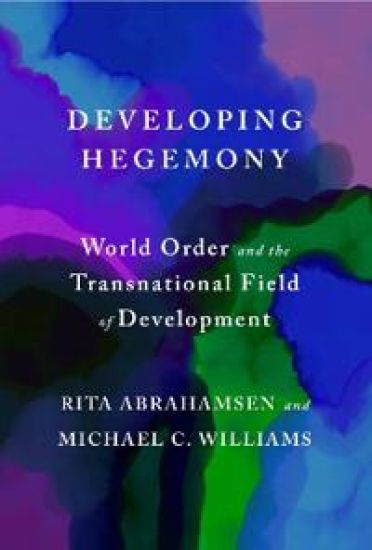
Developing Hegemony

Developing Hegemony

Rita Abrahamsen; Michael C. Williams

STANFORD UNIVERSITY PRESS
2026
pokkari
At a time of multiple challenges to the liberal international order, development has become one of the most contentious areas of world politics. Dominant powers have reduced their assistance and overtly fused development with national and security interests, while rising powers like China have become major donors promoting new models and norms. Advancing an innovative Bourdieusian-inspired analysis of global politics as interaction between transnational fields, this book places development in the context of contemporary transformations in world order. It traces the history of development as a field of struggle from 1945 to the present, and argues that development is central to the emergence, maintenance, and transformation of world order. The authors show how the global field of development is characterized by a specific form of interest – an interest in disinterest – that performs the social alchemy of converting economic and military power into the symbolic power that is crucial for international hegemony. In the current geopolitical context, the ability of development to produce this symbolic power is dissolving and transforming, making the field one of the crucial sites where attempts to build an alternative global order are emerging and will be historically tested.
Developing Hegemony

Developing Hegemony

Rita Abrahamsen; Michael C. Williams

STANFORD UNIVERSITY PRESS
2026
sidottu
At a time of multiple challenges to the liberal international order, development has become one of the most contentious areas of world politics. Dominant powers have reduced their assistance and overtly fused development with national and security interests, while rising powers like China have become major donors promoting new models and norms. Advancing an innovative Bourdieusian-inspired analysis of global politics as interaction between transnational fields, this book places development in the context of contemporary transformations in world order. It traces the history of development as a field of struggle from 1945 to the present, and argues that development is central to the emergence, maintenance, and transformation of world order. The authors show how the global field of development is characterized by a specific form of interest – an interest in disinterest – that performs the social alchemy of converting economic and military power into the symbolic power that is crucial for international hegemony. In the current geopolitical context, the ability of development to produce this symbolic power is dissolving and transforming, making the field one of the crucial sites where attempts to build an alternative global order are emerging and will be historically tested.
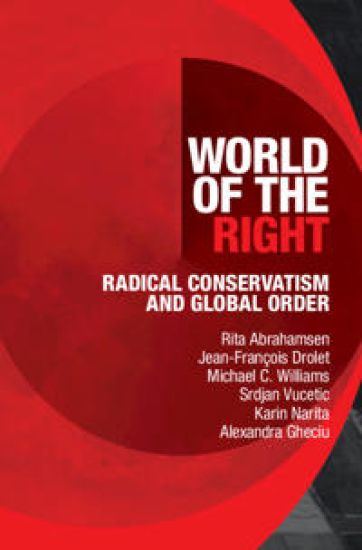
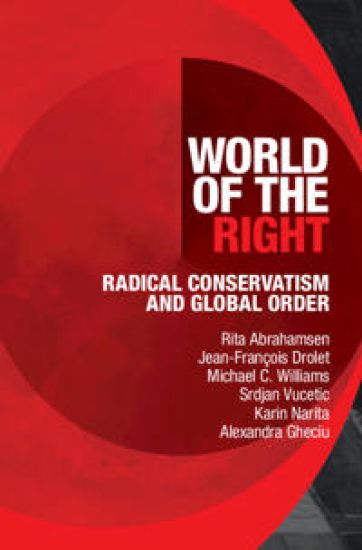
World of the Right

World of the Right

Rita Abrahamsen; Jean-François Drolet; Michael C. Williams; Srdjan Vucetic; Karin Narita; Alexandra Gheciu

Cambridge University Press
2024
pokkari

Halvin toimitettuna 31,70 €

The contemporary radical Right is not merely a series of nationalist projects but a global phenomenon. This book shows how radical conservative thinkers have developed long-term counter-hegemonic strategies that challenge prevailing social and political orders both nationally and internationally. At the heart of this ideological project is a critique of liberal globalisation that seeks to mobilise transversal alliances against a common enemy: the 'New Class' of global managerial elites who are accused of undermining national sovereignty, traditional values, and cultures. 'World of the Right' argues that while the radical Right is far from a unified political movement, its calls for sovereignty, civilisational orders, and multipolarity enable complex, strategic convergences with illiberal states such as China and Russia, as well as states and people in the Global South. The potential consequences for the future of the liberal world order are profound and wide-ranging.
World of the Right

World of the Right

Rita Abrahamsen; Jean-François Drolet; Michael C. Williams; Srdjan Vucetic; Karin Narita; Alexandra Gheciu

Cambridge University Press
2024
sidottu
The contemporary radical Right is not merely a series of nationalist projects but a global phenomenon. This book shows how radical conservative thinkers have developed long-term counter-hegemonic strategies that challenge prevailing social and political orders both nationally and internationally. At the heart of this ideological project is a critique of liberal globalisation that seeks to mobilise transversal alliances against a common enemy: the 'New Class' of global managerial elites who are accused of undermining national sovereignty, traditional values, and cultures. 'World of the Right' argues that while the radical Right is far from a unified political movement, its calls for sovereignty, civilisational orders, and multipolarity enable complex, strategic convergences with illiberal states such as China and Russia, as well as states and people in the Global South. The potential consequences for the future of the liberal world order are profound and wide-ranging.
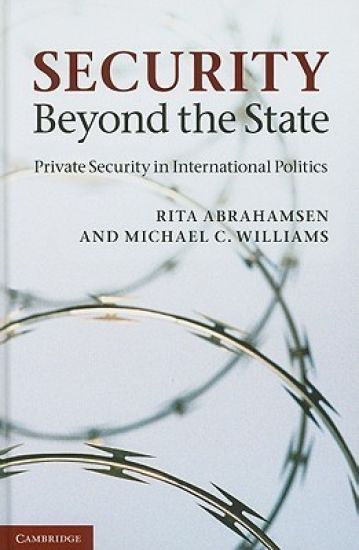
Security Beyond the State

Security Beyond the State

Rita Abrahamsen; Michael C. Williams

Cambridge University Press
2010
sidottu
Across the globe, from mega-cities to isolated resource enclaves, the provision and governance of security takes place within assemblages that are de-territorialized in terms of actors, technologies, norms and discourses. They are embedded in a complex transnational architecture, defying conventional distinctions between public and private, global and local. Drawing on theories of globalization and late modernity, along with insights from criminology, political science and sociology, Security Beyond the State maps the emergence of the global private security sector and develops a novel analytical framework for understanding these global security assemblages. Through in-depth examinations of four African countries – Kenya, Nigeria, Sierra Leone and South Africa – it demonstrates how global security assemblages affect the distribution of social power, the dynamics of state stability, and the operations of the international political economy, with significant implications for who gets secured and how in a global era.