Kirjojen hintavertailu – 12 903 725 kirjaa ja 27 kauppaa

Kirjailija

Rob Phillips

Kirjat ja teokset yhdessä paikassa: 28 kirjaa, julkaisuja vuosilta 2001–2026, suosituimpiin kuuluu Green Chairs and Squeaky Sheets. Vertaile teosten hintoja ja tarkista saatavuus suomalaisista kirjakaupoista.

28 kirjaa

Kirjojen julkaisuvuodet: 2001–2026.

Cell Biology by the Numbers

Cell Biology by the Numbers

Ron Milo; Rob Phillips

CRC Press Inc
2015
nidottu

Halvin toimitettuna 66,90 €

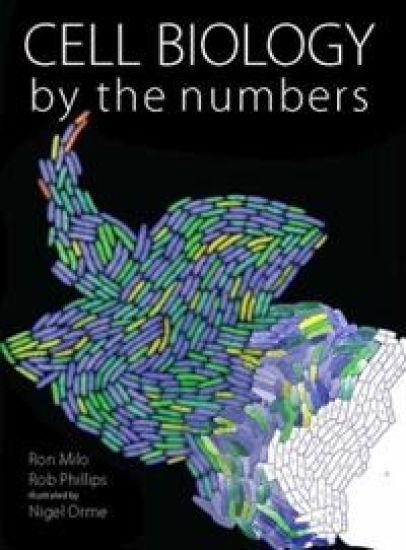
A Top 25 CHOICE 2016 Title, and recipient of the CHOICE Outstanding Academic Title (OAT) Award. How much energy is released in ATP hydrolysis? How many mRNAs are in a cell? How genetically similar are two random people? What is faster, transcription or translation? Cell Biology by the Numbers explores these questions—and dozens of others—providing a richly illustrated and handy reference for students and researchers in molecular and cell biology, chemistry, and biophysics. The book features question-driven vignettes and "back of the envelope" calculations that investigate some of the key numbers in cell biology. Readers will learn about the sizes, concentrations, rates, energies, and other numbers that describe and drive the living world.
Physical Biology of the Cell

Physical Biology of the Cell

Rob Phillips; Jane Kondev; Julie Theriot; Hernan Garcia

CRC Press Inc
2012
nidottu

Halvin toimitettuna 130,40 €

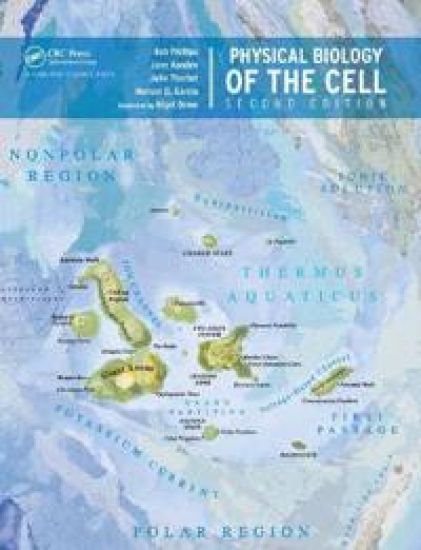
Physical Biology of the Cell is a textbook for a first course in physical biology or biophysics for undergraduate or graduate students. It maps the huge and complex landscape of cell and molecular biology from the distinct perspective of physical biology. As a key organizing principle, the proximity of topics is based on the physical concepts that unite a given set of biological phenomena. Herein lies the central premise: that the appropriate application of a few fundamental physical models can serve as the foundation of whole bodies of quantitative biological intuition, useful across a wide range of biological problems. The Second Edition features full-color illustrations throughout, two new chapters, a significantly expanded set of end-of-chapter problems, and is available in a variety of e-book formats.
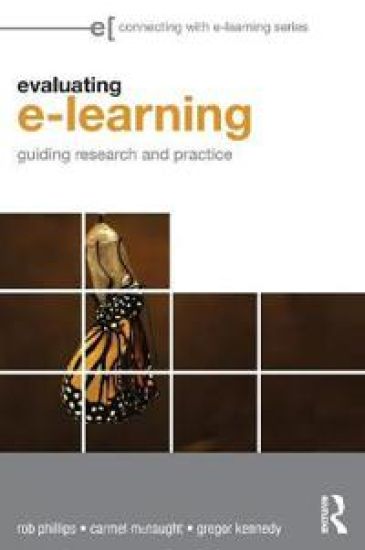
Evaluating e-Learning

Evaluating e-Learning

Rob Phillips; Carmel McNaught; Gregor Kennedy

Routledge
2011
nidottu
How can novice e-learning researchers and postgraduate learners develop rigorous plans to study the effectiveness of technology-enhanced learning environments? How can practitioners gather and portray evidence of the impact of e-learning? How can the average educator who teaches online, without experience in evaluating emerging technologies, build on what is successful and modify what is not? By unpacking the e-learning lifecycle and focusing on learning, not technology, Evaluating e-Learning attempts to resolve some of the complexity inherent in evaluating the effectiveness of e-learning. The book presents practical advice in the form of an evaluation framework and a scaffolded approach to an e-learning research study, using divide-and-conquer techniques to reduce complexity in both design and delivery. It adapts and builds on familiar research methodology to offer a robust and accessible approach that can ensure effective evaluation of a wide range of innovative initiatives, including those covered in other books in the Connecting with e-Learning series. Readers will find this jargon-free guide is a must-have resource that provides the proper tools for evaluating e-learning practices with ease.
Evaluating e-Learning

Evaluating e-Learning

Rob Phillips; Carmel McNaught; Gregor Kennedy

Routledge
2011
sidottu
How can novice e-learning researchers and postgraduate learners develop rigorous plans to study the effectiveness of technology-enhanced learning environments? How can practitioners gather and portray evidence of the impact of e-learning? How can the average educator who teaches online, without experience in evaluating emerging technologies, build on what is successful and modify what is not? By unpacking the e-learning lifecycle and focusing on learning, not technology, Evaluating e-Learning attempts to resolve some of the complexity inherent in evaluating the effectiveness of e-learning. The book presents practical advice in the form of an evaluation framework and a scaffolded approach to an e-learning research study, using divide-and-conquer techniques to reduce complexity in both design and delivery. It adapts and builds on familiar research methodology to offer a robust and accessible approach that can ensure effective evaluation of a wide range of innovative initiatives, including those covered in other books in the Connecting with e-Learning series. Readers will find this jargon-free guide is a must-have resource that provides the proper tools for evaluating e-learning practices with ease.
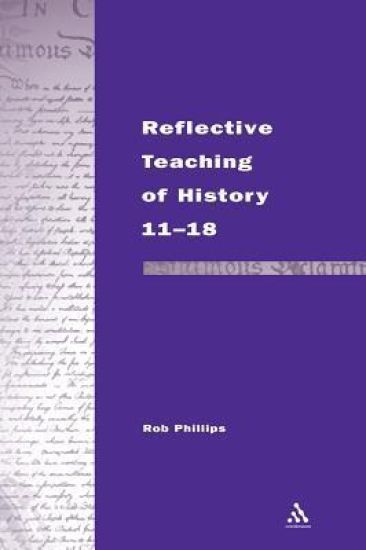
Reflective Teaching of History 11-18

Reflective Teaching of History 11-18

Rob Phillips

Continuum International Publishing Group Ltd.
2002
sidottu
This series of textbooks is aimed at teacher training students and comprises two concerns: the practice of teaching and how to use theory and research findings to improve that practice, and how to meet the TTA standards whilst placing them in a wider context. This comprehensive textbook is an accessible guide to all those who are new to the profession of teaching history. Covering all aspects of the job, from planning through to teaching and assessment, Rob Phillips provides constructive, practical advice to help subject teachers become more effective in their work
Reflective Teaching of History 11-18

Reflective Teaching of History 11-18

Rob Phillips

Continuum International Publishing Group Ltd.
2002
nidottu
This series of textbooks is aimed at teacher training students and comprises two concerns: the practice of teaching and how to use theory and research findings to improve that practice, and how to meet the TTA standards whilst placing them in a wider context. This comprehensive textbook is an accessible guide to all those who are new to the profession of teaching history. Covering all aspects of the job, from planning through to teaching and assessment, Rob Phillips provides constructive, practical advice to help subject teachers become more effective in their work.
Crystals, Defects and Microstructures

Crystals, Defects and Microstructures

Rob Phillips

Cambridge University Press
2001
sidottu
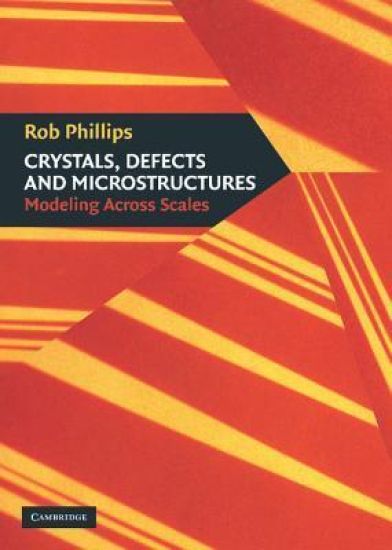
Materials science has emerged as one of the central pillars of the modern physical sciences and engineering, and is now even beginning to claim a role in the biological sciences. A central tenet in the analysis of materials is the structure-property paradigm, which proposes a direct connection between the geometric structures within a material and its properties. The increasing power of high-speed computation has had a major impact on theoretical materials science and has permitted the systematic examination of this connection between structure and properties. In this graduate textbook, Rob Phillips examines the various methods that have been used in the study of crystals, defects and microstructures and that have made such computations possible. A second key theme is the presentation of recent efforts that have been developed to treat problems involving either multiple spatial or temporal scales simultaneously.
Crystals, Defects and Microstructures

Crystals, Defects and Microstructures

Rob Phillips

Cambridge University Press
2001
pokkari
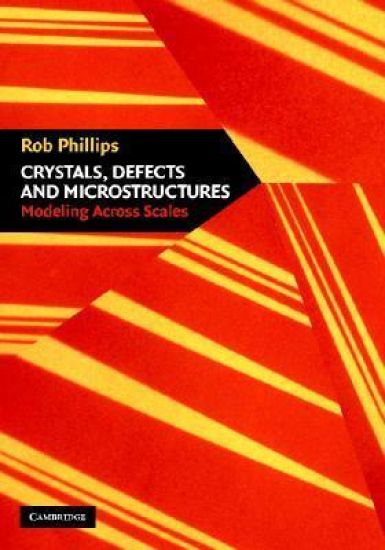
Materials science has emerged as one of the central pillars of the modern physical sciences and engineering, and is now even beginning to claim a role in the biological sciences. A central tenet in the analysis of materials is the structure-property paradigm, which proposes a direct connection between the geometric structures within a material and its properties. The increasing power of high-speed computation has had a major impact on theoretical materials science and has permitted the systematic examination of this connection between structure and properties. In this graduate textbook, Rob Phillips examines the various methods that have been used in the study of crystals, defects and microstructures and that have made such computations possible. A second key theme is the presentation of recent efforts that have been developed to treat problems involving either multiple spatial or temporal scales simultaneously.