Kirjojen hintavertailu – 12 903 725 kirjaa ja 27 kauppaa

Kirjailija

Rob Roggema

Kirjat ja teokset yhdessä paikassa: 8 kirjaa, julkaisuja vuosilta 2009–2025, suosituimpiin kuuluu Planning, Urban Design, and Architecture for Climate Action. Vertaile teosten hintoja ja tarkista saatavuus suomalaisista kirjakaupoista.

8 kirjaa

Kirjojen julkaisuvuodet: 2009–2025.

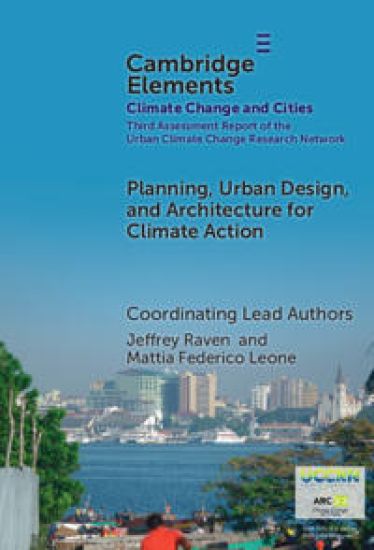
Planning, Urban Design, and Architecture for Climate Action

Planning, Urban Design, and Architecture for Climate Action

Jeffrey Raven; Mattia Federico Leone; Sanjukkta Bhaduri; Christian Braneon; David Corbett; David Driskell; Ursula Eicker; John E. Fernandez; Jing Gan; Anna Hürlimann; Ilana Judah; Michael Neuman; Barbara Norman; Dennis Pamlin; Chao Ren; Rob Roggema; Pourya Salehi; Anne Shellum; Joel Towers; Cristina Visconti

Cambridge University Press
2025
sidottu

Halvin toimitettuna 79,30 €

Embedding climate resilient development principles in planning, urban design, and architecture means ensuring that transformation of the built environment helps achieve carbon neutrality, effective adaptation, and well-being for people and nature. Planners, urban designers, and architects are called to bridge the domains of research and practice and evolve their agency and capacity, developing methods and tools consistent across spatial scales to ensure the convergence of outcomes towards targets. Shaping change necessitates an innovative action-driven framework with multi-scale analysis of urban climate factors and co-mapping, co-design, and co-evaluation with city stakeholders and communities. This Element provides analysis on how urban climate factors, system efficiency, form and layout, building envelope and surface materials, and green/blue infrastructure affect key metrics and indicators related to complementary aspects like greenhouse gas emissions, impacts of extreme weather events, spatial and environmental justice, and human comfort. This title is also available as open access on Cambridge Core.
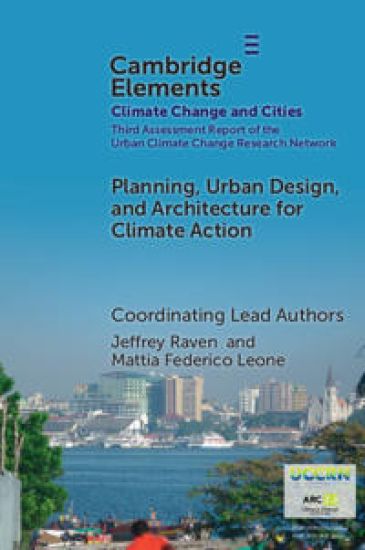
Planning, Urban Design, and Architecture for Climate Action

Planning, Urban Design, and Architecture for Climate Action

Jeffrey Raven; Mattia Federico Leone; Sanjukkta Bhaduri; Christian Braneon; David Corbett; David Driskell; Ursula Eicker; John E. Fernandez; Gan Jing; Anna Hürlimann; Ilana Judah; Michael Neuman; Barbara Norman; Dennis Pamlin; Ren Chao; Rob Roggema; Pourya Salehi; Anne Shellum; Joel Towers; Cristina Visconti

Cambridge University Press
2025
pokkari
Embedding climate resilient development principles in planning, urban design, and architecture means ensuring that transformation of the built environment helps achieve carbon neutrality, effective adaptation, and well-being for people and nature. Planners, urban designers, and architects are called to bridge the domains of research and practice and evolve their agency and capacity, developing methods and tools consistent across spatial scales to ensure the convergence of outcomes towards targets. Shaping change necessitates an innovative action-driven framework with multi-scale analysis of urban climate factors and co-mapping, co-design, and co-evaluation with city stakeholders and communities. This Element provides analysis on how urban climate factors, system efficiency, form and layout, building envelope and surface materials, and green/blue infrastructure affect key metrics and indicators related to complementary aspects like greenhouse gas emissions, impacts of extreme weather events, spatial and environmental justice, and human comfort. This title is also available as open access on Cambridge Core.
Swarm Planning

Swarm Planning

Rob Roggema

Springer
2016
nidottu
This book shows that the problem of climate adaptation, which is described in social planning terms as ‘wicked,’ is at odds with the contemporary practice of spatial planning. The author proposes a new adjusted framework which is more adaptable to unpredictable, wicked, dynamic and non-linear processes. The inspiration for this new method is the behaviour of swarms: bees, ants, birds and fish are capable of self-organization, which enables the system to become less vulnerable to sudden environmental changes. The framework proposed in Swarm Planning consists of these four elements: Two levels of complexity, the first being the whole system and the second its individual components. Each of these has different attributes for adapting to change. Five layers, consisting of networks, focal points, unplanned space, natural resources and emerging occupation patterns. Each layer has its own spatial dynamic, and each is connected to a spatial scale. Non-linear processes, which emerge in different parts of the framework and include emerging patterns, connectedness and tipping points among others. Two planning processes; the first, ‘from small to large’ works upward from the slowest changing elements to more rapidly-changing ones. The second, ‘on the list of partners’ addresses each layer from networks through emerging occupation patterns. Swarm Planning applies this framework to a series of pilot studies, and appraises its performance using criteria for an adaptive landscape. The results show that the use of the Swarm Planning Framework reduces the vulnerability of landscapes as well as the impact of climate hazards and disasters, improves response to unexpected hazards and contains adaptation strategies. “This book is a must for planners in government and the private sector as it outlines the concept, strategies and techniques for swarm planning. It is also an important guide for policymakers looking to engage communities in a dialogue about the adaptation planningprocess.” Professor John Martin, La Trobe University “The ultimate value of the book lies in encouraging the planning community to consider options that go far beyond those offered by business-as-usual planning methodologies developed for a set of operating conditions that are fast becoming obsolete. As such it makes an important and much needed contribution to the field.” Assistant Professor Dr. Chrisna du Plessis, University of Pretoria
Adaptation to Climate Change: A Spatial Challenge
As it becomes clear that climate change is not easily within the boundaries of the 1990’s, society needs to be prepared and needs to anticipate future changes due to the uncertain changes in climate. So far, extensive research has been carried out on several issues including the coastal defence or shifting ecozones. However, the role spatial design and planning can play in adapting to climate change has not yet been focused on. This book illuminates the way adaptation to climate change is tackled in water management, ecology, coastal defence, the urban environment and energy. The question posed is how each sector can anticipate climate change by creating spatial designs and plans. The main message of this book is that spatial design and planning are a very useful tool in adapting to climate change. It offers an integral view on the issue, it is capable in dealing with uncertainties and it opens the way to creative and anticipative solutions. Dealing with adaptation to climatechange requires a shift in mindset; from a technical rational way of thinking towards an integral proactive one. A new era in spatial design and planning looms on the horizon.
Swarm Planning

Swarm Planning

Rob Roggema

Springer
2013
sidottu
This book shows that the problem of climate adaptation, which is described in social planning terms as ‘wicked,’ is at odds with the contemporary practice of spatial planning. The author proposes a new adjusted framework which is more adaptable to unpredictable, wicked, dynamic and non-linear processes. The inspiration for this new method is the behaviour of swarms: bees, ants, birds and fish are capable of self-organization, which enables the system to become less vulnerable to sudden environmental changes. The framework proposed in Swarm Planning consists of these four elements: Two levels of complexity, the first being the whole system and the second its individual components. Each of these has different attributes for adapting to change. Five layers, consisting of networks, focal points, unplanned space, natural resources and emerging occupation patterns. Each layer has its own spatial dynamic, and each is connected to a spatial scale. Non-linear processes, which emerge in different parts of the framework and include emerging patterns, connectedness and tipping points among others. Two planning processes; the first, ‘from small to large’ works upward from the slowest changing elements to more rapidly-changing ones. The second, ‘on the list of partners’ addresses each layer from networks through emerging occupation patterns. Swarm Planning applies this framework to a series of pilot studies, and appraises its performance using criteria for an adaptive landscape. The results show that the use of the Swarm Planning Framework reduces the vulnerability of landscapes as well as the impact of climate hazards and disasters, improves response to unexpected hazards and contains adaptation strategies. “This book is a must for planners in government and the private sector as it outlines the concept, strategies and techniques for swarm planning. It is also an important guide for policymakers looking to engage communities in a dialogue about the adaptation planningprocess.” Professor John Martin, La Trobe University “The ultimate value of the book lies in encouraging the planning community to consider options that go far beyond those offered by business-as-usual planning methodologies developed for a set of operating conditions that are fast becoming obsolete. As such it makes an important and much needed contribution to the field.” Assistant Professor Dr. Chrisna du Plessis, University of Pretoria
Adaptation to Climate Change: A Spatial Challenge

Adaptation to Climate Change: A Spatial Challenge

Rob Roggema

Springer-Verlag New York Inc.
2009
sidottu
As it becomes clear that climate change is not easily within the boundaries of the 1990’s, society needs to be prepared and needs to anticipate future changes due to the uncertain changes in climate. So far, extensive research has been carried out on several issues including the coastal defence or shifting ecozones. However, the role spatial design and planning can play in adapting to climate change has not yet been focused on. This book illuminates the way adaptation to climate change is tackled in water management, ecology, coastal defence, the urban environment and energy. The question posed is how each sector can anticipate climate change by creating spatial designs and plans. The main message of this book is that spatial design and planning are a very useful tool in adapting to climate change. It offers an integral view on the issue, it is capable in dealing with uncertainties and it opens the way to creative and anticipative solutions. Dealing with adaptation to climatechange requires a shift in mindset; from a technical rational way of thinking towards an integral proactive one. A new era in spatial design and planning looms on the horizon.